


Nasal breathing is the body’s most efficient and balanced breathing method because it enhances oxygen delivery, regulates the nervous system, and supports Lung Qi, while mouth breathing disrupts airflow, weakens energy circulation, and contributes to long-term health imbalances.
Breathing happens automatically, but the pattern you default to is not neutral. It influences oxygen efficiency, stress response, sleep quality, and even how your body distributes energy throughout the day. What seems like a small habit can quietly shape how well your systems function over time.
Modern physiology now validates what Traditional Chinese Medicine has long emphasized: the breath is a central regulator of internal balance. When breathing shifts away from the nose and into the mouth, it creates subtle inefficiencies that accumulate. Over time, these patterns can influence fatigue, immunity, emotional stability, and overall resilience.
Nasal breathing supports deeper, slower, and more efficient respiration, while mouth breathing promotes shallow breathing, reduces oxygen efficiency, and increases physiological stress.

Nasal breathing is the process of inhaling and exhaling through the nose rather than the mouth. It is widely regarded as the body’s natural and most efficient way to breathe. The human respiratory system is built for nasal breathing because the nose acts as a highly effective conditioning system that filters, warms, and humidifies incoming air while also releasing compounds that support oxygen uptake and circulation.
The nose and nasal passages have important functions that the mouth cannot replicate. These features help protect the lungs and support overall health.
Nasal breathing supports multiple systems simultaneously, making it one of the most efficient and biologically aligned ways to breathe. It enhances oxygen delivery, protects the respiratory system, and regulates both physiological and neurological function.
The nose produces nitric oxide, a compound that improves blood vessel dilation and enhances oxygen circulation. This allows oxygen to be delivered more effectively throughout the body while supporting stable blood pressure and cardiovascular efficiency.
The nasal passages are lined with microscopic hairs and cilia that trap dust, allergens, bacteria, and airborne toxins before they reach the lungs. These particles are redirected toward the throat and digestive system, reducing the burden on the respiratory system and lowering infection risk.
The nose adjusts the temperature of incoming air, warming cold air and cooling excessively warm air before it reaches the lungs. This helps prevent irritation and supports optimal lung function, especially during exercise or exposure to extreme environments.
Nasal breathing adds moisture to incoming air, preventing dryness in the airways. This protects delicate lung tissues and reduces symptoms such as dry throat, irritation, or nighttime discomfort often associated with mouth breathing.
Breathing through the nose naturally slows the breath and encourages diaphragmatic activation. This allows fuller lung expansion, improves gas exchange, and reduces reliance on shallow chest breathing.
Slow, controlled nasal breathing activates the parasympathetic nervous system, promoting calm, focus, and recovery. This helps counterbalance chronic stress and supports emotional stability.
The nasal passages naturally limit airflow volume, making it harder to over-breathe. This helps maintain healthy carbon dioxide levels, which are essential for efficient oxygen release into tissues.
The nose plays a key role in detecting environmental signals, including harmful toxins, smoke, or spoiled food. This sensory function supports survival and helps the body respond to potential threats.
Nasal breathing promotes more efficient oxygen use and better breathing rhythm, which can improve endurance and reduce fatigue during physical activity. It also helps maintain steady breathing patterns under stress.
Nasal breathing is not just about airflow. It is a built-in system that protects, regulates, and optimizes multiple functions at once. When breathing shifts away from the nose, the body loses these layered benefits, often without immediate awareness.

Mouth breathing is the pattern of inhaling and exhaling primarily through the mouth instead of the nose. While occasional mouth breathing can happen during intense exercise, heavy exertion, or temporary nasal congestion, it becomes a concern when it turns into a habitual or default breathing pattern.
In many cases, mouth breathing begins as a practical adaptation. When nasal airflow is restricted, the body uses the mouth as an alternate route to maintain airflow. The problem develops when this temporary adjustment continues even after the original trigger has improved. Over time, habitual mouth breathing can affect sleep quality, oral health, breathing efficiency, and, in some cases, facial development, especially in children.
Mouth breathing usually develops when the body cannot move enough air comfortably through the nose. This can happen for physical, structural, or behavioral reasons.
The most common cause is reduced nasal airflow. This may be linked to allergies, chronic sinus congestion, colds, nasal polyps, or a deviated septum.
In children, enlarged adenoids or tonsils can partially block the airway and make nasal breathing more difficult, encouraging the mouth to become the primary breathing route.
Sometimes a child or adult starts mouth breathing during a temporary illness or congestion episode and continues the pattern long after the nasal blockage has resolved.
A narrow upper jaw, high palate, or lip posture issues can make it harder to keep the mouth comfortably closed, which may reinforce mouth breathing.
Stress can encourage faster, shallower upper-chest breathing. In some people, this pattern makes mouth breathing more likely, especially during sleep or emotional strain.
Mouth breathing often begins as a temporary adaptation, but when it becomes habitual, it creates a cascade of physiological, structural, and neurological imbalances. Over time, these effects can influence everything from oxygen efficiency to sleep quality and oral health.
Mouth breathing disrupts the balance between oxygen and carbon dioxide, limiting how efficiently oxygen is released into tissues. This can contribute to fatigue, reduced endurance, and lower overall energy levels.
Faster, shallow breathing is associated with sympathetic nervous system activation. This keeps the body in a heightened state, making it harder to relax, recover, or regulate stress effectively.
Saliva plays a critical role in maintaining oral health by neutralizing acids, protecting enamel, and controlling bacterial balance. Mouth breathing reduces saliva production, allowing harmful bacteria to accumulate.
This can lead to:
Mouth breathing during sleep is strongly associated with:
These disruptions can lead to daytime fatigue, poor concentration, and reduced cognitive performance.
Because air bypasses the nasal humidification process, mouth breathing often results in:
These are often early signs of an underlying breathing pattern issue.
Without nasal filtration, airborne particles such as dust, allergens, and pollutants enter directly into the respiratory system. This can increase irritation and contribute to ongoing inflammation or allergy symptoms.
Chronic mouth breathing, especially during childhood, can influence facial development and airway structure.
Potential effects include:
Poor sleep quality and reduced oxygen efficiency can contribute to:
In children, these effects may sometimes be mistaken for attention or behavioral issues.
Mouth breathing does not just affect one system. It creates overlapping inefficiencies across respiratory, neurological, and structural pathways. Because these changes develop gradually, many people adapt to them without recognizing the root cause.
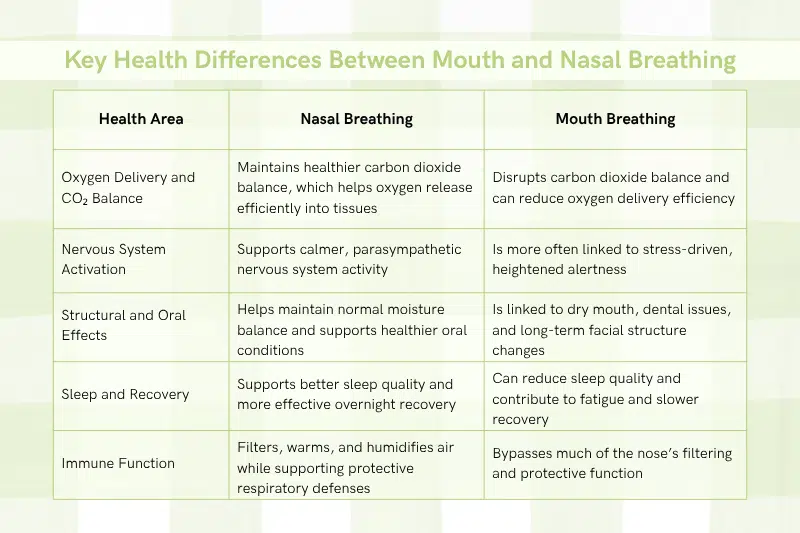
Breathing patterns are shaped by a combination of structural, physiological, and behavioral factors. While nasal breathing is the body’s default design, mouth breathing often develops as a compensatory response when airflow through the nose becomes restricted or inefficient.
In many cases, what begins as a temporary adjustment, such as breathing through the mouth during a cold or allergy flare-up, gradually becomes a habitual pattern. Over time, the body adapts to this shortcut, even after the original trigger has resolved.
Certain physical conditions can make nasal breathing more difficult, increasing reliance on the mouth:
In these cases, mouth breathing is not a preference. It is the body’s way of maintaining airflow when nasal breathing feels restricted.
Even without structural issues, modern habits can gradually shift breathing patterns:
These factors reduce diaphragmatic engagement and train the body to rely on faster, less efficient breathing pathways.
One of the most overlooked reasons people become mouth breathers is efficiency under stress.
When the body perceives urgency, whether physical or emotional, it prioritizes speed over efficiency. Mouth breathing allows larger volumes of air to move quickly, which can feel relieving in the short term. However, this comes at the cost of reduced oxygen utilization and increased physiological strain over time.
Once mouth breathing becomes habitual, it reinforces itself:
This creates a feedback loop where inefficient breathing begins to feel normal.

In Traditional Chinese Medicine, breathing is more than a mechanical function. It reflects the strength, direction, and harmony of Qi throughout the body. The quality of the breath can reveal whether energy is flowing smoothly or whether deeper imbalances are affecting physical and emotional health.
In TCM, the lungs govern respiration and are responsible for taking in the clear Qi of the air and distributing it throughout the body. They also help regulate the descending and dispersing movement of Qi, which supports healthy breathing, proper fluid movement, and the circulation of defensive energy. Efficient breathing helps this process remain balanced, while shallow or strained breathing can weaken it over time.
The lungs are associated with the Metal element, which is linked to structure, boundaries, clarity, and the emotion of grief. This is why breathing patterns and emotional states often influence each other so strongly. When the lungs are balanced, breathing tends to feel smooth and steady, and emotional processing is often more grounded. When Lung Qi is weakened or constrained, a person may feel tightness in the chest, emotional heaviness, or difficulty fully releasing stress and sadness.
Wei Qi is the body’s protective energy. It circulates at the surface and helps defend against external pathogens such as wind, cold, dryness, and seasonal illness. Strong, efficient breathing supports the lungs’ role in dispersing Wei Qi. From a TCM perspective, nasal breathing better supports this defensive function, while chronic mouth breathing may weaken the body’s ability to protect itself and maintain resilience.
From a TCM perspective, chronic mouth breathing is not just a breathing habit. It is a sign that the normal rhythm of Lung Qi has been disrupted. Because mouth breathing is often shallower and less regulated, it can gradually affect multiple organ systems and reduce overall vitality.
Mouth breathing tends to encourage shallow inhalation and less efficient breath control. This can weaken the lungs’ ability to gather and distribute Qi properly. Over time, a person may feel more easily fatigued, more prone to respiratory discomfort, or less resilient during stress.
When breathing is inefficient, the movement of Qi can become sluggish or irregular. In TCM, this disruption does not stay isolated in the lungs. It can affect the broader network of organ relationships, especially when the pattern becomes chronic.
When mouth breathing persists, it may contribute to a wider pattern of imbalance:
Breathing patterns directly influence emotional regulation, and emotional states can also change the way a person breathes. This two-way relationship is central to both modern physiology and TCM.
Mouth breathing is more often associated with heightened stress responses, upper chest tension, and a feeling of being on edge. Nasal breathing, by contrast, supports a calmer and more grounded state. In TCM, unresolved emotional patterns, especially grief, sadness, or prolonged stress, can weaken Lung Qi and further disrupt breathing. This creates a cycle where emotional strain affects the breath, and inefficient breathing makes it harder for the body to return to balance.
Some signs of chronic mouth breathing are obvious, while others are easy to overlook because they develop gradually. Common signs include:
When several of these signs appear together, they may point to a breathing pattern that is affecting more than just airflow.
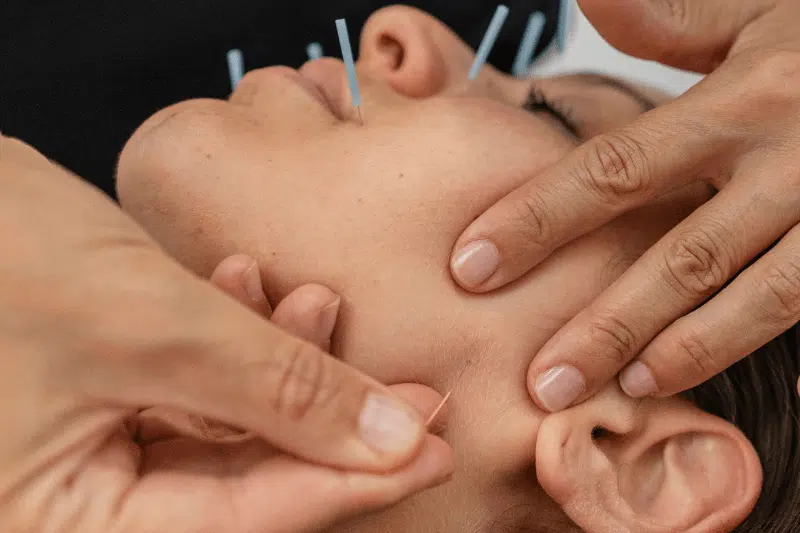
Acupuncture supports better breathing by addressing both energetic imbalances and physical patterns that interfere with healthy respiration. Rather than focusing only on symptoms, it works to improve how the body regulates breath, tension, and internal balance.
Acupuncture helps support the lungs’ ability to descend and disperse Qi effectively. This can encourage smoother, deeper breathing and improve the body’s ability to use breath more efficiently.
Targeted acupuncture points can help release tension in the chest, diaphragm, and upper back. This may make it easier for the breath to expand fully rather than staying shallow and restricted.
Stress-driven breathing patterns often become automatic. Acupuncture may help calm the nervous system, reduce sympathetic overactivation, and support a shift toward slower, more regulated breathing.
In some cases, acupuncture may also help improve nasal airflow by reducing inflammation and supporting better sinus and airway function. This can be especially helpful when mouth breathing is linked to congestion or chronic irritation.
Several acupuncture points are commonly used to support respiratory function and encourage deeper, more balanced breathing:
In clinical practice, points are selected based on the individual pattern rather than used as a one-size-fits-all formula.
Changing a breathing pattern takes time, especially when mouth breathing has become automatic. The goal is not to force the breath, but to gradually make nasal breathing feel more natural and sustainable.
Start by noticing when you breathe through your mouth during the day. Many people do it while working, scrolling, driving, or feeling stressed without realizing it. Awareness is the first step in changing the pattern.
Because mouth breathing often worsens at night, it helps to address sleep posture, bedroom air quality, and nasal congestion. Supporting better nighttime breathing can make daytime improvement easier as well.
Dry air, allergens, and irritants can make nasal breathing more difficult. Using a humidifier, reducing dust exposure, and managing allergens can make the transition smoother.
Long-standing breathing patterns rarely change overnight. Gentle consistency matters more than intensity. Repeated practice helps the body relearn nasal breathing as its default state.
The long-term effects of breathing patterns can show up in daily energy, emotional steadiness, sleep quality, and resilience.
Over time, these differences can shape how a person feels physically, mentally, and emotionally from day to day.
Nasal breathing is better because it filters, humidifies, and regulates airflow while improving oxygen efficiency and supporting nervous system balance. Mouth breathing is less efficient and often linked to stress, poor sleep, and reduced respiratory function.
The healthiest breathing technique is slow, steady nasal breathing that engages the diaphragm. This pattern supports optimal oxygen exchange, calms the nervous system, and promotes overall physiological balance.
There is no evidence that mouth breathing increases lifespan. In fact, chronic mouth breathing is associated with poorer sleep, reduced oxygen efficiency, and higher stress levels, which may negatively affect long-term health.
In children and adolescents, correcting mouth breathing can support healthier facial development over time. In adults, structural changes are more limited, but improvements in muscle tone, posture, and oral health can still occur.
Chronic mouth breathing during developmental years can influence jaw and facial structure, sometimes leading to a less defined jawline. However, this is not true for everyone and depends on multiple genetic and environmental factors.
No. It is not too late. Breathing patterns can be retrained at any age through awareness, nasal breathing practice, and addressing underlying causes such as congestion or structural issues.
Yes. Mouth breathing can make exercise feel more exhausting because it often encourages faster, shallower breathing and less efficient oxygen use. Nasal breathing helps regulate airflow, improve breathing rhythm, and support better endurance over time.
Yes. Nasal breathing humidifies incoming air before it reaches the throat and lungs, which helps reduce dryness and irritation. This is one reason people who breathe through their mouths at night often wake with a dry mouth or sore throat.
It can contribute. Stress often shifts breathing into a faster, shallow upper-chest pattern, and that can make mouth breathing more likely, especially during sleep or periods of emotional strain. Over time, this stress pattern can become habitual if it is not corrected.
Not always. Occasional mouth breathing during intense exercise, temporary congestion, or illness can be normal. It becomes more concerning when it is chronic, happens during rest or sleep, or comes with symptoms like fatigue, snoring, dry mouth, or difficulty breathing through the nose.
Breathing is one of the few systems that is both automatic and trainable. That makes it uniquely powerful. Small changes in breathing patterns can influence how the body produces energy, regulates stress, and maintains internal balance.
When breathing shifts from the mouth to the nose, the body moves toward greater efficiency. Oxygen delivery improves, the nervous system stabilizes, and energy becomes more consistent.
From both a modern and Traditional Chinese Medicine perspective, restoring proper breathing is not just about airflow. It is about aligning the body with how it is designed to function. At ACA Acupuncture and Wellness, we take a holistic approach to help address the deeper patterns that may be contributing to mouth breathing, including stress, tension, congestion, and broader imbalances that affect long-term health.
Sources:
Lörinczi, F., Vanderka, M., Lörincziová, D., & Kushkestani, M. (2024). Nose vs. mouth breathing: Acute effect of different breathing regimens on muscular endurance. BMC Sports Science, Medicine and Rehabilitation, 16, Article 42.

Recent Comments