

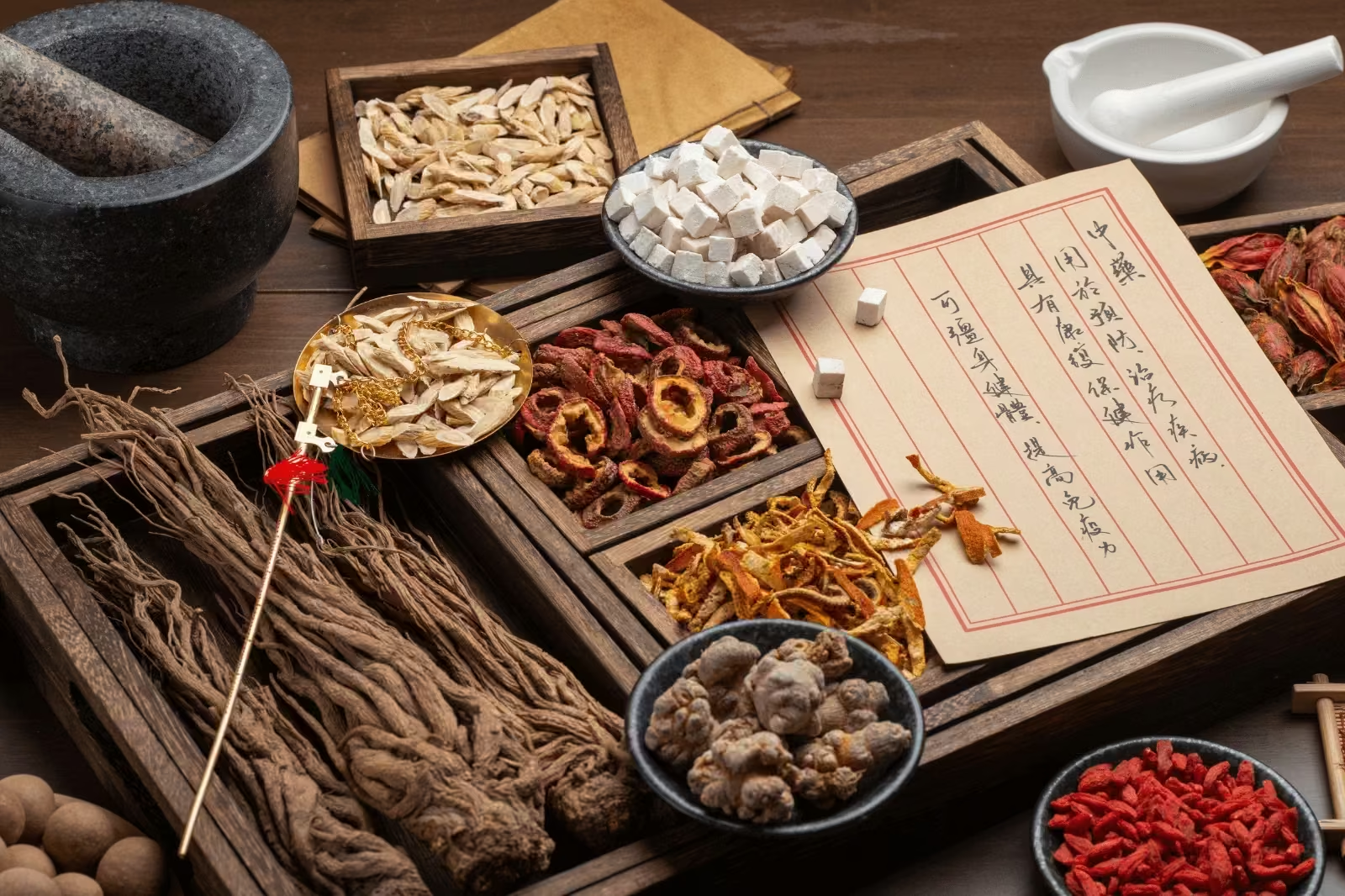
Chinese herbal formulas are made by authenticating and preparing medicinal materials, processing selected herbs, combining them in carefully chosen proportions, and converting the mixture into a decoction, granule, powder, pill, capsule, tablet, or liquid extract.
The finished remedy is only the final stage of a much longer process. Before a formula reaches a patient, its ingredients may be cultivated for years, harvested during a specific season, cleaned, dried, sliced, traditionally processed, tested for quality, and accurately weighed. A qualified practitioner then selects and combines those ingredients according to the person’s presentation, health history, and intended preparation method.
Understanding this process helps explain why Chinese herbal medicine is not simply a collection of dried plants. Each formula is a deliberately constructed preparation whose quality depends on botanical identity, processing method, ingredient proportions, extraction, manufacturing, storage, and professional oversight.
A Chinese herbal formula generally moves through eight connected stages:
The exact pathway varies from one medicinal substance to another. A root intended for a traditional decoction may be washed, softened, sliced, dried, and dispensed as prepared pieces. The same root may instead be extracted in water, concentrated, dried into a powder, and packaged as granules.
Some ingredients also require specialized processing before they are considered appropriate for use. As a result, two products made from the same plant species may not be identical if they were harvested, processed, extracted, or manufactured differently.
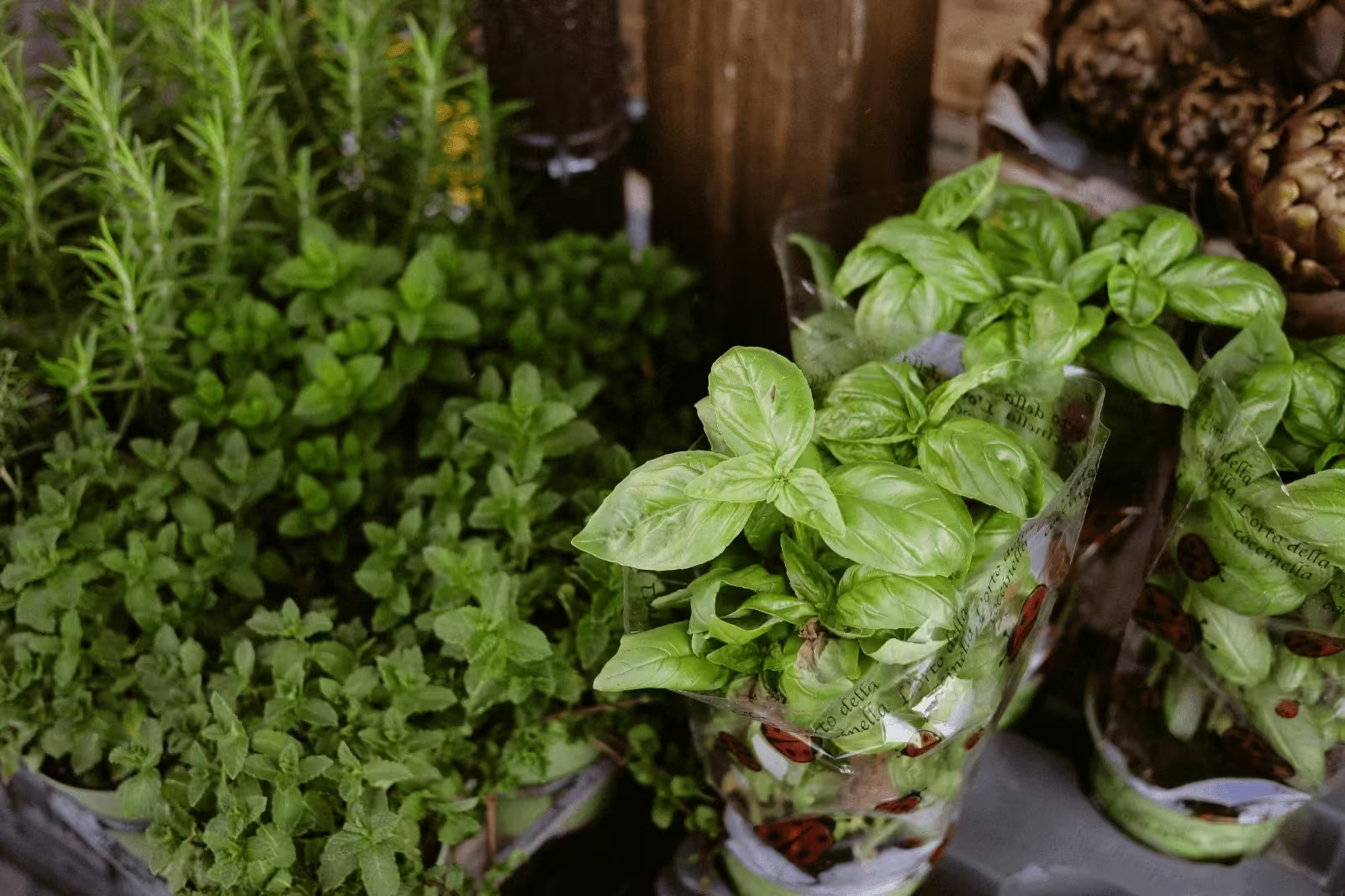
Chinese materia medica includes roots, rhizomes, leaves, stems, flowers, fruits, seeds, bark, resins, and fungi. Traditional formularies may also include mineral or animal-derived substances, although their modern use depends on safety, legality, ethics, sourcing standards, and conservation requirements.
A medicinal plant’s name does not tell the complete quality story. Growing conditions can influence its physical characteristics and chemical composition.
Important factors include:
Certain medicinal materials are traditionally associated with specific geographic production regions. Similar to agricultural terroir, local climate, soil, cultivation practices, and harvesting traditions may affect the final quality of the material.
Harvest timing is also important. Flowers may be collected before they fully open, fruits at a defined stage of ripeness, and roots after the plant has stored sufficient material underground. Once harvested, herbs must be handled promptly to reduce deterioration, excess moisture, mold growth, insect damage, and contamination.
Before a medicinal material is used, its identity should be confirmed. Authentication establishes the correct species, medicinal part, and processed form.
This step is essential because related plants may look similar while having different chemical profiles, traditional applications, or safety considerations.
Identification may involve:
DNA-based testing can provide useful supporting evidence in some cases. However, it does not replace botanical and chemical evaluation. Processing may degrade genetic material, and DNA testing alone cannot show the concentration of important compounds or confirm that a sample is free from contaminants.
After authentication, the material is sorted and graded. Soil, stones, damaged pieces, nonmedicinal plant parts, and foreign matter are removed. Lots may be graded according to size, color, aroma, texture, moisture content, origin, or other recognized quality characteristics.
Modern testing programs may also screen incoming materials for:
These controls are important because medicinal herbs contain biologically active compounds and require more careful evaluation than ordinary dried food ingredients.
Freshly harvested herbal materials are often too bulky, moist, hard, or inconsistent to use directly in a formula. They must first be converted into a stable and dispensable form.
Cleaning may involve washing, brushing, scraping, peeling, sieving, or removing unwanted roots, stems, husks, or other structures.
The objective is to eliminate soil and unnecessary material while preserving the intended medicinal portion.
Not every herb is cleaned in the same way. Excessive washing can damage delicate flowers or remove water-soluble compounds, while insufficient cleaning may leave soil or foreign material behind. The method must therefore match the physical characteristics of the herb.
Hard roots, rhizomes, bark, and woody stems may be moistened or briefly soaked before cutting. This makes them easier to slice evenly without crushing or splintering.
Depending on the material, herbs may be prepared as:
Cutting increases the surface area exposed to water during decoction or extraction. Pieces that are too large may release their constituents unevenly, while extremely fine particles may make filtration difficult or cause sensitive compounds to deteriorate more rapidly.
Prepared materials must be dried to a suitable moisture level before storage.
Traditional drying methods include sun drying and shade drying. Modern facilities may use temperature-controlled drying rooms, low-temperature ovens, dehumidification systems, or specialized industrial equipment.
The drying process affects more than shelf life. Temperature, airflow, light exposure, and duration may influence color, aroma, volatile compounds, texture, and chemical stability.
The resulting prepared materials are commonly called decoction pieces. These are cleaned, cut, dried, and sometimes specially processed substances that can be weighed directly into prescriptions.
Pao Zhi is the specialized preparation of Chinese medicinal materials before they are prescribed or manufactured into finished remedies.
It takes place after harvesting and basic cleaning, but before final dispensing. Depending on the herb, processing may involve heat, moisture, fermentation, mineral treatment, or the addition of a traditional processing substance.
Common Pao Zhi methods include:
The method is herb-specific. Honey, vinegar, ginger, salt water, or wine is not added casually or for flavor alone. The adjunct, temperature, preparation time, and endpoint are selected according to established processing standards.
Pao Zhi may be used to:
Processing may change volatile oils, alkaloids, glycosides, tannins, organic acids, sugars, and other constituents. The degree and importance of these changes vary by herb and preparation method.
A single medicinal substance may be available in raw, fried, charred, honey-prepared, wine-prepared, or vinegar-prepared forms. These versions may have different names, appearances, aromas, chemical profiles, and traditional uses.
For that reason, a prescription should clearly identify the required form. Replacing a processed ingredient with the raw version may change the balance and intended function of the formula.
Pao Zhi is therefore not a cosmetic finishing step. It is part of the medicinal identity of the ingredient.
The formula is selected after the practitioner evaluates the individual, not simply after matching one herb to one symptom.
The assessment may include:
In Traditional Chinese Medicine (TCM), these findings are organized into a clinical pattern. The practitioner then selects a classical formula, modifies an established prescription, or constructs a customized combination.
A classical formula is an established herbal combination documented in traditional medical literature. Its ingredients and proportions reflect a defined therapeutic strategy.
Classical formulas are not necessarily used unchanged. They may serve as a starting framework that is adjusted to fit the person’s current presentation.
A modified formula keeps the central strategy of an established prescription while adding, removing, or changing ingredients.
Modifications may address differences in symptom severity, constitution, digestion, sleep, pain, temperature, or other clinically relevant features.
A fully customized formula is constructed for a specific person. It may draw from several traditional strategies while using a focused group of ingredients selected for the current presentation.
Customization does not mean adding as many herbs as possible. A well-designed formula should remain coherent, purposeful, and easy to reassess.
Standardized formulas are manufactured in fixed proportions and sold in a ready-made form. They may be supplied as pills, tablets, capsules, liquids, or granules.
These products are sometimes called Chinese patent medicines. In this context, “patent” refers to a standardized prepared formula rather than an exclusive legal patent.
Traditional formula analysis often describes ingredients according to four functional roles.
The chief ingredient addresses the formula’s principal therapeutic objective. A formula may contain one chief herb or several ingredients that share the primary role.
Deputy ingredients support the chief or address an important secondary part of the presentation.
Assistant ingredients may reinforce the main strategy, moderate another ingredient, reduce an unwanted effect, or address an additional concern.
Envoy ingredients may coordinate the actions of the formula or direct its effects toward a particular functional area according to traditional theory.
This structure is a useful explanatory model, but it is not a rigid numerical formula. Some ingredients perform more than one role, and not every modern prescription fits neatly into four separate categories.
The most important principle is functional coherence. Every ingredient should contribute to the overall strategy.
The amount of each ingredient depends on more than its name.
Relevant considerations include:
Dosage cannot always be transferred directly between raw herbs, concentrated granules, powders, pills, and liquid extracts. Each format may have a different concentration, extraction yield, and serving method.
For this reason, directions should be based on the specific product and prescription rather than copied from a general online source.
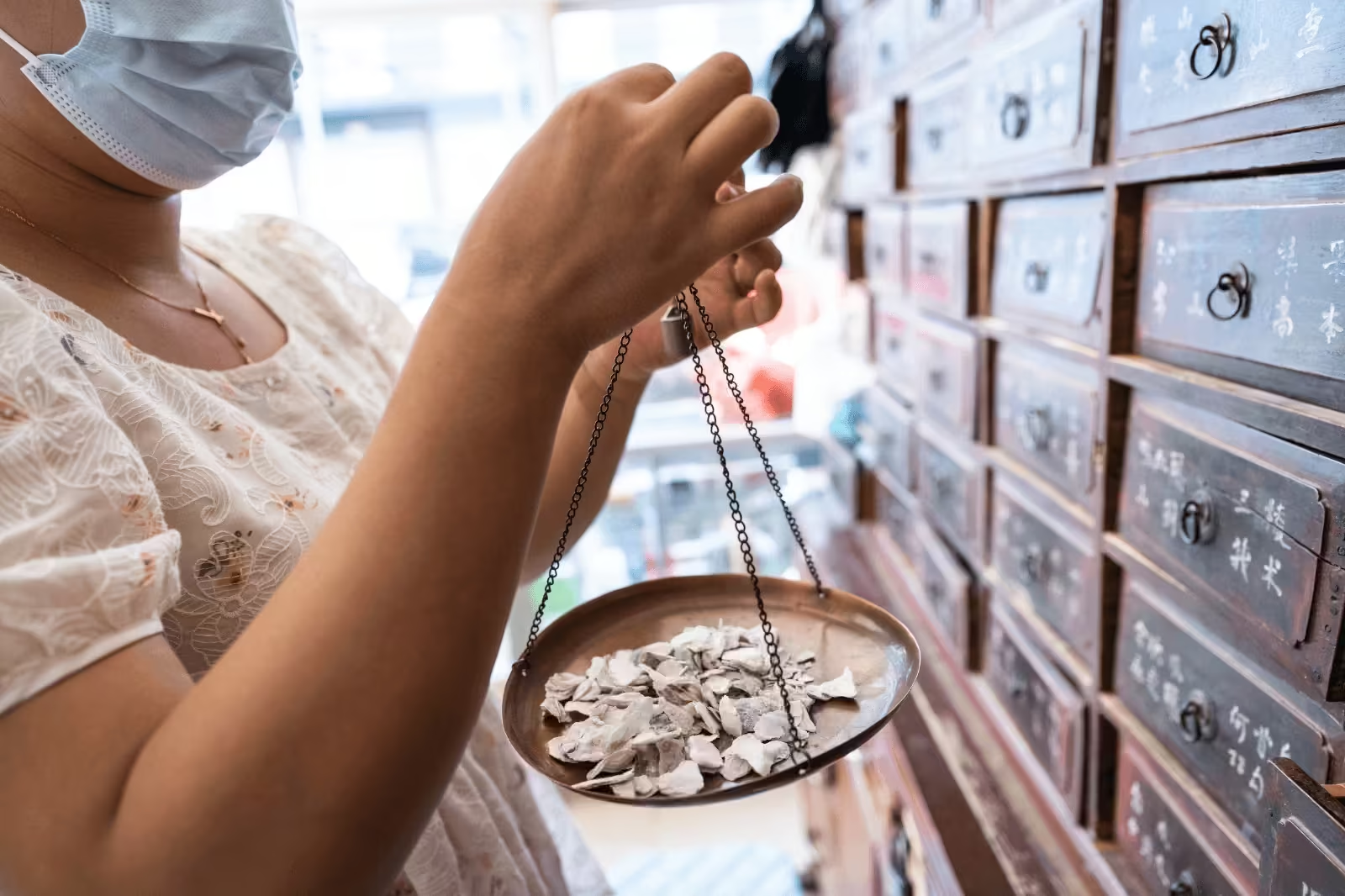
Once the formula has been written, the ingredients are selected, checked, and weighed.
A complete dispensing record may identify:
Accurate weighing is essential because the formula depends on relationships among ingredients. Even when the individual quantities appear small, changing the proportions may alter the intended balance of the prescription.
Clean equipment, organized storage, clear labels, and independent verification can help reduce dispensing mistakes. Facilities should also have procedures for preventing cross-contamination and separating ingredients that require special handling.
Not every ingredient is placed into the pot at the same time.
A prescription may instruct the patient or dispensary to:
These directions affect extraction, texture, aroma, filtration, and the final concentration of certain constituents.
Aromatic herbs may be added late because prolonged boiling can cause volatile compounds to evaporate. Hard materials may be cooked first because they require more time to release extractable components.
Special preparation instructions are therefore part of the prescription, not optional suggestions.
Chinese herbal formulas can be converted into several dosage forms. The choice depends on the ingredients, the treatment strategy, convenience, storage, taste, manufacturing capabilities, and the patient’s needs.
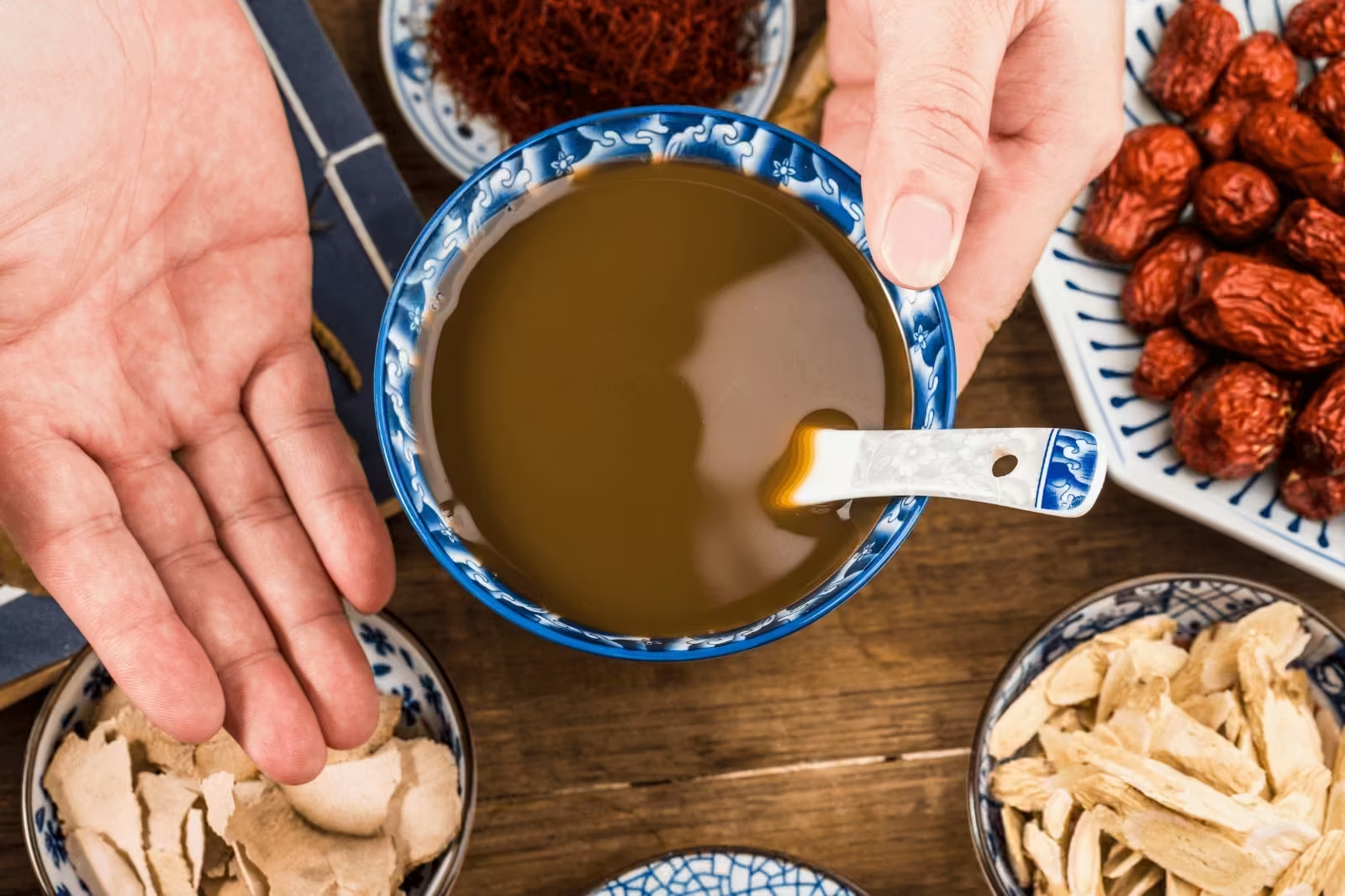
A decoction is made by extracting a measured combination of herbs in water.
A typical process includes:
The cooking time may range from approximately 20 to 60 minutes, although some ingredients require shorter or longer preparation.
Aromatic formulas may be simmered briefly, while dense roots, bark, minerals, or shells may require extended cooking.
Traditional ceramic pots are often used, but glass or suitable stainless steel may also be appropriate. Reactive cookware should generally be avoided unless the practitioner or product instructions state otherwise.
Raw decoctions allow a high level of customization. The practitioner can change individual ingredients and proportions without relying on a fixed manufactured product.
They also preserve the traditional process of extracting the complete formula together.
Decoctions require soaking, cooking, straining, refrigeration, and reheating. They can have a strong taste and aroma, and the preparation process may be difficult for people with demanding schedules.
The prepared liquid also has a limited storage life and should be handled according to the practitioner’s instructions.
Granules provide a more convenient way to prepare an herbal drink.
They are generally made by extracting medicinal materials in water, concentrating the liquid, and drying it into a soluble powder or granule.
A typical manufacturing sequence includes:
Granules are usually dissolved in warm or hot water before use.
Single-herb granules are manufactured separately and later combined according to a customized prescription.
This format allows the practitioner to change individual ingredients and proportions more easily.
Whole-formula granules are made by extracting the complete combination of herbs together before drying.
This more closely reflects the traditional practice of cooking the ingredients in one pot, although the final product still differs from a freshly prepared home decoction.
A label may include an extraction ratio such as 5:1 or 10:1. This describes an input-to-output relationship, but it does not prove that the finished product contains a specific amount of every meaningful compound.
Extraction efficiency differs among herbs and chemical constituents. Carriers or excipients may also be added to improve drying, flow, stability, or solubility.
The practitioner must therefore consider the actual product specifications rather than relying on a ratio alone.
Herbal powders may be made by grinding dried medicinal materials or by drying an extracted liquid and milling the resulting concentrate.
These are not the same type of preparation.
A direct powder contains finely milled plant material. It retains much of the original solid matter, including components that may not dissolve in water.
An extract powder is produced after selected compounds have been transferred into water or another permitted solvent. The liquid is then concentrated and dried.
The final powder may contain an approved carrier used during the drying process.
Because the production methods differ, a direct powder and an extract powder should not be assumed to have the same concentration, dose, or clinical use.
Traditional pills are produced by combining herbal powders or extracts with a binding substance and shaping the mixture into small spheres.
Water pills use water or a water-based binder to form powdered herbs into compact pills. They are typically small and taken in multiple units per serving.
Honey pills combine herbal powder with honey. They are often larger, softer, and slower to break down than water pills.
Extract pills may contain concentrated herbal extract, powdered material, or both. The mixture is formed, dried, and sometimes polished before packaging.
Modern equipment can automate blending, rolling, sizing, drying, and inspection to improve consistency.
Capsules and tablets offer convenient, portable dosing.
Capsules may contain:
Manufacturers control particle size, blend uniformity, and capsule fill weight to reduce variation among doses.
Tablets are made by compressing a prepared powder or granulate under controlled pressure.
The formula may include binders, disintegrants, flow agents, coatings, or other approved inactive ingredients. These help the tablet maintain its shape, move through manufacturing equipment, and break apart appropriately after use.
Finished tablets may be tested for hardness, weight variation, disintegration, and packaging integrity.
Some Chinese herbal formulas are supplied as concentrated liquids, syrups, thick pastes, or tincture-style preparations.
Manufacturers may use water, alcohol, glycerin, or a combination of solvents depending on the ingredients and intended preparation.
After extraction, the liquid may be:
Liquid remedies may be useful for people who have difficulty swallowing pills or capsules. However, they require clear dosing instructions, suitable preservation, stable packaging, and proper storage.
Not all Chinese herbal remedies are taken internally.
Herbal materials may also be prepared as:
External formulas require their own preparation, safety, labeling, and quality standards.
A product intended for topical use should not be swallowed unless it is also specifically labeled and prescribed for internal administration.
No single herbal format is best for every person or every formula.
Raw herbs allow the practitioner to adjust individual ingredients and proportions with precision. The entire combination is cooked together, which reflects the traditional preparation method.
The main disadvantages are preparation time, strong taste, limited portability, and the short storage life of the finished liquid.
Single-herb granules can be combined into individualized formulas without requiring the patient to cook raw herbs every day.
They are portable, relatively easy to prepare, and have a longer shelf life when stored correctly. Their quality depends heavily on the original herbs, extraction method, drying conditions, carrier content, and manufacturer controls.
These forms are easy to transport, store, and take. They are often suitable for standardized formulas and longer-term use.
However, fixed products are generally less customizable than raw herbs or individually combined granules. The amount of herbal material per unit may also be lower than users assume, so the serving instructions should be followed carefully.
The appropriate choice depends on the prescription, product quality, lifestyle, taste tolerance, storage conditions, and practitioner’s clinical judgment.
Quality control begins before manufacturing and continues through packaging, storage, and distribution.
A finished product can only be as reliable as the ingredients and processes used to make it.
Before herbs enter production, manufacturers may establish specifications for:
Materials may be quarantined until testing and documentation have been reviewed.
A certificate of analysis may summarize test results, but it should not be viewed as meaningful unless the sampling methods, laboratory procedures, specifications, and supplier controls are reliable.
During production, manufacturers may monitor:
These controls help reduce batch-to-batch variation.
For example, excessive drying temperatures may damage heat-sensitive compounds, while inadequate drying may allow moisture-related deterioration.
Depending on the dosage form, the completed product may be tested for:
Not every herbal constituent can be measured routinely. Manufacturers may instead use chemical fingerprints or selected marker compounds to help confirm consistency.
A marker compound does not necessarily represent the product’s full therapeutic activity. It serves primarily as a quality-control reference.
A controlled herbal product should be traceable from the finished container back to the ingredients used.
Relevant records may include:
Traceability allows a manufacturer to investigate problems and identify affected batches if contamination, labeling errors, or manufacturing failures are discovered.
Extraction transfers selected constituents from herbal materials into water or another solvent. It does not transfer every substance equally.
Water can extract many:
Oils, resins, and other poorly water-soluble substances may behave differently.
Heat softens plant tissue and helps release extractable compounds. At the same time, prolonged heating may transform or degrade heat-sensitive substances.
Volatile aromatic compounds can evaporate, which is why certain herbs are added near the end of cooking or prepared with the lid on.
When several herbs are cooked together, their compounds share the same extraction environment.
One ingredient may change the acidity, mineral content, viscosity, or chemical behavior of the liquid. Compounds may become more soluble, less soluble, transformed, bound to other substances, or deposited as sediment.
This means that a formula extracted as a complete mixture may not be chemically identical to separately extracted single herbs combined afterward.
Neither method is automatically better in every situation. The important issue is understanding how the product was manufactured and using it according to appropriate professional guidance.
Extraction ratios are often presented as evidence of product strength.
A 10:1 ratio may suggest that 10 units of raw material were used to produce one unit of extract. However, this number does not show:
Two products with the same printed ratio may differ considerably in composition and quality.
An extraction ratio should therefore be interpreted alongside the ingredient identity, manufacturing method, serving size, carrier content, testing, and professional dosing instructions.
Customized herbal treatment is often an iterative process.
A practitioner may prescribe a formula for a defined period and then evaluate changes in symptoms, digestion, sleep, energy, comfort, and overall tolerance.
An adjustment may involve:
Patients should not make these adjustments independently. Changing one ingredient can affect the balance, concentration, and safety of the entire formula.
A professionally supplied herbal product should provide enough information to identify, use, and trace it.
Look for:
Products should also be stored in conditions that protect them from heat, direct sunlight, moisture, insects, and contamination.
Avoid products that conceal their ingredients, make exaggerated disease-treatment promises, lack basic manufacturer information, or have damaged or unsealed packaging.
Chinese herbal formulas contain biologically active substances. Natural origin does not make a product automatically safe or suitable for every person.
Potential concerns include:
All health care providers should be informed about the herbs, prescription medications, over-the-counter medicines, vitamins, and supplements being used.
Additional caution is appropriate for:
Chinese herbs should not be used to delay urgent medical assessment for severe pain, difficulty breathing, neurological symptoms, heavy bleeding, high fever, persistent vomiting, loss of consciousness, or another potentially serious condition.
Chinese herbal granules are typically made by washing and preparing authenticated herbs, extracting them in hot water, filtering the liquid, and concentrating the extract. The concentrated liquid is then spray-dried or otherwise dehydrated into a powder or granule. Some manufacturers add a carrier, such as starch or another approved excipient, to improve stability, drying, and solubility.
Most Chinese herbal medicines are derived from plants, including roots, rhizomes, leaves, flowers, bark, fruits, and seeds. Traditional Chinese materia medica may also include fungi, minerals, and certain animal-derived substances, although modern use depends on safety, legality, ethical sourcing, and conservation standards.
No single country can objectively be said to have the best herbal medicine. China has one of the world’s most extensive and systematically documented herbal traditions, while India is known for Ayurveda, and many other regions have established botanical medicine systems. Product quality depends more on correct identification, responsible sourcing, processing standards, testing, manufacturing controls, and professional guidance than on country of origin alone.
Raw Chinese herbs are dried medicinal pieces that are usually soaked and simmered in water to make a decoction. Herbal granules are concentrated extracts that have already been cooked, filtered, and dried. Raw herbs offer traditional preparation and extensive customization, while granules are generally faster, more portable, and easier to prepare.
Granules and raw herbs may both be used effectively when they are properly prescribed and sourced, but they are not automatically equivalent. Their composition can differ depending on herb quality, extraction methods, concentration, added carriers, dosage, and whether the herbs were extracted together or separately. The appropriate format depends on the formula and the practitioner’s clinical judgment.
Chinese herbal granules usually remain stable until the manufacturer’s expiration or best-by date when stored in a tightly sealed container away from heat, light, and moisture. Granules that have changed color, developed an unusual odor, become damp, or formed signs of mold should not be used.
A finished Chinese herbal formula represents a complete chain of decisions.
The medicinal species must be correct. The appropriate plant part must be harvested at the right stage, cleaned, stabilized, cut, and processed. Each ingredient must then be selected in a purposeful proportion and converted into a suitable dosage form under appropriate quality controls.
This process explains why responsible herbal care involves more than choosing a product from a shelf. Ingredient identity, processing method, formula design, extraction, manufacturing, dosage, storage, and personal health context all matter.
At ACA Acupuncture & Wellness, Chinese herbal recommendations are developed with careful attention to each patient’s health history, current concerns, medications, and treatment goals. Schedule a consultation to learn whether a professionally selected Chinese herbal formula may be an appropriate part of your personalized wellness plan.
Sources:
U.S. Food and Drug Administration. (2010). Current good manufacturing practice in manufacturing, packaging, labeling, or holding operations for dietary supplements: Small entity compliance guide.
Wang, M., Franz, G., Meissner, A., & others. (2022). Key quality factors for Chinese herbal medicines entering the European Union market. Chinese Medicine, 17.
Wu, X., Wang, S., Lu, J., Jing, Y., Li, M., Cao, J., Bian, B., & Hu, C. (2018). Seeing the unseen of Chinese herbal medicine processing (Paozhi): Advances in new perspectives. Chinese Medicine, 13, Article 4.

Recent Comments