
In Traditional Chinese Medicine (TCM), fall fatigue is viewed through seasonal changes in Qi and symptom patterns involving breathing, digestion, sleep, and emotional strain. These are traditional explanations, not medical diagnoses or proof that autumn itself causes an energy deficiency.
Shorter daylight hours, busy work schedules, and seasonal stress can make everyday tiredness more noticeable, especially in fast-paced cities like New York. You may find mornings harder, experience afternoon energy dips, or feel drained by the end of the day. Alongside a medical assessment when needed, acupuncture may be considered for symptoms such as pain or sleep difficulties that accompany fatigue.
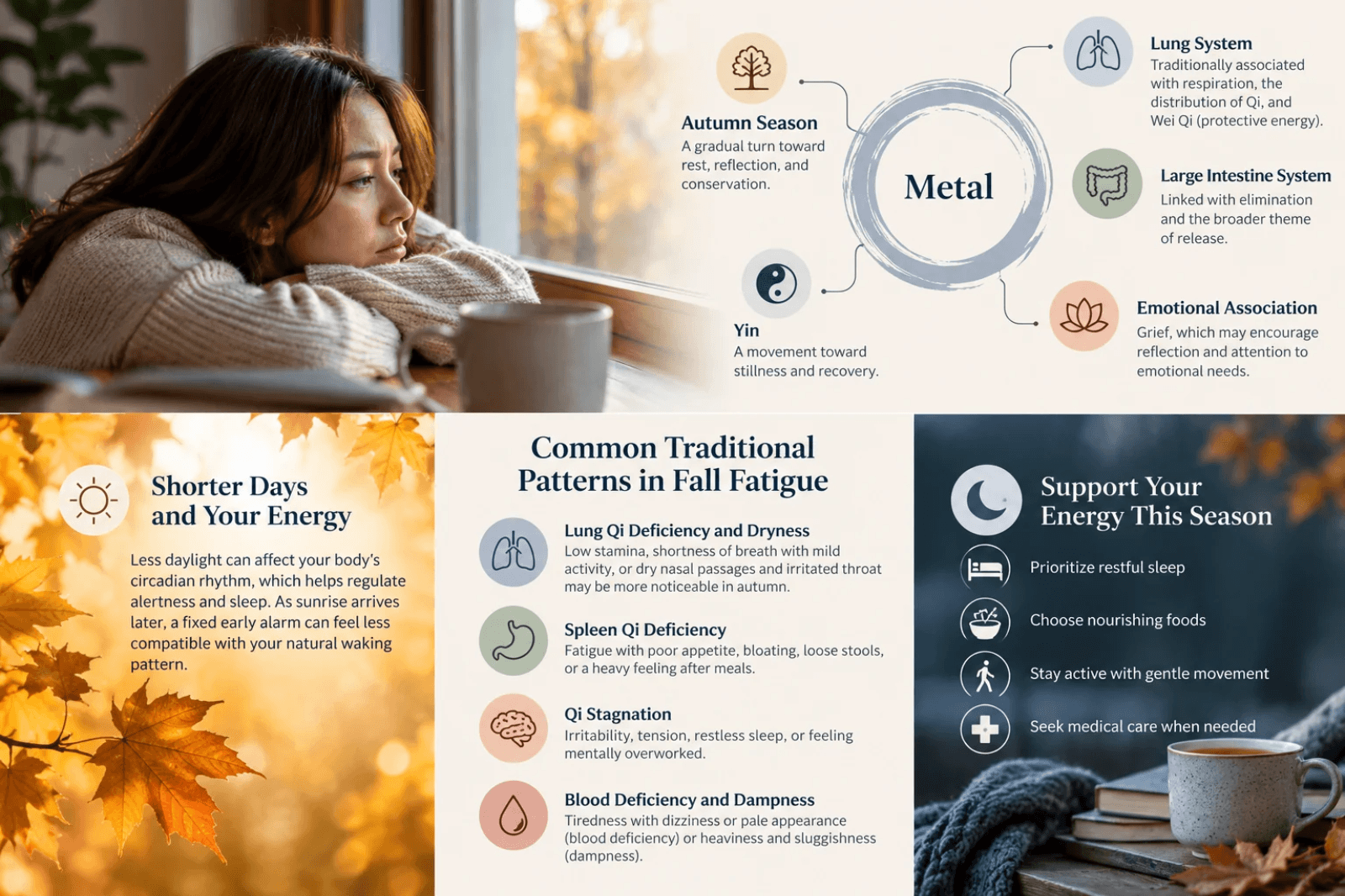
In traditional Chinese medicine, autumn marks a gradual shift from summer’s activity toward rest, reflection, and recovery. The season is associated with the Metal element and the Lung and Large Intestine systems.
The Lung system is traditionally linked to breathing, Qi circulation, and the body’s protective energy, known as Wei Qi. The Large Intestine is associated with elimination and letting go. These concepts are part of TCM rather than medical diagnoses.
Autumn also represents a shift toward Yin, which emphasizes rest and restoration, rather than summer’s active Yang energy. This seasonal perspective encourages slowing down, getting enough sleep, and allowing time for recovery.
The Metal element is also associated with grief and emotional reflection. If you’re experiencing stress or major life changes, fall can be a helpful reminder to check in with your emotional well-being and make time for activities that help you relax.
Shorter days can affect the body’s circadian rhythm, or internal clock, which helps regulate sleep and alertness. With later sunrises and earlier sunsets, waking up in the morning or maintaining your usual energy levels may feel more difficult.
Sleep quality matters, too. A recent national health survey found that 30.5% of U.S. adults averaged fewer than seven hours of sleep per day. Although this statistic is not specific to fall, getting too little rest may make seasonal tiredness more noticeable.
To support better sleep during fall, try getting natural daylight in the morning, maintaining consistent sleep and wake times, and limiting caffeine later in the day. If sleep difficulties continue, consider speaking with a healthcare professional rather than assuming they’re caused by seasonal changes.
While TCM explains seasonal tiredness through Qi patterns, modern medicine also recognizes the role of daylight, sleep habits, and biological rhythms in everyday energy levels.
In TCM, fatigue may be associated with different patterns depending on symptoms such as low energy, digestive discomfort, poor sleep, or emotional stress. Understanding these traditional patterns can encourage greater awareness of your daily habits and overall well-being.
In TCM, Lung Qi deficiency may be associated with low stamina, a weak voice, or feeling easily exhausted. Fall’s cooler, drier air and indoor heating can also contribute to dry nasal passages, throat irritation, and uncomfortable skin.
Practical tip: Drink water regularly, maintain comfortable indoor humidity, and consider warm soups or broths to help you stay hydrated. Persistent symptoms or breathing difficulties should be evaluated by a healthcare professional rather than attributed to a TCM imbalance.
The Spleen system in TCM is associated with processing nourishment. Fatigue accompanied by poor appetite, bloating, loose stools, or heaviness after meals may be interpreted as Spleen Qi deficiency.
Practical tip: Eat balanced meals at regular times, avoid skipping meals, and choose nourishing foods that are easy to prepare. Oatmeal, vegetable soups, and whole grains can help support a consistent eating routine. Persistent digestive symptoms deserve medical attention.
Qi stagnation is a traditional TCM pattern associated with irritability, tension, restless sleep, and mental exhaustion. Busy schedules and ongoing stress can also affect sleep, appetite, and energy levels.
Practical tip: Take short breaks throughout the day, practice deep breathing, or try gentle movement such as walking, tai chi, or stretching. Making time to unwind after work may help you manage everyday stress. Persistent emotional or mental health concerns should be discussed with a qualified professional.
In TCM, Blood deficiency may be associated with tiredness, dizziness, pale appearance, or disturbed sleep, while Dampness is traditionally linked to heaviness, sluggishness, and digestive discomfort.
Practical tip: Focus on regular meals, adequate sleep, hydration, and gentle physical activity to support your overall well-being. These TCM patterns are not medical diagnoses, and symptoms such as persistent fatigue or dizziness may require evaluation for conditions such as anemia.
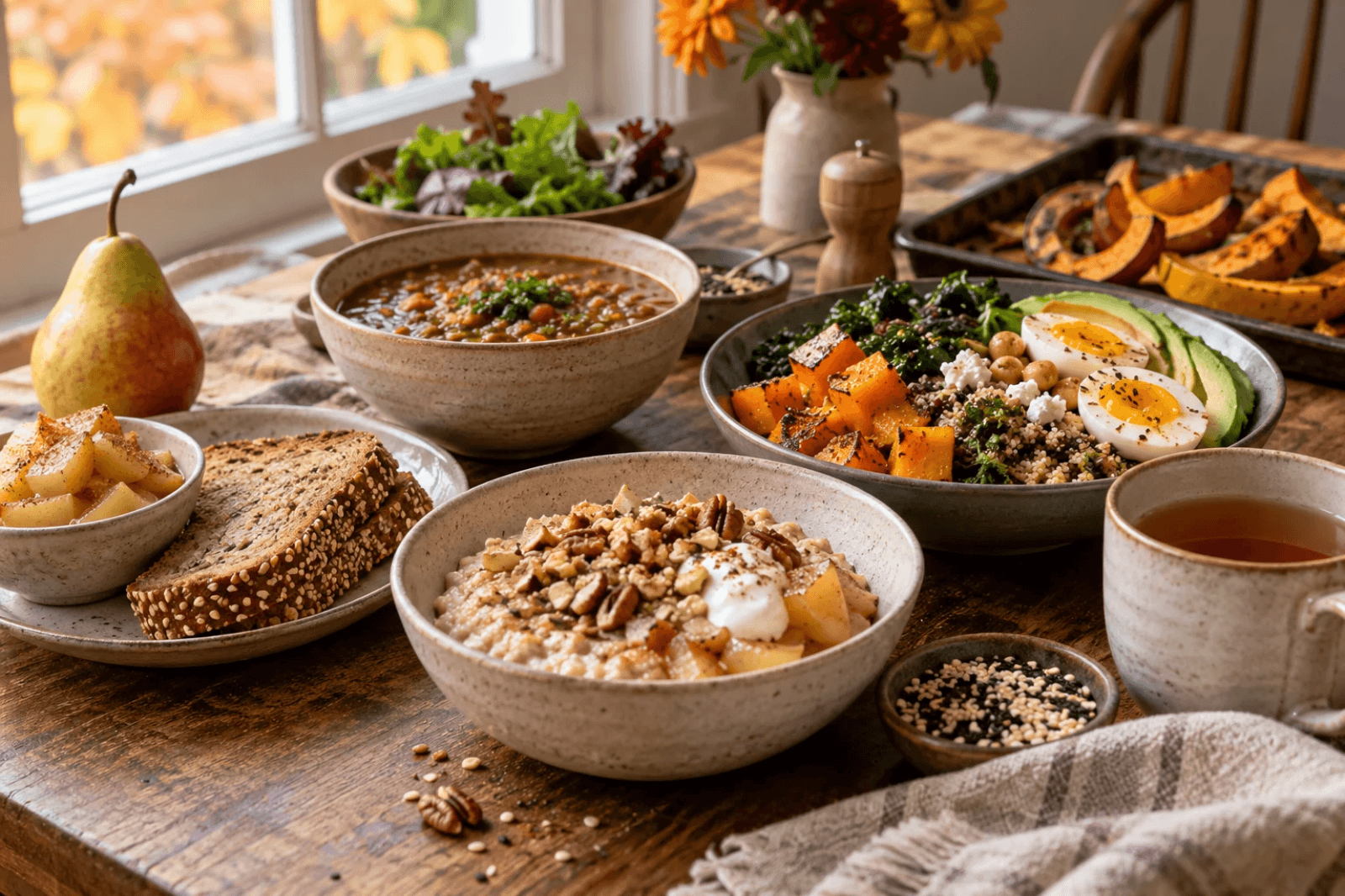
An effective fall eating routine supplies regular nourishment rather than relying on one food to correct a traditional imbalance. TCM food traditions often favor cooked dishes and ingredients described as warming or moistening. These can fit naturally into a balanced, nutritious diet.
Start with a breakfast that includes protein and fiber, such as oatmeal with nuts and yogurt or tofu with whole-grain toast. For lunch, a lentil soup or grain bowl with vegetables provides a meal that’s easy to prepare ahead. At dinner, roasted squash, greens, and fish, eggs, beans, or chicken make a filling combination.
Pears, cooked apples, sesame, and light broths are commonly included in traditional autumn food recommendations. These foods can complement a balanced diet, while drinking enough water and maintaining comfortable indoor humidity may help with seasonal dryness.
Notice how you feel between meals. Long gaps without eating can leave some people hungry and distracted, while very heavy lunches may lead to afternoon sleepiness. Try preparing meals ahead, keeping nutritious snacks available, and eating at consistent times. Choose foods that work for your needs rather than following strict rules about temperature, as raw fruits and vegetables remain nutritious throughout fall.
Energy management during autumn begins with simple habits you can maintain, even on busy workdays. Instead of making major lifestyle changes, focus on small adjustments that support rest and recovery.
Get outside after waking when daylight is available. A walk to the bus stop, a short morning stroll, or a break outdoors can provide natural light and gentle movement. Keep your wake-up time reasonably consistent, including on weekends, to help maintain a regular sleep schedule.
For activity, choose movement that feels manageable. Walking, relaxed cycling, tai chi, and qigong are gentle options for days when a demanding workout feels unappealing. Qigong combines slow movements, breathing, and focused attention, making it a simple way to incorporate mindful activity into your routine.
Protect the final part of your evening from unnecessary stimulation. Limiting bright screens, avoiding late caffeine, and maintaining a regular bedtime may help improve sleep quality. Even a few minutes of quiet reading, stretching, or relaxation before bed can make your evening routine feel more restful.

Acupuncture may play a supportive role when seasonal tiredness is accompanied by stress, muscle tension, or sleep difficulties. Although it has not been proven to treat fall fatigue directly, addressing related symptoms may help improve comfort and overall well-being.
At ACA Acupuncture & Wellness, we take a personalized approach by assessing your sleep patterns, stress levels, digestion, and changes in energy. We use these insights, along with traditional TCM assessments, to develop a treatment plan tailored to your individual needs.
Research supports acupuncture for certain pain conditions. Through our acupuncture treatments, we aim to help manage muscle tension and discomfort that may contribute to stress and disrupted sleep. Sessions may also encourage relaxation, although evidence for acupuncture as a treatment for insomnia or unexplained fatigue remains limited.
We may also incorporate herbal formulas into an individualized care plan when appropriate. Because herbs can interact with medications, we recommend consulting a healthcare professional before use, especially during pregnancy or when managing an existing medical condition.
Seasonal affective disorder is a form of depression with a recurring seasonal pattern. Tiredness can be part of it, but the condition also involves changes in mood and the ability to enjoy or manage everyday life.
Warning signs include persistent sadness, loss of interest, social withdrawal, changes in appetite, oversleeping, or difficulty concentrating. The pattern can emerge in fall or winter and should be assessed by a mental health professional rather than interpreted only as seasonal Qi depletion.
Treatment can include psychotherapy, antidepressant medication, and light therapy when appropriate. Light boxes are not interchangeable with ordinary room lighting, and people with certain eye conditions or bipolar disorder should seek medical guidance before using them. Acupuncture is not a replacement for depression treatment.
Fatigue that lasts, worsens, or interferes with daily function should be assessed rather than explained away by the season. Possible causes include iron-deficiency anemia, thyroid disorders, sleep apnea, infection, medication effects, and mental health conditions.
A healthcare professional may ask about snoring, breathing changes, heavy menstrual bleeding, unexplained weight changes, or recent illness. A clinician may recommend blood tests or sleep assessment. Seek urgent care if unusual fatigue occurs with chest pain, fainting, severe breathing difficulty, or sudden confusion.
Before an appointment, make a brief record of when tiredness appears and what else changes with it. Include any new medicines and whether sleep leaves you feeling refreshed. This is more useful than trying to assign yourself a Qi pattern from a single symptom.
Yes. Daylight hours may shorten before temperatures change much. Your sleep schedule and daily routine can respond to that shift even during a stretch of mild weather.
No. Practitioners may consider different traditional patterns, and many cases of tiredness have causes unrelated to TCM. One symptom cannot establish a diagnosis.
Yes, within TCM, Lung patterns may involve stamina or voice as well as breathing. The terminology refers to a traditional assessment, not proof of an anatomical lung problem.
No. Cooked dishes are common in TCM autumn traditions, but raw produce can still be part of a healthy diet. Food quality and overall nutritional intake matter more than temperature alone.
There is no research-backed treatment schedule for fall fatigue. If you try acupuncture for a related concern, your practitioner should discuss reasonable goals and review your response rather than promise a fixed number of visits.
It can, although recurrence does not identify the cause. Track when symptoms begin, whether your mood changes, and how much daily life is affected. Discuss recurring symptoms with a healthcare professional.
A changing season can make you more aware of how much rest your usual routine allows. It can also reveal concerns that deserve attention beyond a change in habits. Understanding what’s affecting your energy is the first step toward finding an approach that suits your needs.
At ACA Acupuncture & Wellness, we take time to understand your health history, sleep patterns, stress levels, and overall well-being. Depending on your symptoms, our practitioners may recommend acupuncture, TuiNa massage, or cupping therapy to address related concerns such as muscle tension, pain, or difficulty relaxing. We also offer moxibustion, reflexology, ear seeding, individualized herbal care, and physical therapy when appropriate. Our goal is to help you identify suitable complementary care options while encouraging medical evaluation for persistent or unexplained fatigue.
Don’t let ongoing tiredness interfere with the activities you enjoy. Contact us today to schedule a personalized consultation. Our practitioners will take time to understand your concerns, explain your treatment options, and help you take the next step toward better rest, greater comfort, and improved well-being throughout the changing seasons.
Sources:
Ng, A. E., Black, L. I., & Adjaye-Gbewonyo, D. (2026). Short sleep duration and sleep difficulties among adults: United States, 2024 (NCHS Data Brief No. 559). National Center for Health Statistics.
National Center for Complementary and Integrative Health. (2022). Acupuncture: Effectiveness and safety.
National Institute of Mental Health. (n.d.). Seasonal affective disorder.

Recent Comments