


LI4, also called Hegu, Large Intestine 4, or Union Valley, is an acupuncture point on the back of the hand between the thumb and index finger. It is commonly selected for headaches, facial and jaw discomfort, tooth pain, nasal symptoms, and broader pain patterns. In traditional Chinese medicine, LI4 is the Yuan-Source point of the Large Intestine channel and a command point for the face and mouth. Professional treatment usually combines LI4 with other points selected according to the patient’s complete health pattern.
Although LI4 is easy to approximate at home, professional acupuncture and self-applied acupressure are not interchangeable. The point also has important precautions, particularly during pregnancy.
LI4 is the fourth recognized point on the Large Intestine channel in standardized acupuncture nomenclature. Its Chinese name, Hegu, is often translated as “Joining Valley” or “Union Valley.” The name describes the valley-like area formed between the thumb and index finger.
Traditional Chinese medicine classifies LI4 as the Yuan-Source point of the Large Intestine channel. Yuan-Source points are traditionally understood as locations where the channel’s source Qi can be accessed and regulated.
LI4 is also recognized as one of the four traditional command points. Its command area is the face and mouth, which helps explain why practitioners frequently consider it for headaches, toothaches, jaw tension, nasal congestion, and other symptoms affecting the head and face.
The “Large Intestine” name refers to the channel system in traditional Chinese medicine. It does not mean that pressing LI4 directly stimulates the anatomical large intestine or that LI4 is appropriate for every digestive problem.
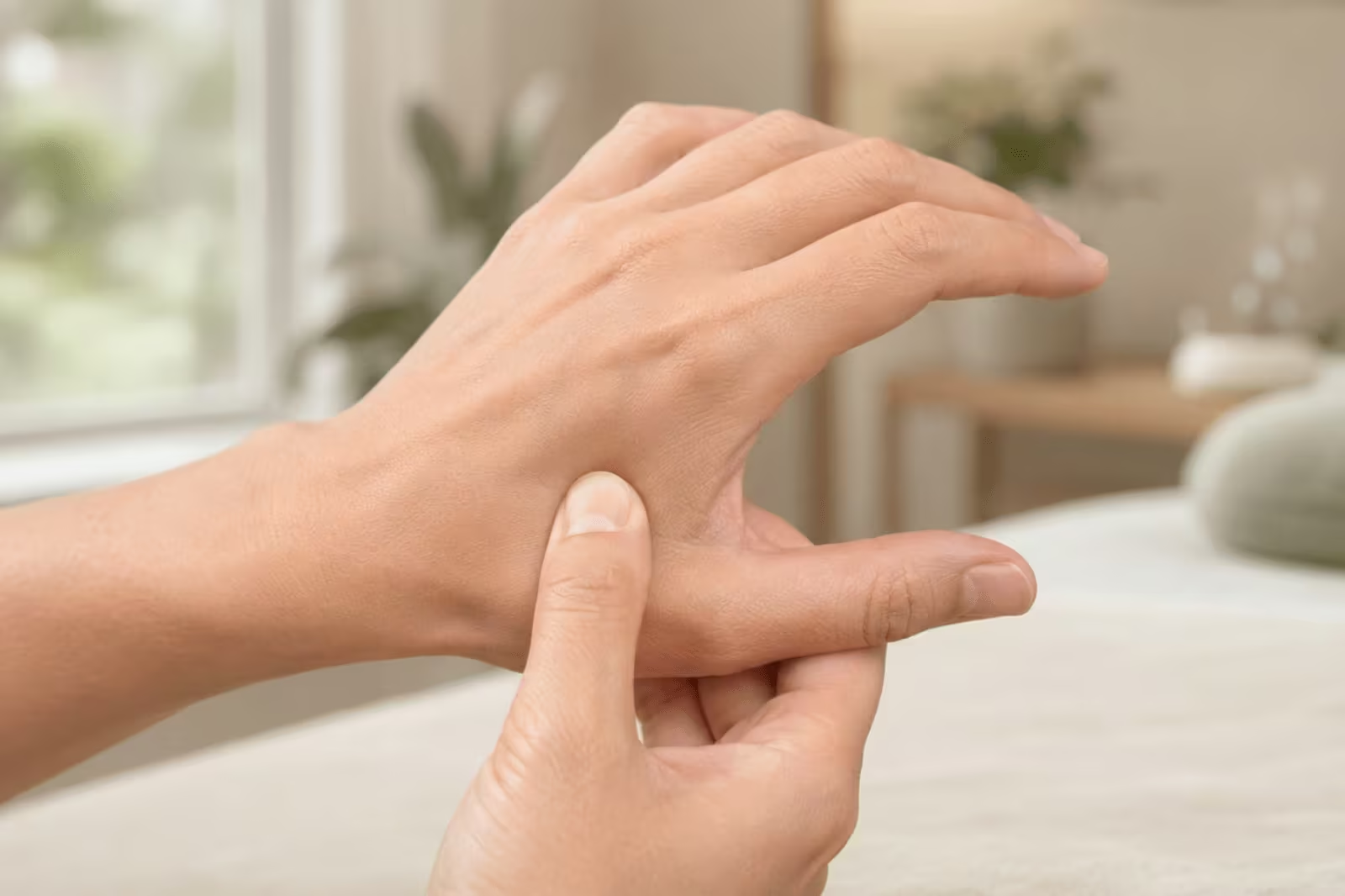
LI4 is located on the dorsum, or back, of the hand. Its standardized location is between the first and second metacarpal bones, approximately at the midpoint of the second metacarpal bone and toward its radial side.
In simpler terms, it lies in the fleshy area between the base of the thumb and index finger. However, LI4 is not located directly in the loose webbing between the fingers. It sits farther into the hand, over the first dorsal interosseous muscle.
LI4 is positioned near the superficial branch of the radial nerve and vascular branches associated with the radial artery. This anatomical relationship helps describe the structures surrounding the point but does not establish that LI4 can treat a particular medical condition.
You can approximate LI4 using the following steps:
You may notice mild tenderness or a dull, achy sensation when pressing the area. Tenderness does not prove that an organ is unhealthy, that energy is blocked, or that LI4 is the correct point for your symptoms. The area contains muscle, connective tissue, nerves, and blood vessels, so sensitivity can have several explanations.
A licensed acupuncturist uses anatomical landmarks and palpation to identify the point more precisely. The visible muscle-bulge technique is useful for orientation but should not be treated as an exact clinical locating method.
A command point is an acupuncture point traditionally associated with a broad region of the body. LI4’s designated region is the face and mouth.
Traditional channel theory describes the Large Intestine channel as traveling from the hand through the arm, shoulder, neck, face, and nose. This pathway provides the traditional rationale for using a hand point to address symptoms located far from the hand.
LI4 may therefore be considered when a patient presents with:
The designation does not mean LI4 is a universal solution for every condition involving the face. A practitioner may combine it with local points and other distal points based on the location, cause, duration, and traditional pattern associated with the symptoms.
The following actions describe LI4 within traditional Chinese medicine theory. They should not be interpreted as claims that one point has been scientifically proven to treat every corresponding disease.
LI4 is traditionally used to move constrained Qi and address pain. This action contributes to its frequent inclusion in treatments for headaches, jaw tension, tooth pain, neck stiffness, and other painful conditions.
Because LI4 is the command point of the face and mouth, practitioners may select it for symptoms involving the teeth, gums, jaw, nose, eyes, throat, or facial tissues.
In TCM, an “Exterior” pattern generally refers to an early presentation associated with symptoms such as chills, fever, nasal congestion, body aches, or a sore throat. LI4 may be included in point combinations intended to release the Exterior and regulate the body’s defensive Qi.
LI4 is traditionally said to clear Heat. Depending on the complete presentation, this action may be considered when redness, swelling, fever, sore throat, or inflammatory-looking symptoms are present.
“Clearing Heat” is a traditional therapeutic concept. It should not be presented as proof that LI4 eliminates an infection or directly lowers systemic inflammation.
Classical point combinations use LI4 differently depending on whether sweating is considered excessive, insufficient, or absent. This illustrates an important feature of Chinese medicine: one point’s intended function can change according to the other points used and the patient’s overall pattern.
LI4 has historically been used in treatments intended to support labor. Evidence concerning acupressure or acupuncture for labor initiation remains limited and inconsistent, and LI4 should never be used to self-induce labor.
Headache relief is one of the most common reasons people use LI4. Practitioners may consider it for tension-type, frontal, temporal, or generalized headaches, especially when muscular tension or facial discomfort is also present.
LI4 may be used through acupressure or as part of a broader acupuncture treatment involving several points and repeated sessions. Its effects can vary depending on the cause of the headache and the person’s overall condition.
A sudden severe headache, a headache after an injury, or a headache accompanied by weakness, confusion, fainting, fever, neck stiffness, visual changes, or difficulty speaking requires prompt medical evaluation.
LI4’s traditional relationship with the face and mouth makes it a commonly selected point for tooth and gum discomfort. It may also be incorporated into complementary care for certain types of dental or postoperative pain.
LI4 cannot repair a cavity, drain an abscess, treat advanced periodontal disease, or replace professional dental care. Tooth pain accompanied by facial swelling, fever, pus, difficulty swallowing, or difficulty breathing may indicate a serious infection and requires urgent dental or medical attention.
LI4 may be included in acupuncture protocols for jaw tension, temporomandibular disorder symptoms, clenching, and related facial pain. It is usually combined with other local and distal points based on the location and suspected cause of the discomfort.
Jaw symptoms can also arise from dental disease, teeth grinding, joint injury, arthritis, or muscular dysfunction. A proper evaluation helps determine whether acupuncture may be an appropriate complementary option.
Practitioners may combine LI4 with points near the forehead, temples, jaw, cheeks, or neck when addressing facial tension. Distal point selection allows the practitioner to work with the affected region without placing every needle near the painful area.
Sudden facial weakness, facial drooping, speech difficulty, loss of coordination, or severe facial pain should not be managed with acupressure alone. These symptoms may require emergency assessment.
Traditional acupuncture protocols may include LI4 for nasal congestion, sinus pressure, a runny nose, and facial fullness. Other points are selected according to whether the symptoms resemble allergies, a respiratory infection, a recurring sinus problem, or another TCM pattern.
LI4 should not be described as curing sinusitis, eliminating allergens, or treating a bacterial infection. Persistent congestion, severe facial pain, breathing difficulty, or symptoms that repeatedly return should be evaluated by a healthcare professional.
LI4 may be selected as a distal point for neck stiffness and upper-body tension. A practitioner might pair it with points on the forearm, shoulder, upper back, scalp, or lower extremities.
Because LI4 is only one part of a treatment plan, its use may differ between someone with an acute muscle strain and someone experiencing recurring headaches, jaw clenching, nerve irritation, or posture-related tension.
LI4 is frequently paired with Liver 3, or LV3, in a combination known as the Four Gates. LI4 is located on both hands, while LV3 is located on both feet.
Traditionally, the Four Gates are used to promote the movement of Qi throughout the body. Practitioners may consider this combination when stress occurs alongside muscle tension, irritability, digestive discomfort, or pain.
This traditional pairing should not be presented as a stand-alone treatment for an anxiety disorder, depression, trauma, or another mental health condition. People experiencing persistent emotional distress should seek appropriate professional support.
LI4 is sometimes promoted online as an “immune-boosting” point. However, that phrase is too broad to describe its traditional function accurately.
Within TCM, LI4 may be used in carefully selected combinations for Exterior patterns involving fever, chills, congestion, headaches, or body aches. This does not mean that pressing LI4 can prevent infections or predictably strengthen the immune system.
High fever, breathing difficulty, dehydration, confusion, chest pain, or rapidly worsening symptoms require medical attention.
Because LI4 belongs to the Large Intestine channel, some people assume it is primarily a point for constipation or other digestive symptoms. However, its channel name alone does not determine how it is used.
LI4 may appear in certain digestive treatment plans, particularly when the practitioner identifies pain, stagnation, Heat, or another relevant pattern. Other acupuncture points are often more central when addressing nausea, abdominal discomfort, changes in bowel movements, or appetite concerns.
Persistent abdominal pain, blood in the stool, vomiting, unexplained weight loss, or a major change in bowel habits should be medically evaluated.
LI4 has been studied in combination with points such as SP6 and BL32 for labor pain, cervical preparation, and labor progression. Reviews have found that acupressure may affect labor pain or duration in some circumstances, but further research is required to determine whether it reliably initiates labor or reduces the need for medical induction.
Pregnant individuals should not press or needle LI4 for labor induction without approval and direct guidance from their obstetric care team and a qualified acupuncture professional.
Modern explanations of LI4 generally focus on three areas:
These areas should not be treated as interchangeable. When LI4 is used with several other acupuncture points, any improvement cannot automatically be attributed to LI4 alone. Likewise, identifying nearby nerves or blood vessels does not establish that stimulating the point will produce a particular therapeutic effect.
Possible explanations for responses to LI4 include sensory nerve stimulation, changes in pain processing, altered local circulation, and activity within the central nervous system. These explanations may help describe how stimulation affects the body, but they do not confirm every traditional use associated with the point.
LI4 is most appropriately viewed as one component of a complete acupuncture or acupressure plan. Its potential effects depend on the condition being addressed, the stimulation method, the other points used, treatment frequency, and the individual receiving care.
Acupressure uses external pressure rather than needles. For temporary headache or tension support, a commonly described method is:
The pressure may feel mildly tender, heavy, or achy, but it should not cause sharp pain, intense burning, numbness, or persistent tingling. Stop if your symptoms worsen.
Do not apply pressure over an open wound, rash, blister, infection, or visibly inflamed area. Avoid LI4 acupressure during pregnancy unless a qualified healthcare professional specifically recommends it.
Acupressure and acupuncture stimulate the same general region in different ways.
Acupressure uses a finger or another blunt surface to apply pressure through the skin. It is noninvasive and may be used as a limited self-care technique when appropriate.
Acupuncture uses sterile, single-use needles inserted at a depth and angle selected by a trained practitioner. The acupuncturist may manipulate the needle manually or use controlled electrical stimulation.
Professional treatment also involves diagnostic reasoning, point combinations, dosage, treatment frequency, and ongoing reassessment. Patients should never attempt to needle LI4 or any other acupuncture point themselves.
A licensed acupuncturist does not usually select LI4 solely because a patient mentions a headache or jaw pain. The practitioner first considers the symptom’s location, severity, onset, triggers, accompanying signs, medical history, and possible contraindications.
A TCM evaluation may also include observation of the tongue, palpation of the pulse, and assessment of patterns such as Qi stagnation, Heat, Exterior invasion, Blood stasis, or deficiency.
Depending on the findings, LI4 may be combined with:
This individualized approach explains why two people with apparently similar headaches may receive different point prescriptions.
Needle insertion may produce a brief pinch. After the needle is positioned, some patients notice a dull ache, heaviness, pressure, warmth, tingling, or a spreading sensation.
Acupuncture terminology may describe this response as deqi, a characteristic needling sensation traditionally associated with engagement of the point. Deqi should not be confused with severe pain.
Tell the practitioner immediately if you experience sharp, electrical, burning, or increasingly intense pain. The needle can be adjusted or removed.
Acupuncture performed by a qualified practitioner is generally considered safe, but it is not risk-free. Common temporary effects can include:
Poor technique or inadequate infection control can cause more serious complications. Licensed practitioners should use sterile, single-use needles and follow appropriate clean-needle procedures.
Traditional practice treats LI4 as a point that may promote downward movement or uterine activity. Research has not conclusively shown that casual LI4 stimulation initiates labor, and a systematic review found limited evidence of harm from needling historically restricted points during pregnancy. Nevertheless, pregnancy care requires individualized risk assessment.
The practical safety recommendation is straightforward: do not self-stimulate LI4 during pregnancy. A pregnant patient should disclose the pregnancy to the acupuncturist and follow the advice of the obstetric care team.
LI4 should not be needled or pressed when the area has:
Patients with hand neuropathy, reduced sensation, bleeding disorders, or anticoagulant use should discuss these factors before treatment.
LI4 acupressure may provide temporary comfort, but symptom relief should never delay necessary diagnosis or treatment.
Seek prompt medical or dental attention for:
These symptoms may have causes that cannot be treated through acupressure or acupuncture alone.

LI4 acupressure can be incorporated into a broader self-care routine for occasional tension, stress-related muscle tightness, or mild headache discomfort. It is most appropriate as a complementary practice rather than a substitute for professional acupuncture, medical treatment, dental care, adequate sleep, hydration, or other necessary care.
Apply gentle pressure to LI4 while taking slow, comfortable breaths. Allow the shoulders, hands, and jaw to relax as you exhale. This combination may be particularly useful when stress contributes to clenching, upper-body tension, or a feeling of physical restlessness.
Long periods of computer use may contribute to eye strain, jaw tension, headaches, and stiffness in the neck and shoulders. During a short break, relax both hands and apply gentle pressure to LI4 for one to two minutes on each side. Follow this with light hand, wrist, shoulder, and neck movements.
LI4 acupressure does not correct poor ergonomics or treat an underlying musculoskeletal condition. Adjusting screen height, posture, seating, and break frequency remains important.
Tai chi, qigong, yoga, walking, and comfortable stretching can complement an acupressure routine by encouraging movement and reducing prolonged muscular tension. LI4 may be stimulated before or after these activities, provided the hand is healthy and pressure does not cause pain.
For an occasional mild headache, LI4 acupressure may be combined with rest, hydration, reduced screen exposure, regular meals, and relaxation of the jaw and shoulders. Keeping a headache diary can also help identify patterns involving sleep, stress, caffeine, meals, hormones, or other triggers.
Acupressure should not be used to repeatedly mask unexplained headaches. New, severe, frequent, or changing headaches require medical evaluation.
More frequent or forceful pressure does not necessarily produce a better result. Use only enough pressure to create a comfortable sense of heaviness or mild tenderness. Stop if the area becomes painful, numb, bruised, or irritated.
Avoid LI4 acupressure during pregnancy and over injured, infected, inflamed, or damaged skin. If symptoms continue or interfere with daily life, consult a qualified healthcare professional or licensed acupuncturist for an individualized assessment.
LI4 is present on both hands. For general acupressure, people commonly stimulate one hand and then the other. A licensed acupuncturist may use LI4 on one side or both sides according to the symptom location, treatment strategy, and condition of each hand.
LI4 may be pressed for two to three minutes on each hand and repeated occasionally as needed. Allow the area to rest between sessions. Stop using the point if repeated pressure causes bruising, numbness, skin irritation, or lingering soreness.
Some people notice temporary relaxation or reduced discomfort within several minutes, while others experience little or no change. The response depends on the symptom, its underlying cause, the pressure technique, and the individual. LI4 should not be expected to provide immediate or permanent relief.
“Great Eliminator” is an informal modern nickname associated with LI4’s traditional functions of moving constrained Qi, clearing Heat, releasing the Exterior, and relieving pain. It is not a formal anatomical description and does not mean that LI4 removes toxins or cures disease.
Pressing slightly outside the recognized LI4 location is unlikely to cause a serious problem when the hand is healthy and the pressure is gentle. However, it may not produce the intended response. Avoid pressing directly over prominent blood vessels, injured tissue, inflamed joints, wounds, or areas that cause sharp or electrical pain.
There is no standard number of sessions because LI4 is normally used as part of an individualized acupuncture plan. Acute symptoms may require fewer visits, while persistent or recurring concerns may need a longer course of care. The practitioner should reassess progress and adjust the point combination, treatment frequency, and overall plan accordingly.
LI4 is a versatile acupuncture point, but effective treatment depends on much more than stimulating one location on the hand. The practitioner must determine why the symptom is occurring, whether acupuncture is appropriate, and which combination of points best matches the patient’s presentation.
At ACA Acupuncture and Wellness, we provide personalized acupuncture, Chinese herbal medicine, cupping, moxibustion, and other traditional Chinese medicine services based on each patient’s symptoms, health history, and treatment goals. Contact us to schedule an appointment and learn whether an individualized treatment plan may appropriately support your care.
Sources:
Umemoto, K., Naito, M., Tano, K., Terayama, H., Koike, T., Ohmichi, M., Ohmichi, Y., Sakabe, K., & Nakano, T. (2019). Acupuncture point “Hegu” (LI4) is close to the vascular branch from the superficial branch of the radial nerve. Evidence-Based Complementary and Alternative Medicine, 2019, Article 6879076.

Recent Comments