

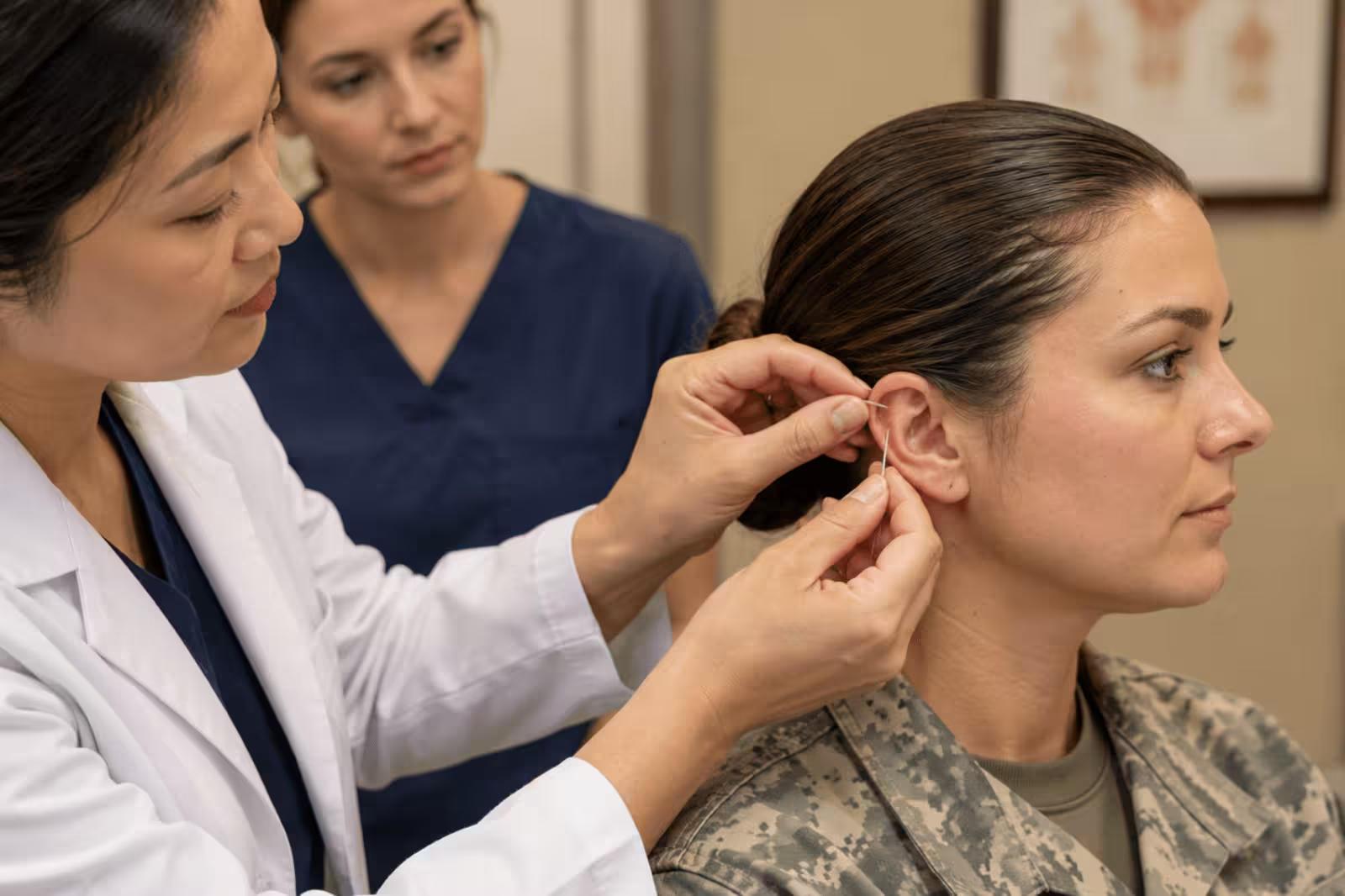
Battlefield acupuncture (BFA) is a form of ear acupuncture used to manage pain in veterans and service members. A trained clinician places small needles at selected points on the outer ear to seek short-term relief. BFA does not require needles near the painful area and may be considered alongside other medical care.
For veterans living with pain after service, small changes in comfort matter. This Veterans Day, anyone considering acupuncture therapy deserves to know what BFA offers and when to avoid it.
While BFA follows a specific ear acupuncture protocol, acupuncture care can vary depending on individual needs. At ACA Acupuncture & Wellness, personalized acupuncture and ear seeding services are available to support pain management. It is important to note that these services are different from the standardized BFA procedure.
Military service can leave people managing old injuries for decades. Repeated strain, surgeries, and musculoskeletal conditions may cause ongoing pain. Some veterans cannot comfortably tolerate needles near an injured body part, making an ear-based approach worth discussing.
U.S. Air Force physician Dr. Richard Niemtzow developed BFA as a brief procedure that could be used where conventional acupuncture was difficult to perform. Its name reflects that origin, not a restriction to combat injuries. The method is now used in certain Veterans Affairs (VA) settings and other medical clinics.
The appeal is straightforward: a brief visit, needles away from the painful area, and no added drug. Whether to try BFA depends on symptoms, health history, and medical assessment.
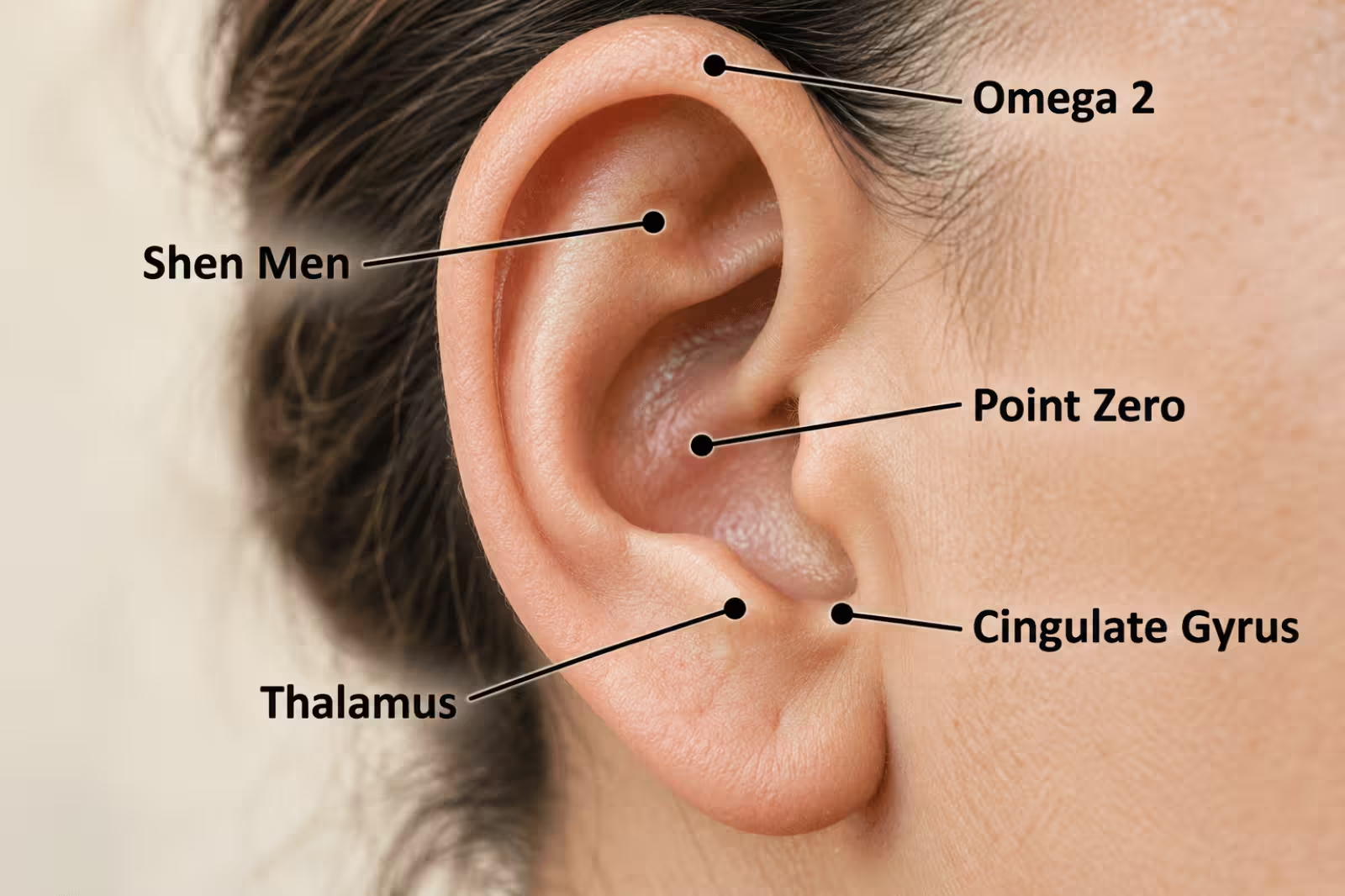
BFA is a form of auricular acupuncture, meaning the outer ear is the treatment site. Its protocol uses five named points: Cingulate Gyrus, Thalamus, Omega 2, Point Zero, and Shen Men. A clinician can place up to five small needles in each ear, depending on the protocol and patient response.
In traditional acupuncture, treatment points are described through patterns of connection across the body. Discussions of acupuncture meridian pathways explain that traditional framework. From a modern anatomical perspective, the outer ear contains sensory nerves that communicate with the nervous system.
Stimulating ear tissue may influence how the body processes discomfort, although scientists have not established an exact mechanism for BFA. The five point names are labels on an ear map. A needle placed at the Thalamus point does not reach the thalamus in the brain.
Body acupuncture may involve needles on the back, arms, legs, or other areas, with point selection guided by the patient’s condition. BFA uses a shorter, preset ear protocol and is commonly assessed as the needles are placed. Both use acupuncture needles, but they are not interchangeable procedures.
BFA also differs from ear seeding. Ear seeds are small beads or seeds applied to the skin to create pressure without puncturing it. Ask which technique the provider uses before booking.
After a clinician has evaluated the cause of pain, BFA may be considered for certain acute or chronic symptoms. Veterans sometimes seek it for back or neck discomfort, sore joints, or painful flare-ups that make ordinary movement difficult. The aim is to ease symptoms, not repair an injury.
Some patients notice a change shortly after needle placement. Others feel only a slight difference or no difference at all. Relief can vary with the pain condition and other health problems. Its duration is difficult to predict.
Relief does not mean arthritis has reversed or a damaged nerve has healed. Agree with your clinician on realistic goals and when to reassess the plan.
For veterans managing persistent pain, progress can mean being able to stand for longer, take a comfortable walk, or complete prescribed exercises. These changes can matter more than a pain score. When BFA helps, everyday tasks may become easier for a time.
Pain can also make sleep less restful and leave people feeling irritable or worn down. Feeling physically more comfortable might make it easier to relax, but BFA is not an established treatment for insomnia, anxiety disorders, or post-traumatic stress disorder (PTSD). Veterans experiencing those conditions deserve appropriate assessment and care.
Other acupuncture methods use different point selections for different concerns. A treatment involving the PC-6 acupuncture point is distinct from the five-point BFA procedure. Ask why a given approach is being recommended.
BFA may be included in a pain management plan that also involves prescribed medication, physical therapy, counseling, or rehabilitation. If pain eases, gentle movement and prescribed exercises may be more manageable.
Medication decisions must remain with the prescribing clinician. Feeling better after one appointment is not a reason to stop pain medicine or increase activity beyond the limits set by a rehabilitation team.
Veterans considering other complementary options, such as Chinese herbs for pain relief, should tell their health care team about all products they take. Herbal ingredients can interact with prescription medicines. Discussing all treatments with one care team can reduce avoidable risks.
A BFA visit begins with a review of the pain concern, recent changes in symptoms, medicines, and any ear problems. The clinician checks whether the procedure is appropriate before placing sterile, single-use needles in selected points on the outer ear. Patients are usually seated during placement.
Between insertions, the provider may ask the patient to stand, walk, or move a painful area gently. This gives both patient and clinician a chance to compare how movement feels during the visit. Some patients feel a quick pinch or tenderness where a needle enters. If dizziness, marked discomfort, or anxiety occurs, the patient should tell the clinician immediately.
The provider should explain needle removal and follow-up. If there is no relief, discuss that response before scheduling another session.
Small BFA needles may stay in place for up to three days. Patients should keep the area clean, avoid tugging at the needles while bathing or drying their ears, and follow the clinician’s instructions about avoiding heavy exercise or strenuous chores for the rest of the day. Any needles still in place must be removed before magnetic resonance imaging (MRI).
The treating clinician should give clear removal instructions, including whether removal happens at home or during a return visit. Used needles belong in an approved sharps container, not loose household trash. A little soreness, bruising, or bleeding may occur, while redness, warmth, swelling, or worsening pain around a needle site warrants prompt medical attention.
Recording pain, sleep, and movement over the next few days can help the provider assess the response.

BFA is not suitable for everyone, and screening should happen before any needle is inserted. VA patient instructions state that the treatment should not be used by someone who is pregnant or thinks they might be pregnant, has an infection on the outer ear, or has a fear of needles severe enough to cause fainting.
The same guidance advises against BFA for new pain or a major change in existing pain. Sudden severe pain, new weakness, fever, or pain after a fresh injury needs medical assessment to identify the cause. An ear procedure should never delay care for symptoms that could signal a more serious condition.
Bleeding disorders and certain medications, including some blood thinners, may make BFA unsuitable. Patients should disclose their medications, medical history, previous fainting episodes, and ear conditions so the treating clinician can assess whether the procedure is appropriate. Anyone unable to manage retained needles needs a safe removal plan.
BFA must be performed by a properly trained clinician using sterile equipment. Patients should not attempt to reproduce the procedure at home or leave needles in beyond the recommended removal time. If the treated ear becomes increasingly sore, swollen, warm, or red, contact a health professional promptly.
Some VA medical centers provide BFA through pain clinics, rehabilitation services, or other care teams. Access varies by location, so veterans can ask their clinician whether the service is offered and whether an appointment or referral is needed. Those using VA Community Care should confirm authorization and coverage before booking outside treatment.
For care outside the VA, ask whether the practitioner is licensed or otherwise authorized to perform the procedure, has specific BFA training, and uses sterile, single-use needles. Ask about follow-up, potential costs, and how progress will be assessed.
Battlefield acupuncture is generally well tolerated, with many patients experiencing little discomfort. The procedure uses tiny needles placed gently on the outer ear and takes only a few minutes. Your practitioner will monitor your comfort throughout treatment.
Some patients notice less pain during the appointment or soon after it. Others do not experience relief. A change during treatment does not guarantee a lasting result.
VA patient instructions state that retained needles can remain for up to three days and must then be removed. Follow the timeline and disposal instructions given by your clinician.
No. BFA may be considered alongside prescribed treatment, but it should not be used as a reason to stop or change medication without advice from the prescribing clinician.
BFA is designed as a pain management procedure, not a stand-alone treatment for PTSD. Veterans experiencing trauma-related symptoms should receive care suited to those symptoms.
Yes, some appropriately trained providers offer BFA outside VA facilities. Before booking, check their qualifications, the exact technique offered, the cost, and whether your health coverage applies.
Persistent pain can make it hard to plan ordinary activities or feel confident about what your body can handle. BFA may offer a period of relief for some veterans, but choosing care starts with understanding the cause of discomfort and setting realistic goals. Care should reflect symptoms, health history, and daily needs.
At ACA Acupuncture & Wellness, we provide personalized acupuncture treatments focused on pain management, muscle tension, and mobility concerns. We also offer ear seeding therapy, a needle-free way to apply pressure to points on the outer ear. We discuss your concerns and recommend appropriate services. These treatments differ from the specific BFA protocol described here.
Take the next step toward managing your pain with care that fits your needs. Schedule a consultation with us to discuss your symptoms, ask about our acupuncture and ear seeding services, and find an approach that supports more comfortable daily movement.
Sources:
Nordenberg, T. (2021, August 26). Battlefield acupuncture: An emerging and promising alternative to risky pain medications. U.S. Department of Veterans Affairs, Office of Research & Development.
U.S. Department of Veterans Affairs. (2024, December 1). Battlefield acupuncture (BFA). Veterans Health Library.
Yang, J., Zhou, X., Lim, K. H., Barnett, H. J., Weinman, A. F., Woods, J. T., Mohabbat, A. B., Wahner-Roedler, D. L., Chon, T. Y., & Bauer, B. A. (2026). The role of battlefield acupuncture in emergency department settings: A systematic review of randomized controlled trials. Journal of Integrative and Complementary Medicine, 32(9), 718–726.

Recent Comments