

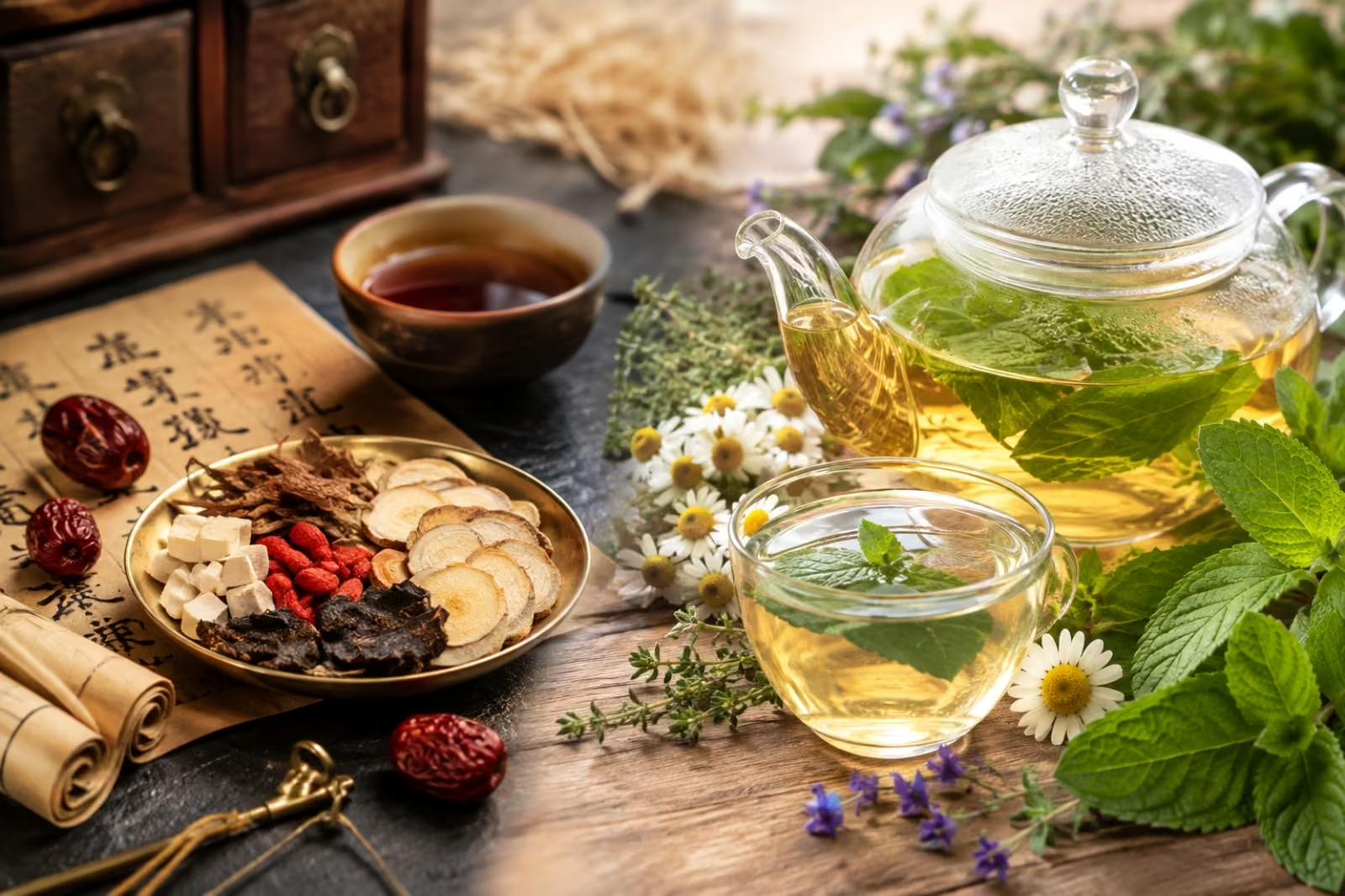
Traditional Chinese Medicine (TCM) and naturopathy both look beyond a single symptom, but they use different systems to understand health and choose care.
TCM follows a traditional pattern-based approach and commonly uses Chinese herbal medicine, acupuncture, and related therapies. Rather than treating each therapy as a separate option, TCM often brings different methods together within one treatment framework. Depending on a person’s pattern and needs, a practitioner may use acupuncture on its own or alongside herbal medicine, cupping, Tui Na, dietary guidance, or other traditional approaches.
Naturopathic care tends to place more attention on nutrition, lifestyle habits, botanical medicine, supplements, and other natural-health approaches.
The two may overlap in areas such as diet, herbs, sleep, and stress. The difference often comes down to how the practitioner interprets your symptoms and why a particular treatment is recommended.
The main difference is how each system understands your health and chooses care.
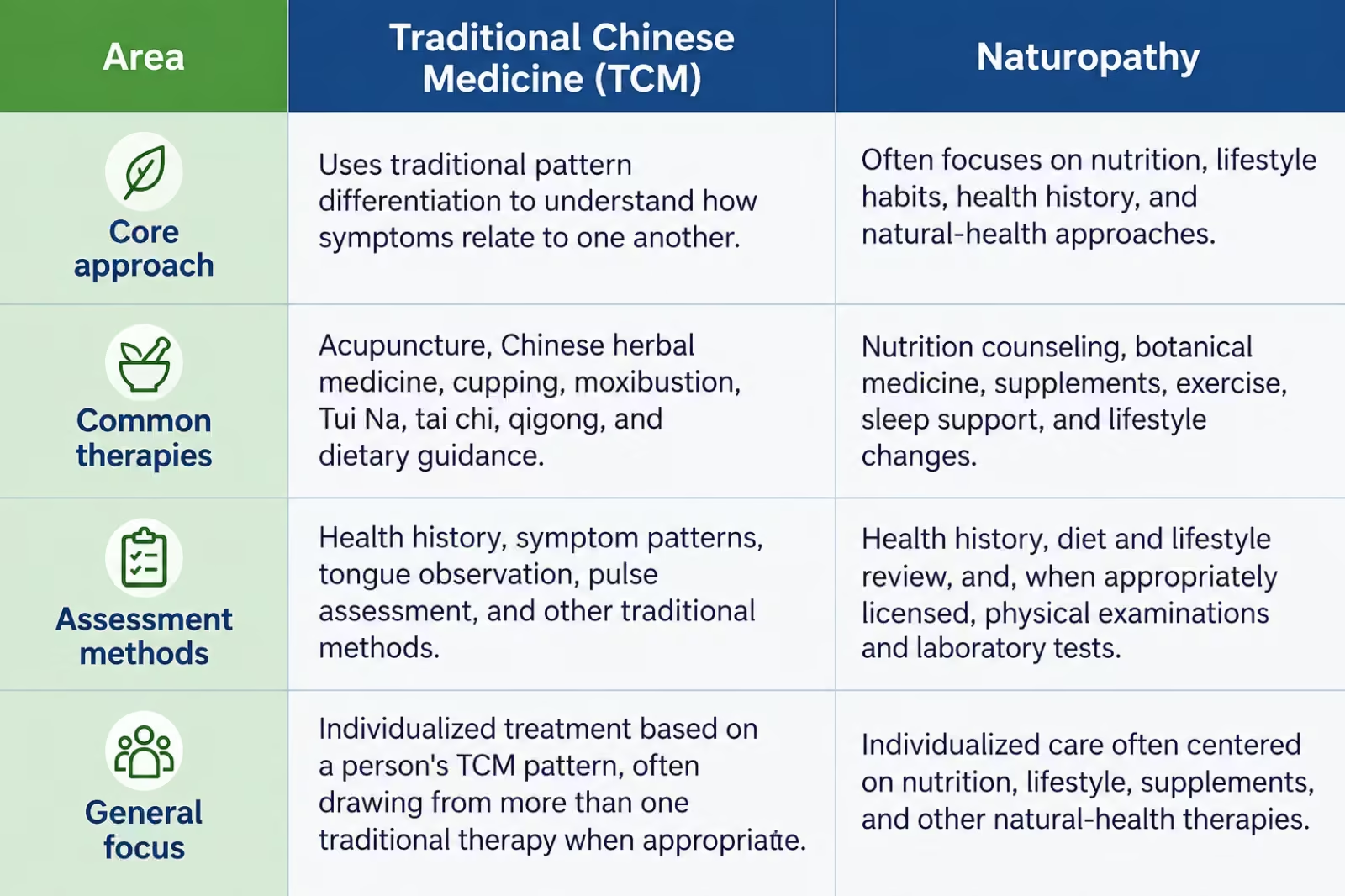
Traditional Chinese Medicine uses concepts such as qi, yin and yang, Blood, meridians, and pattern differentiation to understand how symptoms relate.
Naturopathic care generally focuses more on nutrition, lifestyle, health history, supplements, and other natural-health approaches. Licensed naturopathic doctors may also use physical examinations and laboratory tests when their training and local laws allow it.
Here is a quick comparison:
TCM assessment looks for patterns across several symptoms and areas of health.
A consultation usually begins with the reason you are seeking care. Your practitioner may also ask about:
Tongue observation and pulse assessment are also traditionally used during a TCM evaluation.
The practitioner brings this information together when choosing herbal formulas, acupuncture points, dietary suggestions, or other therapies.
Pattern differentiation is one of the features that sets TCM apart.
Two people can have the same conventional diagnosis and describe very different symptoms. One person might report fatigue, poor sleep, digestive changes, and dull discomfort. Another might describe tension, irritability, headaches, and sharper pain.
Within TCM, those differences may point to different patterns.
That can lead to different herbal formulas, acupuncture point selections, or other treatment choices even when the conventional diagnosis is the same.
The reverse can happen too. People with different diagnoses may receive some of the same treatment when their TCM patterns share similar features.
A disease name by itself does not usually determine the entire TCM treatment plan. The broader pattern helps guide which therapies are chosen and how they may be used together.

Naturopathic care often looks closely at health history, nutrition, lifestyle habits, and factors that may be changed over time.
A consultation may cover eating habits, exercise, stress, sleep, digestive symptoms, medications, supplements, previous health conditions, family history, and environmental exposures.
The practitioner uses that information to decide whether changes in diet, daily habits, natural products, or other forms of care may be appropriate.
Licensed naturopathic doctors may also perform physical examinations, review or order laboratory tests, and use other medical information when their training and state laws allow it.
These titles do not always mean the same thing.
In the U.S., licensed naturopathic doctors generally complete graduate-level training at an accredited naturopathic medical school and meet licensing requirements in states or territories that regulate the profession.
Traditional naturopaths may train through other types of programs and may not have the same licensing pathway.
Before starting care, check the practitioner’s education, license, clinical training, and what they are allowed to provide where they practice.
TCM tends to center care around therapies that come from Chinese medicine.
These may include:
Chinese herbal medicine often uses formulas made from more than one traditionally used ingredient. A practitioner chooses the formula according to the patient’s TCM pattern.
Acupuncture is also commonly used in TCM. Very thin needles are placed at selected points based on the patient’s presentation and treatment plan.
One of the practical differences in TCM is that treatment does not always revolve around a single therapy. A practitioner may decide that acupuncture is appropriate on its own, or that it makes more sense to pair it with Chinese herbal medicine, cupping, Tui Na, or another traditional approach. The combination can change as the patient’s presentation changes over time.
This individualized, multi-therapy approach is also part of how care is provided at ACA Acupuncture & Wellness. Treatment options are considered in relation to the patient’s symptoms, overall pattern, and goals rather than automatically applying the same plan to everyone.
Naturopathic care may include:
What a naturopathic practitioner can provide depends on education, licensing, and local law.
Both systems may discuss diet, sleep, stress, exercise, herbs, and daily habits.
Some naturopathic doctors also complete extra training in acupuncture and may provide it when their qualifications and local rules allow them to do so.
Even when both systems use similar types of care, the reasoning may differ.
A TCM practitioner may choose an herbal formula according to a traditional pattern. A naturopathic practitioner may recommend a botanical product based on symptoms, nutrition, laboratory findings, or another clinical goal.
Evidence varies widely from one treatment to another in both TCM and naturopathy.
Some TCM therapies have been studied more than others. Acupuncture has a relatively large research base, including studies on several types of pain. Chinese herbal medicine, cupping, moxibustion, tai chi, and other therapies each have their own evidence base.
Naturopathic care also includes treatments with different levels of research. Nutrition, exercise, botanical products, vitamins, minerals, and supplements need to be judged according to the health concern being treated.
This makes it difficult to compare TCM and naturopathy as if each were a single treatment.
A more useful question is:
What does the research say about this treatment for the health concern I want to address?
That gives you a clearer picture of whether the individual therapy you are considering has meaningful evidence behind it.
Safety depends on the treatment, the practitioner’s training, your health history, and any medications or supplements you already take.
Chinese herbal products may interact with medications, contain allergens, or need extra caution during pregnancy. Product quality can also vary.
Botanical products and dietary supplements used in naturopathic care can create similar concerns. Some may interact with medications or lead to problems when combined with other supplements.
Acupuncture has a good safety record when a trained practitioner performs it correctly with sterile, single-use needles. Improper needling can cause infections or other complications.
Tell every healthcare professional involved in your care about any herbs, vitamins, minerals, medications, or supplements you use.
TCM and naturopathic care should not delay medical attention for severe, urgent, new, or unexplained symptoms.

The better fit depends on the type of care you are looking for, the health concern you want to address, and the practitioner’s qualifications.
TCM may suit you if you are interested in Chinese herbal medicine, acupuncture, cupping, moxibustion, or other therapies rooted in Chinese medicine.
You may also prefer TCM if you want a practitioner to look at your symptoms through traditional pattern differentiation and consider how several areas of health may relate to one another.
Another reason some people prefer TCM is the way different therapies can be coordinated within the same system. Instead of choosing acupuncture, herbal medicine, or bodywork as completely separate approaches, a TCM practitioner may use one or more of them together based on the pattern identified during the assessment.
Naturopathic care may suit you when nutrition, lifestyle habits, sleep, stress, botanical products, or supplements are the main areas you want to address.
Some licensed naturopathic doctors may also combine lifestyle-based care with physical examinations, laboratory testing, and other clinical information.
If you want laboratory tests or diagnostic services, check that the practitioner has the right license and is allowed to provide those services where they practice.
The practitioner you choose can matter just as much as the type of care.
Before starting treatment, you might ask:
Focus on whether the practitioner is qualified and whether the proposed treatment makes sense for what you want help with.
Some people use both types of care at the same time.
You might receive treatment from a TCM practitioner while another qualified healthcare professional helps with nutrition, exercise, sleep, or other lifestyle concerns.
Good communication matters most when herbs or supplements are involved.
Two practitioners could recommend products with overlapping ingredients without realizing it. Herbal products and supplements may also interact with medications.
Keep an up-to-date list of everything you take and share it with each practitioner involved in your care.
No. They are separate approaches to care.
TCM uses traditional Chinese pattern differentiation and may include Chinese herbal medicine, acupuncture, cupping, and related therapies.
Naturopathy tends to focus more on nutrition, lifestyle habits, botanical medicine, supplements, and other natural-health treatments.
A TCM practitioner is trained in Chinese medicine and may use therapies such as Chinese herbal medicine, acupuncture, dietary guidance, and other traditional approaches.
A licensed naturopathic doctor receives naturopathic medical training and may work with nutrition, lifestyle habits, botanical medicine, supplements, and other forms of care. Training and legal scope vary by location.
Some naturopathic doctors receive extra training in Chinese medicine or acupuncture, but that does not make naturopathy and TCM the same system.
A practitioner’s qualifications and legal scope determine which therapies they can provide.
Coverage varies by insurance plan and the specific service provided. Some plans may cover acupuncture or visits with certain licensed practitioners while excluding herbs, supplements, or other services. Check directly with your insurer before scheduling care.
Neither is better for everyone. The better fit depends on the type of care you want, your health needs, and the practitioner’s qualifications.
TCM and naturopathy overlap in areas such as diet, herbs, sleep, and stress, but practitioners may approach those areas differently.
Your decision should come down to the type of care you are considering, the practitioner’s training, and what you want help with.
At ACA Acupuncture & Wellness, care starts with an individual assessment and a conversation about your needs. Depending on your presentation and treatment goals, your practitioner may recommend acupuncture, Chinese herbal medicine, cupping, Tui Na, or a combination of traditional therapies when appropriate. Your practitioner can explain how Traditional Chinese Medicine may fit into your routine and which options may be appropriate for you.
Ready to learn whether TCM is the right fit for you? Book a visit with ACA Acupuncture & Wellness and talk with a practitioner about your care options.
Sources:
National Center for Complementary and Integrative Health, National Institutes of Health. Naturopathy. Last updated April 2025.
National Center for Complementary and Integrative Health, National Institutes of Health. Acupuncture: Effectiveness and Safety. Last updated October 2022.
National Center for Complementary and Integrative Health, National Institutes of Health. Traditional Chinese Medicine: What You Need To Know. Last updated April 2019.

Recent Comments