

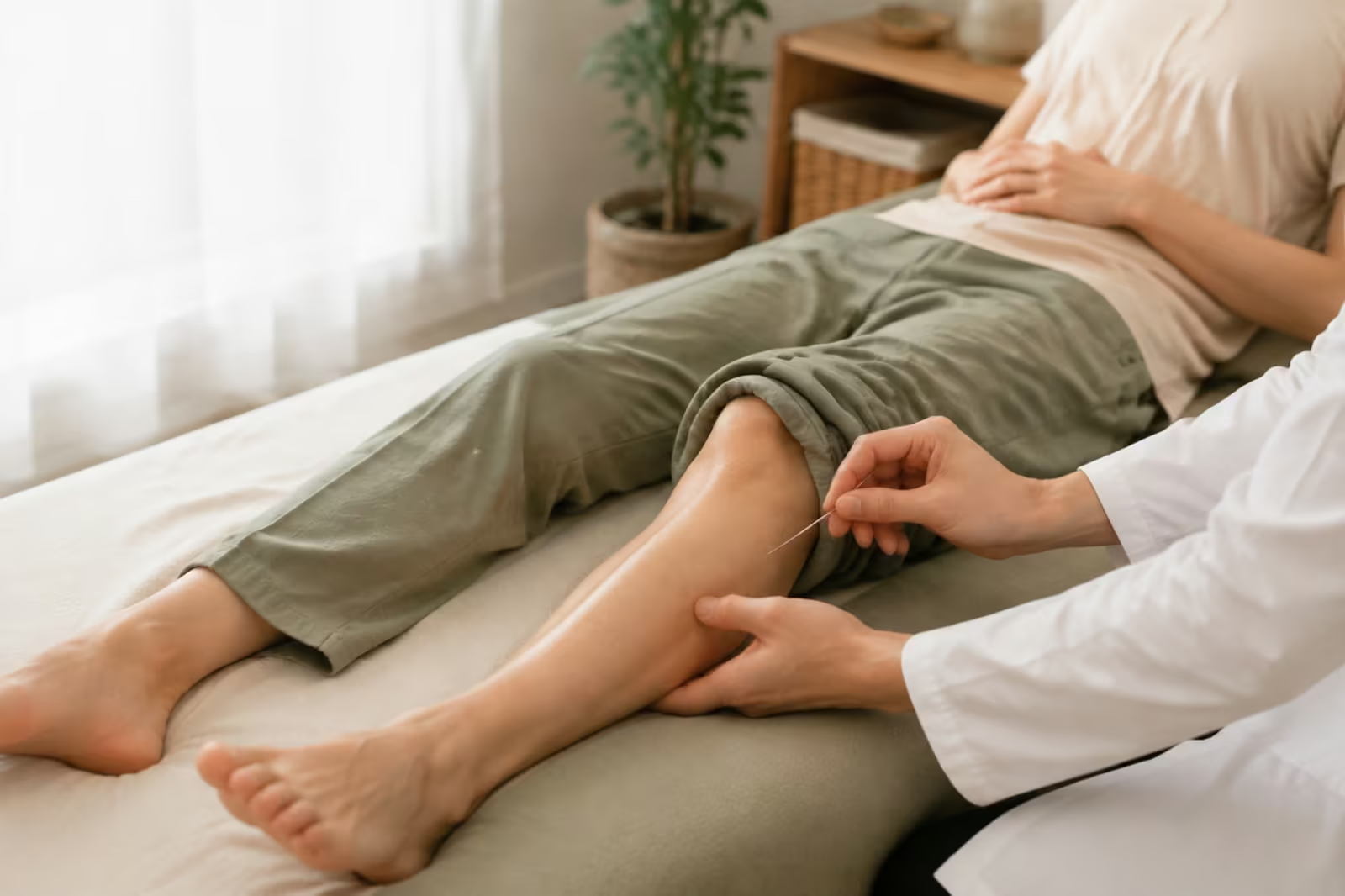
ST36 is used in acupuncture treatment to help ease digestive discomfort, address fatigue, and support immune health as part of an individualized treatment plan.
If you’ve ever finished a meal feeling bloated and too sluggish to get back to your day, you know how digestive discomfort and low energy can overlap. These are concerns an acupuncturist may consider when choosing ST36.
Also called Zusanli or “Leg Three Miles,” ST36 sits just below the knee, a location that may surprise you when your stomach is the source of discomfort. In Chinese medicine, it belongs to the stomach meridian and has a long history of use for digestion and stamina. Whether it is included in your care depends on your symptoms, health history, and personal needs.

ST36 is an acupuncture point on the lower leg. Its Chinese name, Zusanli, is often translated as “Leg Three Miles.”
The name reflects a traditional belief that stimulating this point could help a tired person walk farther. It evokes the image of a weary traveler resting aching legs before continuing another three miles. This connection to endurance makes the name a memorable reminder of ST36’s traditional use for low stamina, weakness, poor digestion, and feeling worn down.
ST36 belongs to the stomach meridian, a pathway described in Chinese medicine. Although the point is below the knee, practitioners may select it for digestive symptoms. Its place on this traditional pathway does not mean it has a direct physical connection to the stomach.
ST36 is found on both legs. It sits about four finger-widths below the bottom of the kneecap and roughly one finger-width outside the sharp edge of the shinbone.
To find the general area:
You should be pressing the muscle, not the shinbone. The exact position differs slightly from person to person because bodies have different proportions.
This method gives you a rough location for acupressure. A trained acupuncturist uses touch, body landmarks, and your individual anatomy to locate the point before needling.
ST36 may be needled straight or at a slight angle. The angle and depth depend on the patient’s body, comfort, and health needs. Needling should be performed only by a qualified acupuncturist.
The combinations below are examples of points an acupuncturist may pair with ST36.
Practitioners choose points based on each patient’s symptoms, health history, and overall assessment, rather than following a fixed formula for each symptom. Two people with the same concern may receive different combinations.
Responses differ. A person receiving treatment for mild nausea may notice a change during or soon after a visit. Bloating, bowel changes, and long-standing fatigue may take longer.
Your general health, the cause of your symptoms, their duration, and the rest of your care can all affect the outcome.
Use a clear symptom to judge whether treatment is helping. You might track how often nausea occurs, how uncomfortable you feel after eating, or how many days you go without a bowel movement. This is more useful than waiting for a vague sense that something has changed.
If several visits bring no improvement, speak openly with your acupuncturist. The treatment plan may need to change, or your symptoms may need another type of assessment.
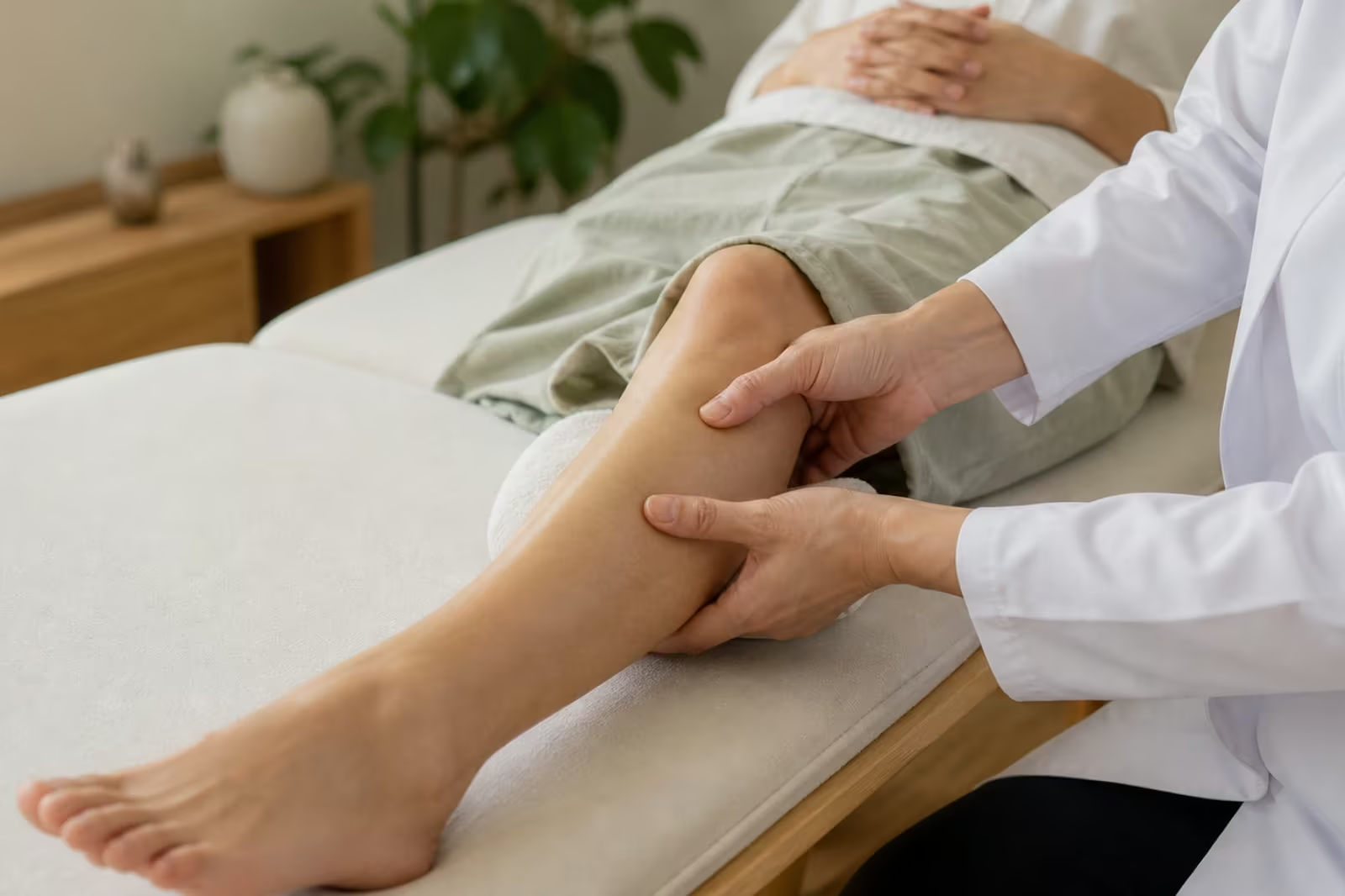
ST36 acupressure is a gentle option for mild nausea, bloating, or tiredness at home. ST36 acupuncture provides more personalized care based on your symptoms and health history. Neither option should replace medical care for severe or lasting symptoms.
ST36 should not be used to manage a medical emergency or delay an assessment.
Seek medical care for:
These symptoms may need testing and medical treatment.
ST36 may be a useful part of acupuncture care if you struggle with digestive discomfort, tiredness, poor appetite, or feeling run down. Its role depends on your symptoms and how it fits within your full treatment.
At ACA Acupuncture and Wellness, we take a whole-person approach. We look at your symptoms, health history, daily habits, and personal goals before creating your treatment plan. We also track changes such as less nausea, more comfortable meals, steadier bowel habits, and better day-to-day energy.
Book your appointment with ACA Acupuncture and Wellness to learn whether ST36 acupuncture may be suitable for you.
Sources:
Kao, T.-W., Lin, J., Huang, C.-J., Huang, Y.-C., & Tsai, T.-J. (2024). Electroacupuncture of ST36 and PC6 for postoperative gastrointestinal recovery: A systematic review and meta-analysis. Journal of Traditional and Complementary Medicine, 14(6), 666–674.
ST36 is commonly used for digestive discomfort, low energy, and weakness. It may help with nausea, bloating, poor appetite, bowel changes, and tired legs. Its use depends on your symptoms and health needs.
ST36 may help settle the stomach and ease abdominal tension. It is often used for nausea, fullness, constipation, or loose stools. Results differ depending on the cause and duration of your symptoms.
ST36 is often used when bloating occurs after meals. It may also help when bloating appears with fullness, poor appetite, or bowel changes. Persistent or painful bloating should be checked by a healthcare provider.
Yes, ST36 is commonly used for nausea and an unsettled stomach. It may be paired with PC6, a point on the inner wrist. Repeated vomiting or dehydration requires medical attention.
ST36 may help when you feel tired, weak, or slow to recover. Some people notice steadier energy after treatment. It does not create the sudden rush associated with caffeine.
ST36 may support rest, appetite, digestion, and recovery. It is often used when someone feels run down or stressed. It does not prevent colds, flu, or other infections.
You may feel a small pinch when the needle enters the skin. Warmth, heaviness, tingling, or mild pressure may follow. Sharp pain, burning, or numbness should be reported at once.

Recent Comments