

Last Updated Date: December 03, 2025
With stress, anxiety, and emotional fatigue becoming increasingly common, prioritizing mental health is more essential than ever. Many people are now seeking holistic approaches that go beyond symptom management and address deeper emotional balance. Acupuncture, grounded in Traditional Chinese Medicine, is gaining recognition for its ability to regulate mood, reduce stress, and restore energetic harmony in the body. By supporting both mental clarity and emotional resilience, it offers a natural path toward feeling calmer, more grounded, and better equipped to navigate everyday challenges.
Key Takeaways
- Acupuncture supports mental clarity by regulating mood-related neurotransmitters for a calmer, more balanced emotional state.
- Regular acupuncture sessions help reduce stress by lowering cortisol and promoting the body’s natural relaxation response.
- Acupuncture encourages better sleep quality, which strengthens emotional stability and improves overall mental well-being.
- Emotional resilience improves with acupuncture, helping individuals better manage anxiety, mood swings, and burnout.
- Chronic pain relief from acupuncture positively influences mental health, breaking the cycle between persistent pain and emotional strain.
Connection Between Acupuncture and Mental Health

Acupuncture is increasingly being used as a natural method to calm the mind, ease emotional stress, and support conditions like anxiety and depression. It offers a holistic approach that works beyond the physical body, helping you feel more emotionally steady and mentally clear. This makes it an appealing complement to traditional care or an alternative option for those seeking natural healing pathways.
How acupuncture supports mental well-being:
- Encourages the release of serotonin and endorphins
- Reduces cortisol and stress responses
- Promotes emotional grounding and clarity
- Helps reset the nervous system
Acupuncture also plays a valuable role in cases where mental health is influenced by chronic pain. Long-term discomfort can increase emotional distress, but acupuncture addresses both the physical symptoms and the emotional tension that accompanies them. This dual benefit helps break the pain-stress cycle, offering more complete relief and improved overall well-being.
Signs Acupuncture May Help Your Mental Health
Sometimes the body gives clear signals that emotional strain is building, even before we consciously recognize it. If you’ve been feeling mentally or emotionally off-center, these symptoms can be gentle indicators that acupuncture may be beneficial. This self-check helps you understand whether your nervous system could use extra support and balance.
You may benefit from acupuncture if you experience:
- Frequent stress or emotional overload
- Difficulty sleeping or relaxing
- Feeling “wired but tired”
- Mood instability or irritability
- Emotional sensitivity or overwhelm
- Anxiety that manifests physically, such as tight chest, jaw tension, racing heart, or shallow breathing
Many people find comfort realizing that these experiences are not personal failures, they are signs of a nervous system in need of regulation, and acupuncture offers a gentle, natural way to support that healing process.
Therapeutic Benefits of Acupuncture on Mental Health

Stress Reduction: Bringing Calm to the Chaos
We all experience stress—whether it’s from work, personal responsibilities, or life’s unpredictability. What if there was a natural way to help manage that stress and bring a sense of calm back into your life? Acupuncture offers exactly that.
By gently stimulating specific points on the body, acupuncture works to reduce stress by calming your nervous system and releasing endorphins—the body’s natural mood enhancers. This isn’t a temporary solution; regular acupuncture sessions can help retrain your body’s response to stress, making it easier to stay relaxed even when life gets hectic. Over time, you’re better equipped to handle the challenges of your day-to-day life with more ease and clarity.
Better Sleep: Restore Your Restful Nights
If you’ve ever found yourself lying awake at night, unable to shut off your racing thoughts, you know how deeply sleep is connected to mental health. Poor sleep can make anxiety and depression worse, and vice versa.
Acupuncture addresses this cycle by targeting the root cause of sleep disturbances. It helps calm the mind and relax the body, making it easier to fall into a deep, restorative sleep.
The best part? You’ll notice that as your sleep improves, your mood stabilizes, and you wake up feeling mentally refreshed and ready to take on the day. It’s all about creating balance, and acupuncture plays a key role in bringing that balance back to your sleep routine.
Emotional Balance: Staying Steady in Life’s Ups and Downs
Life has its highs and lows, but how we respond to them can define our emotional well-being. Acupuncture helps foster emotional resilience by working to regulate the energy flow in your body, bringing emotional stability when you need it most.
Think of it as a reset for your emotions. When stress or anxiety takes over, acupuncture helps smooth out those feelings, giving you the clarity and strength to handle life’s challenges with more ease. Over time, this emotional balance becomes second nature, helping you stay connected to yourself and manage even the toughest days with a sense of calm and centeredness.
A Holistic Approach to Mental Wellness
What’s truly unique about acupuncture is how it works in harmony with your body and mind. It doesn’t just focus on one aspect of your mental health—it addresses the bigger picture. By balancing your body’s energy systems, acupuncture not only helps improve your mental clarity but also supports other treatments you may be using, like therapy or medication.
This holistic approach ensures that you’re taking care of your entire well-being. Many people find that acupuncture enhances the effects of traditional treatments, offering a more complete, well-rounded path to mental wellness. It’s all about synergy—everything working together to help you feel your best.
Chronic Pain and Mental Health
Chronic pain doesn’t just take a toll on your body—it weighs heavily on your mind as well. The constant discomfort can lead to feelings of anxiety, frustration, and even depression. Acupuncture provides relief on both fronts. By reducing inflammation and improving circulation, acupuncture helps alleviate physical pain, while also addressing the emotional burden that often comes with it.
This dual-action approach means that as your body heals, your mind does too. Acupuncture offers a unique opportunity to break the cycle of chronic pain and emotional distress, giving you a path to greater physical and emotional freedom.
Understanding Depression, Anxiety, and Stress: The Role of Acupuncture

Mental health challenges like depression, anxiety, and stress have become increasingly common, affecting millions of individuals worldwide. These conditions don’t just occur in isolation—they often overlap, creating a cycle where one worsens the other. Acupuncture is gaining recognition as a holistic therapy that addresses both the emotional and physical aspects of these mental health issues, providing relief in ways that traditional methods may not.
Depression
Depression is a heavy burden, affecting every aspect of life, from how you feel emotionally to how you function physically. Common symptoms include persistent sadness, feelings of hopelessness, and physical manifestations like fatigue or changes in appetite. While medication and psychotherapy are the go-to treatments, not everyone responds to them. That’s where acupuncture can shine as a natural, complementary therapy.
Anxiety
Anxiety can feel like an overwhelming, never-ending sense of fear or worry that makes even everyday tasks seem insurmountable. While many rely on medications or therapy to manage anxiety, not everyone finds these approaches effective or tolerable. Acupuncture offers a refreshing alternative that works by promoting relaxation and helping the body regulate stress.
Through the gentle stimulation of acupoints, acupuncture encourages the release of endorphins and other neurotransmitters that foster a sense of calm and well-being. What’s remarkable is acupuncture’s ability to balance the body’s stress response, lowering cortisol levels, the infamous “stress hormone.” This helps reduce the overwhelming feelings of anxiety, creating a more centered, peaceful state of mind. Over time, individuals report improved coping mechanisms and a greater ability to face life’s stressors with calmness.
Stress and Emotional Burnout
Stress and its cumulative effects can take a significant toll on both the body and mind, leading to emotional burnout—a state where exhaustion leaves you feeling drained and unable to cope. This isn’t just about feeling worn out; emotional burnout can manifest as frustration, irritability, and mental fatigue, making even small tasks feel overwhelming.
Acupuncture provides a powerful way to combat emotional burnout by resetting your body’s stress response and promoting deep relaxation. By activating the parasympathetic nervous system, the body’s natural relaxation response, acupuncture helps lower heart rates, reduce blood pressure, and create a profound sense of tranquility. Regular treatments can improve resilience, helping you recover from life’s challenges more effectively and prevent burnout before it takes hold.
Acupuncture vs. Medication vs. Therapy: A Supportive Duo, Not a Replacement
Mental health support works best when it blends multiple approaches rather than relying on a single method. Acupuncture does not replace medication or therapy; instead, it complements them by addressing patterns in the nervous system and body that talk-therapy and pharmaceuticals alone may not reach. This creates a well-rounded foundation for healing that acknowledges both emotional and physiological needs.
Each method plays its own role:
- Therapy supports cognitive and emotional awareness
- Medication supports biochemical regulation
- Acupuncture supports energetic flow and nervous system balance
When used together, these approaches strengthen each other, allowing for deeper recovery, greater emotional stability, and a more grounded state of mental well-being. It’s not about choosing one over another, it’s about finding the combination that truly supports your whole self.
Acupuncture’s Clinical Impact on Mental Health

Acupuncture’s ability to support mental health is no longer just a theory—it’s backed by solid, impactful results. One notable study out of Alberta, part of the Alberta Complementary Health Integration Project (ABCHIP), followed 606 participants, focusing on youth and elderly individuals grappling with pain and mental health challenges. The outcomes speak for themselves: after 12 sessions, participants reported a 78.4% reduction in depression, a 41.1% decrease in anxiety, and a 43.7% drop in fatigue. Even more impressive, their sleep quality saw a 53.1% improvement, which is crucial for emotional stability and mental clarity.
Source: Frontiers
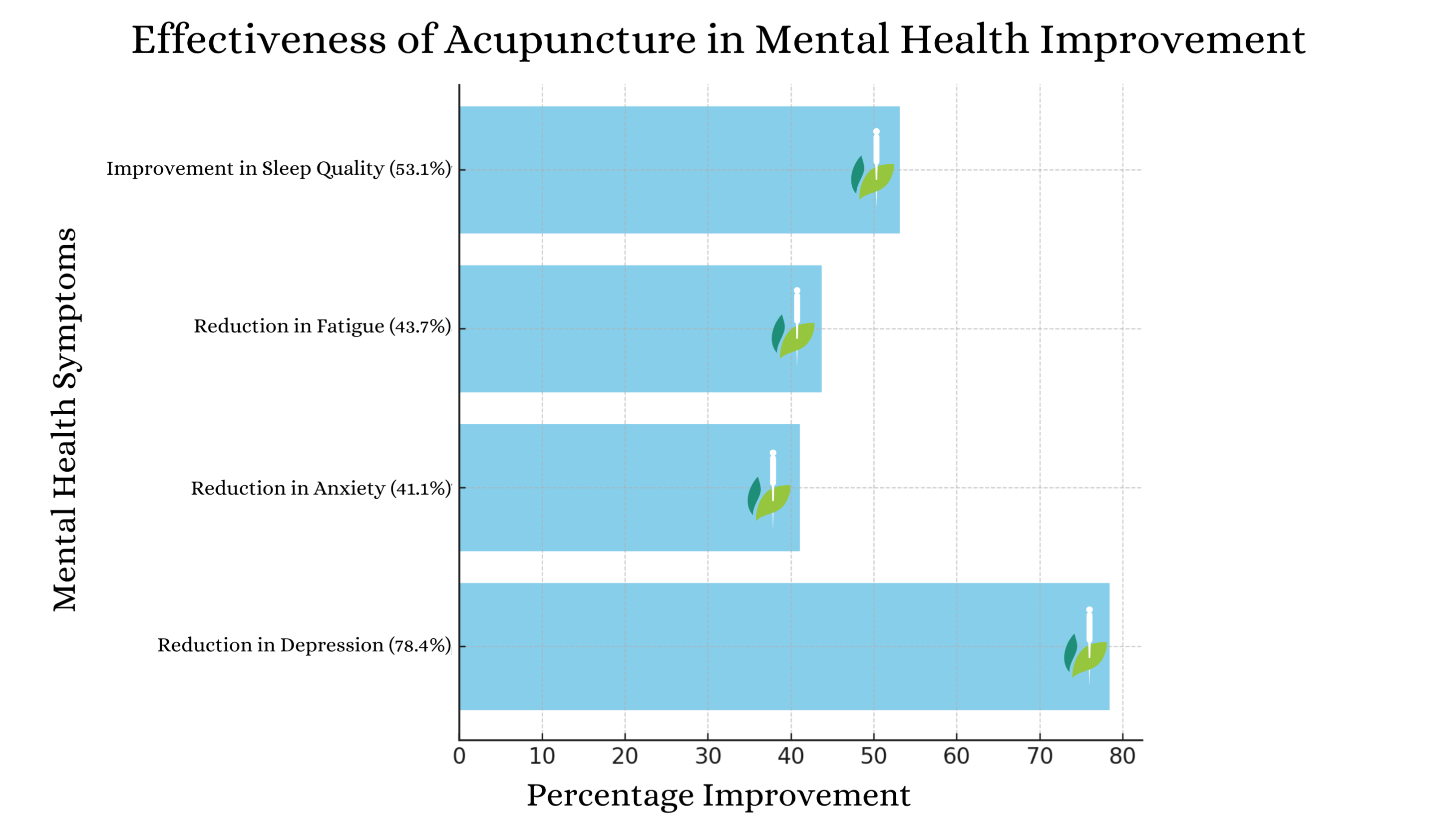
The data speaks volumes: acupuncture is not just about symptom relief—it’s about restoring balance, both mentally and physically. By offering a natural, holistic way to address the core imbalances that contribute to mental health struggles, acupuncture has become a trusted method for those seeking comprehensive emotional wellness. These findings underscore why acupuncture is increasingly recognized as a valuable complement—or even alternative—to conventional treatments in mental health care.
Incorporating Acupuncture into Your Mental Health Care
At ACA Acupuncture and Wellness, we provide personalized acupuncture treatments specifically designed to support your mental health. Our skilled practitioners tailor each treatment to your unique needs, ensuring a focused approach to addressing mental health concerns.
When you visit us, you’ll be welcomed into a peaceful environment that encourages relaxation and healing. During your session, you’ll lie comfortably while our acupuncturists gently insert needles at precise points on your body, helping you achieve a deep sense of calm and balance.
Consistency is essential for lasting benefits, and we’ll work with you to determine the ideal frequency of sessions. By maintaining regular treatments, you can reduce stress and support emotional well-being over time, making acupuncture a practical and effective addition to your mental health routine.
Embracing Acupuncture for Comprehensive Mental Wellness

As we celebrate Mental Health Day, it’s the perfect time to recognize the therapeutic benefits of acupuncture as a valuable tool for nurturing both mind and body. This ancient practice offers a holistic approach that addresses physical and emotional well-being, empowering individuals to take charge of their mental health journey. By integrating acupuncture into your wellness routine, you not only enhance your resilience against life’s challenges but also foster deeper connections within yourself.
Prioritizing mental health is essential—not just today, but every day. Embrace the opportunities that come with exploring new avenues for healing, like acupuncture, which can support balance and harmony in your life. Remember, you are not alone on this journey—there are many paths toward achieving well-being and happiness, and acupuncture can be a key part of that process. At ACA Acupuncture and Wellness, we’re here to support you every step of the way.
FAQs
How does acupuncture help mental health?
Acupuncture stimulates points in the body that regulate mood, release feel-good neurotransmitters, and reduce stress hormones. This helps the nervous system shift into a calmer, more balanced state. Many people report improvements in clarity, emotional stability, and overall well-being.
What to do on a bad mental health day?
Start by slowing down and doing one thing at a time rather than pushing productivity. Gentle self-care, such as rest, breathing exercises, or stepping outside, can help reset your nervous system. Reach out to someone you trust if you need conversation or support.
What are 5 ways to improve mental health?
- Prioritize consistent, healthy sleep
- Stay connected socially rather than isolating
- Move your body daily, even gently
- Practice mindfulness or calming breathwork
- Seek supportive care like acupuncture, therapy, or counseling
Each of these habits reduces emotional load and strengthens resilience over time.
How does acupuncture help with emotions?
Acupuncture works to balance the body’s energy flow, which influences emotional regulation. It reduces internal pressure from stress and anxiety while increasing emotional calm. Over time, many people experience greater emotional steadiness and improved resilience.
How fast does acupuncture work for anxiety?
Some individuals feel immediate relief after their first session, with noticeable relaxation and reduced worry. Others may see gradual improvements over several sessions as their nervous system rebalances. Consistency is key, especially for long-term or deeply rooted anxiety patterns.
Is acupuncture good for health anxiety?
Yes, acupuncture can be very helpful for health-focused anxiety by calming the nervous system and reducing hyper-vigilance. It helps reduce the body’s stress response, quiets racing thoughts, and promotes a grounded emotional state. Many people find that it eases the compulsive worry cycle and increases mental trust in the body’s well-being.
Recent Comments