


Use ice for short-term relief of a fresh, swollen injury. Use gentle heat for muscle tension and stiffness without new swelling. Both can help manage discomfort as part of a recovery plan that includes physiotherapy to address movement, strength, and everyday function.
When deciding between ice or heat for sore muscles, consider how the discomfort began and what you feel now. A tight shoulder after desk work needs different care from an ankle that swells after a misstep. Choosing the right temperature treatment can make prescribed movement and rehabilitation exercises more comfortable.
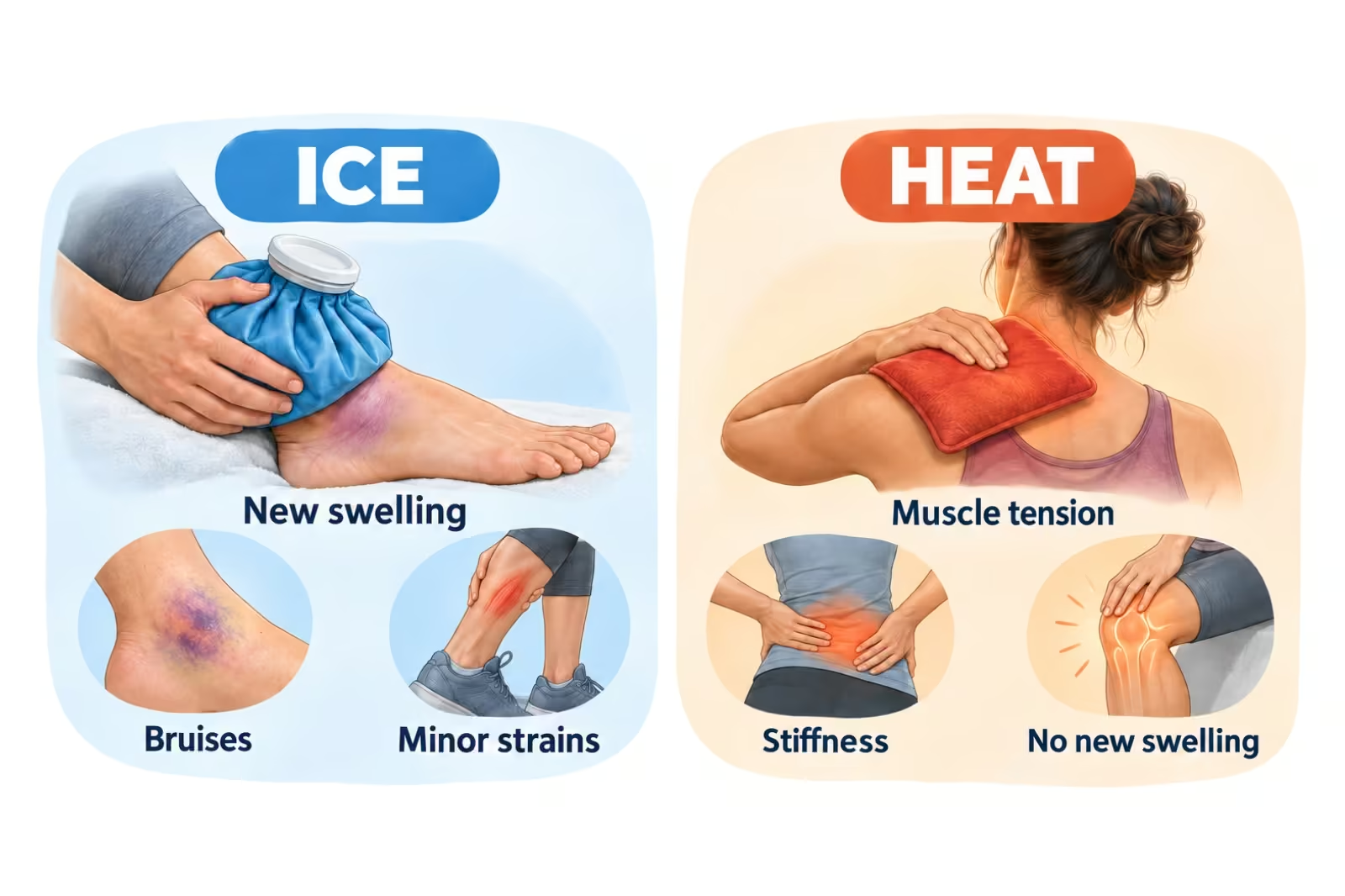
Before reaching for a pack, ask yourself: Did this begin after an injury? Is there swelling? Does the area feel stiff? Have you lost strength or movement?
Cold therapy lowers tissue temperature and temporarily reduces local blood flow. It can numb discomfort and help manage swelling after a minor injury.
A wrapped cold pack may be useful for:
Ice cannot tell you whether you have a fracture or significant tissue damage. Difficulty bearing weight, severe pain, or substantial loss of strength needs assessment.
Heat warms tissues and increases local blood flow. Gentle warmth may ease tension and make movement more comfortable.
Consider it for:
Avoid heat over a freshly swollen injury. Remove it if throbbing, pain, or swelling increases.
The first 48 to 72 hours are commonly a period for protecting a minor sprain or strain and avoiding heat. However, there is no automatic deadline for switching.
An ankle that remains swollen on day four may need reassessment rather than warmth. Let your symptoms and your clinician’s guidance determine the next step.
Soreness beginning a day or two after unfamiliar exercise may be delayed-onset muscle soreness, or DOMS. This differs from sudden pain during a lift, sprint, or awkward movement.
For general soreness without swelling, warmth may ease tightness, while cold may offer temporary comfort. Reduce training intensity and keep movement gentle instead of using either treatment to push through another demanding workout.
A specific swollen area deserves closer attention. Sudden pain or loss of strength should prompt you to stop the activity.
Ice baths also differ from local packs. Regular cold-water immersion immediately after resistance training may reduce muscle-building adaptations, so consider your training goals before making it routine.
Feeling less sore does not necessarily mean you have recovered. Consider whether you can move comfortably and control the movement.
Gentle warmth may help muscular tightness after sitting. Follow it with position changes and comfortable movement.
For recurring neck pain and stiffness, assessment can help identify contributing factors. Pain after a fall or accompanied by new weakness or numbness needs medical evaluation.
Warmth may help morning stiffness, while cold may feel more comfortable during a familiar swollen flare. Continue your prescribed care plan because neither treats the underlying arthritis.
A newly hot, swollen joint, especially with fever, needs prompt assessment.
Repeated tendon pain is not automatically fresh inflammation. Temperature treatment may provide comfort, but adjusting the provoking activity and gradually rebuilding load tolerance are often more relevant to recovery.
A physiotherapist can help determine suitable exercises and progression.
Methods range from targeted packs to treatments involving larger areas. Choose an option suited to your symptoms and follow the guidance specific to that method.
Cold can be applied through packs, water, or equipment used within a supervised recovery plan.
Using ordinary cold packs safely: Wrap the pack in a towel, start with 10 to 15 minutes, and do not exceed 20 minutes. Check your skin and stop for burning, unusual discoloration, or excessive numbness. Allow normal skin temperature and sensation to return before repeating or exercising.
Heat may be dry or moist. Some methods offer surface warmth at home, while others require professional assessment.
Using heating pads and warm packs safely: Choose comfortable warmth, follow product instructions, and protect your skin. Keep ordinary sessions to approximately 15 to 20 minutes. Stop if discomfort or swelling increases. Never sleep on a heating pad or lie on top of it. Avoid applying heat over pain-relief creams or patches unless their instructions allow it.
Ask a clinician before using local heat or cold if you have reduced sensation, neuropathy, poor circulation, or Raynaud’s phenomenon. Avoid applying packs over damaged skin or suspected infection.
Pack timings do not apply to ice baths, saunas, moxibustion, or fire acupuncture. Whole-body exposure needs separate guidance, and practitioner procedures require individual assessment. These methods are not interchangeable or suitable for every injury.

Physical Therapy, also called Physiotherapy, assesses how symptoms affect strength, mobility, balance, and everyday activities. Your plan may include education, exercise, rehabilitation, and selected hands-on techniques.
Heat or ice can support that plan. For example, warmth may make prescribed shoulder exercises more comfortable, while a cold pack may help manage discomfort during ankle rehabilitation.
Longer-term progress may involve:
A heating pad does not replace an active warm-up, and icing cannot compensate for repeated overload. Avoid aggressive stretching after a recent injury unless advised.
Traditional Chinese Medicine approaches, including acupuncture and Tuina massage, may also be considered for persistent pain or muscle tension. Moxibustion provides practitioner-applied warmth near acupuncture points when heat is appropriate.
At ACA Acupuncture & Wellness, our Thermal Therapy Room offers steady warmth in a low-humidity environment and may complement acupuncture or other care for stiffness without new swelling. Your practitioner can assess whether it suits your symptoms and health history. Avoid heat over a freshly swollen injury.
Seek prompt medical care for:
Arrange an assessment if discomfort keeps returning, worsens, has no clear cause, or interferes with sleep and daily activities.
Choose temperature treatment according to your current symptoms, then consider what will help restore comfortable movement.
At ACA Acupuncture & Wellness, we can help you explore care suited to your needs. For muscle tension and stiffness, Tuina massage may be considered within an individualized plan. Recurring discomfort may benefit from assessment and guidance on physiotherapy, mobility exercises, or other appropriate care.
Contact our team to discuss your symptoms and next steps.
Yes. A bag of frozen peas can mold around an affected area. Wrap it in a towel and follow the same precautions as an ordinary cold pack.
For some minor sprains and strains, an elastic support bandage can complement cold therapy. It should feel supportive without restricting circulation. Loosen it if tingling, numbness, or skin color changes develop.
Resting the limb comfortably on pillows can help manage swelling after a minor sprain or strain. Elevation and cooling serve different purposes and can be used together.
Sometimes, when symptoms suit each method. Stiffness and a familiar swollen flare may occur at different times, but alternating is optional. Avoid heat while fresh swelling remains and let your skin return to normal between applications.
There is no universal requirement. Tell your practitioner about recent injuries, swelling, and changes in sensation so they can decide whether warmth is appropriate before treatment.
Do not increase the temperature or application time to force a result. Persistent symptoms may need reassessment and a different approach rather than more temperature treatment.
Ice massage involves moving ice over a small, targeted area, while a cold pack rests over a broader area. Application times and techniques differ, so the article’s cold-pack instructions should not be applied automatically to ice massage. Ask your physiotherapist to demonstrate the technique if they recommend it.
A warm shower can be an alternative for easing general muscle stiffness, particularly when discomfort affects a broader area. A heating pad offers more targeted warmth. Avoid hot showers or baths immediately after an injury with fresh swelling.
References
Wang, Y., Lu, H., Li, S., Zhang, Y., Yan, F., Huang, Y., Chen, X., Yang, A., Han, L., & Ma, Y. (2022). Effect of cold and heat therapies on pain relief in patients with delayed onset muscle soreness: A network meta-analysis. Journal of Rehabilitation Medicine, 54, Article jrm00258.

Recent Comments