

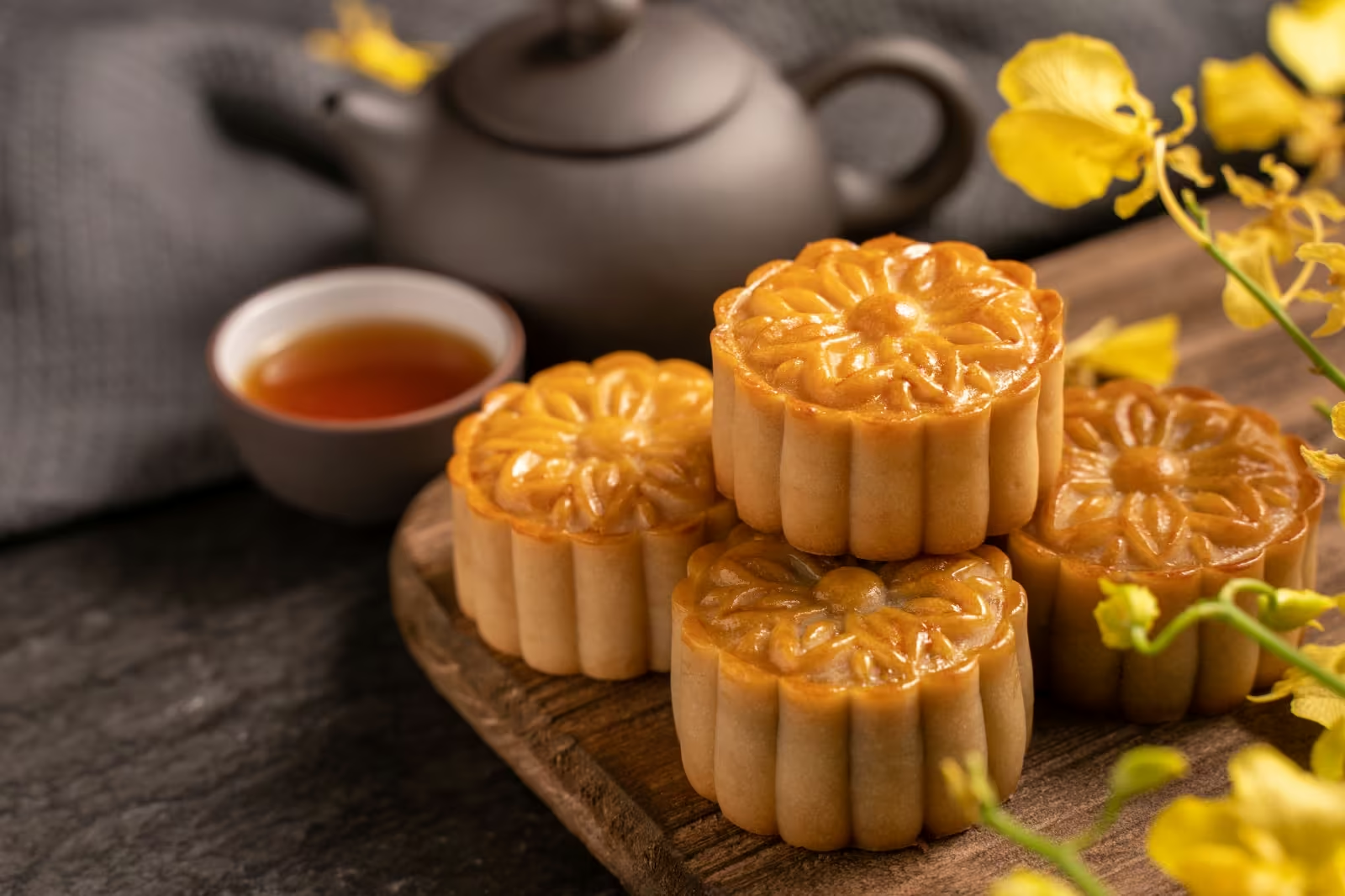
The Mid-Autumn Festival arrives at a time when summer is fading and autumn is settling in. Celebrated on the fifteenth day of the eighth lunar month, it brings families together for mooncakes, tea, lanterns, seasonal foods, and a chance to admire the full moon.
Traditional Chinese Medicine, or TCM, looks at this same time of year through a seasonal lens. Autumn is associated with the Metal element, the Lung and Large Intestine systems, and the gradual shift from the outward energy of summer toward the quieter months ahead.
Seasonal thinking also appears in Chinese herbal medicine, where practitioners may consider changes in weather and season alongside a person’s individual needs.
The Mid-Autumn Festival is not a TCM holiday, and its foods and customs should not be treated as medical treatments. Still, the two traditions share an appreciation for seasonality, moderation, nourishment, and slowing down as autumn begins.
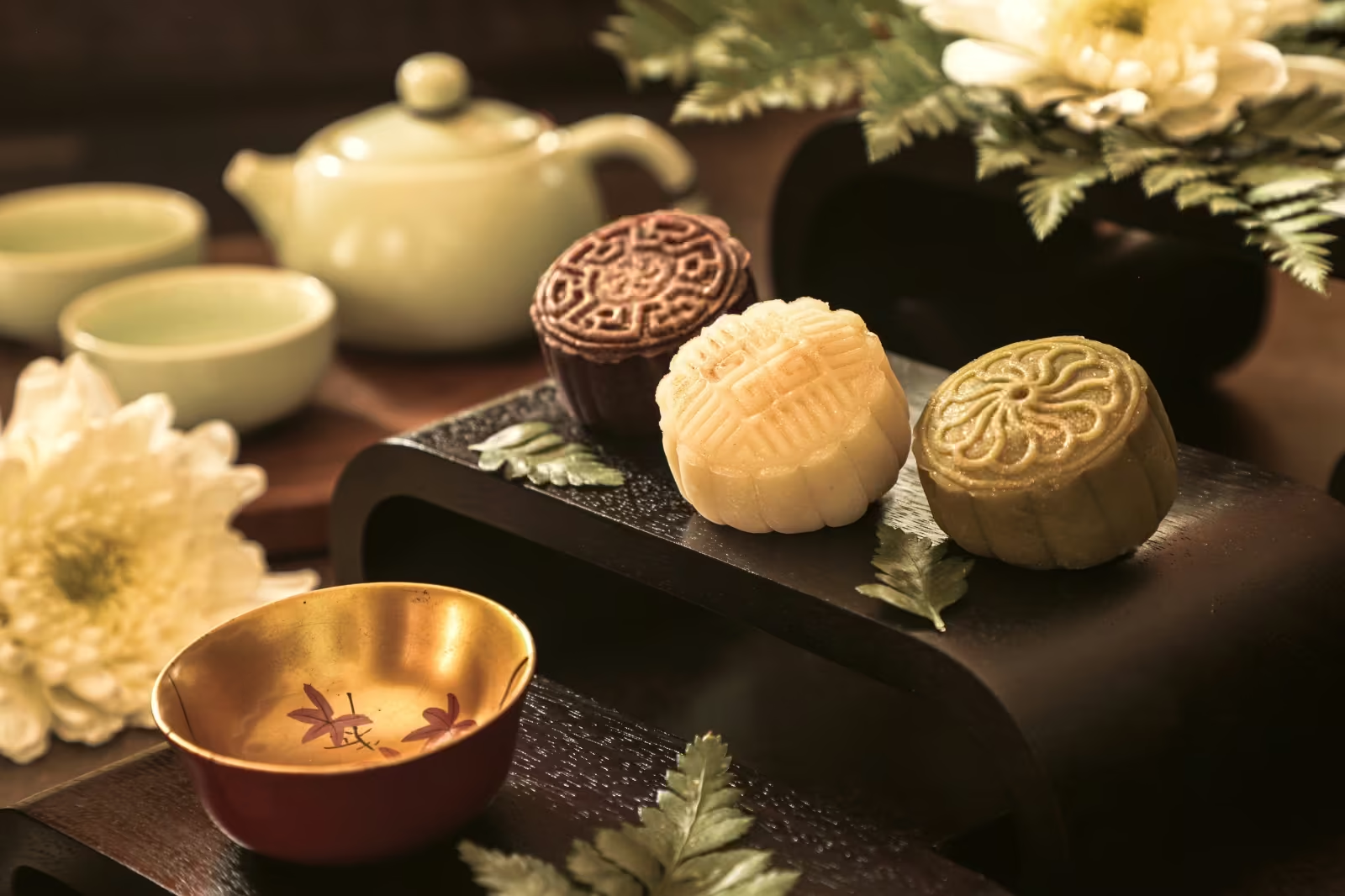
Mid-Autumn falls when the heat and activity of summer are starting to ease. In TCM, autumn represents a period of gathering and conserving. Nature is changing, daylight is getting shorter, and the year is moving toward winter.
The festival has a similar rhythm. Families gather for a meal, share mooncakes, drink tea, and often end the evening by looking at the moon.
These customs developed from cultural tradition rather than Chinese medicine, but the timing makes the overlap easy to see.
TCM does not treat every season the same way.
Food choices, daily routines, and herbal practices may change according to the weather, the time of year, and the individual. Autumn traditionally receives more attention to dryness and the gradual cooling of the environment.
Chinese herbal formulas are also chosen for the individual rather than prescribed simply because autumn has arrived.
For most people celebrating Mid-Autumn, the seasonal idea can be much simpler. Pay attention to the weather, enjoy foods that suit the time of year, and allow the evening to slow down naturally.
Mid-Autumn has long been associated with the harvest and family reunion.
The table may be full, but the evening often becomes quieter as it goes on. By the end of the meal, people may linger over tea or head outside to see lanterns and the moon.
The slower pace feels different from a summer evening and suits the season without turning the celebration into a set of wellness rules.
In the Five Phases system used in TCM, autumn corresponds with the Metal element.
Metal is traditionally connected with the Lung and Large Intestine systems. The Lung is associated with breathing and the movement of qi.
TCM also connects Metal with themes such as sadness, grief, order, and letting go.
These ideas belong to the traditional Chinese medical framework. They should not be read as direct explanations of modern anatomy or physiology.
Metal is often described through ideas of gathering, refinement, and release.
The connection is easy to understand when looking at nature. Spring brings new growth. Summer brings expansion. By autumn, crops are harvested, leaves begin to fall, and plants start preparing for winter.
Mid-Autumn happens right in the middle of that seasonal change.
A festival meal can still be generous and celebratory. The autumn connection simply brings more attention to pacing, variety, and enjoying rich foods without making every dish heavy.
Yin and yang describe complementary qualities in Chinese philosophy.
Summer is associated more strongly with yang because it is warmer, brighter, and more active. Winter leans more toward yin because it is colder, darker, and quieter.
Autumn sits between them.
During the Mid-Autumn season, the warmth of summer has not disappeared, but the days are beginning to shorten and cooler weather is approaching.
The festival evening can follow the same pattern. A lively family dinner may turn into tea, relaxed conversation, lantern viewing, or quiet moon gazing.
Dryness is one of the qualities traditionally linked with autumn in TCM.
That association helps explain why seasonal eating during autumn often includes soups, cooked vegetables, fruit, and foods with naturally high water content.
The Lung system is traditionally considered sensitive to dryness. TCM also connects the Metal element with the color white, which is one reason pale foods such as pears, white fungus, and lily bulb frequently appear in conversations about autumn eating.
Weather varies widely from place to place, of course. Not every autumn climate is dry.
Still, these ingredients can make a pleasant addition to a Mid-Autumn table, especially alongside richer foods such as mooncakes.
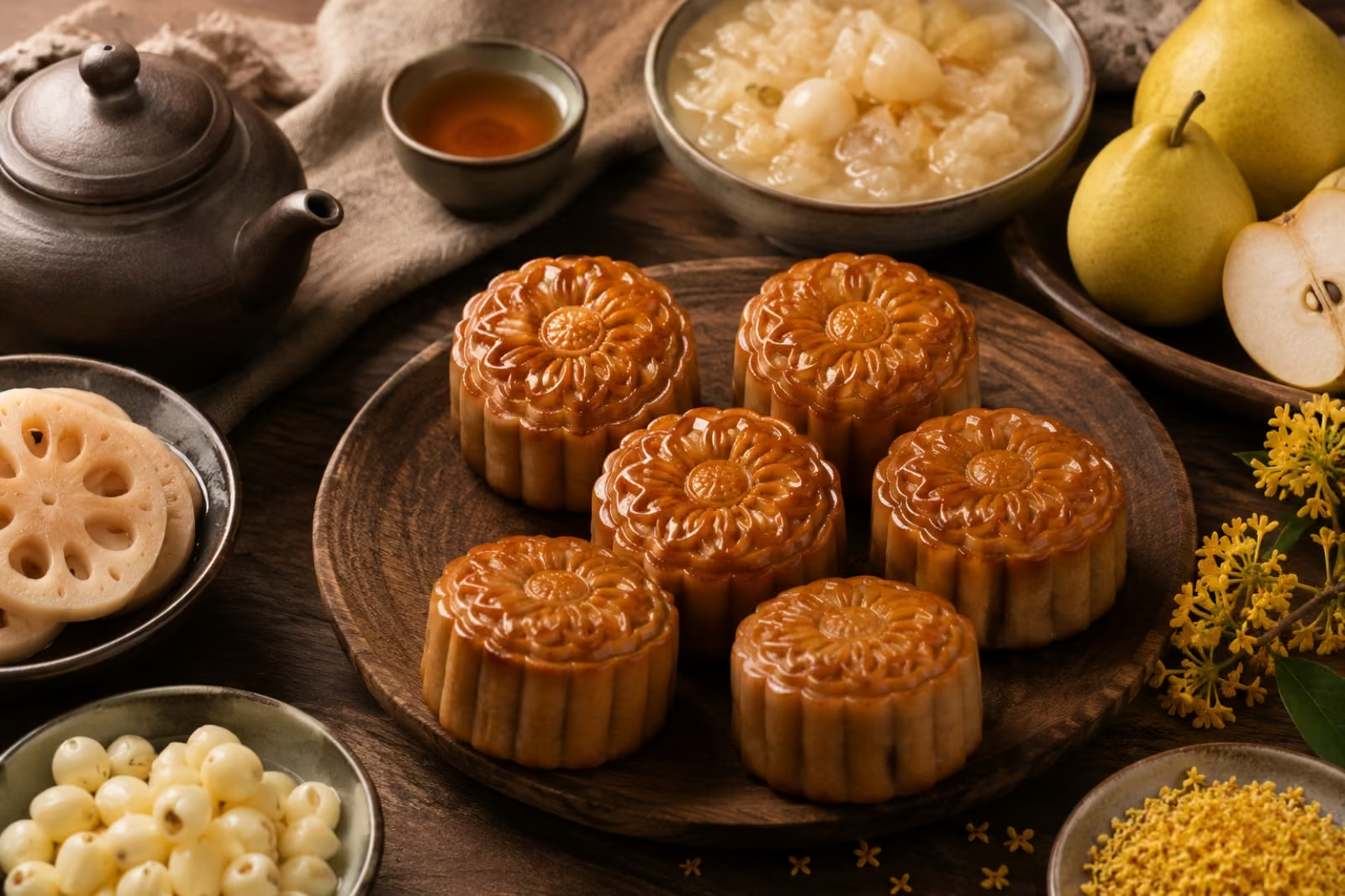
Food is where the connection between festival customs and seasonal eating becomes easiest to appreciate.
Some foods belong directly to Mid-Autumn tradition. Others simply suit the season and help create more variety around the table.
Mooncakes symbolize the full moon, reunion, and togetherness. Because they are rich and dense, families often cut them into small wedges and share several flavors after the main meal.
Fresh, poached, or gently cooked pears offer a light contrast to mooncakes. They are also common in Chinese autumn dishes, sometimes paired with white fungus.
White fungus is often simmered in soups and desserts. Lotus root can be stir-fried or added to soup, while lily bulb works in both sweet and savory dishes. These traditional ingredients fit naturally into autumn meals.
Fragrant osmanthus flowers bloom around the Mid-Autumn season. They are used in tea, desserts, syrups, rice dishes, and traditional drinks, adding a distinctive autumn flavor without overwhelming the meal.
Warm tea is an easy companion to mooncakes.
Tea gives guests something less sweet to sip between bites and naturally encourages a slower dessert course.
Oolong works well with nutty, sesame, or lotus seed fillings. Pu’er has a deeper, earthier flavor that can stand up to richer mooncakes.
Chrysanthemum tea gives the table a lighter floral option, while osmanthus tea has an obvious connection with the season.
Tea creates a pleasant contrast with the sweetness of mooncakes and gives everyone a reason to linger a little longer after dinner.
Family reunion lies at the heart of the Mid-Autumn Festival.
The full moon has long represented completeness and togetherness. Families may gather outside to admire it after dinner, while people living far from home can look at the same moon and think of relatives elsewhere.
There is also an interesting contrast with the season itself.
Autumn is moving toward shorter days and a quieter evenings, yet Mid-Autumn brings people together. Nature is slowing down while families gather around a bright full moon.
TCM traditionally connects autumn and Metal with sadness, grief, and letting go. These associations do not mean autumn causes sadness, nor does moon gazing act as a form of treatment.
Sometimes the value of the tradition is much simpler.
A few quiet minutes outside after a busy family meal can create space for conversation, reflection, or simply enjoying the night.
A seasonal Mid-Autumn meal does not need a long list of rules.
Start with foods your family already enjoys. Include vegetables, grains, protein, and perhaps a warm soup or cooked dish. Lotus root can work well in either a soup or side dish.
Bring out the mooncakes after dinner and slice them into small pieces so everyone can share different flavors.
Fresh pears or another seasonal fruit can sit alongside dessert.
Serve tea based on what your guests actually like. Oolong, pu’er, chrysanthemum, and osmanthus are all good choices.
After the meal, take a short walk, continue talking over tea, or spend some time looking at the moon. If qigong is already part of your routine, the quieter part of the evening may also be a comfortable time to practice.
There is no need to turn the festival into a health program.
Mid-Autumn already gives families a chance to gather, enjoy seasonal food, slow down, and appreciate the change of season.
The Mid-Autumn Festival is a traditional Chinese festival celebrated on the fifteenth day of the eighth lunar month. It is closely associated with family reunion, the harvest, moon viewing, lanterns, and sharing mooncakes.
Mooncakes are closely associated with the full moon and family reunion. Their round shape reflects ideas of wholeness and togetherness, and families often cut and share them during the celebration.
The full moon has long been a symbol of reunion and completeness in Chinese culture. Families traditionally admire it together, while people who live far apart may view the same moon as a reminder of one another.
Mooncakes are the most recognizable festival food. Depending on the region and family tradition, meals may also include seasonal fruit, lotus root, pomelo, taro, pumpkin, sesame dishes, and other local specialties.
In TCM’s Five Phases framework, autumn is associated with the Metal element and the Lung and Large Intestine systems. The season is also traditionally connected with dryness, gathering, and the gradual movement from stronger yang toward yin.
Autumn food traditions often include pears, white fungus, lotus root, lily bulb, sesame, soups, and gently cooked vegetables. These foods can be part of a seasonal diet, but they should not be treated as substitutes for medical care.
Mid-Autumn already has plenty of meaning on its own, from shared food and mooncakes to time together under the full moon.
A TCM perspective can also draw attention to the seasonal changes happening around the festival and how your own routines may shift as autumn settles in.
At ACA Acupuncture & Wellness, care is based on the individual rather than the season alone. Your practitioner can talk with you about acupuncture, Chinese herbal medicine, and other TCM approaches that may fit your needs.
Ready to bring seasonal TCM ideas into your routine? Book a visit with ACA Acupuncture & Wellness and talk with a practitioner about what may suit you this autumn.
Sources:
Academy of Nutrition and Dietetics. Fares of Faith: Mid-Autumn Festival. July 24, 2023.
Marshall, Anita Chen. Traditional Chinese Medicine and Clinical Pharmacology. Springer Nature / PubMed Central. March 2, 2020.
Beijing Municipal Government. Customs Related to the Mid-Autumn Festival. October 18, 2021.

Recent Comments