Traditional Chinese herbs support weight loss by correcting the root patterns behind weight gain, improving digestion, regulating appetite, and reducing fluid retention. Practitioners match formulas to patterns such as Spleen Qi Deficiency, Dampness, Liver Qi Stagnation, and Phlegm Heat rather than focusing only on calories. Combined with acupuncture therapy, dietary changes, and gentle movement, these remedies increase energy, calm stress eating, and support steady, sustainable changes in body composition.
For many, weight loss is not just about a number on the scale. It is about fatigue that never goes away, cravings that feel out of control, bloating after almost every meal, and frustration when standard diets stop working.
Traditional Chinese Medicine gives a different lens. Instead of counting calories alone, practitioners look at qi, digestive fire, body fluids, and how stress and emotions move through the body. In a clinical setting, practitioners use Chinese herbs, acupuncture therapy, and individualized lifestyle strategies to address the specific root patterns driving weight gain rather than treating the surface symptom of “extra fat.”
Key Takeaways
TCM looks at the root pattern behind weight gain, such as Spleen Qi Deficiency, Dampness, Liver Qi Stagnation, and Phlegm Heat, rather than focusing only on calories.
Chinese herbs are most effective in formulas, where qi tonics, damp-transforming herbs, and digestive aids work together to support metabolism, appetite regulation, and fluid balance.
Acupuncture and auricular points help manage cravings, stress eating, digestion, and metabolic regulation, which can improve the results you get from diet and movement.
Lifestyle therapies like Chinese dietary therapy, Qi Gong, and Tai Chi reinforce herbal treatment, especially for stress-driven overeating and long-term weight maintenance.
Safe use of Chinese herbs for weight loss requires proper pattern differentiation, awareness of medications and medical conditions, and guidance from a licensed practitioner.
How TCM Approaches Weight Gain: The Root-Cause Model
When evaluating weight gain in TCM, the focus is not on “willpower” but on how internal systems are functioning. Two people can share the same BMI yet have completely different underlying patterns.
TCM vs Western understanding of obesity
In Western medicine, obesity is usually framed around energy balance, insulin resistance, inflammation, and hormonal changes in leptin, ghrelin, and cortisol. Treatment often focuses on diet, exercise, medications, and sometimes surgery.
In Traditional Chinese Medicine, we still care about blood sugar and hormones, but we translate your symptoms into energetic patterns. The main weight-gain patterns we see include:
Spleen Qi Deficiency
Dampness and Damp-Phlegm accumulation
Liver Qi Stagnation
Phlegm Heat
Each pattern has its own symptom profile, tongue and pulse findings, and matching herbal strategy.
Spleen Qi Deficiency
The Spleen in TCM is responsible for transforming food into qi and transporting fluids. When Spleen Qi is weak, digestion slows, nutrients are not transformed efficiently, and fluids accumulate into Dampness.
Common signs include:
Fatigue after eating
Loose stools or soft bowel movements
Bloating, especially in the lower abdomen
Tendency to gain weight easily even with modest eating
Pale or swollen tongue, often with teeth marks on the sides
Herbs such as Atractylodes (Bai Zhu) and Astragalus (Huang Qi) work with this pattern by tonifying qi and improving fluid transport.
Dampness and Damp-Phlegm
Dampness is a central concept in TCM weight gain. When fluids are not moved or transformed properly, they congeal into Dampness and sometimes into Phlegm. In the body, this can look like:
Heavy limbs, puffiness, or edema
Swollen abdomen or a feeling of “heaviness”
Thick body type that feels “soft” rather than muscular
Greasy tongue coating, often white or yellow
Brain fog and sluggishness
Herbs like Job’s Tears (Yi Yi Ren) and Lotus Leaf (He Ye) help drain Dampness and promote urination. Digestive herbs like Chinese Hawthorn (Shan Zha) and Pu-erh tea support the breakdown of rich foods that generate Dampness.
Liver Qi Stagnation
When stress, frustration, and emotional tension are not resolved, the Liver channel can become constrained. This often shows up as:
Emotional eating, especially sweets, alcohol, or heavy comfort foods
PMS irritability, chest tightness, or frequent sighing
Alternating constipation and loose stools
Weight gain around the abdomen or flanks
Herbs such as Bupleurum (Chai Hu) help course Liver Qi and address the emotional drivers behind overeating.
Phlegm Heat
Phlegm Heat is a more advanced form of Dampness where excess heat “cooks” fluids and creates thick, sticky phlegm. In modern terms, this can correlate with inflammation and metabolic dysfunction.
Signs may include:
Strong thirst, especially for cold drinks
Red face or a tendency to feel hot
Greasy yellow tongue coat
High appetite with a preference for fried or spicy foods
Central obesity and metabolic markers such as elevated lipids
Herbal approaches here combine phlegm-resolving herbs with cooling components and careful dietary support.
Why herbs alone are not enough
Herbs rarely create sustainable weight loss on their own because several systems in the body need to be regulated at the same time. Effective results usually depend on:
Correct pattern identification
Appropriate herbal formulas, not just single herbs
Acupuncture or auricular treatment for cravings, stress, and digestion
Dietary changes that match your pattern
Movement practices to move qi and regulate mood
When all of these work together, patients typically experience better energy, reduced cravings, improved digestion, and healthier body composition over time.
Top 12 Chinese Herbs for Weight Loss
Category 1: Qi Tonics for Low Metabolism
1. Ginseng (Panax ginseng, Ren Shen)
TCM function: Ginseng strongly tonifies Yuan Qi, supports Spleen and Lung Qi, and helps generate fluids. It is reserved for patients with significant fatigue, cold intolerance, and depleted qi.
Western mechanism: Panax ginseng has been studied for effects on energy metabolism, fatigue reduction, cognitive function, and glucose regulation. Some data suggest mild improvements in insulin sensitivity and energy expenditure.
Best suited for: Patients who feel exhausted, gain weight easily, and struggle to start or maintain exercise. Often pale, easily short of breath, and may have low appetite yet still gain weight.
2. Astragalus (Huang Qi)
TCM function: Astragalus tonifies Spleen and Lung Qi, raises yang, and helps secure the exterior. It supports fluid metabolism and is frequently used for chronic fatigue, spontaneous sweating, and frequent colds.
Western mechanism: Astragalus has been studied for immunomodulatory, antioxidant, and potential anti-inflammatory effects. Some research suggests it may help with glucose control and lipid metabolism.
Best suited for: Patients with low energy, easy weight gain, mild edema, and a tendency to pick up infections. It fits Spleen Qi Deficiency with Dampness.
3. Atractylodes (Bai Zhu)
TCM function: Atractylodes is a key Spleen Qi tonic that also dries Dampness. It strengthens digestion, improves fluid transport, and helps reduce bloating and heaviness.
Western mechanism: Atractylodes species show digestive and diuretic effects in experimental studies. They may support gut motility and fluid balance.
Best suited for: Patients with soft stools, swelling, abdominal distension, and a soft, heavy body type. It is ideal when low metabolism and fluid accumulation are both present.
Category 2: Herbs That Transform Dampness and Reduce Water Retention
4. Job’s Tears (Yi Yi Ren, Coix seed)
TCM function: Yi Yi Ren strengthens the Spleen, leaches out Dampness, and clears mild Heat. It supports urination and reduces edema without damaging qi.
Western mechanism: Coix seed has been studied for anti-inflammatory, diuretic, and metabolic effects. It may influence lipid metabolism and fluid regulation.
Best suited for: Patients with puffiness, swollen ankles, “water weight,” and a sense of heaviness. Often used for Dampness patterns with mild heat signs.
5. Lotus Leaf (He Ye)
TCM function: He Ye raises clear yang, transforms Dampness, and helps stop bleeding. In weight management, it is valued for its role in resolving Dampness and supporting digestion of fats.
Western mechanism: Lotus leaf extracts have been studied for lipid-lowering effects, antioxidant properties, and potential influence on fat absorption.
Best suited for: Patients with central weight gain, greasy tongue coating, and a diet high in fried or heavy foods. Often combined with hawthorn and other digestion-supporting herbs.
6. Dandelion Root (Pu Gong Ying)
TCM function: Pu Gong Ying clears Heat and resolves toxicity, and also promotes urination. In selected weight-loss formulas, it supports liver and gallbladder function and helps move fluids.
Western mechanism: Dandelion root has mild diuretic properties and has been investigated for liver support and antioxidant effects. It may assist bile flow and digestion of fats.
Best suited for: Patients with signs of Heat and Dampness, such as acne, red complexion, or bitter taste in the mouth, along with bloating or sluggish digestion.
Category 3: Herbs That Improve Digestion and Break Down Fat
7. Chinese Hawthorn (Shan Zha)
TCM function: Shan Zha breaks up food stagnation, especially from meat and greasy foods, and invigorates Blood. It is a classic choice for heavy, rich meals.
Western mechanism: Hawthorn has been studied for cardiovascular support, including effects on lipids and circulation. It may influence digestion of fats and improve blood flow.
Best suited for: Patients with indigestion after rich meals, abdominal fullness, and a preference for meat or fried foods. Often seen in Damp-phlegm patterns.
8. Pu-erh Tea (Fermented Camellia sinensis)
TCM function: Pu-erh warms the middle, transforms Dampness, and helps digest food stagnation. It is often recommended after meals that are oily or heavy.
Western mechanism: Pu-erh tea has been studied for its impact on lipid metabolism, gut microbiota, and weight modulation in animal and some human studies. It may support reduced triglycerides and improved cholesterol profiles.
Best suited for: Patients who tolerate caffeine and benefit from a warm digestive tea, especially after meals. Useful for those with mild Dampness and no significant heat signs.
Category 4: Herbs That Regulate Cravings and Appetite
9. Cinnamon Twig (Gui Zhi)
TCM function: Gui Zhi warms and unblocks the channels, harmonizes the Ying and Wei, and supports Spleen and Kidney yang in some formulas. In weight support, we mainly value its warming and regulatory effects.
Western mechanism: Cinnamon has been studied for effects on blood sugar regulation and insulin sensitivity. Stable blood sugar can reduce energy crashes and sugar cravings.
Best suited for: Patients who feel cold easily, crave sweets, and experience dips in energy between meals. Often used in small amounts as part of a broader formula.
10. Goji Berry (Gou Qi Zi, Lycium barbarum)
TCM function: Goji tonifies Liver and Kidney, nourishes Blood and yin, and benefits the eyes. While not a classic “weight loss herb,” it supports vitality and stable energy, which help with long-term lifestyle change.
Western mechanism: Goji berries are rich in carotenoids and polysaccharides and have been studied for antioxidant, metabolic, and neuroprotective effects. Some research suggests modest benefits on waist circumference and metabolic parameters when part of an overall plan.
Best suited for: Patients with fatigue, dry eyes, mild yin deficiency, and a busy schedule who need nutrient density without heavy calories. We often use it in soups and teas.
Category 5: Herbs for Stress-Related Overeating
11. Bupleurum (Chai Hu)
TCM function: Chai Hu soothes Liver Qi, raises yang, and harmonizes Shaoyang. It is central in formulas that address mood swings, irritability, and stress-related digestive issues.
Western mechanism: Bupleurum extracts show anti-inflammatory and hepatoprotective properties in lab studies. Clinically, it helps patients whose stress and mood strongly influence their eating patterns.
Best suited for: Patients who experience emotional eating, tension in the chest or ribs, premenstrual mood changes, and digestive fluctuations when stressed.
12. Mugwort (Ai Ye)
TCM function: Ai Ye warms the channels, disperses Cold, and stops bleeding. In weight management, it is most relevant as a moxibustion herb used externally rather than as an internal daily tea.
Western mechanism: Mugwort is often studied in the context of moxibustion and its effects on circulation, pain, and local tissue temperature. Warmer tissues can support metabolism in cold-type patterns.
Best suited for: Patients with cold hands and feet, low body temperature, sluggish digestion, and weight gain that worsens in cold weather. Often used in moxa sticks over abdominal and leg points.
Traditional Chinese Medicine Techniques for Weight Loss
Acupuncture for Weight Reduction
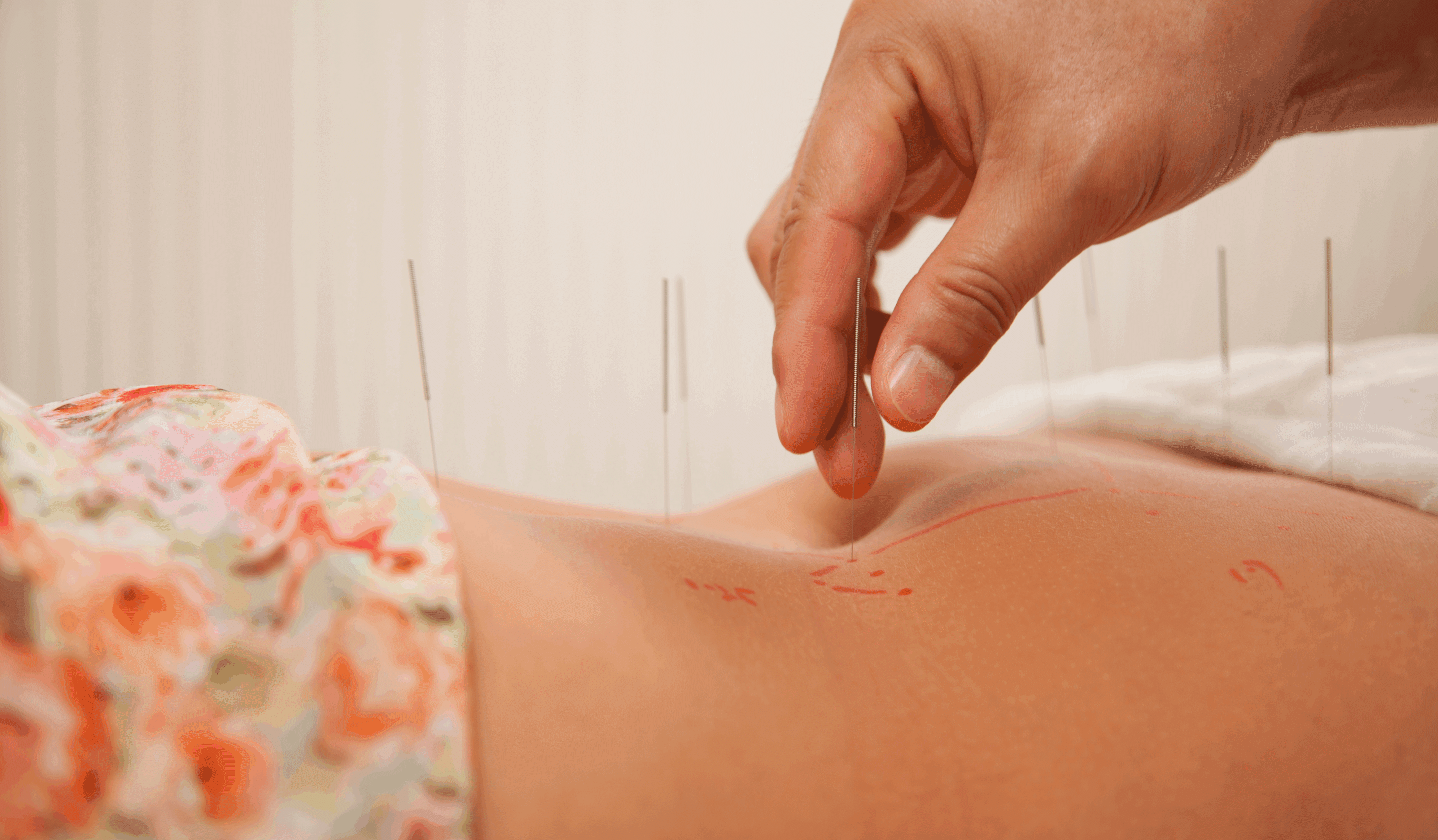
Acupuncture is a core part of many weight-loss treatment plans. We use both body points and ear (auricular) points to influence digestion, appetite, stress, and metabolism.
Key body points
ST36 (Zusanli): Supports Spleen and Stomach Qi, enhances digestion, and improves overall energy. We often call it one of the “longevity points.”
CV12 (Zhongwan): Regulates the middle burner, harmonizes Stomach and Spleen, and reduces bloating and fullness.
SP6 (Sanyinjiao): Influences the Spleen, Liver, and Kidney. Helpful for fluid metabolism, hormonal balance, and stress.
LI11 (Quchi): Clears Heat and regulates Qi and Blood. Often used in patterns with Phlegm Heat or inflammatory components.
Auricular points for appetite and cravings
We frequently add ear acupuncture to weight-loss sessions, using points such as:
Shenmen for stress, anxiety, and emotional regulation
Mouth for compulsive eating and oral fixation
Stomach for digestion and appetite
Endocrine for hormonal modulation
These points help break the cycle of stress eating and snacking out of habit rather than true hunger.
How acupuncture regulates cravings and metabolism
Clinical research suggests that acupuncture can influence:
Levels of ghrelin and leptin, hormones that regulate hunger and satiety
Sympathetic and parasympathetic balance, which affects digestion and fat storage
Stress pathways and cortisol levels, which play a major role in abdominal fat and cravings
In practice, many patients report:
Less urge to snack late at night
Improved digestion and less bloating
Better sleep, which indirectly improves weight loss efforts
Electroacupuncture
For some patients, we use gentle electrical stimulation on selected points. Electroacupuncture can:
Enhance the regulatory effect on digestion and metabolism
Support pain relief, making exercise more accessible
Provide a stronger stimulus in stubborn patterns such as longstanding Damp-phlegm
Cupping Therapy
Cupping uses suction to lift the skin and underlying tissues. In TCM terms, this mobilizes Qi and Blood in areas of stagnation. In modern language, it improves microcirculation and tissue metabolism.
For weight-related concerns, we may apply cupping along:
The upper and lower back, where the Bladder channel reflects internal organ states
The flanks and abdomen, in select patterns and with gentle techniques
Patients often notice a sense of lightness and reduced tension after cupping, which can make movement and exercise more comfortable.
Effects on stubborn fat regions
Cupping is not a magic “fat vacuum.” However, by improving circulation, reducing local stagnation, and modulating nervous system tension, it can support:
Better responsiveness to diet and exercise in stubborn zones
Relief of myofascial tightness that restricts movement
A general feeling of warmth and activation in previously “stuck” areas
Moxibustion for cold-type weight gain patterns
Moxibustion uses burning mugwort near or on acupuncture points to warm channels and dispel Cold. For patients with:
Cold extremities
Low basal body temperature
Sluggish digestion and loose stools
Weight gain that worsens in cold seasons
Moxa can be a powerful adjunct. We commonly apply moxa over ST36, CV4, CV8 (indirectly), and along the lower back, always with professional safety measures.
Reflexology for Weight Management
Reflexology maps body systems onto areas of the feet and hands. While it is not a traditional core TCM practice, we integrate reflexology concepts into holistic care for patients who enjoy bodywork.
Foot zones we focus on
Stomach and intestines zones for digestion and motility
Liver and gallbladder zones for fat metabolism and detoxification
Spleen zone for fluid metabolism and qi production
Adrenal glands zone for stress response and cortisol modulation
Gentle, focused pressure in these regions can relax the nervous system and improve the way your body processes food.
Role in stress reduction
For many patients, reflexology becomes a calming ritual that:
Reduces sympathetic overdrive
Supports better sleep
Lowers the drive to use food as a coping tool
In that way, it supports the same overall goal as acupuncture and herbs: regulating the systems that influence weight, not just treating the symptom of fat.
The Effectiveness of Chinese Herbal Medicine for Weight Loss
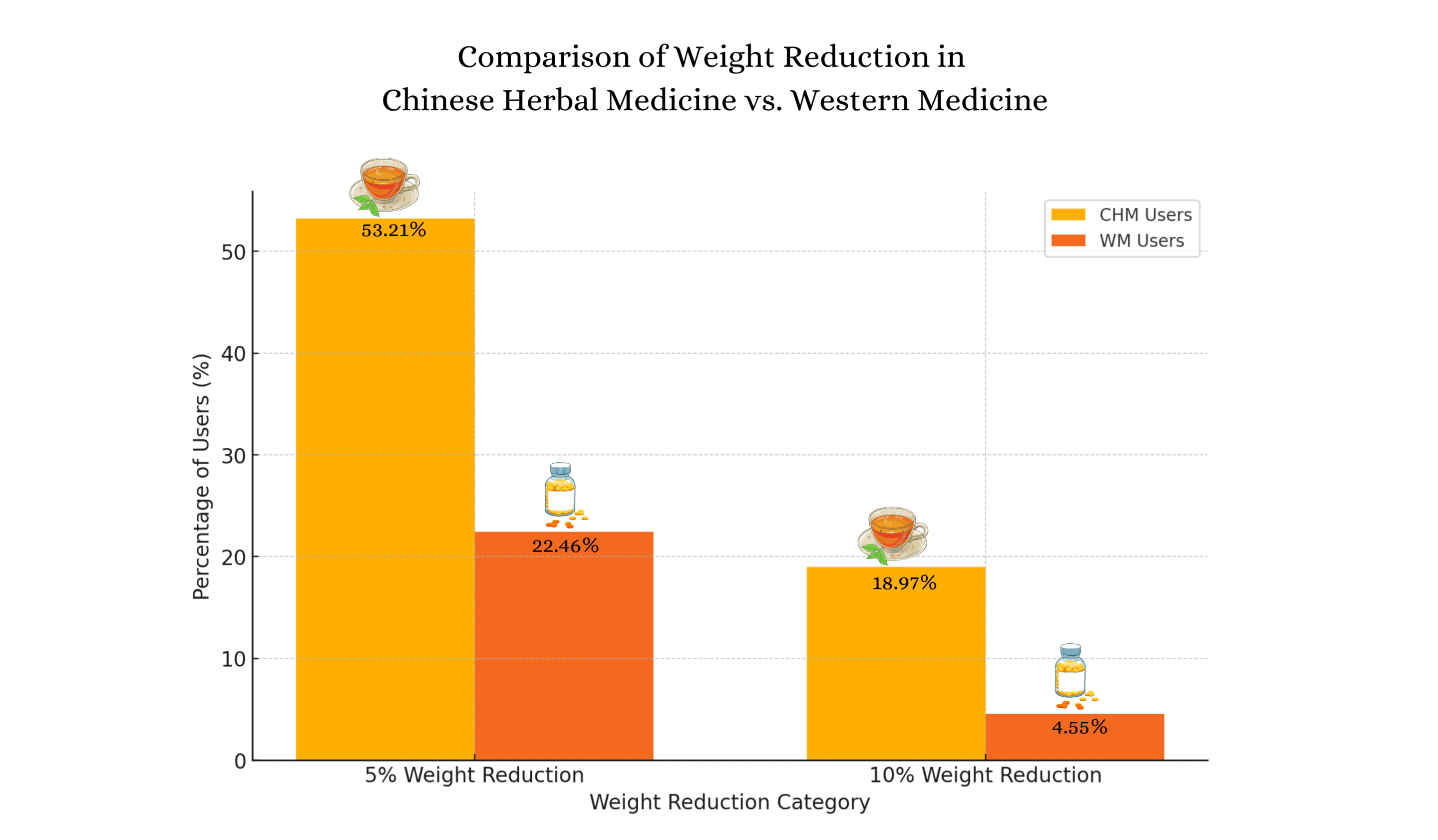
A recent study compared the effectiveness of Chinese herbal medicine (CHM) to Western medicine (WM) in promoting weight loss among an obese population. The study revealed that CHM was significantly more effective in achieving substantial weight reduction. According to the research published in Frontiers in Pharmacology, 53.21% of individuals using CHM achieved at least a 5% reduction in body weight, while only 22.46% of those using WM reached the same milestone. Additionally, the results showed that 18.97% of CHM users achieved a 10% weight reduction compared to just 4.55% in the WM group .
These findings underscore the potential of Chinese herbal medicine in addressing obesity and promoting more effective weight management. By targeting the root causes of weight gain and enhancing the body’s natural functions, CHM provides a holistic and natural alternative to conventional weight loss medications. This evidence supports the growing interest in using traditional Chinese herbs as a valuable part of weight loss strategies.
TCM Diet for Weight Loss: What Our Practitioners Recommend
Diet often determines whether herbal and acupuncture treatments will succeed or stall. We tailor our recommendations to your pattern, but certain principles apply to most weight-loss patients.
Spleen-strengthening food list
To support Spleen Qi and reduce Dampness, we often encourage:
Lightly cooked vegetables, especially squash, carrots, and greens
Whole grains in moderate amounts, such as millet, barley, and brown rice
Lean proteins like fish, lentils, and small amounts of organic poultry
Warm, simple soups and congee, especially in colder weather
Spices such as ginger, cinnamon, and cardamom in appropriate amounts
Foods that increase dampness (what to reduce)
To prevent Dampness and Phlegm, we typically ask patients to reduce:
Deep-fried foods
Heavy dairy, especially cheese and ice cream
Excessive sugar and refined carbohydrates
Overuse of cold, iced drinks
Highly processed foods and snacks
We do not require perfection. Instead, we coach patients to observe how these foods affect their body, digestion, and energy.
Cooking methods
From a TCM perspective, cooking methods influence how digestible a meal will be.
We favor:
Steaming
Light stir-frying
Braising
Slow cooking in soups and stews
We are more cautious with raw diets for Spleen Qi Deficiency, because too many raw, cold foods can weaken digestive fire and worsen bloating.
Warm vs cold foods
Warm does not only mean temperature. It also means the energetic nature of the food.
Cold, raw, and iced items can slow digestion in many patients
Moderately warm, cooked meals tend to support Spleen Qi and reduce cravings
We adjust recommendations based on the presence of Heat or Cold patterns.
Daily meal patterns
In clinic, we often advise:
Consistent meal timing to stabilize blood sugar and appetite
Satisfying, protein-rich breakfast to prevent late-day cravings
Smaller, earlier dinners for patients with evening indigestion or reflux
Mindful eating habits, such as chewing thoroughly and avoiding screens during meals
Qi Gong and Tai Chi for Hormonal and Metabolic Balance
Movement in TCM is not only about burning calories. It is about moving qi and Blood, smoothing Liver Qi, and calming the mind.
Best routines for beginners
We often start patients with:
Short, 10 to 20 minute Qi Gong sets that focus on breathing, spinal mobility, and gentle leg strength
Beginner Tai Chi forms that train balance, coordination, and mental focus
Patients who feel intimidated by gyms or intense workouts usually find these practices more inviting and sustainable.
How slow movement reduces cravings
Slow, coordinated movement combined with deep breathing can:
Lower baseline stress levels
Improve heart rate variability
Shift the nervous system toward a more parasympathetic state
When stress drops, emotional eating often follows. Many patients notice that their urge to stress snack decreases after regular Qi Gong or Tai Chi.
Cortisol regulation and emotional eating
Chronic stress elevates cortisol, which can:
Encourage fat storage around the abdomen
Increase cravings for high-sugar, high-fat foods
Disrupt sleep and recovery
By reducing stress physiology, mind-body practices help align the hormonal environment with your weight-loss goals.
When to Use Chinese Herbs And When Not To
Chinese herbs are powerful tools. At ACA Acupuncture & Wellness, we are careful to match them with the right people at the right time.
Medical conditions requiring caution
We take special care with patients who have:
Significant cardiovascular disease
Uncontrolled hypertension
Advanced liver or kidney disease
Autoimmune diseases
History of stroke or clotting disorders
In these situations, we may still use herbs, but with tighter monitoring and often in coordination with your primary physician or specialist.
Medication interactions
Many herbs are safe when used properly, but some may interact with:
Only a limited set of herbs are appropriate during these times, and some herbs mentioned in this guide are completely avoided. Always disclose pregnancy status and plans when we design your treatment.
Embrace a Holistic Journey to Weight Loss with TCM
At ACA Acupuncture and Wellness, our practitioners understand that achieving and maintaining a healthy weight requires more than quick fixes or rigid diets. Traditional Chinese Medicine (TCM) offers a comprehensive and personalized approach to weight management, focusing on harmonizing the body’s systems and addressing the root causes of weight gain. By combining the natural power of Chinese herbs, the targeted relief of acupuncture, and the restorative practices of reflexology, TCM supports a journey toward sustainable and balanced weight loss.
This holistic approach goes beyond shedding pounds—it prioritizes enhancing overall well-being, improving energy levels, and fostering emotional resilience. At ACA Acupuncture and Wellness, we’re here to guide and support you every step of the way on your journey to healthier living.
FAQs
What is the traditional Chinese medicine for weight loss?
Traditional Chinese medicine uses herbal formulas that match a patient’s underlying pattern, such as Spleen Qi Deficiency, Dampness, Liver Qi Stagnation, or Phlegm Heat. These formulas may include qi tonics, damp-draining herbs, digestive aids, and stress-regulating botanicals. The most effective plans combine herbs with acupuncture therapy, dietary strategies, and movement practices.
What is the 7-second weight loss secret?
There is no authentic “7-second secret” in TCM, as quick fixes do not address the root patterns behind weight gain. Many viral claims are oversimplified interpretations of breathing exercises or acupressure techniques. True TCM weight management relies on consistent treatment, pattern-specific herbs, and lifestyle changes.
What is the strongest herb to lose weight?
There is no universally “strongest” weight-loss herb because effectiveness depends on the patient’s pattern. For low metabolism, ginseng may be powerful, while herbs like lotus leaf or hawthorn are more effective for Dampness and food stagnation. The safest and strongest results come from targeted formulas rather than single herbs.
What is the 3-ingredient drink for weight loss?
TCM does not rely on trendy three-ingredient recipes, but simple teas like ginger, hawthorn, and pu-erh can gently support digestion and reduce Dampness. These ingredients warm the middle, move qi, and help break down rich foods. They are supportive tools, not stand-alone weight-loss solutions.
What is the Chinese technique for losing belly fat?
TCM treats abdominal weight by addressing the underlying pattern, often Spleen Qi Deficiency, Dampness, or Liver Qi Stagnation. Techniques may include acupuncture, moxibustion, cupping, and customized herbs that target fluid retention, stress eating, and sluggish digestion. Belly fat improves when qi moves smoothly, digestion strengthens, and the hormonal environment becomes more balanced.
What do Chinese people use to lose weight?
Many people in China use a combination of pattern-specific herbal formulas, acupuncture, and dietary therapy grounded in Spleen-supportive cooking. Daily habits such as warm meals, consistent movement, and stress-regulating practices like Tai Chi or Qi Gong also play a major role. Rather than focusing on quick fixes, the approach emphasizes steady, sustainable metabolic balance.
Hi, thanks for interested in our service. Our staff will contact you soon to make an appointment for you. If you want to make the appointment online yourslef, you can go to this page https://acaacupuncture.com/contact-us/request-an-appointment/. Thank you!









Request for an appointment
Hi, thanks for interested in our service. Our staff will contact you soon to make an appointment for you. If you want to make the appointment online yourslef, you can go to this page https://acaacupuncture.com/contact-us/request-an-appointment/. Thank you!