


The Large Intestine meridian is a primary Yang pathway in Traditional Chinese Medicine that governs elimination, detoxification, immune defense, and emotional release. It begins at the index finger, travels up the arm and across the shoulder, and ends beside the opposite nostril. This channel supports the body’s ability to let go physically, mentally, and emotionally, helping regulate bowel function, clear heat, relieve pain, and address unresolved grief. Imbalances often appear as constipation, skin issues, shoulder tension, rigidity, or difficulty letting go.
In TCM, the Large Intestine meridian represents a system of release and purification. It clears what the body no longer needs, maintains mental clarity, and supports the emotional boundaries associated with the Metal element. This meridian is often described as one that creates space, both physically and emotionally, allowing the body to function without unnecessary strain.
Its relevance today is clear. Prolonged sitting slows digestive rhythm. Digital stress tightens the neck and shoulders along the LI pathway. Emotional heaviness creates patterns of over-control, stubbornness, or avoidance. When the Large Intestine meridian is balanced, it restores healthy flow, strengthens immunity, and promotes a sense of lightness that makes change easier to navigate.
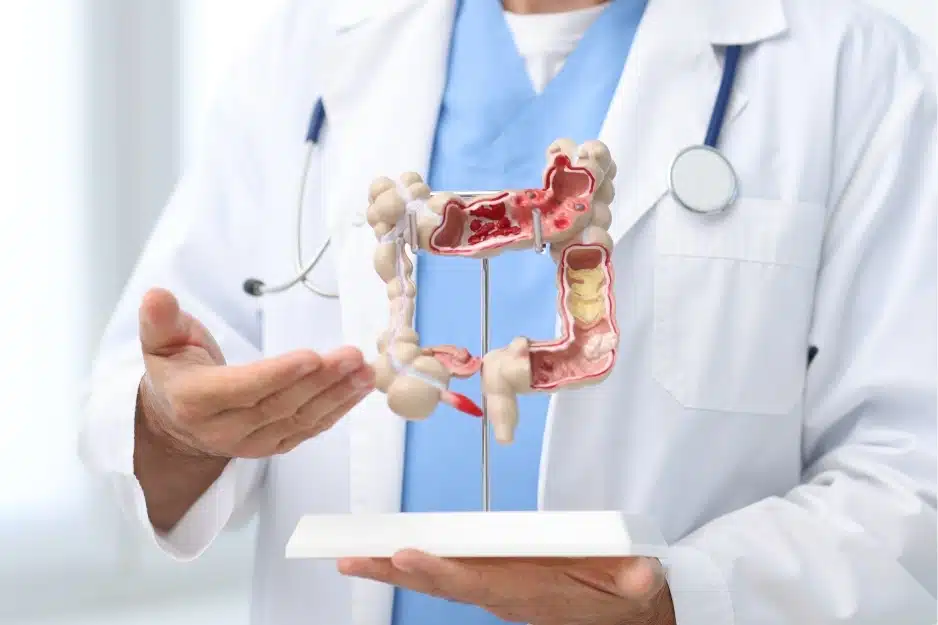
The Large Intestine meridian is a primary Yang pathway in Traditional Chinese Medicine that governs elimination, detoxification, immune defense, and emotional release. It begins at the index finger, travels up the arm and across the shoulder, and ends beside the opposite nostril. This channel supports the body’s ability to let go physically, mentally, and emotionally, helping regulate bowel function, clear heat, relieve pain, and address unresolved grief. Imbalances often appear as constipation, skin issues, shoulder tension, rigidity, or difficulty letting go.
In TCM, the Large Intestine meridian represents a system of release and purification. It clears what the body no longer needs, maintains mental clarity, and supports the emotional boundaries associated with the Metal element. This meridian is often described as one that creates space, both physically and emotionally, allowing the body to function without unnecessary strain.
Its relevance today is clear. Prolonged sitting slows digestive rhythm. Digital stress tightens the neck and shoulders along the LI pathway. Emotional heaviness creates patterns of over-control, stubbornness, or avoidance. When the Large Intestine meridian is balanced, it restores healthy flow, strengthens immunity, and promotes a sense of lightness that makes change easier to navigate.
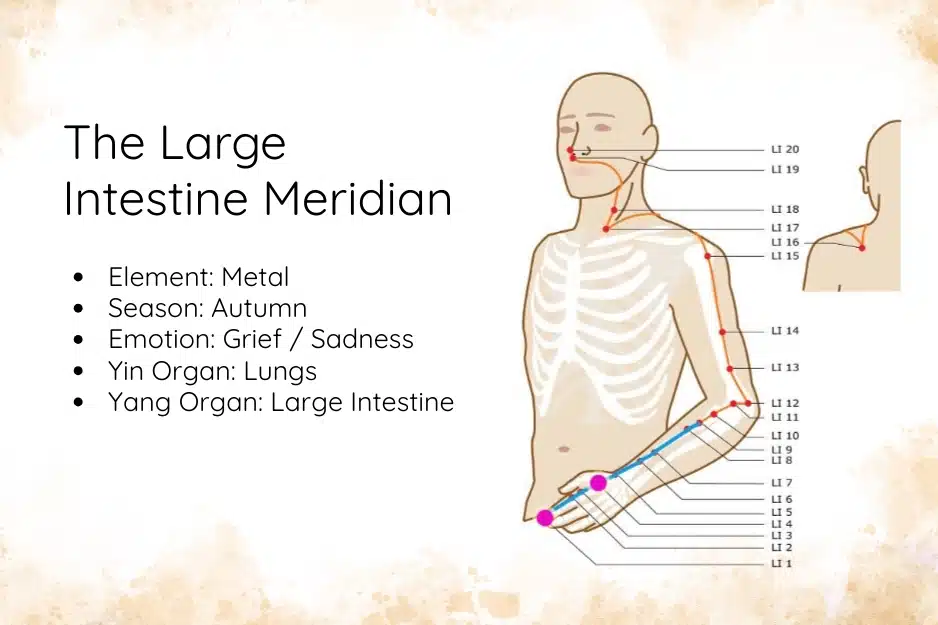
The Large Intestine meridian is a Yang Metal channel responsible for elimination, detoxification, immune protection, and the ability to let go on multiple levels.
It is one of the Twelve Primary Meridians and forms a Yin–Yang partnership with the Lung meridian. As a Yang pathway, it promotes movement by clearing waste, dispersing internal blockages, cooling heat, and directing Qi outward. Its Metal nature symbolizes clarity, refinement, and the ability to keep what is essential while releasing what is not.
Lung draws in the new; Large Intestine lets go of the old. Together they create a cycle of renewal that cleans the internal environment and stabilizes emotional resilience.
The Large Intestine meridian begins at LI1 on the index finger, runs along the arm and shoulder, ascends the neck, and ends beside the opposite nostril at LI20.
The pathway starts at the radial side of the index finger (LI1), travels up the hand and wrist, moves along the lateral forearm, crosses the elbow, continues up the upper arm, and enters the shoulder region. It passes through the supraclavicular fossa, ascends beside the neck and cheek, and terminates at LI20 near the opposite nostril.
Internal branches connect to:
These internal links explain why digestive, respiratory, immune, and skin symptoms often overlap clinically.
Because the channel crosses the arm, deltoid, trapezius, neck, jaw, and sinuses, LI imbalances often appear as:
Our acupuncturists at ACA often observe rapid improvement in upper-body tension when regulating this pathway.
The Large Intestine meridian regulates bowel movement, clears heat, supports immunity, relieves pain, and governs emotional release.
The Large Intestine meridian helps with:
Metal element imbalances often manifest as perfectionism, rigidity, or difficulty moving forward.
This meridian influences deeper patterns of refinement, clarity, and personal alignment.

Imbalances may appear as constipation, diarrhea, skin inflammation, shoulder pain, rigidity, grief, or difficulty letting go.
Modern living patterns amplify LI stagnation. We frequently see these patterns in:
Stagnation arises from stress, grief, dehydration, low-fiber diets, sedentary habits, and autumn dryness.
| Therapy | How It Supports the Large Intestine Meridian | Common Clinical Uses |
| Acupuncture | Regulates digestion, clears heat, relieves pain, supports immunity, and encourages emotional release along the LI pathway. |
|
| Cupping | Improves circulation, releases fascial tightness, and restores mobility along the meridian. |
|
| Moxibustion | Warms the channel, dispels cold, and boosts digestive metabolism. |
|
| Electroacupuncture | Enhances stimulation of LI points, reduces inflammation, and supports nerve repair. |
|
| Ear Seeding | Stimulates auricular points that correspond to bowel function and emotional regulation. |
|
| Reflexology | Activates LI-related zones on the feet and hands to support elimination and channel flow. |
|
Key points include LI4, LI10, LI11, LI15, LI18, and LI20 for pain relief, detoxification, digestive regulation, and emotional release.
The Large Intestine meridian governs the ability to release emotional burdens, process endings, and let go of outdated beliefs.
Metal distinguishes the pure from the impure—physically and psychologically.
The Lung and Large Intestine meridians both process grief—new, old, or unexpressed.
Constipation and emotional stagnation often mirror each other, since both reflect an inability to release what is no longer needed. When Qi cannot move freely, the body holds waste and the mind holds unresolved thoughts or feelings, creating a parallel between physical tension and emotional heaviness.
Metal energy peaks in autumn, heightening reflection and emotional sensitivity. This season naturally encourages letting go, but it can also intensify grief, nostalgia, or internal pressure for order. During this time, the Large Intestine meridian becomes more reactive to dryness, stress, and unprocessed emotions.

Warm, cooked foods, fiber-rich vegetables, hydration, and Metal-supportive ingredients help regulate the Large Intestine.

Hydration, daily movement, breathwork, boundary-setting, and decluttering strengthen Large Intestine function and support the emotional qualities of the Metal element.
Consistent water intake keeps the intestines lubricated and supports natural bowel rhythm throughout the day.
Gentle stretching, warm water, and slow breathing between 5 and 7 AM help the meridian function during its peak time and encourage regular elimination.
Deep, steady breathing strengthens Lung Qi, which naturally supports Large Intestine movement and emotional release.
Clearing physical space mirrors clearing emotional space, helping the mind let go of unnecessary attachments while reinforcing Metal element balance.
Apply steady pressure to LI4 on the hand to ease headaches, facial tension, and stress. This point helps move stagnant Qi and supports emotional release. It is especially helpful when tension gathers in the temples, jaw, or forehead. LI4 also promotes circulation throughout the upper body, making it one of the most versatile points for home care.
Rub or press along the forearm at LI10 to support digestion, boost energy flow, and warm the Large Intestine pathway. This point helps awaken sluggish Qi and prepares the channel for deeper work. It is often used to improve nutrient absorption and strengthen overall vitality. LI10 is also useful for arm fatigue caused by repetitive motions or long hours at a desk.
Use gentle pressure at LI11 for inflammation, heat symptoms, or skin flare-ups. This point clears internal heat and cools excess Yang that can irritate the skin or blood. It is frequently selected for conditions like acne, hives, or redness that worsen with stress or heat. LI11 can also help reduce feverish sensations and calm emotional agitation linked to overheating.
Press along the Large Intestine line from the shoulder to the jaw to reduce tension and improve mobility. This pathway often becomes tight from posture, stress, or repetitive device use. Working along the channel helps open circulation through the deltoid, trapezius, and neck muscles. It can also relieve jaw tightness and sinus pressure since the meridian travels toward the cheek and nose.
Combine abdominal massage with pressure on LI4 and LI10 to encourage bowel movement and stimulate peristalsis. This combination helps regulate digestive rhythm and soften stagnation in the lower abdomen. Gentle circular massage around the navel can improve circulation and ease discomfort. The protocol is also calming for the nervous system, which supports healthier elimination patterns.
Dryness and heat in the Large Intestine often surface as seasonal skin irritation.

The Large Intestine meridian is more than a pathway that influences digestion and immunity. It is a reminder that health improves when the body and mind feel safe to release what no longer serves them. When this channel flows smoothly, elimination is regular, shoulder and neck tension ease, and emotional heaviness begins to lift.
At ACA Acupuncture and Wellness, we take a holistic approach that supports this meridian on multiple levels. We combine acupuncture with cupping, moxibustion, ear seeding, and reflexology to help regulate digestion, clear heat, and ease upper-body tension. Our thermal therapy room enhances circulation and relaxation, creating the ideal environment for deeper healing. Each treatment plan is personalised, adjusting techniques and pacing to match your individual pattern and capacity for emotional and physical release.
If you notice signs of Large Intestine imbalance such as constipation, skin irritation, chronic shoulder tension, or difficulty letting go of stress or past experiences, we are here to support you. Our practitioners can assess your pattern, explain your treatment options, and guide you toward a balanced, sustainable state of health.
Contact us today to schedule your visit and experience how regulating the Large Intestine meridian can help you feel lighter, clearer, and more at ease in your body.
Sources:
Large intestine meridian. (n.d.). ScienceDirect Topics: Medicine and Dentistry; Immunology and Microbiology. Elsevier.
Autumn has the strongest influence on the Large Intestine meridian. This season corresponds to the Metal element, which governs dryness, emotional reflection, and the natural cycle of letting go. Imbalances surface more easily when the weather turns cool and dry.
Stress disrupts the meridian by tightening Qi flow and altering bowel rhythm. Prolonged tension affects both the gut and the upper body pathway, leading to constipation, diarrhea, neck tightness, and difficulty emotionally releasing pressure.
Yes, the Large Intestine meridian strongly affects skin health. Heat, stagnation, or dryness in the channel often show up as acne, rashes, redness, or inflammation because the meridian helps the body expel waste through the skin.
Yes, deep breathing strengthens Lung Qi, which directly supports the Large Intestine. These two meridians form a paired system. When the breath is slow and full, the body releases tension more easily and bowel movement becomes more regular.
Most people feel improvement within three to six sessions, depending on the pattern. Mild stagnation responds quickly, while chronic digestive, emotional, or skin-related issues take longer because the body must restore both Qi flow and moisture balance.
Sedentary behavior is the most disruptive habit for the Large Intestine meridian. Lack of movement slows peristalsis, increases upper-body tension along the pathway, and weakens the Metal element’s ability to release waste and emotional buildup.
LOCATIONS
MANHATTAN
QUEENS
NEW JERSEY
CALIFORNIA

The over $4 billion US acupuncture market offers a great opportunity with over 10% annual growth rates and a continuing flow of new patients interested in the benefits of acupuncture.