


Suction cupping and fire cupping both use negative pressure to lift tissue, but suction cupping creates vacuum with a pump or flexible cup, while fire cupping creates it with heat inside a glass cup. Fire cupping usually feels warmer and stronger, while suction cupping is more controlled and easier to adjust.
Not all cupping therapy works the same way. The method used changes the feel of treatment, the amount of control a practitioner has, the level of heat involved, and the overall safety profile. That distinction matters because someone seeking gentle recovery support may need a very different approach from someone with longstanding muscular tightness or a preference for stronger bodywork.
The comparison is also important because online content often flattens the topic into a simplistic choice between traditional and modern cupping. In reality, the better method depends on the goal of treatment, the body area involved, the patient’s tolerance, and the practitioner’s skill.
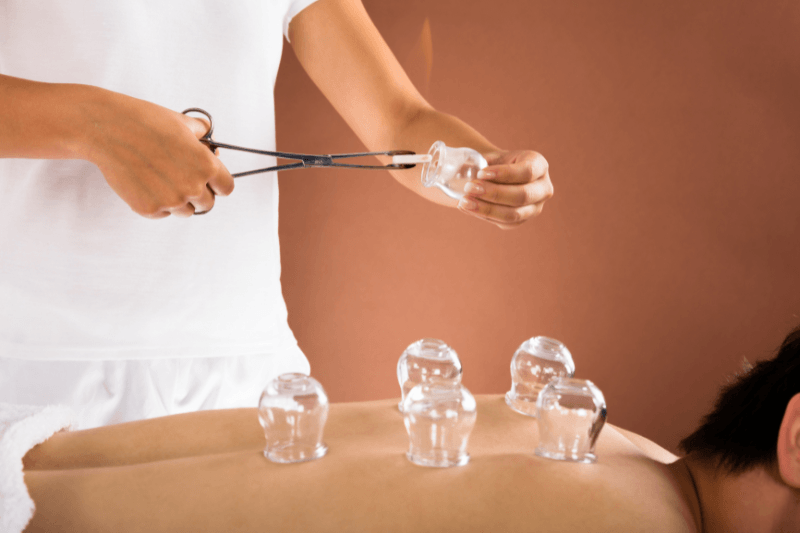
Suction cupping and fire cupping both use negative pressure to lift tissue, but suction cupping creates vacuum with a pump or flexible cup, while fire cupping creates it with heat inside a glass cup. Fire cupping usually feels warmer and stronger, while suction cupping is more controlled and easier to adjust.
Not all cupping therapy works the same way. The method used changes the feel of treatment, the amount of control a practitioner has, the level of heat involved, and the overall safety profile. That distinction matters because someone seeking gentle recovery support may need a very different approach from someone with longstanding muscular tightness or a preference for stronger bodywork.
The comparison is also important because online content often flattens the topic into a simplistic choice between traditional and modern cupping. In reality, the better method depends on the goal of treatment, the body area involved, the patient’s tolerance, and the practitioner’s skill.
The main difference between suction cupping and fire cupping is how suction is created. That difference affects heat, intensity, control, and safety.
| Feature | Suction Cupping | Fire Cupping |
| How suction is created | Manual pump, electric pump, or squeezable cup | Flame briefly heats the inside of a glass cup |
| Common cup materials | Plastic, silicone | Glass |
| Heat involved | No | Yes |
| Pressure control | Easier to adjust gradually | More technique-dependent |
| Typical sensation | Pulling, lifting, controlled pressure | Warmth with a stronger gripping sensation |
| Beginner suitability | Often better for first-time patients | Can feel more intense |
| Safety profile | Lower risk overall | Higher risk if poorly performed |
| Common uses | Sports recovery, localised pain, mobility work | Deep tension, broad back work, traditional treatment |
| Standardisation | Easier to repeat consistently | More dependent on practitioner technique |
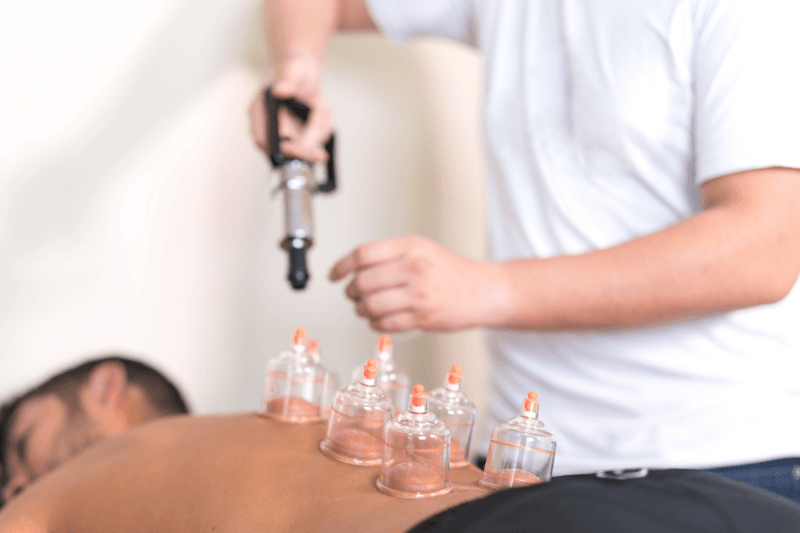
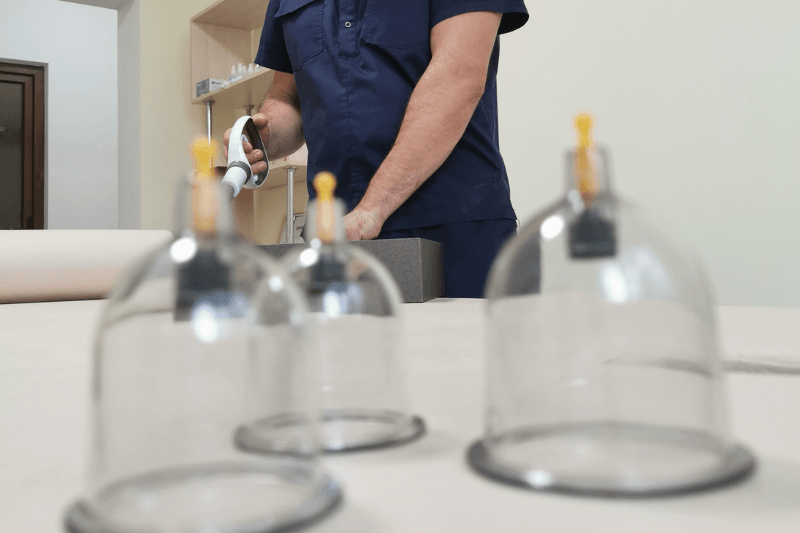
Suction cupping creates negative pressure without flame, using a pump or flexible cup to lift tissue in a controlled way.
This method is common in physiotherapy clinics, sports recovery settings, wellness practices, and some at-home cupping systems. Instead of heat, the vacuum is created mechanically. Plastic cups often use a handheld pump, while silicone cups create suction when compressed and released against the skin.
One of its main advantages is precision. Pressure can usually be increased gradually, reduced quickly, or adapted to the patient’s comfort level. That makes suction cupping especially useful for first-time patients, pressure-sensitive areas, and situations where the practitioner wants more measured control.
It often feels like a steady pulling or lifting sensation rather than a warm or penetrating one. Even so, it should not be mistaken for a weak technique. Strong suction, smaller cups, and moving cupping can still create a powerful tissue response.
Suction cupping is commonly used for:
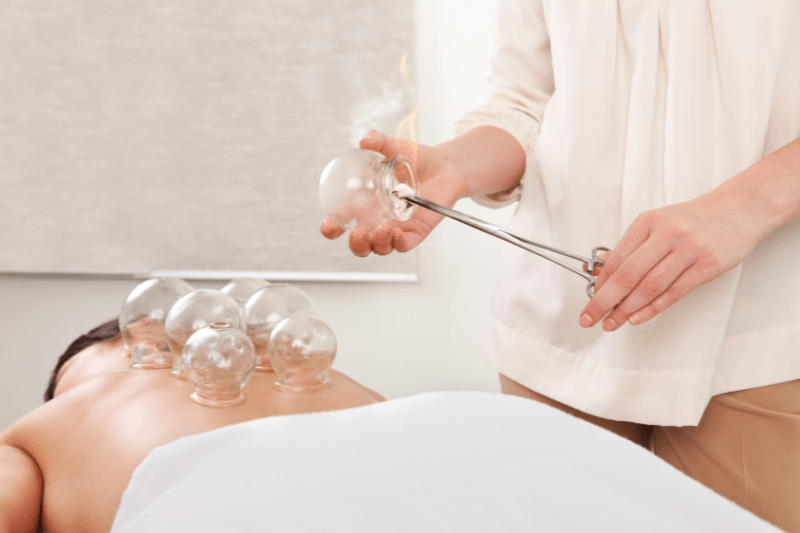
Fire cupping uses heat inside a glass cup to create vacuum, producing a warmer and often deeper-feeling treatment.
In fire cupping, a flame is briefly introduced into the cup before it is placed on the skin. As the air cools, suction forms. The flame does not touch the skin when the method is performed properly, but heat still shapes the overall sensation of treatment.
Many people experience fire cupping as broader, warmer, and more intense than suction cupping. That is one reason it remains closely associated with traditional cupping practice. In Traditional Chinese Medicine, it is often used in treatment approaches that emphasise warming, movement, and the release of stagnation.
Fire cupping is often used for:
Because it involves heat and rapid placement, fire cupping depends more heavily on practitioner skill and timing.
The core difference is the way vacuum is created, but that also changes how the treatment feels, how precisely it can be controlled, and how much risk it carries.
Suction cupping relies on mechanical force. Fire cupping relies on thermal force. That difference changes the treatment in several practical ways.
With suction cupping, pressure is usually easier to fine-tune. A practitioner can often increase or reduce the vacuum step by step, which makes the method feel more measured and predictable.
With fire cupping, the result depends more on cup size, flame timing, placement speed, and practitioner technique. In skilled hands, that can create a very effective and distinctive treatment. It also means the method is less forgiving when technique is poor.
The other major distinction is warmth. Fire cupping adds a thermal element that suction cupping does not have. For some patients, that warmth feels soothing. For others, it makes the treatment feel stronger or more intimidating.
Fire cupping often feels stronger because it combines suction with warmth, but suction cupping can also be intense depending on pressure, cup size, and treatment area.
Fire cupping often feels deeper because warmth and suction are experienced together. On large muscle groups such as the upper back, the effect can feel substantial, especially when tissue is already tight.
Suction cupping can still be very strong. High pump pressure, smaller cups over tense fascia, or moving cupping across restricted tissue can create a surprisingly intense sensation.
The more useful question is not which method is stronger, but which one is more appropriate. The best treatment is not the most aggressive one. It is the one that creates the right amount of stimulus for the tissue being treated.
Suction cupping is generally safer because it avoids open flame and usually offers easier pressure control, while fire cupping carries added risk if performed poorly.
Fire cupping can be safe in experienced hands, but it has a narrower margin for error. Overheating the cup, poor handling, or rushed placement can increase the risk of burns or blistering.
Suction cupping removes that specific risk. The main concerns are usually excessive pressure, skin sensitivity, soreness, or temporary marks. Because pressure can often be adjusted quickly, it is usually the lower-risk option for beginners and more sensitive patients.
Possible side effects of both methods include:
Cupping may need to be avoided or modified in cases involving:
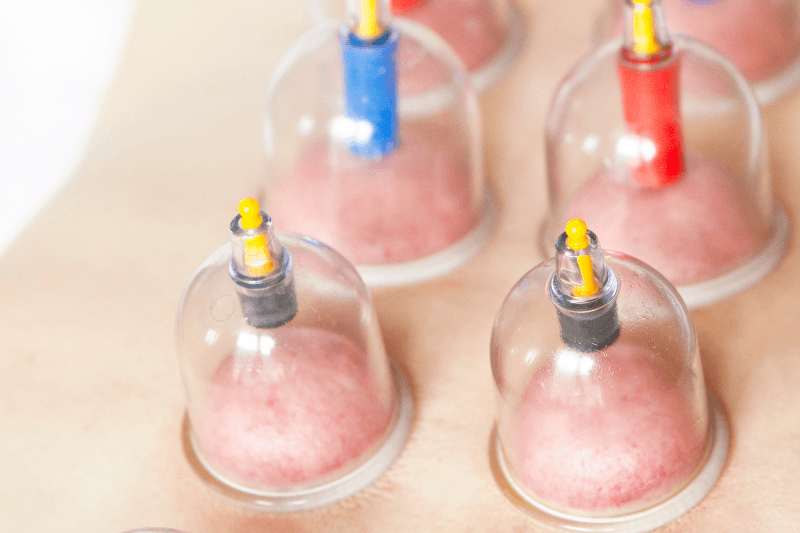
Both methods may help with muscle tension and short-term pain relief, but they are often chosen for different reasons.
Fire cupping is often preferred when the goal is broader, deeper-feeling treatment, especially over large areas like the back and shoulders. It may appeal to patients who like warmth and respond well to stronger bodywork.
Suction cupping is often the better fit when the goal is more controlled decompression, localised treatment, or gradual pressure adjustment. It is especially common in sports rehab, recovery settings, and beginner-friendly care plans.
In practice, the better option depends on:
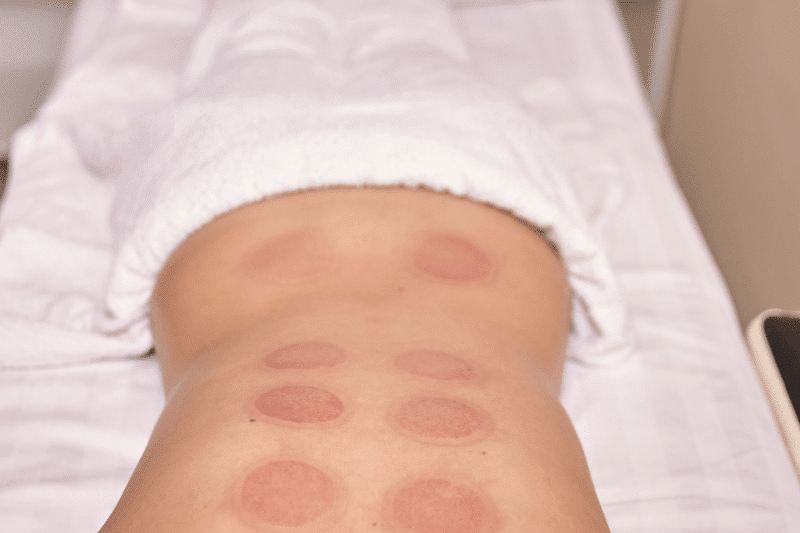
Both methods can leave marks, but mark colour and duration depend more on pressure, duration, tissue condition, and individual response than on the method itself.
Cupping marks are often misunderstood. They are not a measure of how much healing occurred, and darker marks do not automatically mean a more effective treatment. They reflect how the tissue responded to negative pressure.
Fire cupping may leave darker marks in some cases because it is often used more intensely or over broader areas. But suction cupping can also leave pronounced marks when pressure is high or cups remain in place longer.
What matters most is not how dramatic the marks look, but whether the treatment was appropriate and well-dosed.
Suction cupping is usually better for beginners because it is easier to control, less intimidating, and does not involve heat or flame.
For someone new to cupping, predictability matters. Suction cupping allows the practitioner to introduce the sensation gradually and adjust the pressure more easily based on feedback. That usually makes the first experience more comfortable and less overwhelming.
A beginner can still receive fire cupping if the practitioner is experienced and the treatment goal supports it, but suction cupping is often the smoother starting point.
Yes. Some practitioners use both methods within the same treatment plan when different areas or goals call for different tools.
This is not always an either-or decision. A practitioner may prefer fire cupping for a broad area of dense back tension, then use suction cupping for more focused or adjustable work elsewhere.
The key principle is that treatment should follow function. The best method is the one that fits the anatomy, treatment goal, and patient response.
Fire cupping is more closely associated with traditional cupping practice, while suction cupping is widely used in modern rehab and wellness settings because it is practical and easy to control.
In Traditional Chinese Medicine, fire cupping has longstanding roots and is often used in treatment approaches that emphasise warming and movement.
In modern rehab settings, suction cupping is popular because it is efficient, adjustable, and easy to integrate into recovery and mobility-focused treatment plans.
These approaches may use different language, but both often aim to reduce tension, improve local tissue response, and support movement or comfort.
The right type of cupping depends on your goal, comfort level, and the practitioner’s clinical judgement.
Suction cupping may be a better fit if you:
Fire cupping may be a better fit if you:
The cup type matters, but practitioner skill matters more. A well-chosen method used thoughtfully will usually produce better results than a more dramatic technique used poorly.
The biggest myths are that fire cupping is always better, suction cupping is weak, darker marks mean better healing, and stronger treatment always means better results.
These myths survive because cupping is highly visual. People often judge the treatment by the cups, the marks, or the intensity of the sensation. But the effectiveness of cupping depends on fit, technique, and dosage, not spectacle.
A lighter, more controlled treatment can be more useful than an aggressive one if it better matches the tissue and the patient.
Cupping is not suitable for every person or every condition, and professional guidance is important when skin integrity, medical history, or bleeding risk could make treatment unsafe.
Extra caution is needed when there is:
At-home cupping kits can make the method seem simple, but using cups safely still requires judgement about placement, pressure, timing, and suitability.
Suction cupping is usually the better choice for controlled, adjustable, beginner-friendly treatment, while fire cupping is often chosen for a warmer, deeper, and more traditional experience. Neither method is universally better. The best choice depends on the person, the goal, and the practitioner’s skill.
This is not really a debate about which method wins. It is a question of matching the tool to the need. Fire cupping may be ideal for one patient and excessive for another. Suction cupping may be perfect in one context and insufficient in another. Good cupping is defined less by drama and more by precision, suitability, and response.
At ACA Acupuncture and Wellness, cupping therapy is offered as part of a broader holistic approach to care. Depending on the individual, treatment may also be combined with other holistic therapies to support pain relief, mobility, recovery, and overall wellbeing.
Sources:
Sina, R. E., & Bokhari, A. A. (2023, October 30). Cupping therapy. In StatPearls. StatPearls Publishing.
Fire cupping often feels more intense because it combines suction with warmth, which can create a deeper gripping sensation. Suction cupping may feel milder at first, but it can still be uncomfortable if strong pressure is used or if the treated area is already very tight. The overall sensation depends on the person’s pain tolerance, the body area being treated, and the amount of suction applied.
Marks from either method usually last anywhere from a few days to about one to two weeks, depending on the strength of suction, treatment duration, skin sensitivity, and how easily the person marks. The type of cupping matters less than the individual tissue response and the intensity of the session.
Fire cupping may feel more effective for deep tissue tension because of its warmth and broader gripping sensation, especially across large muscle groups like the back. However, suction cupping can also work very well for deep or stubborn tightness when strong pressure and proper placement are used. Effectiveness depends more on technique and treatment planning than on the method alone.
Yes. Both methods are commonly used on areas such as the back, shoulders, thighs, and calves. The choice often depends on how broad the treatment area is, how much control is needed, and whether warmth is part of the intended therapeutic effect.
Suction cupping is often easier to tolerate for sensitive skin because the pressure can usually be adjusted more gradually and it does not involve heat. Fire cupping may feel too intense for people who are highly reactive to warmth or stronger sensory input. Even so, either method should be modified carefully for sensitive patients.
Usually both. The condition being treated, the body area, tissue sensitivity, and treatment goal all influence the choice. At the same time, practitioners often develop preferences based on their training, clinical experience, and treatment philosophy. The best care comes when method selection is guided by the patient’s needs rather than habit alone.
LOCATIONS
MANHATTAN
QUEENS
NEW JERSEY
CALIFORNIA

The over $4 billion US acupuncture market offers a great opportunity with over 10% annual growth rates and a continuing flow of new patients interested in the benefits of acupuncture.