
Watching a moxa stick glow during treatment can raise questions about what it contains, why it is lit, and how close it comes to the skin. A moxa stick is a smoldering roll of dried mugwort that a trained practitioner uses to warm selected points or areas of the body during moxibustion. The stick usually stays above the skin, creating a controlled source of warmth without direct contact.
Medical Disclaimer: This article is for educational purposes only and does not replace medical advice, diagnosis, or treatment. Moxibustion may not be appropriate for everyone and should be performed by a qualified practitioner. Speak with your healthcare provider before treatment, especially if you are pregnant, have a respiratory condition, a mugwort allergy, reduced skin sensation, or another health concern. Do not delay or replace recommended medical care with moxibustion.
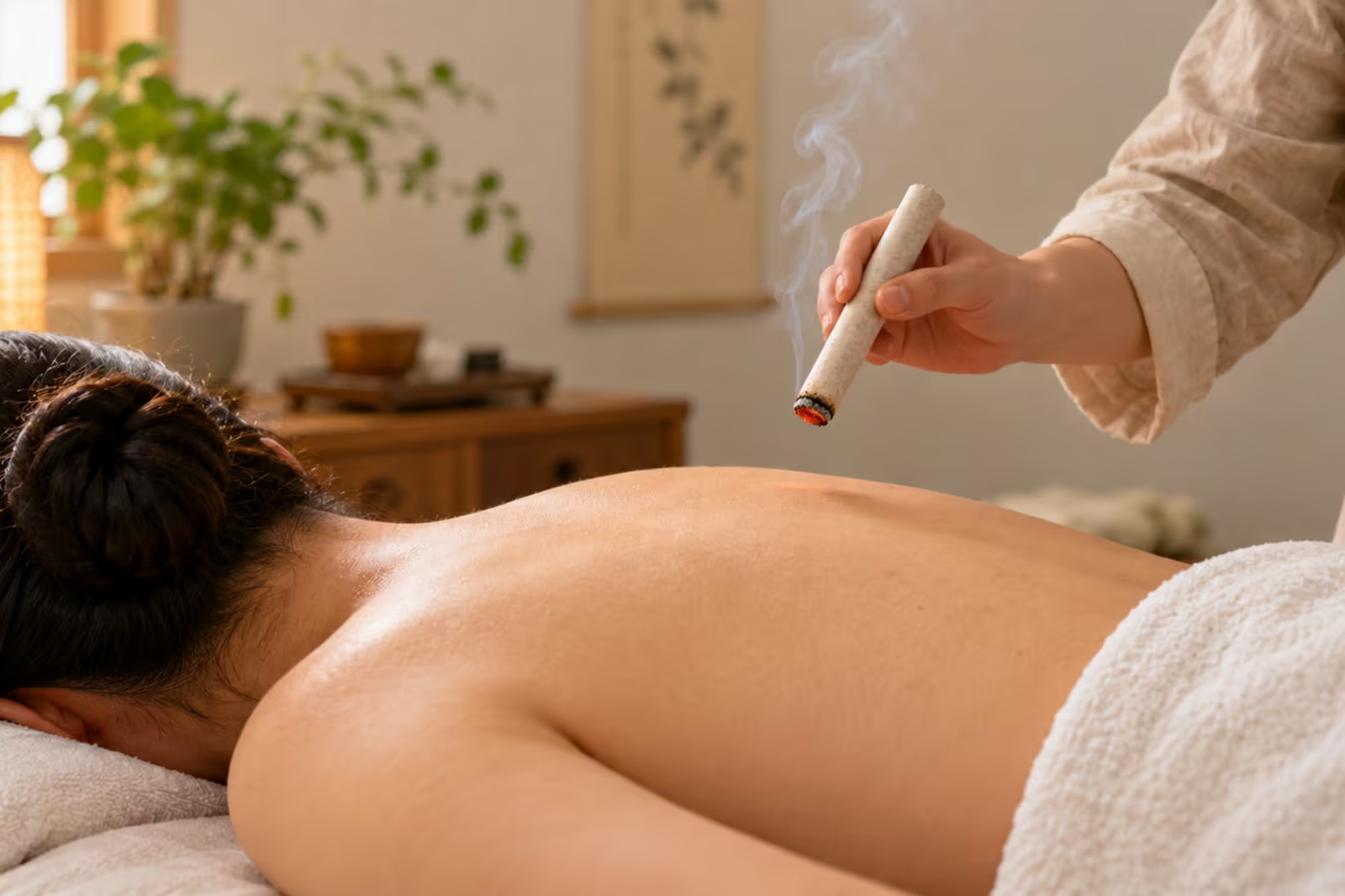
Watching a moxa stick glow during treatment can raise questions about what it contains, why it is lit, and how close it comes to the skin. A moxa stick is a smoldering roll of dried mugwort that a trained practitioner uses to warm selected points or areas of the body during moxibustion. The stick usually stays above the skin, creating a controlled source of warmth without direct contact.
Medical Disclaimer: This article is for educational purposes only and does not replace medical advice, diagnosis, or treatment. Moxibustion may not be appropriate for everyone and should be performed by a qualified practitioner. Speak with your healthcare provider before treatment, especially if you are pregnant, have a respiratory condition, a mugwort allergy, reduced skin sensation, or another health concern. Do not delay or replace recommended medical care with moxibustion.
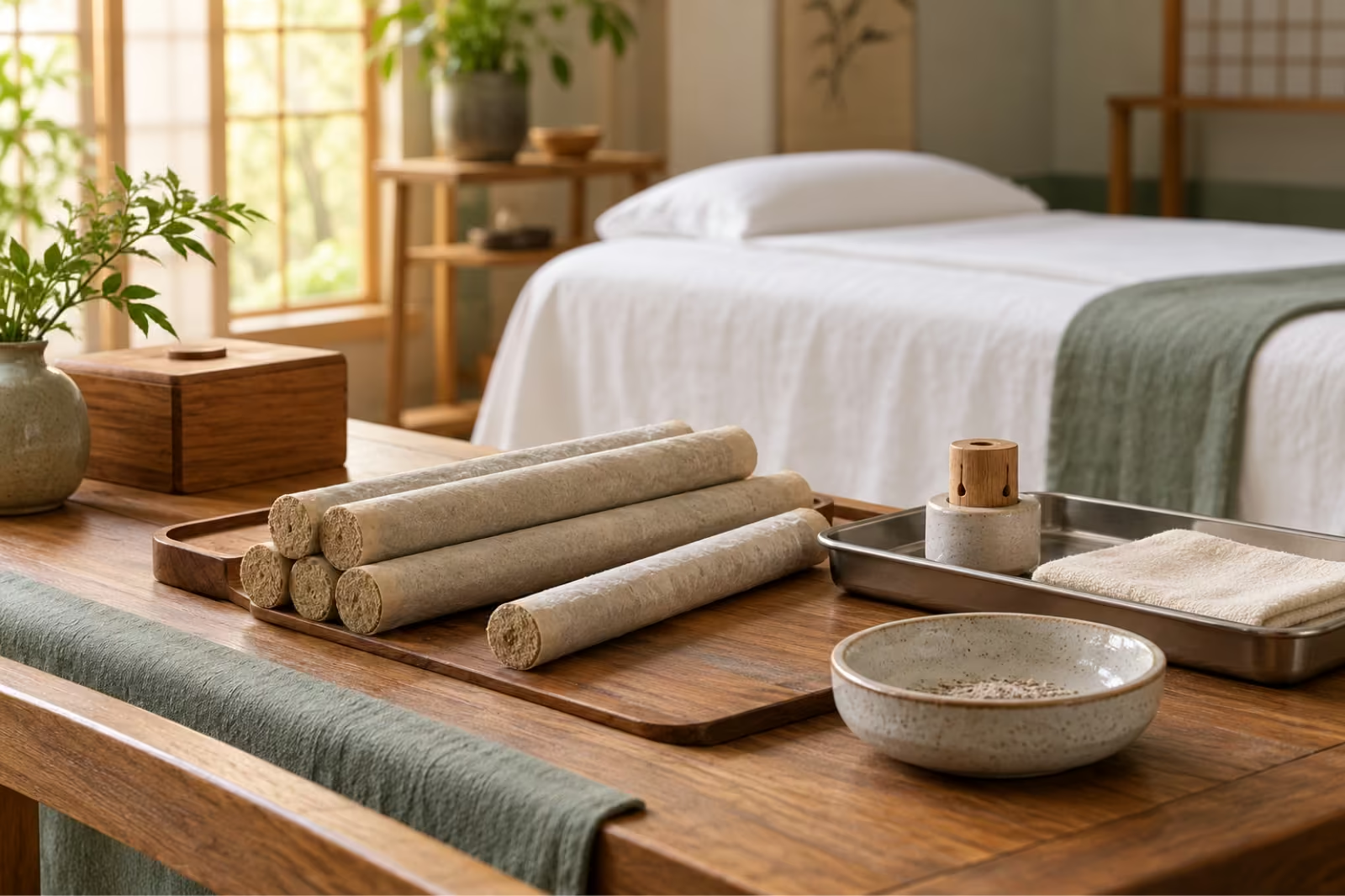
A moxa stick, also called a moxibustion stick or mugwort stick, is a cylinder of dried and processed mugwort, commonly Artemisia argyi. The plant material, often called moxa wool, is packed into a roll and wrapped in paper.
When lit, the end smolders and produces heat, ash, odor, and smoke. In professional treatment, the stick is a heat source. It is not an acupuncture needle and does not need to touch the skin.
During indirect moxibustion, a practitioner holds or moves the glowing stick near selected acupuncture points or body areas. The stick does not touch the skin. The practitioner adjusts its distance and movement based on the area being treated and the patient’s response. There is no single distance that suits every treatment.
In traditional Chinese medicine, moxibustion is described as warming the body and influencing qi through meridians. These are concepts within that medical tradition. Biomedical research examines moxibustion as a heat-based therapy, but its effects and clinical usefulness vary by condition.
Practitioners may use moxibustion as part of care for discomfort, tension, or a sensation of cold in a particular area. Traditional uses also include menstrual or digestive discomfort. These uses do not establish that moxibustion treats an underlying cause or replace medical evaluation and treatment.
Moxibustion has also been studied in relation to breech presentation during pregnancy, often using the acupuncture point BL67 near the little toe. It is not a guaranteed way to turn a baby. Anyone considering this approach during pregnancy should first discuss it with their obstetric care provider and a qualified practitioner.
Traditional moxa sticks produce visible smoke and a strong, earthy odor. Treatment rooms need suitable ventilation, and the scent may linger briefly on clothing or hair.
Smokeless sticks are processed to produce less visible smoke, often using charcoalized material. They may still create odor or emissions, so they are not necessarily smoke-free. If you have asthma, another respiratory condition, or sensitivity to smoke or strong scents, tell your practitioner before treatment.
Moxa sticks offer practical features for practitioners using indirect moxibustion:
These are features of using a moxa stick. They do not show that moxa sticks treat a medical condition or provide a specific health benefit.
Moxa sticks are one way to apply heat during moxibustion. Other methods differ in how the moxa is positioned and how heat reaches the body.
The practitioner chooses a method based on the treatment plan, the area involved, and the patient’s health and comfort.
The practitioner should explain where the warmth will be applied and ask about your health, sensitivities, and treatment goals. You may sit or lie comfortably while the practitioner exposes only the area being treated.
The warmth should feel gradual and gentle, not sharp, stinging, or painful. You may notice the herbal smell or smoke, depending on the type of moxa used and the room’s ventilation. Tell the practitioner if you feel discomfort, become unwell, or have trouble breathing so they can adjust or stop the treatment.
The moxibustion portion of an appointment may take around 15 to 30 minutes, though the time varies by treatment plan and whether it is combined with acupuncture or other care. The full appointment may take longer. Ask your practitioner how long your session is expected to last.
After treatment, the area may feel warm for a short time. Check your skin and tell your practitioner if you notice blistering, persistent redness, or pain. Ask whether any additional care is recommended for the method used.
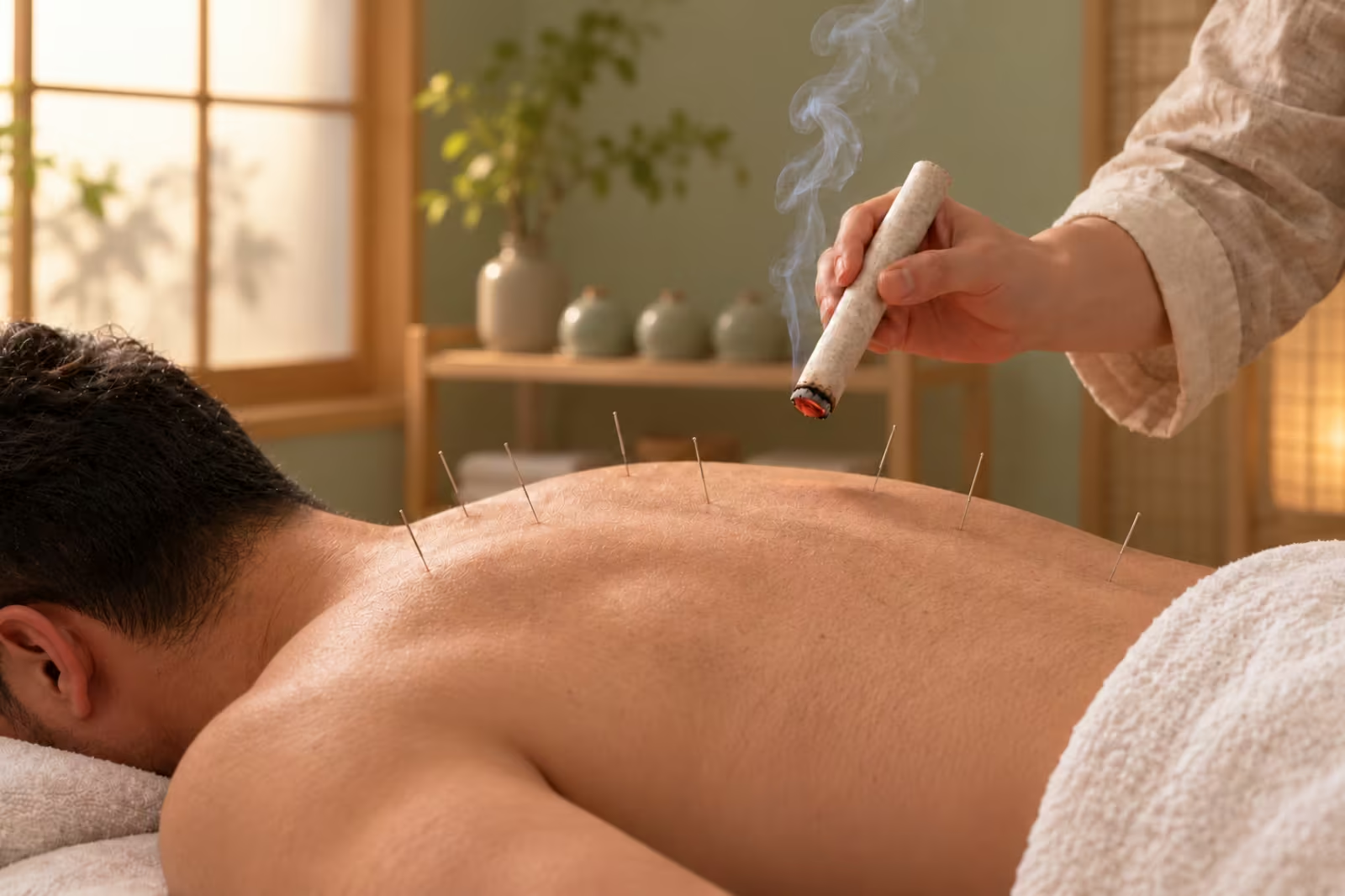
Moxibustion involves heat and burning plant material. If a stick is held too close or applied for too long, it can cause a burn. Smoke may affect people with respiratory sensitivity, and mugwort can cause an allergic reaction in some individuals.
Before treatment, tell your acupuncturist if you:
A trained practitioner should monitor the application and use appropriate ventilation and fire-safety practices.
Moxibustion is a heat-based practice rooted in traditional East Asian medicine. Whether it is appropriate depends on your health history, treatment goals, and comfort with heat or smoke.
At ACA Acupuncture & Wellness, we can answer your questions about moxibustion and explain how it may complement acupuncture or cupping. Book your appointment to discuss your concerns and care options with our team.
In indirect moxibustion, the practitioner holds or moves the smoldering stick near the skin without touching it. Other forms of moxibustion use different methods.
The practitioner adjusts the distance based on the treatment area, heat, and patient response. There is no single distance for every person or session.
Indirect moxibustion should feel warm rather than painful. Tell the practitioner if the heat becomes uncomfortable.
The moxibustion portion may take around 15 to 30 minutes, but the length varies by treatment plan and whether other care is included. Your practitioner can explain what to expect before beginning.
No. They are designed to produce less visible smoke, but may still create odor or emissions. Mention any respiratory or scent sensitivities before treatment.
A practitioner may include both in a treatment plan when appropriate. The choice depends on your health history, goals, and the practitioner’s assessment.
Sources:
Chiu, J.-H. (2013). How does moxibustion possibly work? Evidence-Based Complementary and Alternative Medicine, 2013, Article 198584.
Kim, S.-Y., Chae, Y., Lee, S. M., Lee, H., & Park, H.-J. (2011). The effectiveness of moxibustion: An overview during 10 years. Evidence-Based Complementary and Alternative Medicine, 2011, Article 306515.
LOCATIONS
MANHATTAN
QUEENS
NEW JERSEY
CALIFORNIA
The over $4 billion US acupuncture market offers a great opportunity with over 10% annual growth rates and a continuing flow of new patients interested in the benefits of acupuncture.