

Chinese herbs for hair growth are used in Traditional Chinese Medicine to nourish the body, support scalp circulation, calm inflammation, and create a healthier environment for active hair follicles.
Hair loss is rarely just a cosmetic issue. It can affect confidence, identity, stress levels, and the way people feel when they look in the mirror. In Traditional Chinese Medicine, hair is viewed as a visible expression of internal nourishment. Strong, resilient hair depends on healthy blood, balanced energy, adequate essence, and a scalp environment that allows follicles to stay active.
Modern hair science uses different language, but it often points to overlapping ideas. Hair growth depends on follicle cycling, blood supply, hormonal signaling, inflammation control, immune balance, and cellular energy. Chinese herbs are not a magic cure for every type of hair loss, but they may offer meaningful support when thinning hair is connected to stress, deficiency, poor circulation, dryness, scalp irritation, or early follicle weakening.
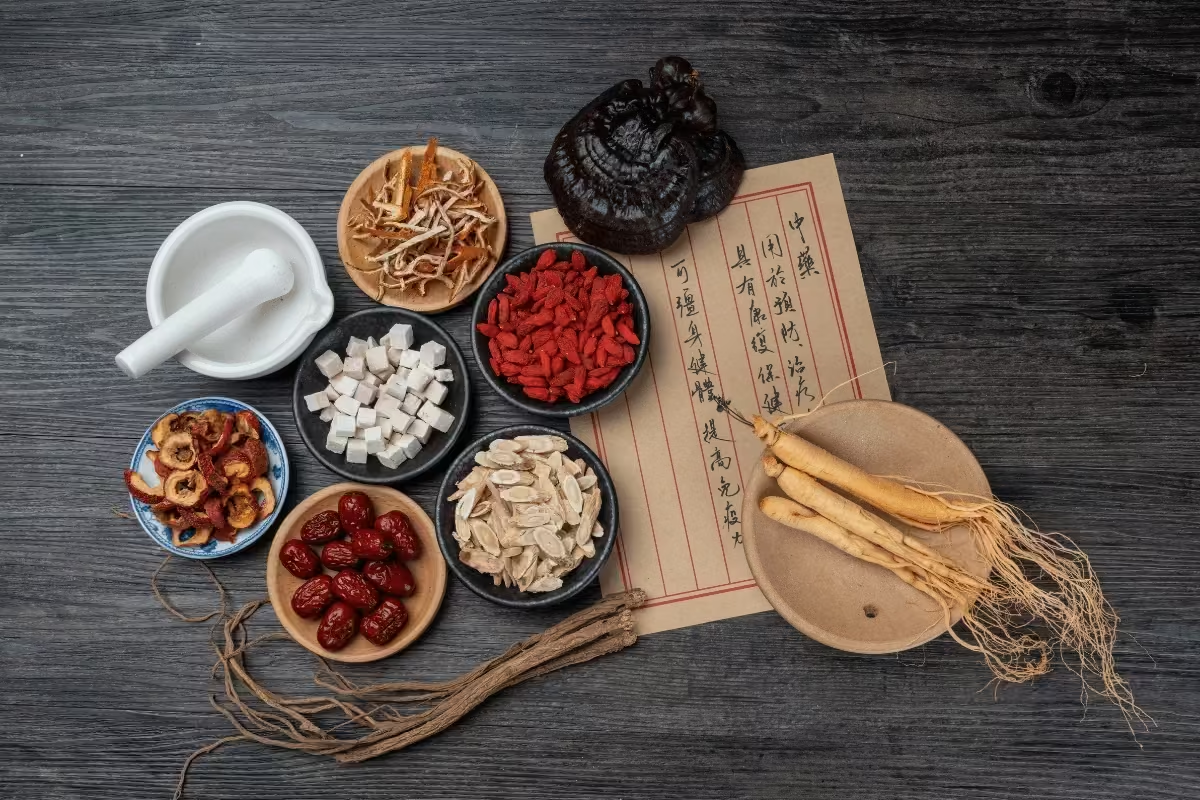
Chinese herbs for hair growth are used in Traditional Chinese Medicine to nourish the body, support scalp circulation, calm inflammation, and create a healthier environment for active hair follicles.
Hair loss is rarely just a cosmetic issue. It can affect confidence, identity, stress levels, and the way people feel when they look in the mirror. In Traditional Chinese Medicine, hair is viewed as a visible expression of internal nourishment. Strong, resilient hair depends on healthy blood, balanced energy, adequate essence, and a scalp environment that allows follicles to stay active.
Modern hair science uses different language, but it often points to overlapping ideas. Hair growth depends on follicle cycling, blood supply, hormonal signaling, inflammation control, immune balance, and cellular energy. Chinese herbs are not a magic cure for every type of hair loss, but they may offer meaningful support when thinning hair is connected to stress, deficiency, poor circulation, dryness, scalp irritation, or early follicle weakening.
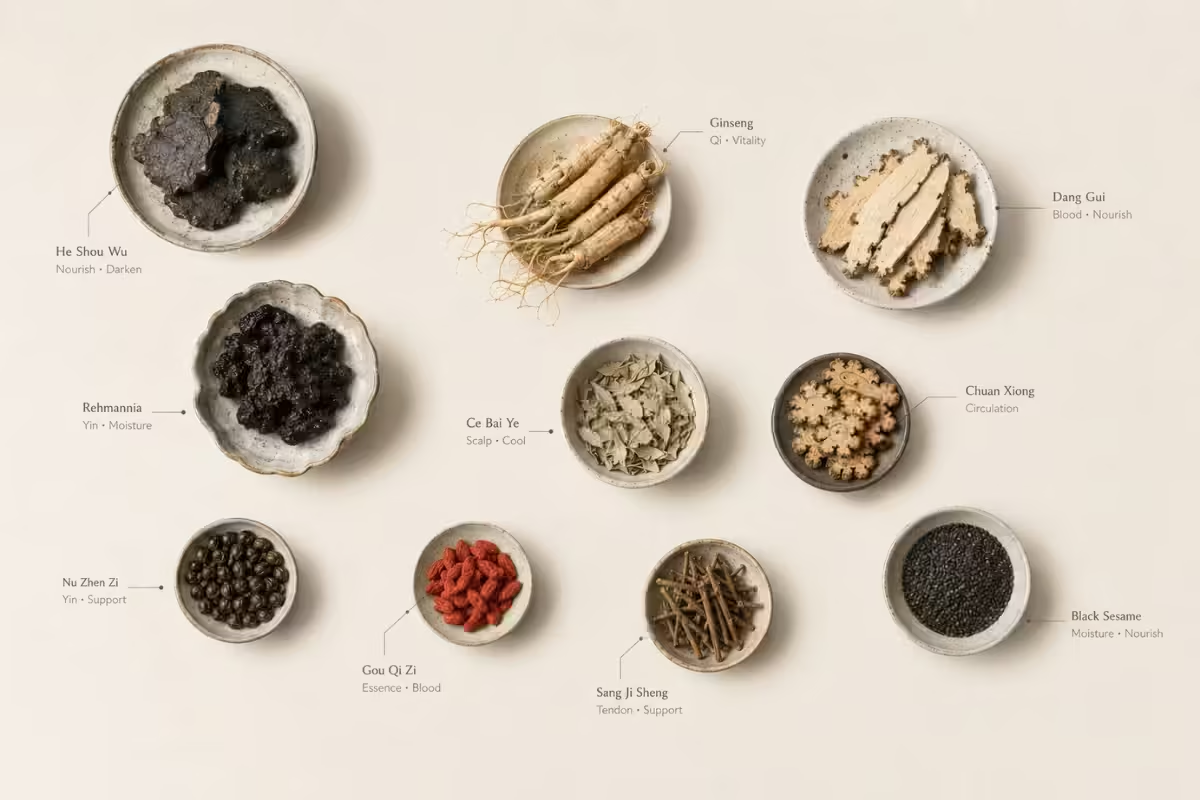
The most important Chinese herbs for hair growth include He Shou Wu, ginseng, Dang Gui, Rehmannia, Ce Bai Ye, Chuan Xiong, Nu Zhen Zi, Gou Qi Zi, Sang Ji Sheng, and black sesame seed.
Each herb has a different role. Some nourish. Some move. Some cool irritation. Some support the scalp externally. Some are traditionally used for gradual thinning and premature graying. The strongest approach is usually not choosing one herb from a list. It is matching herbs to the person’s pattern.
He Shou Wu is the most famous Chinese herb associated with hair growth, premature graying, and age-related hair weakness.
Traditionally, prepared He Shou Wu is used to nourish the liver and kidneys, enrich essence and blood, and support dark, strong hair. It has a long history in formulas for thinning hair, graying hair, dizziness, weak back or knees, and signs of deeper depletion.
Modern interest in He Shou Wu has increased because Polygonum multiflorum appears to affect several pathways related to hair biology.
Research discussions have focused on possible effects involving:
This multi-target profile is one reason He Shou Wu receives so much attention. Pattern hair loss is not driven by only one factor. It involves hormones, follicle sensitivity, inflammation, aging, genetics, circulation, and cellular signaling.
He Shou Wu is most often discussed for:
However, He Shou Wu is also the herb that requires the strongest safety warning. It has been linked to liver injury, including serious cases. Raw and processed forms are not interchangeable, and product quality, preparation, dose, individual susceptibility, and duration all matter.
He Shou Wu may be appropriate in some professionally guided formulas, but it is not a casual daily supplement.
Ginseng is traditionally used to strengthen qi, restore vitality, and support resilience.
For hair growth, ginseng is most relevant when shedding or weak hair appears alongside fatigue, stress depletion, low stamina, poor recovery, or a general sense that the body is running on empty.
Modern research has explored ginsenosides, the active compounds in Panax ginseng, for their effects on dermal papilla cells. These cells sit at the base of the hair follicle and help regulate follicle growth and cycling.
Ginseng is also studied for antioxidant, anti-inflammatory, and adaptogenic effects, which may be relevant for stress-related shedding.
Ginseng may be considered when hair thinning appears with:
Ginseng is not ideal for everyone. It may be too stimulating for some people, especially those with insomnia, anxiety, heat signs, uncontrolled blood pressure, or sensitivity to stimulants. It can also interact with medications.
Dang Gui is one of the most important blood-nourishing herbs in Chinese medicine.
It is often used when hair thinning appears with signs of blood deficiency, such as fatigue, pale complexion, dry skin, brittle nails, dizziness, light or irregular periods, postpartum depletion, or poor sleep.
Because hair depends on nourishment, Dang Gui is often included in formulas designed to rebuild the internal resources that support healthy growth.
Dang Gui is sometimes called “female ginseng,” although that nickname can be misleading. Its primary TCM role is not identical to ginseng. It nourishes and moves blood, which makes it especially useful when deficiency and stagnation overlap.
For hair growth, Dang Gui is important because it is not only about adding stimulation to the scalp. It asks whether the body has enough nourishment to build strong hair in the first place.
Dang Gui may be considered when hair loss appears with:
Dang Gui may not be appropriate for everyone, especially people taking blood thinners, those with heavy bleeding, certain hormone-sensitive conditions, or those preparing for surgery. Professional guidance matters.
Prepared Rehmannia is a deep nourishing herb used to support kidney yin, essence, and blood.
In hair health, Shu Di Huang is most often considered when thinning is gradual, dry, aging-related, or associated with signs of deeper depletion.
Shu Di Huang may be considered when hair concerns appear with:
Rehmannia is not a quick scalp stimulant. It is a constitutional herb. Its purpose is to nourish reserves. In a hair formula, it may be used when the goal is to support long-term quality, moisture, density, and resilience.
Because Rehmannia is rich and cloying in TCM terms, it can be difficult for people with weak digestion, bloating, loose stools, or heaviness. It is often balanced with other herbs that support digestion and movement.
Ce Bai Ye is an important herb for scalp heat, itching, irritation, and topical hair support.
It is traditionally used to cool blood, calm heat signs, and support hair-related formulas. In hair care, it is often discussed for topical application, especially in rinses, extracts, oils, or scalp serums.
Modern studies on Platycladus orientalis, formerly often discussed as Thuja orientalis, have explored its potential to encourage the anagen phase in resting hair follicles. This makes it especially interesting for topical support.
Ce Bai Ye may also be relevant when the scalp feels hot, itchy, inflamed, oily, or reactive.
Ce Bai Ye may be considered when hair loss appears with:
Ce Bai Ye should not be treated as a stand-alone cure for pattern hair loss. Its best role is often as part of a scalp environment strategy.
Chuan Xiong is a blood-moving herb traditionally used to promote circulation and relieve stagnation.
In hair formulas, Chuan Xiong is often paired with blood-nourishing herbs. This pairing makes sense: nourishment needs movement. If a formula only nourishes but does not move, it may be too heavy or slow. If it only moves but does not nourish, it may not rebuild what the hair needs.
Research mapping of TCM herbs used for alopecia found that Polygonum multiflorum and Angelica sinensis were a frequent two-herb combination, while Polygonum multiflorum, Angelica sinensis, and Ligusticum chuanxiong formed a frequently used three-herb combination.
This supports what many TCM practitioners already recognize clinically: hair formulas often combine tonification with circulation support.
Chuan Xiong may be considered when hair loss appears with:
Chuan Xiong may not be appropriate for people on blood-thinning medications, those with bleeding disorders, or certain pregnancy-related situations. It should be used with care.
Several supportive herbs and foods are also used in TCM hair health.
Nu Zhen Zi, also called Ligustrum lucidum fruit, nourishes liver and kidney yin. It may be used when hair concerns appear with dryness, heat from deficiency, dizziness, or aging-related depletion.
Gou Qi Zi, also called goji berry or Lycium fruit, nourishes liver and kidney and supports blood and essence. It is commonly used in food-like ways, though it still may interact with certain medications.
Sang Ji Sheng, also called Taxillus, nourishes liver and kidney and supports bones, tendons, and pregnancy-related formulas in professional settings. It may appear in formulas when hair weakness is part of a broader deficiency picture.
Black sesame seed, or Hei Zhi Ma, is a food-grade TCM tonic often associated with nourishing liver and kidney, moistening dryness, and supporting hair quality. It is not a dramatic regrowth treatment, but it can be a useful dietary addition for people with dryness and deficiency patterns.
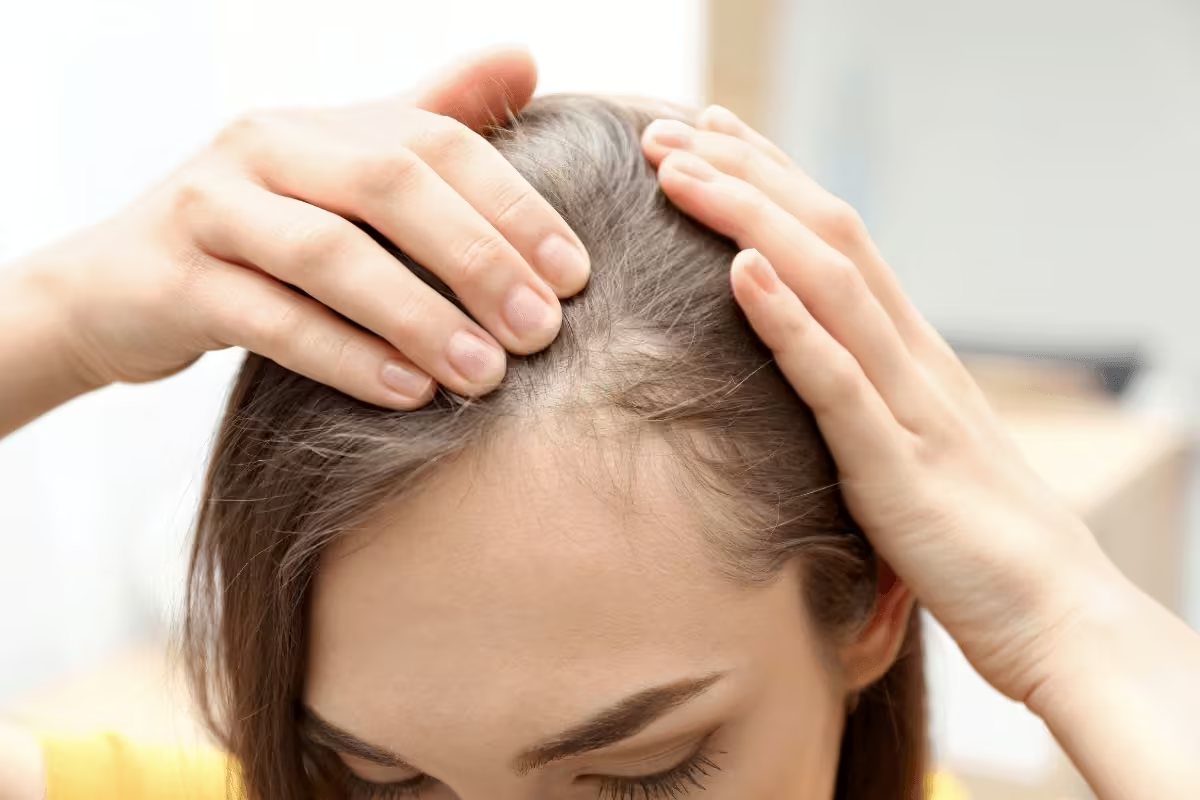
In Traditional Chinese Medicine, healthy hair depends on strong blood, sufficient essence, balanced Qi, and a well-nourished scalp.
TCM does not treat hair as an isolated structure. It sees hair as part of a larger internal system. When hair becomes thin, brittle, dull, prematurely gray, or starts shedding excessively, the question is not only “What can stimulate the scalp?” It is also “Why is the body no longer supporting the hair well?”
This is one reason Chinese herbal care for hair growth often looks different from conventional topical treatments. Instead of using one product for every type of thinning, TCM asks what pattern is showing up in the body.
Classical TCM often describes hair as being closely related to blood and kidney essence. In practical terms, this means hair health is linked with the body’s ability to nourish, restore, and maintain growth over time.
Blood, in TCM, is not only the physical fluid measured in a lab test. It also refers to the nourishing capacity that supports the skin, scalp, muscles, sleep, menstrual health, and hair. When blood is deficient, hair may look dry, thin, dull, or weak.
Common signs of blood deficiency may include:
Kidney essence is a deeper constitutional concept in TCM. It is associated with aging, reproduction, bones, development, and long-term reserves.
When kidney essence or kidney yin is depleted, hair may thin gradually, turn gray early, lose density, or become fragile. This pattern is often considered when hair loss develops slowly over time and appears with signs of deeper depletion.
Possible signs include:
Qi is the body’s functional energy. Qi moves blood and supports digestion, immunity, and tissue repair. If qi is weak, the body may not transform food into usable nourishment efficiently. If qi is stuck, circulation can become sluggish, and the scalp may not receive enough support.
From a TCM perspective, hair growth depends not only on nourishment but also on movement. The scalp needs blood, nutrients, oxygen, and a balanced internal environment to support the follicle.
A high-quality TCM approach does not ask only which herb is “best.” It asks which internal pattern is most likely driving the hair change.
The most common TCM patterns connected with hair thinning include:
These categories do not replace medical diagnosis. They help a trained practitioner choose the correct herbal strategy instead of treating all hair loss the same way.
Modern hair science focuses on the hair follicle and the hair growth cycle. TCM focuses on the body systems that nourish and regulate those follicles. Both perspectives can be useful.
Scalp hair grows in cycles. The main phases are:
Thicker-looking hair depends on keeping more follicles in a healthy anagen phase for longer. Many hair loss conditions involve a shorter anagen phase, a higher number of follicles entering telogen, or gradual follicle miniaturization.
In androgenetic alopecia, often called male or female pattern hair loss, follicles become sensitive to dihydrotestosterone, or DHT. Over time, affected follicles produce thinner, shorter hairs.
This process commonly appears as:
Chinese herbs cannot erase genetics, but some are studied for their possible effects on inflammation, circulation, oxidative stress, and growth signaling pathways involved in follicle health.
Telogen effluvium is a form of diffuse shedding that can happen after illness, childbirth, surgery, emotional stress, crash dieting, medication changes, or rapid weight loss.
In TCM, this may overlap with qi deficiency, blood deficiency, or depletion after a major stressor. In modern biology, the trigger pushes too many hairs into the resting phase at once.
This is why shedding may begin two or three months after the original event.
The scalp environment matters. Itching, redness, oiliness, flaking, tenderness, or burning can interfere with healthy growth.
In TCM, these symptoms may suggest heat, damp heat, blood heat, or wind. In modern dermatology, they may be associated with conditions such as seborrheic dermatitis, folliculitis, psoriasis, contact dermatitis, or inflammatory hair loss.
Persistent scalp irritation should not be ignored.
The best Chinese herb for hair growth depends on whether the main issue is gradual thinning, sudden shedding, dryness, inflammation, poor circulation, stress depletion, or constitutional deficiency.
This is where TCM becomes more nuanced than most online herb lists. Two people can both search for “Chinese herbs for hair growth” and need very different strategies.
Gradual thinning at the crown, widening part, receding hairline, or miniaturized hair often suggests androgenetic alopecia. This type of hair loss is strongly influenced by genetics, androgen sensitivity, DHT signaling, follicle miniaturization, and age.
In TCM, gradual thinning may overlap with liver and kidney deficiency, blood deficiency, blood stasis, or a combination pattern.
Commonly considered herbs may include:
This type of thinning is usually easier to slow early than to reverse late. If follicles have been miniaturizing for years, herbs alone may not restore full density.
Sudden diffuse shedding often points to telogen effluvium, especially if it begins two to three months after a trigger such as illness, high fever, surgery, childbirth, intense stress, crash dieting, rapid weight loss, or medication change.
In TCM, this may be seen as qi and blood deficiency, shock to the system, or depletion after a major event. The strategy is usually not aggressive stimulation. It is recovery, nourishment, and regulation.
Commonly considered herbs may include:
The good news is that telogen effluvium is often reversible once the trigger has passed and the body has enough support to reset the hair cycle.
Dryness, brittleness, dullness, and early graying are often interpreted in TCM as signs of blood deficiency, kidney essence depletion, or yin deficiency.
Commonly considered herbs and foods may include:
This pattern often benefits from a full lifestyle approach: better sleep, enough protein, mineral-rich foods, stress reduction, and avoiding harsh hair practices. Herbs can support the terrain, but they cannot overcome chronic undernourishment or constant damage from heat styling, bleaching, tight hairstyles, or poor sleep.
An irritated scalp can interfere with healthy growth. Itching, redness, oiliness, flaking, follicle tenderness, or heat may suggest inflammation, seborrheic dermatitis, psoriasis, folliculitis, allergy, or other scalp conditions.
In TCM, these signs may be described as heat, damp heat, blood heat, wind, or toxicity depending on the presentation.
Commonly considered approaches may include:
Persistent scaling, pain, pustules, crusting, or scarring requires medical evaluation. Treating an inflamed scalp with random oils can sometimes make the problem worse.
Hair thinning with fatigue, poor sleep, dizziness, heavy periods, postpartum depletion, or brittle nails often suggests that the body’s internal reserves need attention.
In TCM, this may be qi and blood deficiency. Dang Gui is one of the classic herbs for blood nourishment, but it is rarely used alone. A formula may also support digestion, build qi, calm the spirit, and improve the body’s ability to make and move blood.
This pattern also deserves screening for possible biomedical contributors, such as:
Herbs are helpful only when the underlying issue is understood.
Chinese herbs may support hair regrowth in some cases, but the evidence is strongest for supportive mechanisms and early-stage hair concerns rather than guaranteed reversal of advanced hair loss.
The most honest answer is neither hype nor dismissal. Chinese herbs have a long traditional history in hair care and a growing body of laboratory, animal, network pharmacology, and limited clinical research. However, the quality of evidence varies by herb, formula, preparation, route, and hair loss type.
Traditional use suggests that hair loss is often treated through patterns, not single symptoms. Practitioners have historically used combinations of herbs to nourish liver and kidney, build blood, move blood, clear heat, and support the scalp.
This is important because modern consumers often ask, “Which herb grows hair fastest?” That question does not fit the TCM model. A better question is, “Which formula matches the pattern that is causing my hair to weaken?”
Traditional use is valuable, but it is not the same as proof. It can guide research and clinical reasoning, but it should be integrated with modern diagnosis and safety standards.
Laboratory and animal studies suggest several possible mechanisms for Chinese herbs in hair growth support.
Potential mechanisms include:
He Shou Wu has been discussed for multi-pathway effects related to DHT activity, follicle protection, blood flow, oxidative stress, and growth signaling. Platycladus orientalis has been studied for topical hair growth activity and possible anagen induction. Ginseng compounds have been studied for effects on dermal papilla cells and cellular signaling.
Still, lab and animal findings do not automatically translate into human results. Dose, preparation, absorption, formula design, and individual diagnosis all matter.
Human evidence for TCM and hair loss is still developing. Some reviews suggest that Chinese herbal medicine may have value as adjunctive care for androgenetic alopecia, especially when used with standard treatments or within a structured formula approach.
However, many studies vary in:
That means the most responsible position is this: Chinese herbs may be useful, especially as complementary care, but they should not be presented as a guaranteed replacement for evidence-based medical treatment.
Chinese herbs cannot fix every cause of hair loss.
They cannot:
Hair growth is slow. Even successful care takes months because the follicle cycle moves gradually.
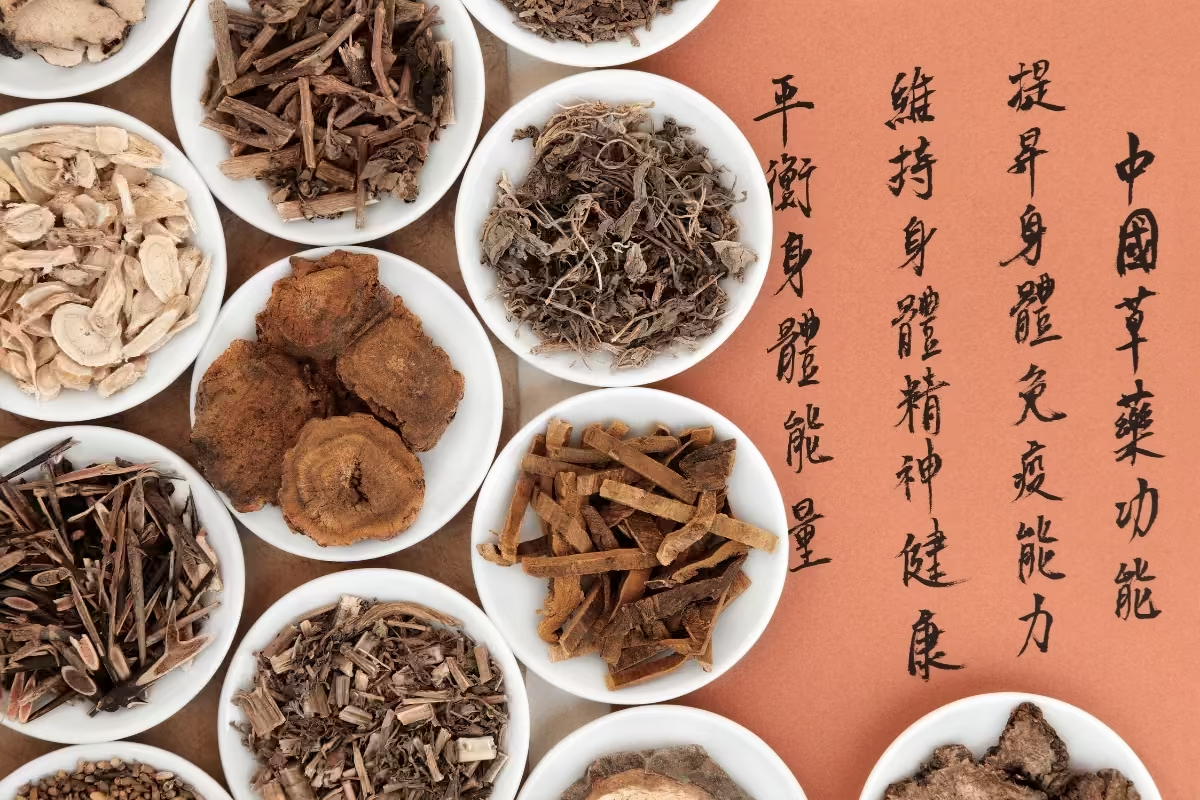
Chinese herbal formulas are usually more effective than single herbs because they combine nourishment, movement, balance, digestion support, and safety moderation.
This is one of the biggest gaps in most online herb lists. They discuss herbs as if each one is a separate supplement. TCM does not usually work that way.
A formula is designed with structure. Some herbs act as the main therapeutic drivers. Some support the main herbs. Some guide the formula to a region of the body. Some moderate harshness. Some protect digestion. Some move blood so nourishing herbs do not become stagnant.
For hair growth, this matters because the follicle needs multiple forms of support. It may need nourishment, circulation, inflammation control, stress regulation, and scalp support. A single herb may address one part of the picture, but a formula can address the pattern more completely.
Common TCM hair-support pairings may include:
The exact formula should depend on the person. A dry, depleted person and an oily, inflamed person should not receive the same strategy.
Pattern diagnosis protects people from choosing the wrong herb.
For example:
Good TCM care is individualized. That is one of its strengths.
Chinese herbs for hair growth may be used as decoctions, granules, capsules, topical scalp preparations, food therapy, or as part of an acupuncture-supported plan.
The best route depends on the pattern, the herb, the person’s digestion, safety concerns, and whether the main issue is internal depletion or scalp-level irritation.
Decoctions are traditional boiled herbal preparations. They allow flexible dosing and customization. A practitioner can adjust the formula as symptoms change.
Decoctions may be appropriate for complex patterns, such as:
Decoctions are not always convenient, and they can taste strong, but they offer a high degree of personalization.
Pre-made teas may be milder and easier to use, but they are less individualized. They should still be chosen carefully, especially if they include He Shou Wu or blood-moving herbs.
Capsules, tablets, and granules are convenient. They are common in modern TCM practice and easier for busy patients to take consistently.
The downside is that quality varies widely. A label may not show enough detail about sourcing, processing, testing, dose, or herb form. Products marketed for “hair growth” may combine many ingredients without clear rationale.
Look for products with:
Topical Chinese herbs may support scalp comfort, microcirculation, and follicle environment. Ce Bai Ye is one of the most relevant herbs in this category.
Topicals may be especially helpful when the scalp is:
However, not every scalp needs oil. If seborrheic dermatitis, folliculitis, or inflammatory scalp disease is present, heavy oils may worsen symptoms.
A good topical plan should be gentle, non-irritating, and appropriate for the scalp condition. More tingling does not mean more growth. Burning, redness, and itching are warning signs.
Food therapy is often overlooked, but it can be powerful when hair thinning reflects deficiency or stress.
TCM-inspired foods for hair support may include:
From a modern perspective, hair also needs adequate protein, iron, zinc, vitamin D, B vitamins, essential fatty acids, and overall calories.
Crash dieting is one of the most common triggers for shedding. No herb can fully compensate for inadequate nutrition.
Chinese herbs can be powerful and should be used with the same seriousness as other biologically active substances.
Natural does not always mean safe. Herbs contain active compounds. They can affect the liver, hormones, blood clotting, digestion, sleep, blood pressure, and medication metabolism. The goal is not to fear herbs. The goal is to use them intelligently.
He Shou Wu requires special caution. It has been associated with clinically apparent liver injury, including severe cases. Risk may depend on preparation, dose, duration, product quality, and individual susceptibility.
Possible liver-related warning signs include:
These symptoms require prompt medical attention.
Avoid self-prescribing He Shou Wu if you have:
He Shou Wu may be appropriate in some cases, but it should be professionally guided.
Some Chinese herbs may interact with medications, including:
Dang Gui and Chuan Xiong may be relevant to bleeding risk. Ginseng may affect sleep, stimulation, blood sugar, and medication response. Goji berry has been reported in interaction discussions with anticoagulants.
These concerns do not mean the herbs are always unsafe. They mean the full health picture matters.
Hair shedding after childbirth is common, but postpartum does not automatically mean every herb is safe. Pregnancy, breastfeeding, and fertility treatment require specialized guidance.
Some herbs that move blood or strongly affect hormones are not appropriate during pregnancy. Some herbs may affect milk supply, infant exposure, or bleeding risk. Postpartum formulas should be selected by a practitioner who understands both TCM and safety considerations.
Quality matters. Herbal products can vary in species identification, processing, dose, contamination, adulteration, and testing standards.
Choose products that provide:
Avoid mystery blends, exaggerated claims, and products that promise guaranteed regrowth within weeks. Hair loss makes people vulnerable to aggressive marketing. A product that sounds too certain should be treated with caution.
Stop taking herbs and seek medical care if you develop:
Also seek evaluation if hair loss is sudden, patchy, painful, scarring, or associated with systemic symptoms.
Chinese herbs usually take at least three to six months to show visible hair changes because hair growth follows a slow biological cycle.
This timeline can feel frustrating, but it is realistic. Hair grows from follicles that cycle gradually. Even if shedding improves early, visible density takes longer.
In the first one to two months, the earliest changes may involve the scalp and shedding pattern rather than visible regrowth.
Possible early improvements may include:
These changes are meaningful, but they do not always show up immediately in photos.
Around three months, some people may begin to notice reduced shedding or small signs of regrowth.
This is often when people notice:
Three months is still early for density changes.
At six months, a consistent plan should be easier to evaluate. If the cause was stress shedding, deficiency, or scalp imbalance, improvement may be more visible by this stage.
Possible changes may include:
If shedding continues or density worsens after several months, the plan should be reassessed.
Shedding reflects how many hairs are exiting the cycle. Density reflects how many follicles are producing visible, strong strands. These are related but not identical.
A person can shed less before they look fuller. That does not mean the plan is failing. It means the early cycle may be stabilizing.
Track progress in a calm and consistent way.
Helpful tracking methods include:
Daily checking increases anxiety, and anxiety itself can worsen the experience of hair loss.
A strong hair growth plan identifies the hair loss pattern, supports the scalp, nourishes deficiencies, reduces inflammatory stress, and reassesses progress over several months.
This is a practical framework for thinking about Chinese herbs without falling into random supplement use.
Start with the pattern.
Helpful questions include:
These clues guide both TCM pattern differentiation and medical evaluation.
The scalp is the soil. Follicles cannot thrive in an irritated environment.
Scalp support may include:
An itchy, oily scalp and a dry, tight scalp need different care.
If the pattern suggests deficiency, rebuild from the inside.
This may include:
Do not overlook iron deficiency, thyroid imbalance, vitamin D deficiency, B12 deficiency, or low protein intake.
Stress can shift hair into the shedding phase. Inflammation can disrupt the scalp environment. Poor sleep can affect hormones, immune function, and recovery.
TCM may use herbs, acupuncture, breathing practices, and routine changes to reduce the load on the system. This is not “just stress.” It is biology. The follicle responds to the internal environment.
Give a plan enough time, but do not stay with the wrong plan indefinitely.
A practical reassessment schedule may look like this:
If shedding continues, density worsens, or scalp symptoms intensify, seek medical evaluation. If improvement is clear, the formula may be adjusted from active correction to maintenance.
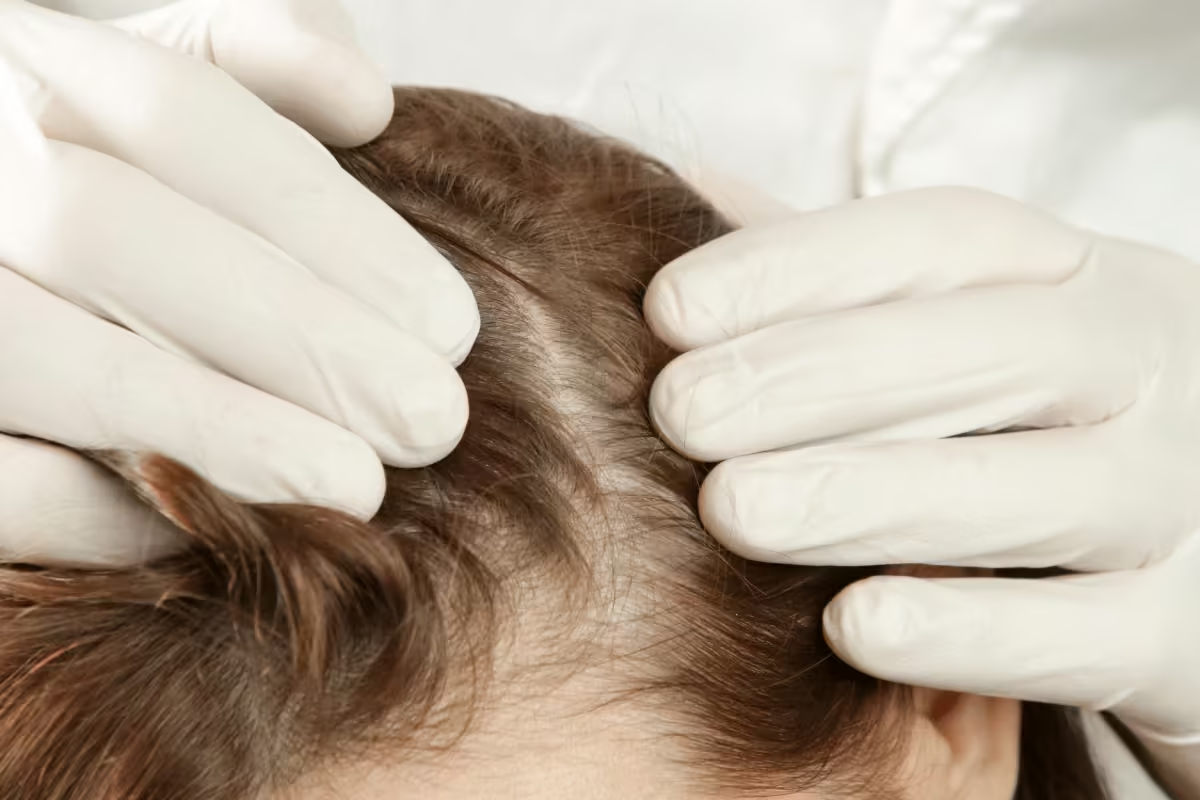
Hair loss needs medical evaluation when it is sudden, patchy, painful, inflamed, scarring, rapidly progressive, or linked with systemic symptoms.
Chinese herbs can be valuable, but some hair loss patterns require prompt diagnosis.
Seek medical evaluation if you notice:
Also seek evaluation after major illness, childbirth, surgery, crash dieting, medication changes, or autoimmune symptoms. Early care can prevent avoidable follicle damage.
Chinese herbs can support hair growth when they are chosen for the right pattern, used safely, and combined with a complete plan for scalp and whole-body health. In TCM, the goal is not to chase one “miracle” herb. The goal is to understand why the hair is thinning in the first place.
A thoughtful hair growth plan looks at the condition of the scalp, the quality of blood and circulation, signs of dryness or inflammation, stress levels, digestion, sleep, and whether medical evaluation may be needed. Herbs such as He Shou Wu, ginseng, Dang Gui, Rehmannia, Ce Bai Ye, and Chuan Xiong can each play a role, but they are not interchangeable. The right formula for one person may not be the right formula for another.
At ACA Acupuncture & Wellness, our acupuncturists use a personalized TCM approach to help identify the pattern behind thinning hair, shedding, scalp irritation, dryness, or early density changes. Find our clinic nearest you or contact us to schedule a consultation and explore a natural, whole-body plan designed to support healthier hair and a more balanced scalp from the inside out.
Sources:
Kaiser, M., Abdin, R., & Gaumond, S. I. (2023). Treatment of androgenetic alopecia: Current guidance and unmet needs. Clinical, Cosmetic and Investigational Dermatology, 16, 1387–1401.
Leem, J., Jung, W., Kim, Y., Kim, B., & Kim, K. (2018). Exploring the combination and modular characteristics of herbs for alopecia treatment in traditional Chinese medicine: An association rule mining and network analysis study. BMC Complementary and Alternative Medicine, 18, 204. https://link.springer.com/article/10.1186/s12906-018-2269-7
National Institute of Diabetes and Digestive and Kidney Diseases. (2020). Polygonum multiflorum. In LiverTox: Clinical and research information on drug-induced liver injury. National Library of Medicine.
In Traditional Chinese Medicine, people commonly use herbs such as He Shou Wu, Dang Gui, Rehmannia, ginseng, Ce Bai Ye, goji berry, and black sesame seed, often combined with acupuncture, scalp massage, food therapy, and lifestyle support to nourish blood, support kidney essence, improve scalp circulation, and encourage healthier hair growth.
He Shou Wu, also called Fo-Ti or Polygonum multiflorum, is the most famous Chinese herb for hair growth because it is traditionally used to nourish the liver and kidneys, support stronger hair, and address premature graying, but it should be used carefully because it has been linked to liver safety concerns.
The herb most often described as the ancient Chinese hair growth herb is He Shou Wu, a traditional tonic associated with thicker, darker, healthier-looking hair, although it is best used as part of a professionally guided formula rather than as a casual daily supplement.
In Traditional Chinese Medicine, the kidneys and liver are most closely connected to hair growth because the kidneys are linked with essence and aging, while the liver is linked with blood and circulation; the spleen also matters because it helps create the qi and blood that nourish the hair.
Chinese herbs may help support thinning hair when shedding is linked with stress, blood deficiency, poor scalp circulation, postpartum depletion, or scalp inflammation, but they are less likely to fully reverse advanced genetic hair loss, scarring alopecia, thyroid-related hair loss, or severe nutrient deficiency without proper medical care.
Chinese herbs usually take three to six months to show visible hair changes because hair grows slowly; shedding may improve first, followed by better scalp comfort, stronger texture, and gradual signs of regrowth if the formula matches the underlying pattern.
LOCATIONS
MANHATTAN
QUEENS
NEW JERSEY
CALIFORNIA

The over $4 billion US acupuncture market offers a great opportunity with over 10% annual growth rates and a continuing flow of new patients interested in the benefits of acupuncture.
