
Labor Day Special: 50% OFF Acupuncture Gift Cards | Use Code: LABORHEAL2026 | Shop Now
Reflexology and massage are both touch-based wellness treatments, but they differ in where and how pressure is applied. Reflexology uses focused pressure on areas of the feet, hands, or ears, while massage works directly with muscles and other soft tissues. Knowing what each session involves can help you choose an experience that feels comfortable and suits your preferences.
Neither treatment needs to be painful to feel worthwhile. Reflexology usually focuses on smaller areas while you remain clothed, whereas massage may involve broader work on the body with draping and undressing only to your comfort level. Understanding these differences can help you feel more prepared before booking.
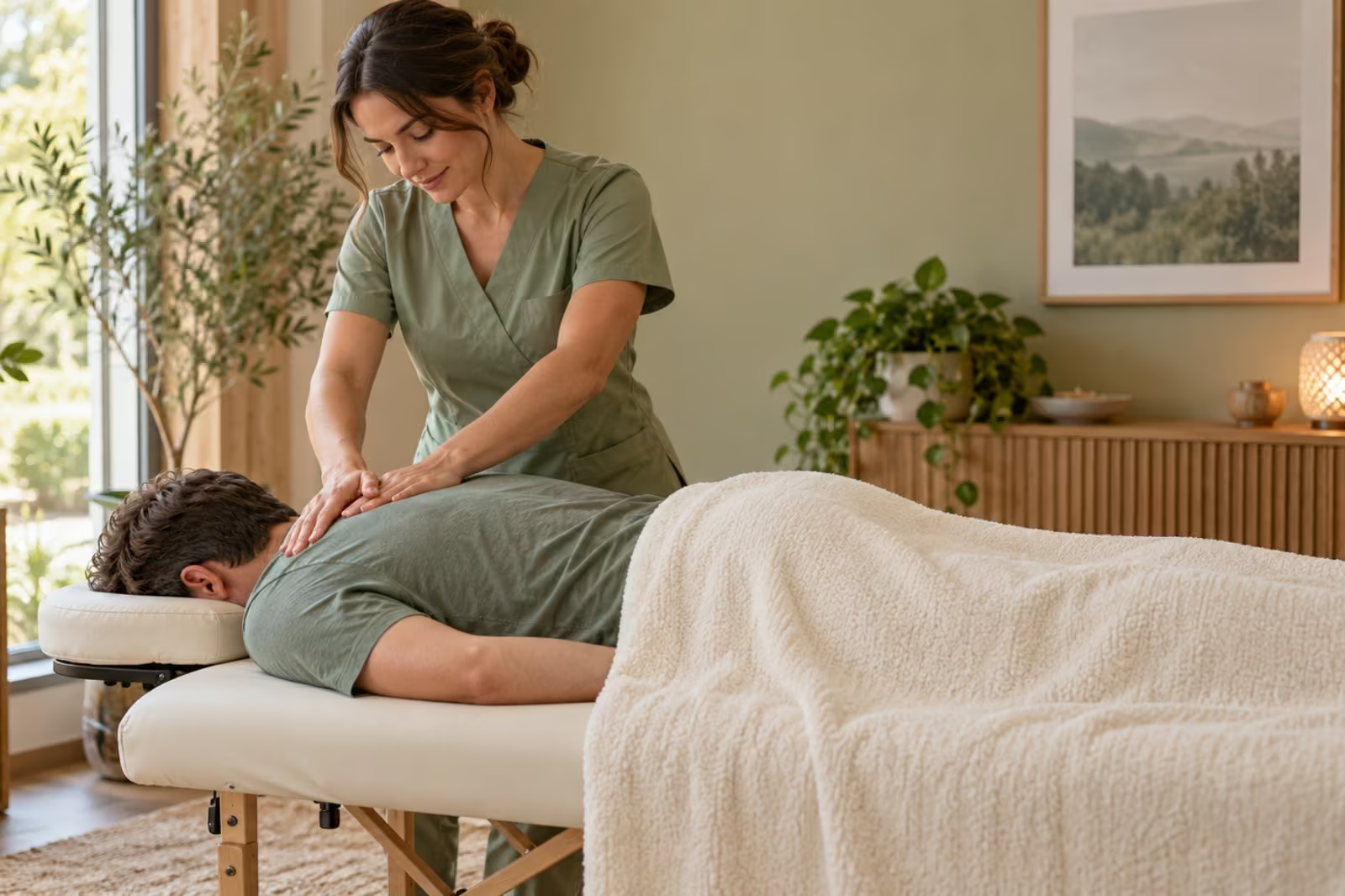
Reflexology and massage are both touch-based wellness treatments, but they differ in where and how pressure is applied. Reflexology uses focused pressure on areas of the feet, hands, or ears, while massage works directly with muscles and other soft tissues. Knowing what each session involves can help you choose an experience that feels comfortable and suits your preferences.
Neither treatment needs to be painful to feel worthwhile. Reflexology usually focuses on smaller areas while you remain clothed, whereas massage may involve broader work on the body with draping and undressing only to your comfort level. Understanding these differences can help you feel more prepared before booking.
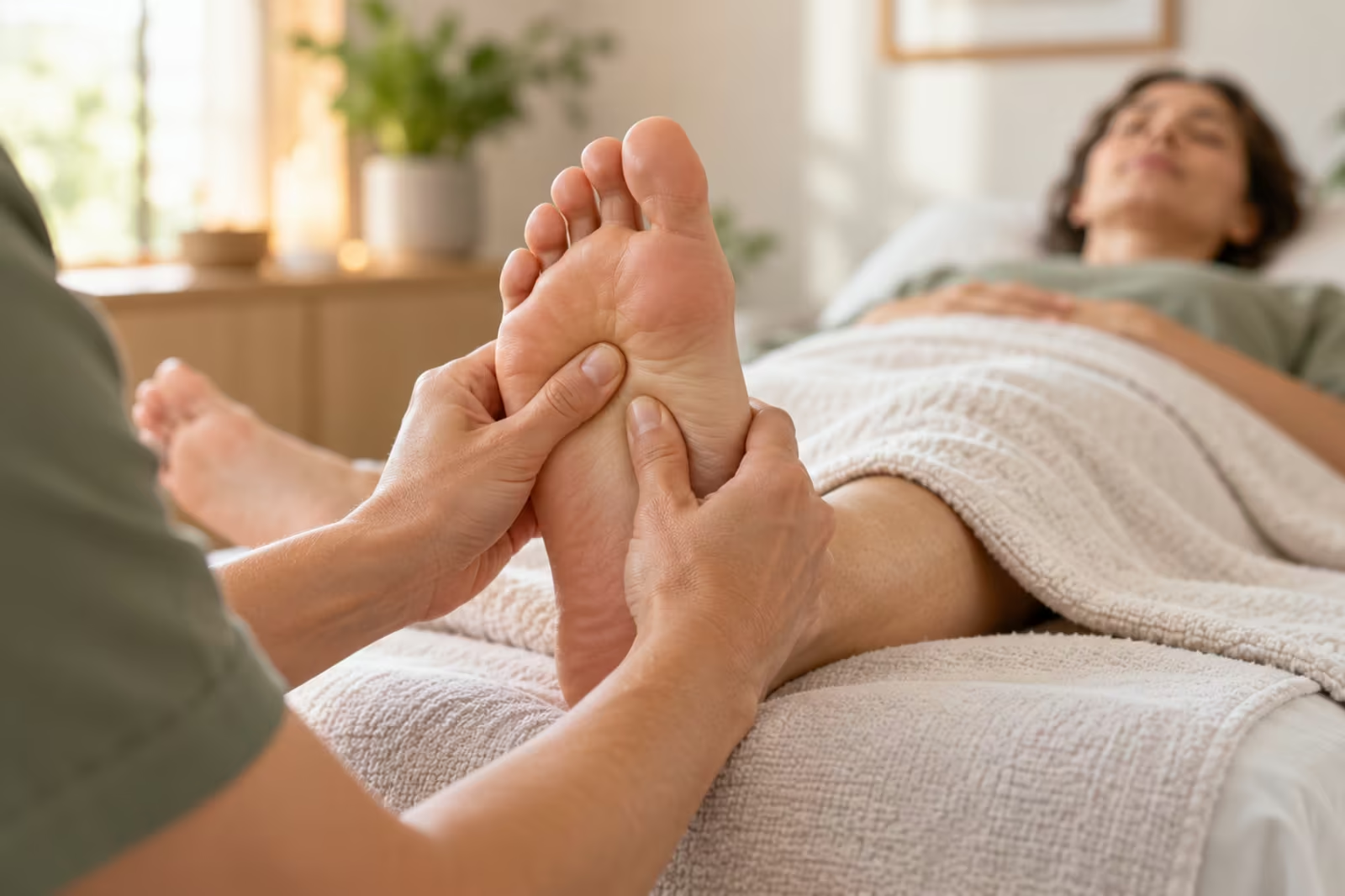
Reflexology is a hands-on practice that applies pressure to specific areas of the feet, hands, or ears. Practitioners use maps that associate these areas with parts or systems of the body. These maps are part of reflexology’s traditional framework. They should not be understood as proof that pressure on a particular point directly treats or changes an internal organ.
A reflexology session may include thumb walking, finger walking, or small, steady presses. The practitioner typically moves across selected areas rather than massaging the body’s muscles from head to toe. Reflexology is often chosen by people who prefer focused touch and want to stay mostly clothed during a session.
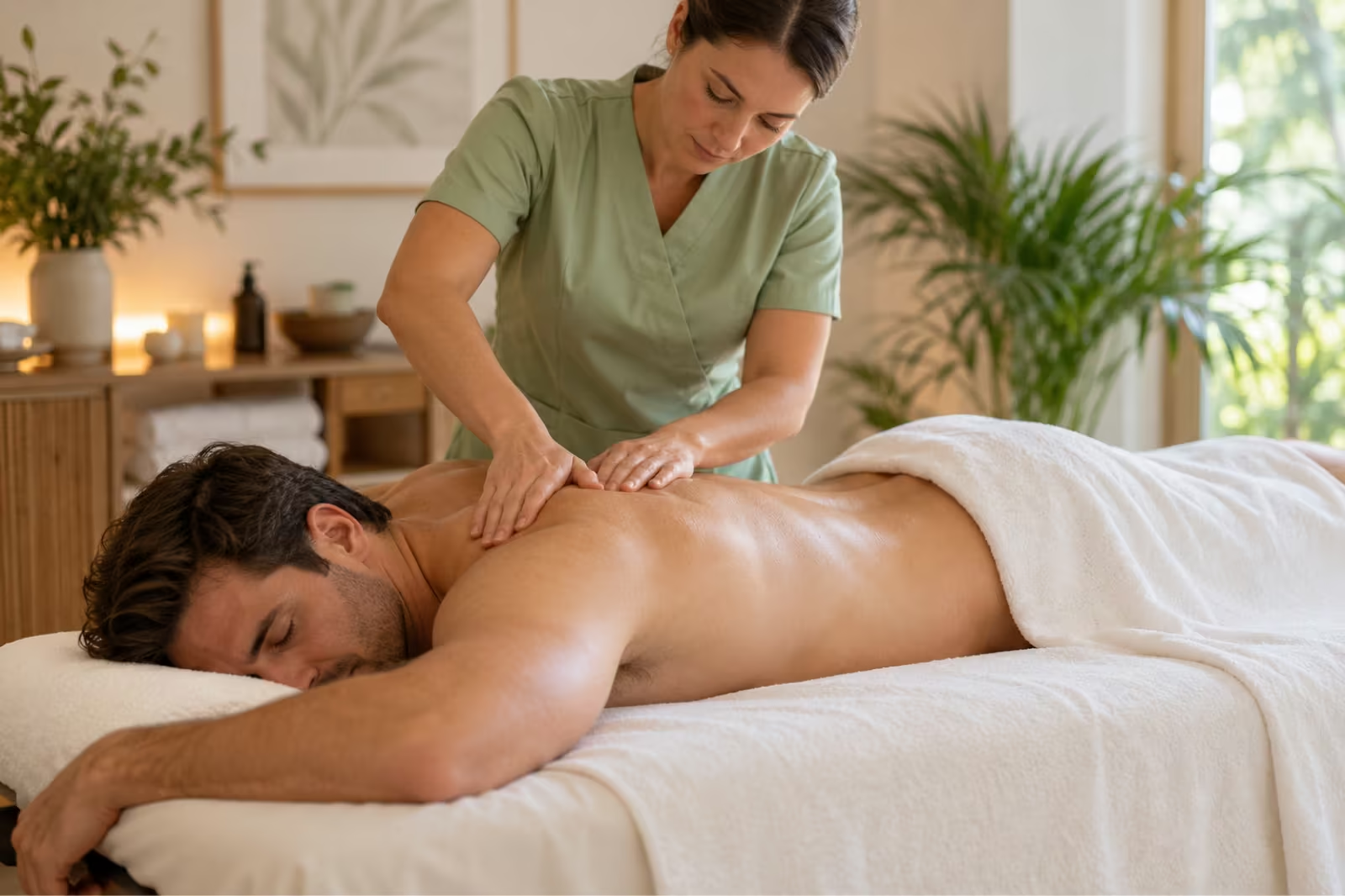
Massage therapy involves hands-on techniques applied directly to muscles and other soft tissues. Depending on the style and your goals, a practitioner may use gliding strokes, kneading, friction, stretching, or other movements.
Massage includes many different styles. Tuina is a form of Chinese therapeutic massage rooted in Traditional Chinese Medicine. It may use techniques such as pressing, pushing, rolling, and kneading on selected areas of the body.
A massage session may focus on relaxation, a particular area of muscle tension, or a broader full-body experience. Pressure can range from light to firm and should be adjusted to your comfort.
People may choose either practice for relaxation, but each offers a different treatment experience. Neither should be expected to diagnose or treat a medical condition, and individual responses vary.
|
Consideration |
Reflexology |
Massage |
|
Treatment focus |
Focused pressure on areas of the feet, hands, or ears, guided by traditional reflexology maps |
Direct work on muscles and other soft tissues, either in selected areas or across the body |
|
Treatment areas |
Usually the feet; hands or ears may also be included |
Areas such as the back, neck, shoulders, arms, or legs, depending on the style and your goals |
|
Typical session duration |
Often about 30–60 minutes; duration varies by provider and appointment |
Commonly about 30–90 minutes; duration varies by style and whether the session is focused or full body |
|
Commonly sought experience |
Focused touch and relaxation |
Relaxation or direct attention to areas of muscle tension |
|
Techniques |
Thumb or finger walking, steady localized pressure, and holding or pressing selected areas |
Techniques vary by style and may include gliding strokes, kneading, friction, or stretching; Tuina may include pressing, pushing, rolling, and kneading |
|
May suit someone who |
Prefers focused pressure and a session that usually allows them to stay clothed |
Wants hands-on work directly on selected areas of the body |
|
What to keep in mind |
Reflexology maps are part of the practice’s traditional framework; they do not show that pressure treats internal organs |
Pressure and techniques should be adjusted to the person’s comfort level |
Reflexology is a hands-on practice, but it is distinct from massage therapy. Both use manual pressure, but massage works directly with muscles and other soft tissues, while reflexology applies focused pressure to areas of the feet, hands, or ears according to traditional reflexology maps.
Both treatments involve touch on the feet, and some techniques may overlap. Reflexology applies focused pressure to specific areas of the feet according to traditional maps. A foot massage focuses on the feet themselves, using movements such as rubbing, kneading, or stroking for local relaxation and comfort.
Providers may combine methods, so ask which techniques they use and where they will focus. Reflexology maps are part of the practice’s traditional framework; they do not establish that pressure on the feet diagnoses or treats internal organ conditions.
You will typically remove your shoes and socks while staying clothed. You may sit in a chair or recline while the practitioner works on your feet, hands, or ears. The sensations can range from gentle pressure to a more noticeable focused touch. Tell the practitioner if an area is too sensitive.
You will usually lie on a massage table. You can undress only to the level you feel comfortable with, and appropriate draping should keep areas not being treated covered. The practitioner may use oil or lotion, depending on the massage style and your preference.
Before either session, you can ask what areas will be treated, how long the session lasts, and how to communicate during treatment. You do not need to wait until the end to mention discomfort or ask for a change.
People may choose reflexology or massage for relaxation, a calming break, or a hands-on wellness experience. Massage may also be selected when someone wants direct work on an area of muscle tension. Reflexology may appeal to someone who prefers focused treatment of the feet, hands, or ears.
These experiences are not guaranteed to produce a particular health outcome. Reflexology maps do not establish that pressure on the feet can diagnose or treat an internal organ condition. If you have persistent pain, new symptoms, or a health concern, speak with a qualified healthcare professional about appropriate care.
Consider these questions before booking:
At ACA Acupuncture & Wellness, our team can help you discuss your comfort, goals, and questions when exploring complementary wellness approaches. A conversation with a qualified provider can help you understand which options may fit your needs.
Let the practitioner know about relevant health conditions, recent injuries or procedures, pregnancy, reduced sensation, or circulation concerns before a session. These details may affect which techniques are appropriate or whether a treatment needs to be modified.
Reflexology and massage are wellness services, not substitutes for medical evaluation. Seek guidance from a qualified healthcare professional for ongoing symptoms, unexplained pain, or questions about a medical condition.
Reflexology and massage offer different hands-on experiences. Reflexology uses focused pressure on areas of the feet, hands, or ears, while massage works directly with muscles and other soft tissues. Your preferred treatment area, touch, and session setup can help guide your choice.
Whichever you choose, share your comfort level and pressure preferences with the practitioner. You can ask questions, request an adjustment, or pause the session at any time.
At ACA Acupuncture & Wellness, we offer holistic treatments, including acupuncture and cupping, that may complement your wellness routine. Visit one of our clinics to speak with our team about your goals and explore which services may be appropriate for you.
Yes. Tuina is a form of Chinese therapeutic massage rooted in Traditional Chinese Medicine. It uses hands-on techniques such as pressing, pushing, rolling, and kneading.
Reflexology maps associate areas of the feet, hands, or ears with parts of the body, but this does not establish that pressing those areas treats internal organ conditions. Consult a healthcare professional about symptoms or medical concerns.
There is no single schedule that suits everyone. Frequency depends on personal preference, goals, comfort, and any relevant health considerations. Discuss a schedule with a qualified provider if you have questions about your situation.
There is no single rule for everyone. Choose what feels comfortable, and tell the provider if you feel unwell or have specific concerns before treatment.
Reflexology uses focused pressure on specific areas of the feet, guided by traditional reflexology maps. A foot massage focuses on the feet themselves, using techniques such as rubbing or kneading for local comfort and relaxation. The methods can overlap, so ask the provider what the session includes.
Some providers may offer both, but availability and session structure vary. Ask when booking whether the treatments can be combined and how the time will be divided.
Sources:
Ghanbari, A., Mangolian Shahrbabaki, P., Dehghan, M., Mardanparvar, H., Kargar Dowlat Abadi, E., Emami, A., & Sarikhani-Khorrami, E. (2022). Comparison of the effect of reflexology and Swedish massage on restless legs syndrome and sleep quality in patients undergoing hemodialysis: A randomized clinical trial. International Journal of Therapeutic Massage & Bodywork, 15(2), 1–13.
Hodgson, N. A., & Lafferty, D. (2012). Reflexology versus Swedish massage to reduce physiologic stress and pain and improve mood in nursing home residents with cancer: A pilot trial. Evidence-Based Complementary and Alternative Medicine, 2012, Article 456897.
Sahin, N. D., Nal, B., & Astarcioglu, M. A. (2026). Comparison of the effects of reflexology and classical hand massage on pain, anxiety, and vital signs in patients after coronary angiography: A randomized controlled trial. Heart & Lung, 77, Article 102707.
LOCATIONS
MANHATTAN
QUEENS
NEW JERSEY
CALIFORNIA

The over $4 billion US acupuncture market offers a great opportunity with over 10% annual growth rates and a continuing flow of new patients interested in the benefits of acupuncture.