

When your shoulders feel tight or your muscles seem to hold onto tension, you may start looking for a massage that feels more focused than a gentle, relaxing session. Tuina and deep tissue massage may both sound like options, but they use different techniques and can feel quite different.
Tuina is a form of Chinese therapeutic massage that may involve pushing, rolling, kneading, grasping, and acupressure. Deep tissue massage usually focuses on selected muscles and soft tissues with slower, sustained pressure. Understanding these differences can help you feel more prepared to talk with a provider about what you need and what feels comfortable to you.
When your shoulders feel tight or your muscles seem to hold onto tension, you may start looking for a massage that feels more focused than a gentle, relaxing session. Tuina and deep tissue massage may both sound like options, but they use different techniques and can feel quite different.
Tuina is a form of Chinese therapeutic massage that may involve pushing, rolling, kneading, grasping, and acupressure. Deep tissue massage usually focuses on selected muscles and soft tissues with slower, sustained pressure. Understanding these differences can help you feel more prepared to talk with a provider about what you need and what feels comfortable to you.
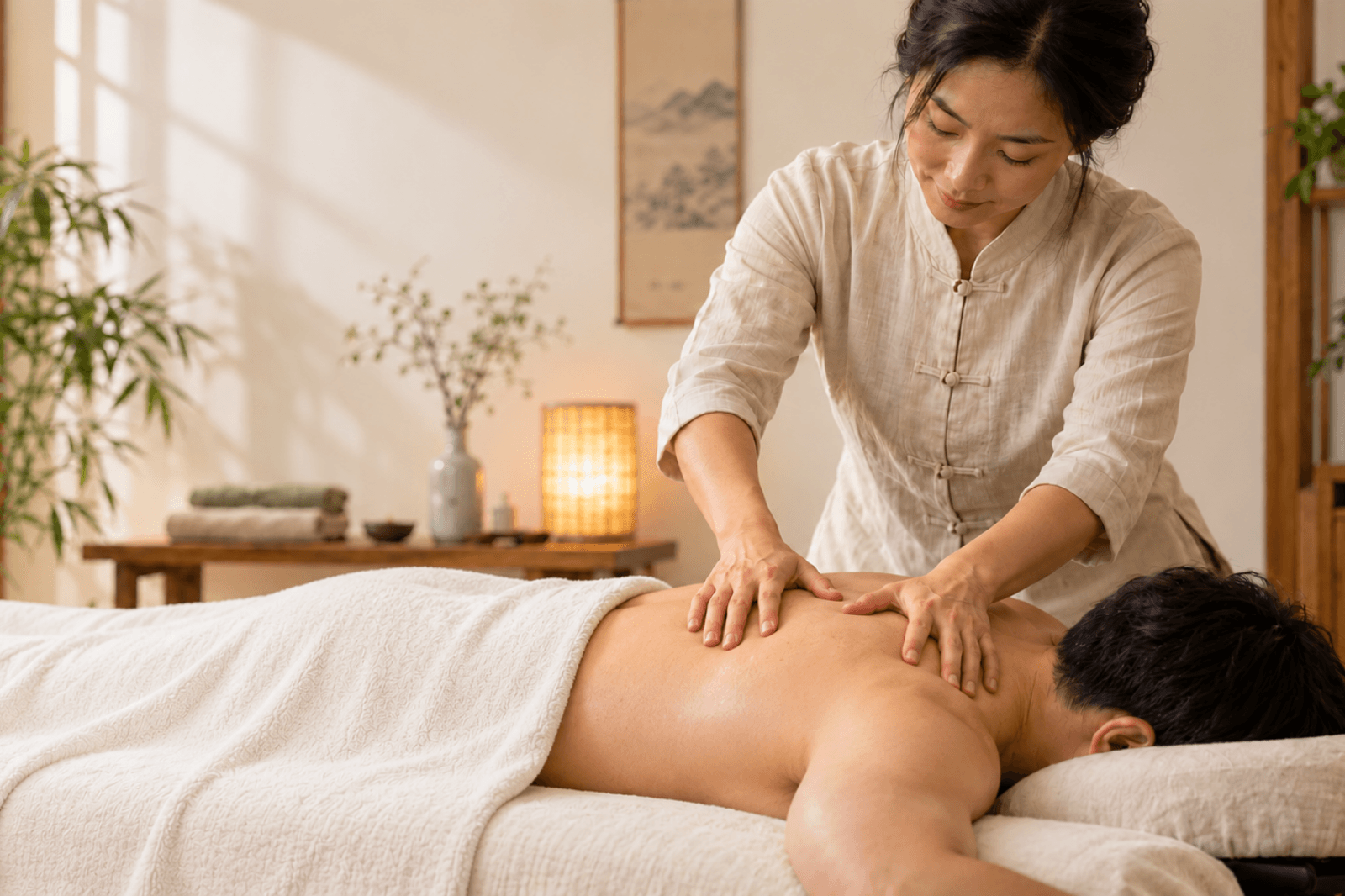
Tuina, also written as Tui Na, is a form of manual therapy rooted in Traditional Chinese Medicine. A practitioner may use a combination of hand movements, including pressing, pushing, rolling, kneading, and grasping. The techniques and pressure can change throughout the session, depending on the practitioner’s approach and your needs.
Traditional Chinese Medicine has its own way of understanding balance and the flow of Qi. Your practitioner may consider these ideas when discussing Tuina with you. They are traditional concepts, not a medical diagnosis.
If you are new to Tuina, it is completely reasonable to ask what a technique will feel like before the session begins. Knowing what to expect can help you feel more at ease.
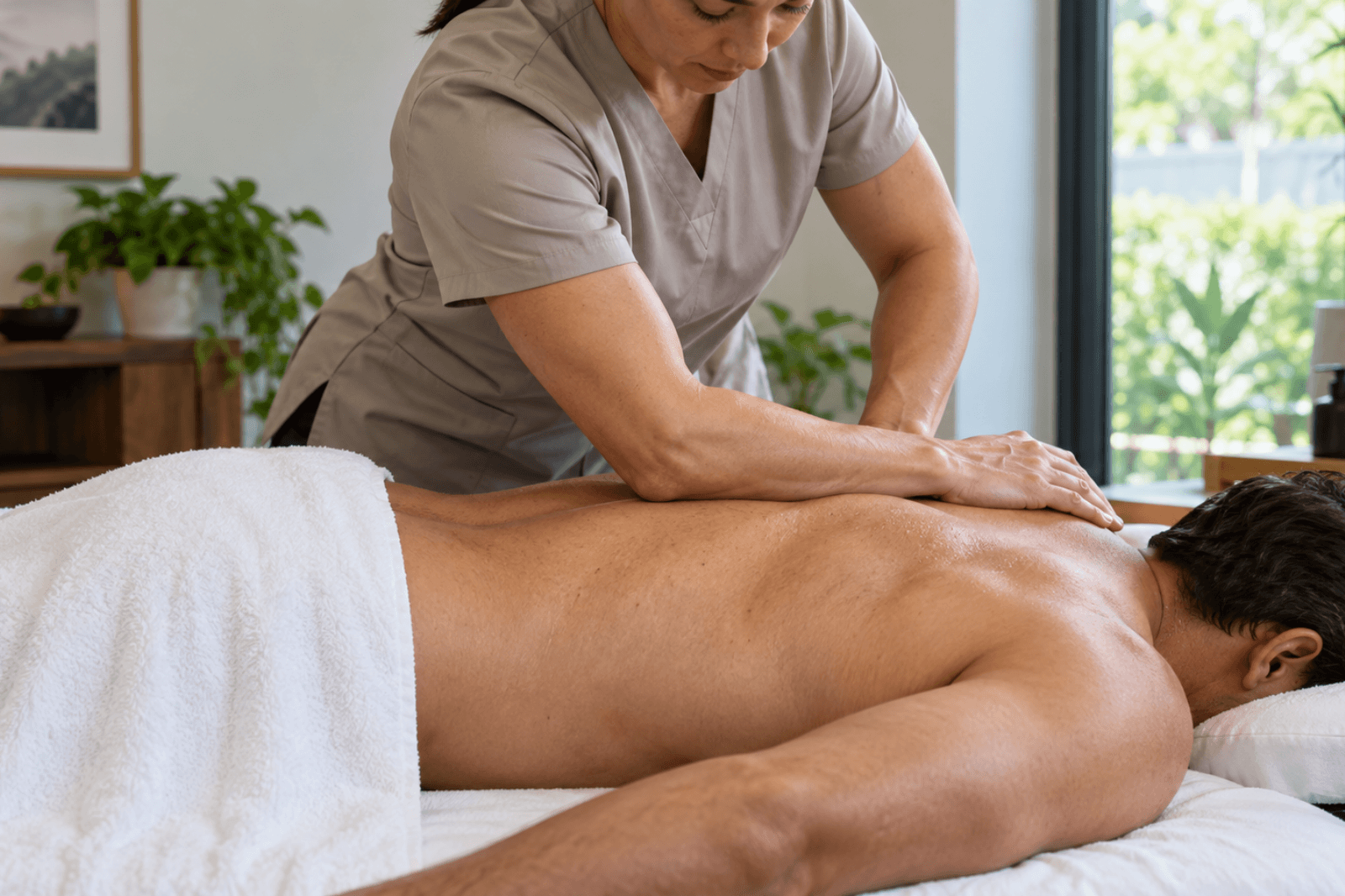
Deep tissue massage is a massage approach that focuses on particular areas of muscle and soft tissue. The therapist may use slower strokes and sustained pressure on areas that feel tight or tense.
The word “deep” can sound intimidating, especially if you are worried that the massage might hurt. You should not have to grit your teeth or endure sharp pain. Let the therapist know what pressure feels manageable for you, and speak up if you want them to adjust it.
| Feature | Tuina | Deep tissue massage |
| Background | Traditional Chinese Medicine bodywork | A massage approach focused on muscles and soft tissues |
| Techniques | May include rhythmic pushing, rolling, kneading, grasping, and acupressure | Often uses slower strokes and sustained pressure on selected areas |
| Pressure and movement | May change in rhythm, speed, and pressure during the session | Often uses steadier pressure on specific areas |
| Treatment focus | May address specific areas within a broader Traditional Chinese Medicine perspective | Commonly focuses on particular areas of muscle tightness or tension |
| Session details | Clothing, oils, positioning, and techniques depend on the provider | Clothing, draping, oils, and techniques depend on the provider |
The experience can vary from one practitioner to another. Tuina is not always vigorous, and deep tissue massage does not have to be painful. Before booking, ask what the provider’s session involves so you can choose with more confidence.
During Tuina, the practitioner may move between different techniques, so the session can feel varied and active. You may notice rhythmic movements or focused pressure on certain areas. If you prefer knowing what is coming next, tell the practitioner that and ask them to explain a technique before using it.
Deep tissue massage may feel more focused, with the therapist spending time on selected areas. The pressure can feel firm or intense, but it should remain within your comfort level. You can ask for lighter pressure, a different technique, or a pause at any point.
It is normal to have questions or feel unsure before trying a type of massage for the first time. A good conversation with the practitioner can help you feel heard and make the session more comfortable.
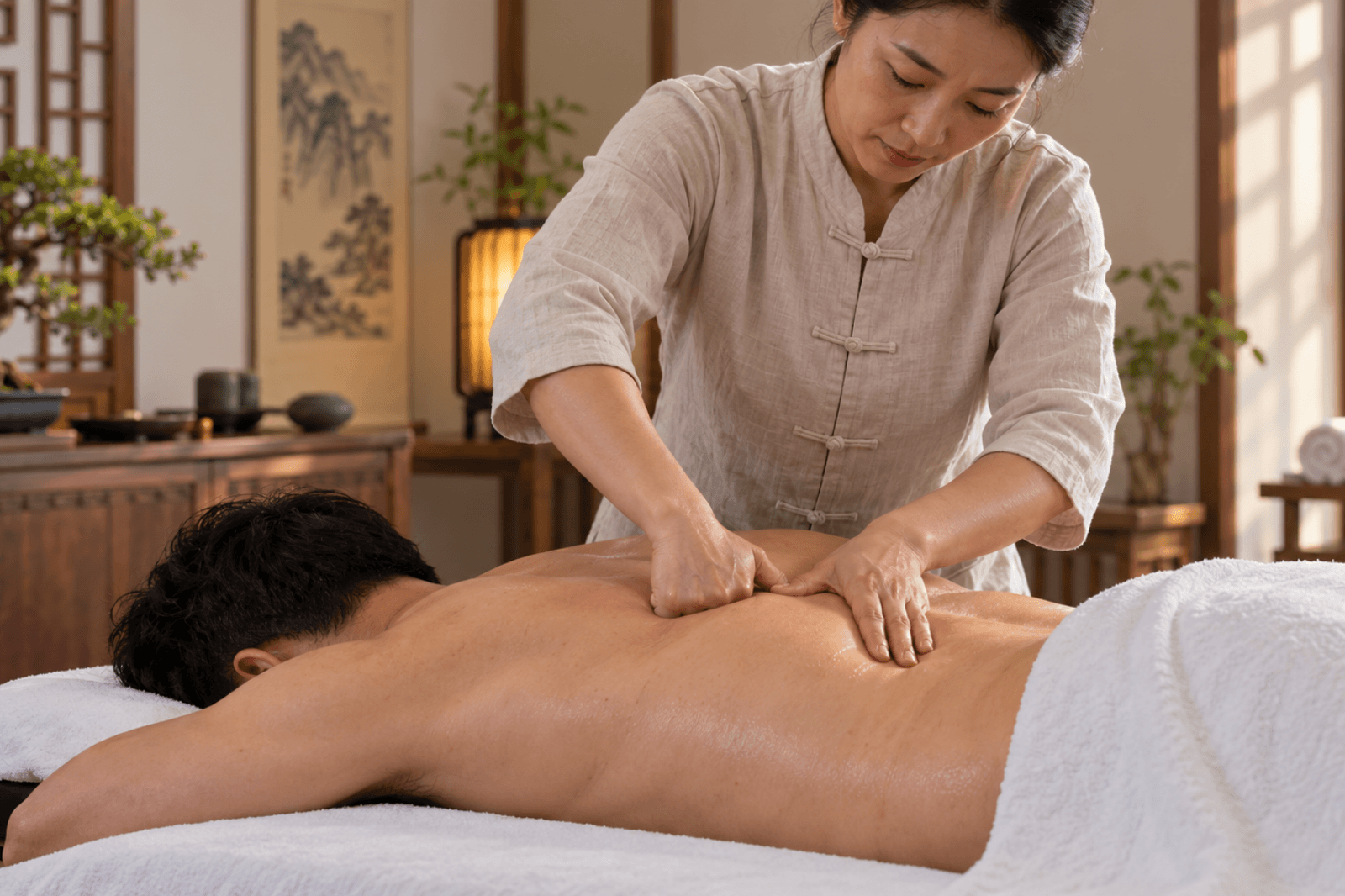
Think about what matters most to you. You might ask about Tuina if you are curious about Chinese therapeutic massage and want to learn about its range of manual techniques. You might ask about deep tissue massage if you prefer a session focused on specific areas with slower, sustained pressure.
You do not need to decide based on which one sounds stronger. Instead, consider:
A provider can explain what they offer and help you understand what a session may involve. If you have a health condition, take blood-thinning medication, or are pregnant, check with your healthcare professional about whether massage is appropriate, and share relevant details with your provider. Massage should not delay medical care for a new, severe, or persistent symptom.
You deserve to feel comfortable asking questions before someone begins working on your body. You could ask:
The provider should explain the session and listen to your preferences. You can speak up at any time if you want the pressure changed or need the session to stop.
If you have a health condition, take blood-thinning medication, are pregnant, or have a recent injury, ask a healthcare professional whether massage is appropriate for you. Share relevant information with your massage provider before the session so they can discuss whether any adjustments are needed.
Massage should not delay medical care for a new, severe, or persistent symptom. If you are seeking help for a health concern, speak with a healthcare professional about appropriate care.
Pay attention to how you feel afterward. If you have discomfort that concerns you, contact your provider for guidance. If you develop severe or persistent pain, or have another worrying symptom, seek advice from a healthcare professional.
You do not need to assume that feeling sore means the massage was more effective. If you book another session, tell the practitioner how you felt so they can take your experience into account.
Ask about the practitioner’s training and experience with the style of massage you are considering. You can also ask how they adapt techniques for different comfort levels and what they do if a client wants the pressure changed.
A provider should explain the session, listen to your preferences, and respect your choice to pause or stop. Feeling comfortable speaking up is part of making an informed choice.
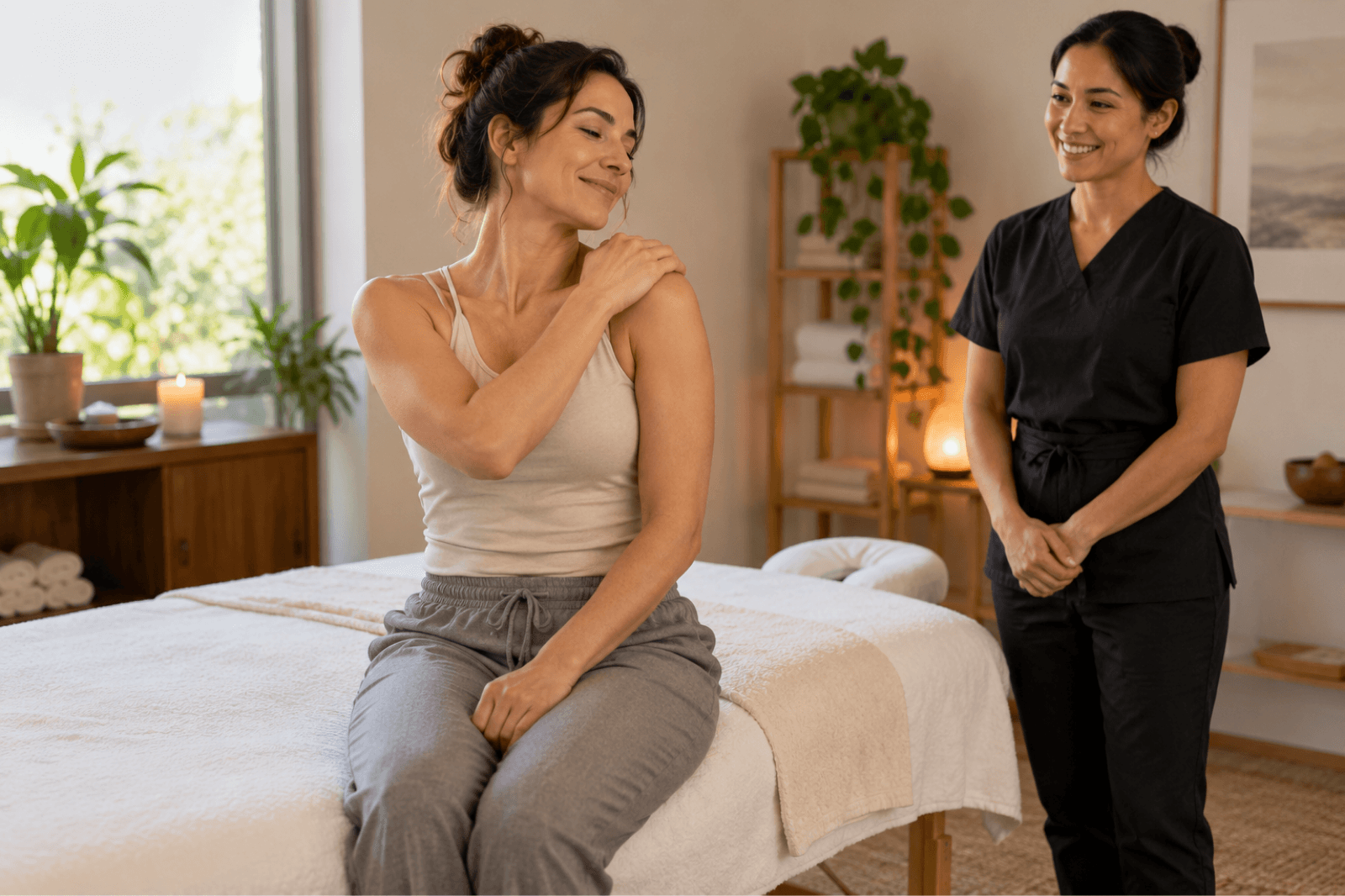
The right massage is the one that feels appropriate for your needs, preferences, and comfort level. You may be drawn to Tuina’s varied techniques or prefer the focused pressure often used in deep tissue massage. Either way, you can ask questions, share what you are comfortable with, and request an adjustment during your session.
If you are curious about Tui Na, contact ACA Acupuncture & Wellness to learn more about the techniques we use and what you can expect during an appointment. We also offer other holistic approaches that may complement Tuina, including acupuncture, cupping, and moxibustion. We can explain these options and help you discuss which approaches may be appropriate for your needs.
Disclaimer: This article is for general information and is not a substitute for medical advice, diagnosis, or treatment.
People often consider deep tissue massage when they want focused work on areas that feel tight or tense. How you respond can vary, and massage is not a guaranteed treatment for an underlying health condition.
Deep tissue massage therapy usually focuses on selected areas with slower, sustained pressure. A relaxation massage generally uses gentler, broader techniques. Ask the provider what their session includes, since approaches can vary.
Tuina is one form of traditional Chinese massage. The broader term can refer to different Chinese massage approaches, so ask which specific techniques a provider uses.
Ask the provider whether the session is specifically Tuina, or Tui Na, and what techniques it includes. The name “Chinese therapeutic massage” can describe a broader approach, so it helps to clarify what you would receive.
Providers may use “deep tissue therapy” to describe focused massage using sustained pressure on selected areas. Ask what techniques are included and how the provider adapts pressure to your comfort.
There is no single schedule that suits everyone. Timing can depend on your preferences, how you feel after a session, and the provider’s recommendations. Ask your provider what schedule they suggest for your situation.
Reference:
Ma, P., Liu, L., Li, S., Cai, M., Han, S., Weng, Z., Chen, Q., Gao, Y., Zhang, L., Wu, G., Yang, X., Zhang, Y., Li, D., Liu, C., Sun, Y., Yan, S., Wang, X., & Yu, C. (2025). Comparative effectiveness of Tuina therapy versus manual physical therapy for knee osteoarthritis: A randomized controlled trial. BMC Complementary Medicine and Therapies, 25, Article 128.
LOCATIONS
MANHATTAN
QUEENS
NEW JERSEY
CALIFORNIA

The over $4 billion US acupuncture market offers a great opportunity with over 10% annual growth rates and a continuing flow of new patients interested in the benefits of acupuncture.