


Acupuncture for blood stasis is a Traditional Chinese Medicine (TCM) treatment approach used to encourage smoother local circulation, reduce fixed or stabbing pain, and restore more comfortable movement. Treatment may focus on areas affected by old injuries, surgery, scar restriction, chronic muscle tension, menstrual cramping, or other patterns in which discomfort remains localized and persistent.
Blood stasis is a Traditional Chinese Medicine pattern rather than a conventional medical diagnosis. It describes a loss of smooth movement and nourishment within the traditional framework of Qi and blood. It does not automatically mean that a person has vascular disease, a blocked artery, or a blood clot.
Acupuncture treatment is individualized according to the location and quality of pain, the events that preceded it, tongue and pulse findings, accompanying symptoms, and the patient’s overall health.

Acupuncture for blood stasis is a Traditional Chinese Medicine (TCM) treatment approach used to encourage smoother local circulation, reduce fixed or stabbing pain, and restore more comfortable movement. Treatment may focus on areas affected by old injuries, surgery, scar restriction, chronic muscle tension, menstrual cramping, or other patterns in which discomfort remains localized and persistent.
Blood stasis is a Traditional Chinese Medicine pattern rather than a conventional medical diagnosis. It describes a loss of smooth movement and nourishment within the traditional framework of Qi and blood. It does not automatically mean that a person has vascular disease, a blocked artery, or a blood clot.
Acupuncture treatment is individualized according to the location and quality of pain, the events that preceded it, tongue and pulse findings, accompanying symptoms, and the patient’s overall health.

Blood stasis is a TCM pattern in which blood is not moving smoothly enough to nourish tissues and support normal movement and recovery.
In Chinese medicine, blood is understood to nourish the muscles, joints, skin, organs, and sensory tissues. Its healthy movement is closely connected to Qi, a traditional functional concept associated with activity, transformation, protection, and physiological movement.
A common TCM principle states that Qi moves blood. When Qi becomes constrained, weakened, or disrupted, blood may also lose its smooth movement. This may contribute to pain that becomes fixed, tissue that remains restricted, or symptoms that persist after an injury has otherwise healed.
Blood stasis can develop gradually or follow a clear event. A practitioner may consider the pattern when:
Modern research literature describes blood stasis syndrome as a pattern involving combinations of findings such as fixed pain, dark-purple discoloration, tongue changes, bleeding signs, and altered pulse qualities. Diagnostic criteria have been developed for research, although blood stasis remains distinct from a conventional disease confirmed through one laboratory test or scan.
The term “stasis” can create the impression that blood has physically stopped moving through a vessel. That is not necessarily what the term means in routine TCM practice.
Blood stasis is identified through pattern differentiation. The practitioner evaluates the complete presentation rather than relying on one symptom. This assessment may include:
A person may have a TCM blood-stasis pattern without having a diagnosed vascular disorder. Conversely, a person can have a serious circulatory condition without displaying the traditional signs of blood stasis.
Blood stasis and medically diagnosed poor circulation are related only in a broad conceptual sense and should not be treated as interchangeable conditions.
Poor circulation generally refers to a medically recognized problem affecting arteries, veins, or smaller blood vessels. Depending on the cause, it may produce:
Blood stasis is a wider pattern within TCM. It may occur around an old injury, painful joint, chronically tense muscle, healed scar, or menstrual condition even when no vascular disorder has been diagnosed.
This article focuses on localized circulation and tissue movement in the context of blood stasis. It does not claim that acupuncture reverses arterial disease, repairs vein valves, dissolves clots, or treats every cause of poor circulation.
Blood-stasis pain is usually fixed, sharp, stabbing, deep, or easy to identify in one precise location.
Pain quality is central to TCM pattern differentiation. Discomfort that changes location or fluctuates strongly with stress may suggest Qi stagnation. Pain that remains in one area and develops a sharper or more persistent quality is more characteristic of blood stasis.
Blood-stasis pain may feel:
The affected area may also feel tight, bound, heavy, or difficult to move. Some people can point to the painful spot with one finger rather than describing a broad or vague region.
Blood stasis may be considered when these symptoms affect the:
These characteristics do not establish a medical diagnosis. Joint damage, nerve irritation, infection, fracture, vascular disease, and other conditions may cause similar symptoms and should be evaluated appropriately.
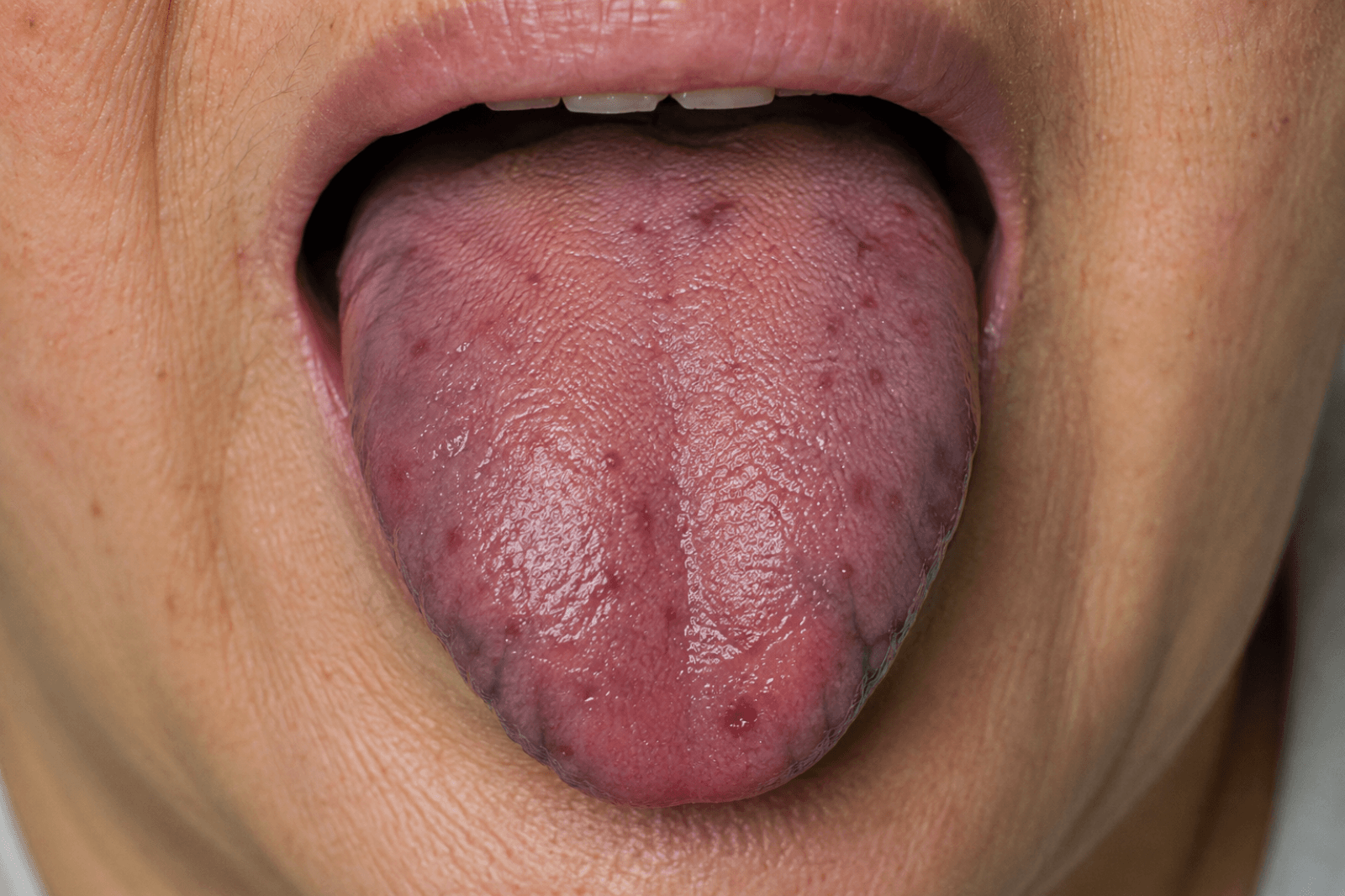
A dusky or purple tongue and firm, choppy, wiry, or tight pulse qualities may support a TCM diagnosis of blood stasis.
Tongue and pulse assessment can help the practitioner determine whether the pattern appears local or systemic, recent or long-standing, and whether it occurs with cold, Qi stagnation, or an underlying deficiency.
Traditional tongue signs may include:
Tongue findings must be interpreted as part of the complete pattern. Lighting, hydration, medication, food, oral conditions, and natural variation can affect tongue appearance.
A purple tongue does not diagnose a blood clot, heart condition, or vascular disorder.
Pulse qualities traditionally associated with blood stasis may be described as:
A weak pulse may suggest that deficiency is contributing to the stagnation. A stronger or more resistant pulse may be interpreted as a more obstructive pattern.
Tongue and pulse assessment are TCM diagnostic methods. They do not replace imaging, laboratory tests, cardiovascular examination, gynecological assessment, or neurological evaluation.
Blood stasis may develop after trauma, surgery, prolonged tension, inactivity, emotional constraint, cold exposure, or constitutional weakness.
The pattern rarely exists without a contributing factor. Identifying that factor helps determine whether treatment should emphasize releasing obstruction, reducing pain, supporting local circulation, warming the area, or strengthening an underlying deficiency.
Falls, bruises, sprains, fractures, repetitive strain, sports injuries, and accidents can disrupt comfortable movement in an affected area.
After the initial injury heals, the body may continue protecting the region. Muscles stay tense, movement remains limited, and the person may unconsciously avoid loading, stretching, or using the area normally.
Over time, this may create a cycle:
In TCM, pain that remains fixed after trauma is a classic blood-stasis presentation.
Treatment may focus on:
Acupuncture should be used after serious structural injuries have been ruled out or medically managed.
Surgery changes the structure and movement of tissue. Even after an incision has healed, the surrounding area may feel:
The body may also change posture or movement to protect the surgical region. These compensations can affect nearby muscles, joints, and connective tissues.
An individualized treatment may use points:
Needles should not be inserted through an unhealed incision, infected tissue, unexplained swelling, or an area that has not received appropriate postoperative clearance.
Muscle guarding is a protective response to pain or perceived threat. It can be useful immediately after an injury, but persistent guarding may limit mobility and maintain sensitivity after the tissue has healed.
Tight muscles can also place pressure on surrounding tissues and make normal movement less comfortable. In TCM terms, this ongoing restriction may interfere with smooth Qi and blood movement.
Acupuncture may help reduce protective tension and create an opportunity for the patient to move, stretch, strengthen, or participate in rehabilitation more comfortably.
Qi stagnation is a common precursor to blood stasis.
In TCM, Qi supports movement. When Qi remains constrained for a prolonged period, blood may also become less mobile within the traditional pattern framework.
Qi stagnation may initially produce:
When discomfort becomes fixed, sharp, darkly discolored, or persistently tender, blood stasis may be present alongside Qi stagnation.
Traditional theory associates cold with contraction and restricted movement.
Some blood-stasis patterns may:
Heat is not suitable for every painful area. It should not be applied over acute swelling, active bleeding, infection, numb skin, a new unassessed injury, or a suspected blood clot.
Prolonged inactivity can reduce normal muscular movement and contribute to stiffness and guarding.
Examples include:
Gentle, medically appropriate movement is often an important part of recovery. However, unexplained one-sided limb swelling, warmth, or tenderness should be evaluated rather than assumed to be ordinary stagnation.
Blood stasis does not always arise from a strong obstruction. It may develop because the body lacks sufficient functional strength to maintain movement.
Contributing TCM patterns may include:
Deficiency-related blood stasis may occur with:
These patients may require a gentler treatment strategy that supports weakened function while gradually addressing stagnation.

Acupuncture may support circulation in blood-stasis patterns by producing localized vascular responses, reducing muscle guarding, and helping the affected area regain comfortable movement.
The phrase “improving circulation” should be interpreted carefully. Acupuncture does not mechanically force blood through an obstructed vessel. Its effects may involve local microcirculatory changes, sensory nerve activity, vascular signaling, muscle relaxation, and pain modulation.
Acupuncture needles stimulate sensory receptors in the skin, muscle, and connective tissue. This stimulation may affect small blood vessels in and around the treated area.
A systematic review of research on local blood-flow responses found that acupuncture can produce measurable microcirculatory changes, although the direction and magnitude of the response varied according to needle technique, location, tissue depth, and measurement method.
This supports a focused claim: acupuncture may influence local and regional circulation around treated tissues.
It does not establish that acupuncture:
Chronically contracted muscles can make an area feel tight, compressed, and difficult to move. Persistent guarding may also contribute to pain with stretching or pressure.
Acupuncture may help reduce this protective response by changing sensory input and decreasing pain sensitivity. When muscle tension eases, the area may tolerate movement more comfortably.
This can support a practical recovery sequence:
Muscle activity helps tissues receive nutrients, tolerate load, and recover from inactivity. A painful area that is rarely moved may remain stiff and sensitive.
Acupuncture may indirectly support circulation by helping the patient return to:
This is an important distinction. Acupuncture may create a more comfortable opportunity for movement, while movement itself remains a key part of long-term recovery.
Pain is influenced by signals traveling through peripheral nerves, the spinal cord, and the brain.
Acupuncture may activate pain-modulating pathways and affect the body’s endogenous pain-relieving systems. The National Center for Complementary and Integrative Health reports that acupuncture may help with several pain conditions, including back or neck pain, osteoarthritis-related knee pain, and postoperative pain.
Reducing pain sensitivity can help the patient use the affected area more normally, which may be especially useful when fear of movement and muscle guarding have become part of the problem.
Needles also interact mechanically with connective tissue. Gentle manipulation can create local tissue deformation and cellular signaling.
The clinical significance varies by condition, but this interaction may be relevant when blood-stasis symptoms involve:
Acupuncture does not remove scar tissue or reconstruct damaged structures. It may be used to address sensitivity and movement restriction around fully healed tissue.
Acupuncture treatment for blood stasis combines local care for the symptomatic region with distal points selected for the underlying pattern.
Traditional treatment principles may include:
The specific strategy depends on what caused the stagnation and how the patient is presenting.
Local points may be placed around:
The practitioner must consider anatomy, tissue healing, medication use, swelling, infection risk, surgical history, and patient sensitivity.
Distal points are located away from the painful region, often on the:
They may be selected according to:
A patient with shoulder pain may receive needles near the shoulder and additional points on the hand or lower leg. The distal points are part of the overall treatment strategy.
TCM treatment often distinguishes between the root and branch.
The branch is the immediate symptom, such as:
The root is the broader pattern contributing to the symptom, such as:
Addressing only the painful area may provide temporary relief without changing the factors that allow symptoms to return.
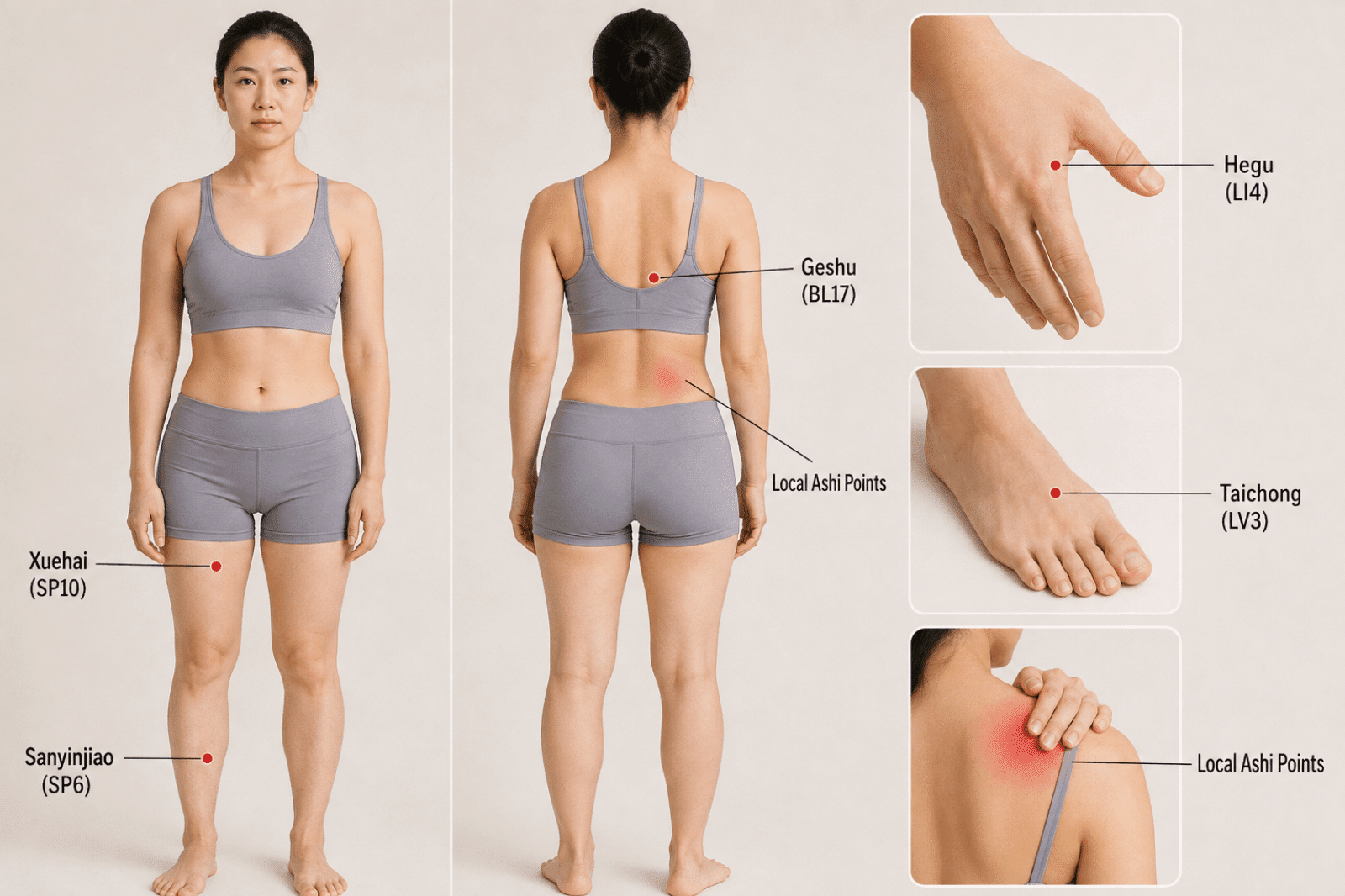
Common points include Xuehai, Geshu, Taichong, Sanyinjiao, Hegu, and local Ashi points, but no universal prescription is appropriate for every patient.
Point selection depends on symptom location, cause, constitution, pregnancy status, medications, and medical history.
Xuehai means “Sea of Blood.”
It is traditionally used to regulate and move blood and may be considered for:
Xuehai is Spleen 10. It is not the same point as Sanyinjiao.
Geshu is traditionally known as the influential point of blood.
It may be included for:
Because it is located on the back, proper anatomical technique is essential.
Taichong is commonly selected when Qi stagnation contributes to blood stasis.
It may be considered when symptoms occur with:
Sanyinjiao is located on the lower leg and is frequently used in gynecological and lower-abdominal patterns.
It may be considered when blood stasis is associated with:
Spleen 6 requires special consideration during pregnancy.
Hegu may be selected for pain and Qi regulation.
It is generally combined with other local and distal points rather than used as a standalone treatment. This point also requires pregnancy precautions.
Ashi points are tender or reactive areas identified through palpation rather than a fixed chart.
They may be found around:
Ashi-point treatment requires professional anatomical knowledge and should never be attempted through self-needling.
Qi stagnation usually causes changing, distending, or stress-reactive discomfort, while blood stasis causes pain that is fixed, sharp, and persistent.
Qi-stagnation symptoms may include:
Blood-stasis symptoms are more likely to include:
The patterns frequently occur together. Prolonged Qi stagnation may eventually contribute to blood stasis.
Blood deficiency describes insufficient nourishment in TCM, while blood stasis describes impaired movement.
Blood deficiency may include:
Blood stasis is more commonly associated with:
Both patterns can occur together. In that situation, treatment may need to support nourishment while also improving movement.
Blood stasis is commonly considered when an old injury or healed surgical area remains painful, tight, tender, or restricted.
Signs may include:
Acupuncture near a fully healed scar may be used to address:
Treatment may include gentle local needling, distal points along related channels, and points chosen for pain regulation.
New redness, drainage, fever, swelling, or rapidly changing pain around a surgical site requires medical assessment.

In gynecological TCM, blood stasis may be considered when menstrual symptoms include strong cramping, dark blood, clots, and fixed pelvic pain.
The pain may feel:
Some patients report that discomfort improves after a clot passes.
Acupuncture treatment may vary according to:
Severe pelvic pain, unusually heavy bleeding, bleeding between periods, fainting, pregnancy-related pain, or sudden changes in symptoms require conventional medical evaluation.
Acupuncture is generally considered safe when performed by a qualified practitioner using sterile, single-use needles and appropriate anatomical technique.
Common temporary effects may include:
The National Center for Complementary and Integrative Health notes that serious complications are uncommon when acupuncture is performed correctly, although improper treatment can cause infection or injury.
Patients taking anticoagulant or antiplatelet medication should tell the practitioner before treatment.
The practitioner may need to adjust:
Prescribed medication should never be stopped without instructions from the prescribing clinician.
Pregnancy affects point selection, positioning, and treatment strength. Patients should disclose pregnancy or possible pregnancy before treatment.
Acupuncture may need to be delayed when a patient has:
Acupuncture cannot dissolve a blood clot, reopen a blocked artery, or replace anticoagulant medication or emergency treatment.
A blood clot is a physical obstruction that requires medical assessment. Blood stasis is a TCM pattern identified through symptoms and traditional findings.
Possible signs of deep vein thrombosis include:
Possible signs of pulmonary embolism include:
The Centers for Disease Control and Prevention advises prompt medical evaluation for possible deep vein thrombosis and immediate help for possible pulmonary embolism.
Acupuncture is helping when pain, movement, sleep, or daily function improves in a measurable and repeatable way.
Useful progress markers include:
Progress may fluctuate, especially as activity increases. The overall trend should move toward better function, more comfortable movement, or reduced symptom burden.
Blood stasis provides a TCM framework for understanding pain that is fixed, trauma-related, pressure-sensitive, or associated with scar restriction and menstrual symptoms.
Acupuncture may support localized circulation while reducing pain sensitivity, easing muscle guarding, and helping affected tissues move more comfortably. The treatment is not based on a universal circulation protocol. It is tailored to the cause of the stagnation, the location and quality of pain, accompanying TCM patterns, and the patient’s medical history.
At ACA Acupuncture and Wellness, we create individualized treatment plans based on your symptoms, health history, pain pattern, and personal goals. We combine traditional pattern differentiation with careful safety screening to support local circulation, ease persistent discomfort, and help restore comfortable movement naturally. Contact us today to schedule a consultation and determine whether acupuncture is appropriate for your needs.
Sources:
Liao J, Wang J, Liu Y, et al. Modern Researches on Blood Stasis Syndrome 1989–2015.
Kim SY, Min S, Lee H, et al. Changes of Local Blood Flow in Response to Acupuncture Stimulation: A Systematic Review.
Vickers AJ, Vertosick EA, Lewith G, et al. Acupuncture for Chronic Pain: Update of an Individual Patient Data Meta-Analysis.
National Center for Complementary and Integrative Health. Acupuncture: Effectiveness and Safety.
In TCM, blood stasis is addressed by restoring movement and treating the pattern that allowed stagnation to develop. Care may include acupuncture, gentle activity, rehabilitation, stress regulation, and condition-appropriate warmth. The treatment strategy depends on whether the pattern developed from trauma, surgery, Qi stagnation, cold, inactivity, or deficiency.
Common points include Xuehai, or Spleen 10; Geshu, or Bladder 17; Taichong, or Liver 3; Sanyinjiao, or Spleen 6; Hegu, or Large Intestine 4; and local Ashi points. Point selection depends on the location and cause of symptoms, the patient’s constitution, pregnancy status, medications, and medical history.
Acupuncture may produce localized changes in blood flow around treated tissues and may support circulation indirectly by reducing muscle guarding and helping the patient move more comfortably. It does not correct every form of poor circulation or replace medical treatment for a vascular disorder.
Typical TCM signs include fixed or stabbing pain, pressure-sensitive tenderness, nighttime pain, dark discoloration, persistent discomfort after an injury, menstrual clots, dark menstrual blood, and a dusky or purple tongue.
No. Blood stasis is a TCM pattern, while a blood clot is a physical obstruction that requires medical assessment. Acupuncture cannot dissolve a clot or replace anticoagulant medication. One-sided swelling, chest pain, or sudden breathing difficulty requires urgent medical care.
In gynecological TCM, blood stasis may be considered when menstrual symptoms include strong cramping, dark blood, clots, and fixed pelvic pain. Severe pain, unusually heavy bleeding, fainting, bleeding between periods, or sudden symptom changes should be medically evaluated.
LOCATIONS
MANHATTAN
QUEENS
NEW JERSEY
CALIFORNIA

The over $4 billion US acupuncture market offers a great opportunity with over 10% annual growth rates and a continuing flow of new patients interested in the benefits of acupuncture.