
Last Updated: July 09, 2026
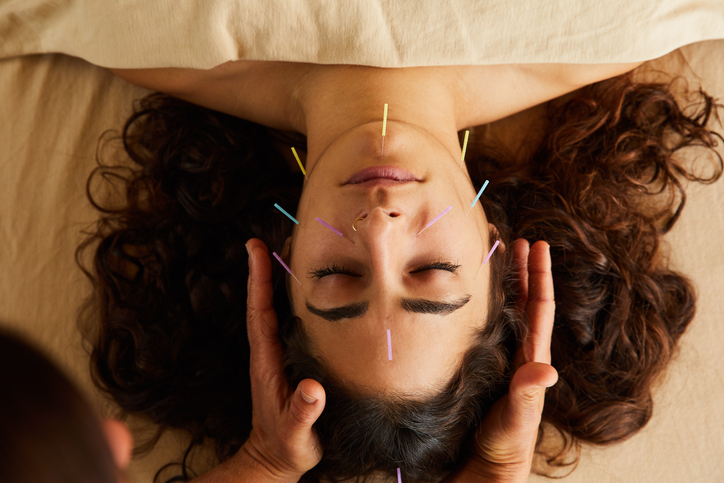
Pressure points for menstrual cramps are specific acupressure and acupuncture points used to reduce period pain, relax lower abdominal tension, support circulation, and calm stress-related discomfort. Common points include SP6, LI4, LV3, CV4, BL32, SP8, SP9, ST36, and P6. Acupressure can be used at home for mild to moderate cramps, while acupuncture offers more personalized support for recurring or severe menstrual pain.
Menstrual cramps are common, but they should not be dismissed when they interfere with daily life. In conventional medicine, painful periods are called dysmenorrhea. In Traditional Chinese Medicine, menstrual pain is often understood through patterns involving Qi flow, Blood circulation, cold, dampness, stress, and constitutional weakness.
Acupressure and acupuncture do not replace medical care. However, they may be useful tools for people looking for natural period pain support, especially when used safely and consistently.
Last Updated: July 09, 2026
Pressure points for menstrual cramps are specific acupressure and acupuncture points used to reduce period pain, relax lower abdominal tension, support circulation, and calm stress-related discomfort. Common points include SP6, LI4, LV3, CV4, BL32, SP8, SP9, ST36, and P6. Acupressure can be used at home for mild to moderate cramps, while acupuncture offers more personalized support for recurring or severe menstrual pain.
Menstrual cramps are common, but they should not be dismissed when they interfere with daily life. In conventional medicine, painful periods are called dysmenorrhea. In Traditional Chinese Medicine, menstrual pain is often understood through patterns involving Qi flow, Blood circulation, cold, dampness, stress, and constitutional weakness.
Acupressure and acupuncture do not replace medical care. However, they may be useful tools for people looking for natural period pain support, especially when used safely and consistently.
Menstrual cramps are lower abdominal pains that happen before or during a period. They are often caused by uterine contractions that help shed the uterine lining. Some people also experience lower back pain, thigh pain, nausea, diarrhea, headaches, fatigue, or dizziness.
Pressure points may help support comfort, but they should not be used to ignore severe symptoms. If cramps stop you from working, going to school, sleeping, walking, or completing normal activities, it is worth speaking with a healthcare professional.
Traditional Chinese Medicine views menstrual cramps as a sign that the body’s normal movement of Qi and Blood has been disrupted. In TCM, healthy menstruation depends on smooth circulation, adequate nourishment, balanced organ systems, and the free flow of energy through the meridians.
Several TCM patterns are commonly associated with menstrual cramps:
|
TCM Pattern |
Common Signs |
Possible Cramp Pattern |
Related Pressure Points |
|
Qi stagnation |
Stress, irritability, breast tenderness, PMS, emotional tension |
Cramping that worsens with stress |
LV3, LI4, SP6 |
|
Blood stagnation |
Dark menstrual blood, clots, fixed or stabbing pain |
Sharp cramps, intense lower abdominal pain |
SP8, SP6, BL32 |
|
Cold accumulation |
Pain relieved by heat, cold hands or feet, cramps worse in cold weather |
Tight, contracting pain |
CV4 with gentle heat, SP6, ST36 |
|
Dampness |
Bloating, heaviness, swelling, sluggish digestion |
Cramps with pelvic heaviness or water retention |
SP9, ST36 |
|
Qi and Blood deficiency |
Fatigue, light period, dull pain, weakness |
Achy, lingering cramps |
ST36, CV4, SP6 |
|
Kidney deficiency |
Low back soreness, fatigue, coldness, chronic cycle issues |
Cramps with back or hip pain |
BL23, BL32, CV4 |
The Liver Meridian is especially important in TCM menstrual health because it is associated with the smooth movement of Qi and Blood. When stress, tension, or emotional strain affects Liver Qi, cramps may feel worse before or during the period.
The Spleen and Kidney systems are also important. In TCM, the Spleen helps transform food into Qi and Blood, while the Kidney system is connected to reproductive vitality, hormonal rhythm, and lower back strength.
The best pressure points for menstrual cramps depend on the symptoms. SP6 is commonly used for lower abdominal cramps, LI4 for general pain and tension, LV3 for stress-related cramps, CV4 for uterine support, BL32 for lower back period pain, SP8 for sharp cramps or clotting patterns, SP9 for bloating, ST36 for fatigue, and P6 for nausea.
|
Pressure Point |
Location |
Best For |
How to Use |
|
SP6, Sanyinjiao |
Inner lower leg, about four finger-widths above the inner ankle bone |
Lower abdominal cramps, cycle regulation, pelvic tension |
Apply steady pressure for 60 to 90 seconds on each side |
|
LI4, Hegu |
Fleshy web between the thumb and index finger |
General pain, muscle tension, stress-related discomfort |
Press firmly but comfortably for 60 seconds on each hand |
|
LV3, Taichong |
Top of the foot, between the big toe and second toe |
PMS, irritability, emotional tension, Qi stagnation |
Massage in slow circles for 60 to 90 seconds |
|
CV4, Guanyuan |
Lower abdomen, below the navel |
Uterine support, cold-type cramps, fatigue-related cramps |
Use gentle pressure or warm compress, not deep pressure |
|
BL32, Ciliao |
Sacral area, in the dimples of the lower back |
Lower back period pain, pelvic tension |
Apply gentle circular pressure or use warmth |
|
BL23, Shenshu |
Lower back near the waist, beside the spine |
Low back soreness, fatigue, Kidney deficiency patterns |
Use gentle massage or heat |
|
SP8, Diji |
Inner lower leg, below the knee along the Spleen channel |
Sharp cramps, clotting patterns, acute pain |
Press gently to moderately for 60 seconds |
|
SP9, Yinlingquan |
Inner leg below the knee, near the soft depression under the knee joint |
Bloating, heaviness, fluid retention |
Massage slowly for 60 to 90 seconds |
|
ST36, Zusanli |
Front outer lower leg, below the knee |
Fatigue, digestive upset, weak Qi |
Apply steady pressure for 1 to 2 minutes |
|
P6, Neiguan |
Inner forearm, about three finger-widths above the wrist crease |
Nausea, anxiety, emotional overwhelm |
Press between the tendons for 60 seconds |
Research on acupressure for primary dysmenorrhea has often focused on points such as SP6 and SP8. One study found that acupressure at SP6 and SP8 reduced dysmenorrhea pain severity for up to two hours after application, while another study reported that SP6 acupressure reduced pain immediately and three hours after treatment.
SP6, also called Sanyinjiao, is one of the most commonly used pressure points for menstrual cramps. It is located on the inner lower leg, about four finger-widths above the highest point of the inner ankle bone, behind the shinbone.
To find SP6:
The pressure should feel firm, but it should not feel sharp, burning, or unbearable. Tenderness is common, but pain is a signal to reduce pressure.
SP6 is traditionally associated with the Spleen, Liver, and Kidney meridians. Because these meridians are closely connected to menstrual and reproductive health in TCM, SP6 is often used for cramps, pelvic tension, PMS, and cycle regulation.
Important safety note: avoid SP6 during pregnancy unless a qualified practitioner specifically recommends it. SP6 is traditionally considered a point that can influence the uterus.
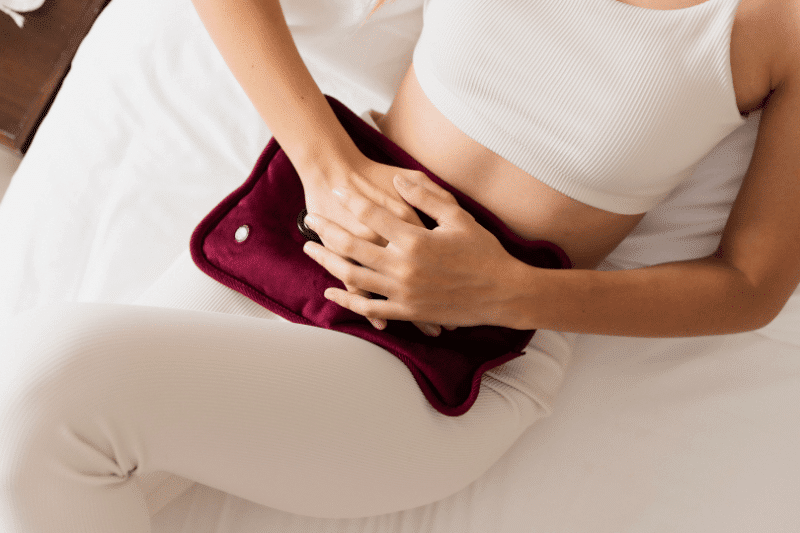
A simple acupressure routine for menstrual cramps should combine lower abdominal support, pain relief, stress reduction, and lower back relaxation. Use gentle to moderate pressure, breathe slowly, and stop if symptoms worsen.
Place a warm compress or heating pad over the lower abdomen for 5 to 10 minutes. Take slow breaths and relax the jaw, shoulders, hips, and abdomen.
Heat is especially helpful when cramps feel tight, cold, or contracting.
Press SP6 on one leg for 60 to 90 seconds. Repeat on the other side.
Use this point when cramps feel centered in the lower abdomen or when pain comes with pelvic tension.
Press the web between the thumb and index finger for 60 seconds on each hand.
This point is often used for pain modulation and tension release. Avoid LI4 during pregnancy unless guided by a qualified practitioner.
Press the top of the foot between the big toe and second toe. Massage slowly for 60 to 90 seconds on each side.
Use LV3 when cramps come with irritability, mood swings, breast tenderness, stress, or PMS tension.
CV4 is on the lower abdomen below the navel. During menstruation, gentle warmth is often better than deep pressure.
Use a warm compress over the area for 5 to 10 minutes. If you apply pressure, keep it light and soothing.
Place your hands on the sacral area at the back of the pelvis. Use gentle circular pressure or a warm pack.
This is especially helpful when period pain radiates into the lower back, hips, or upper thighs.
You can repeat this routine once or twice daily during your period. Some people also begin acupressure one to two days before their period if they usually experience predictable cramps.
Acupressure is a self-care method that uses finger pressure on acupuncture points. Acupuncture is a professional treatment that uses very thin needles placed at specific points by a licensed practitioner. Both approaches use the same meridian system, but acupuncture allows for more precise point selection and deeper pattern-based treatment.
|
Method |
Best For |
Who Performs It |
Main Benefit |
Limitation |
|
Acupressure |
Mild to moderate cramps, at-home relief, PMS tension, nausea |
You can do it yourself |
Accessible, low-cost, easy to repeat |
Less individualized and may be limited for severe symptoms |
|
Acupuncture |
Recurring cramps, severe dysmenorrhea, lower back pain, PMS patterns, irregular cycles |
Licensed acupuncturist |
More precise and personalized |
Requires appointments and professional care |
Acupressure may be useful when cramps are occasional, mild, or moderate. It can also help between acupuncture visits.
Acupuncture may be a better fit when pain returns every cycle, interferes with daily life, comes with significant PMS, or includes lower back pain, digestive upset, fatigue, or cycle irregularity. NCCIH notes that acupuncture is generally considered safe when performed by a qualified practitioner using sterile needles.
Pressure points may help more than lower abdominal cramping. In TCM, period pain often appears with a broader pattern of symptoms, including mood changes, bloating, nausea, fatigue, and low back discomfort.
LV3 and LI4 are often used together to move constrained Qi and ease stress-related tension. This combination may be helpful when cramps come with irritability, frustration, headaches, breast tenderness, or emotional sensitivity.
SP9 is commonly used in TCM for dampness, heaviness, swelling, and fluid retention. ST36 may also be used when bloating comes with fatigue or weak digestion.
P6 is a well-known point for nausea and queasiness. During menstruation, it may be useful when cramps come with digestive discomfort, anxiety, or a unsettled stomach.
BL32 and BL23 are commonly used when cramps radiate into the lower back, hips, or sacrum. These points can be supported with massage, warmth, or professional acupuncture.
ST36 and CV4 are often used in TCM when period pain is accompanied by low energy, weakness, dull pain, or a sense of depletion.
Acupressure should feel supportive, not forceful. Use moderate pressure on the hands, feet, and legs, and use gentle pressure or warmth on the lower abdomen and lower back.
Avoid or modify acupressure in these situations:
Do not press deeply into the abdomen during heavy bleeding or severe pain. Use warmth, rest, and medical guidance instead.
Menstrual cramps should be evaluated when they are severe, new, worsening, unusual, or disruptive to daily life. Pressure points may support comfort, but they should not delay care for symptoms that could indicate an underlying condition.
Speak with a healthcare professional if:
Menstrual pain should be checked by a healthcare professional when it is severe, unusual, worsening, or affects daily activities such as work, school, sleep, or normal movement.
Pressure points may help in the moment, but recurring menstrual cramps often benefit from a broader plan. In TCM, long-term care focuses on understanding the pattern behind the pain, then supporting the body across the full cycle.
A long-term TCM approach may include:
The most effective plan depends on the person. Two people can both have menstrual cramps, but one may need more support for stress-related stagnation, while another may need warmth, nourishment, or lower back support.
Pressure points can be a helpful place to start, especially when menstrual cramps are mild to moderate. However, recurring period pain often needs a more personalized strategy.
At ACA Acupuncture and Wellness, our acupuncturists use Traditional Chinese Medicine pattern assessment to understand how your cramps show up, what makes them worse, and which symptoms appear with your cycle. Care may include acupuncture, Chinese herbal medicine, moxibustion, ear seeding, and lifestyle guidance based on your individual pattern.
If menstrual cramps are affecting your comfort, mood, sleep, work, or daily routine, personalized acupuncture care can help you move beyond short-term relief and toward a more balanced cycle.
Sources:
American College of Obstetricians and Gynecologists. (n.d.). Dysmenorrhea: Painful periods.
Cleveland Clinic. (2023). Dysmenorrhea: Menstrual cramps, causes and treatments. https://my.clevelandclinic.org/health/diseases/4148-dysmenorrhea
Gharloghi, S., Torkzahrani, S., Akbarzadeh, A. R., & Heshmat, R. (2012). The effects of acupressure on severity of primary dysmenorrhea. Patient Preference and Adherence, 6, 137–142.
Mirbagher-Ajorpaz, N., Adib-Hajbaghery, M., & Mosaebi, F. (2011). The effects of acupressure on primary dysmenorrhea. Complementary Therapies in Clinical Practice, 17(1), 33–36.
National Center for Complementary and Integrative Health. (n.d.). Acupuncture: Effectiveness and safety.
SP6 is one of the most commonly used pressure points for menstrual cramps. It is located on the inner lower leg above the ankle and is traditionally used to support menstrual comfort, pelvic circulation, and reproductive health.
SP6 is located on the inner lower leg, about four finger-widths above the highest point of the inner ankle bone, just behind the shinbone. Press the point with steady, comfortable pressure for 60 to 90 seconds on each side.
Most points can be pressed for 60 to 90 seconds at a time. You can repeat a short routine once or twice daily during your period, as long as the pressure feels comfortable and does not worsen symptoms.
Acupressure may help reduce discomfort, but severe menstrual cramps should be evaluated by a healthcare professional. Severe pain can sometimes be linked to conditions such as endometriosis, fibroids, adenomyosis, or pelvic inflammatory disease.
Acupuncture may be better for recurring, severe, or complex menstrual pain because a licensed practitioner can tailor the treatment to your TCM pattern. Acupressure is easier to use at home and may be helpful for mild to moderate cramps.
Some pressure points used for cramps, especially SP6 and LI4, are traditionally avoided during pregnancy unless recommended by a qualified practitioner. If you are pregnant or may be pregnant, do not use strong acupressure for menstrual or pelvic symptoms without professional guidance.
LOCATIONS
MANHATTAN
QUEENS
NEW JERSEY
CALIFORNIA

The over $4 billion US acupuncture market offers a great opportunity with over 10% annual growth rates and a continuing flow of new patients interested in the benefits of acupuncture.
