

Inflammation can protect injured or infected tissue, but persistent inflammation may contribute to ongoing pain, stiffness, swelling, and loss of function. Chinese herbal medicine addresses inflammatory pain and swelling with individualized formulas selected for patterns such as Heat, Dampness, Damp-Heat, Blood stasis, and Wind-Damp obstruction. Frequently considered herbs include Jin Yin Hua, Huang Qin, Huang Bai, Yi Yi Ren, Fu Ling, Chi Shao, San Qi, and Lei Gong Teng. They are not interchangeable, and some can cause serious adverse effects or interact with medication.
Chinese herbs should complement appropriate medical evaluation rather than replace it. This distinction is especially important when swelling appears suddenly, affects only one limb, occurs with fever, or accompanies breathing difficulty.
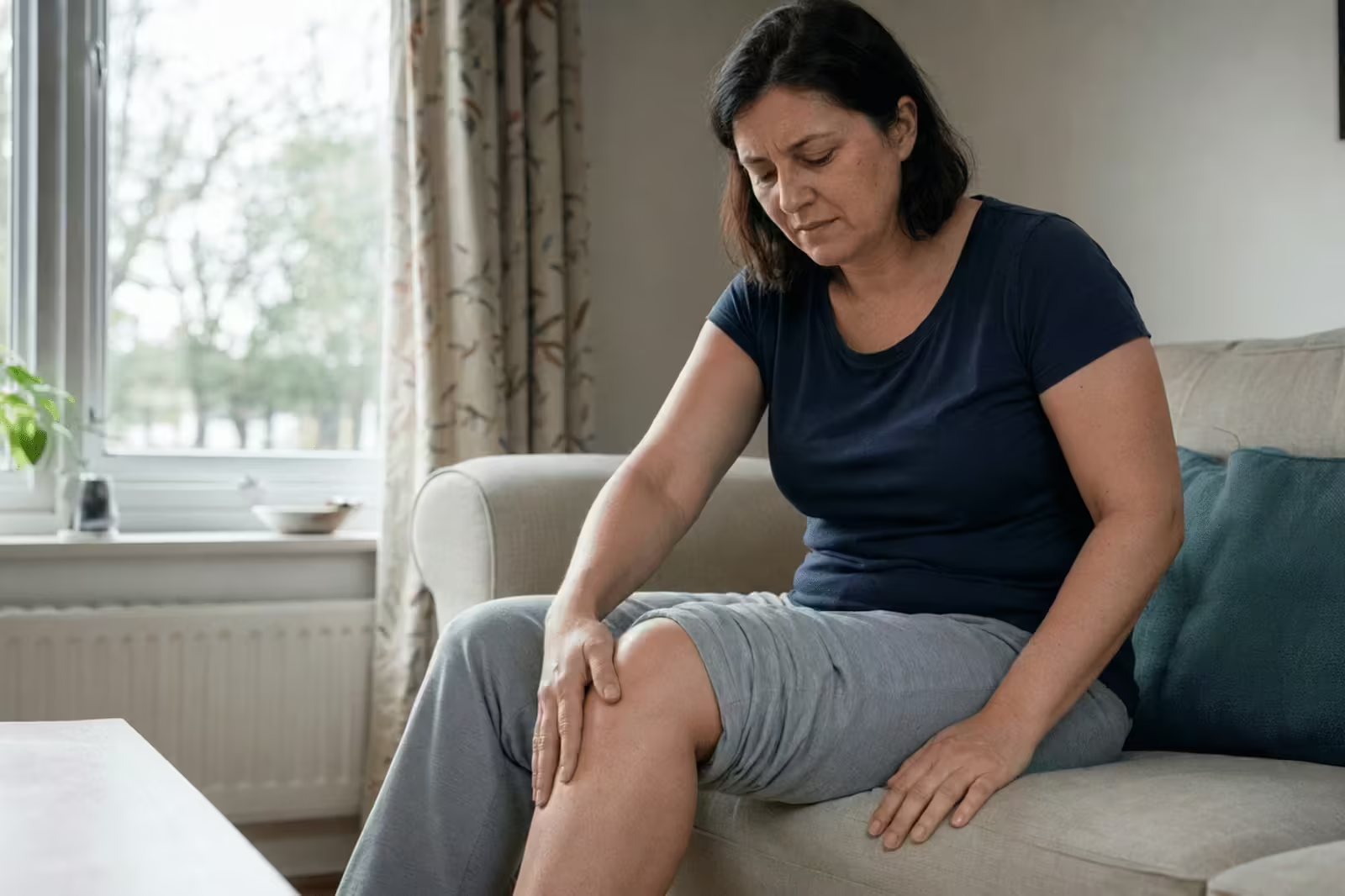
Inflammation can protect injured or infected tissue, but persistent inflammation may contribute to ongoing pain, stiffness, swelling, and loss of function. Chinese herbal medicine addresses inflammatory pain and swelling with individualized formulas selected for patterns such as Heat, Dampness, Damp-Heat, Blood stasis, and Wind-Damp obstruction. Frequently considered herbs include Jin Yin Hua, Huang Qin, Huang Bai, Yi Yi Ren, Fu Ling, Chi Shao, San Qi, and Lei Gong Teng. They are not interchangeable, and some can cause serious adverse effects or interact with medication.
Chinese herbs should complement appropriate medical evaluation rather than replace it. This distinction is especially important when swelling appears suddenly, affects only one limb, occurs with fever, or accompanies breathing difficulty.
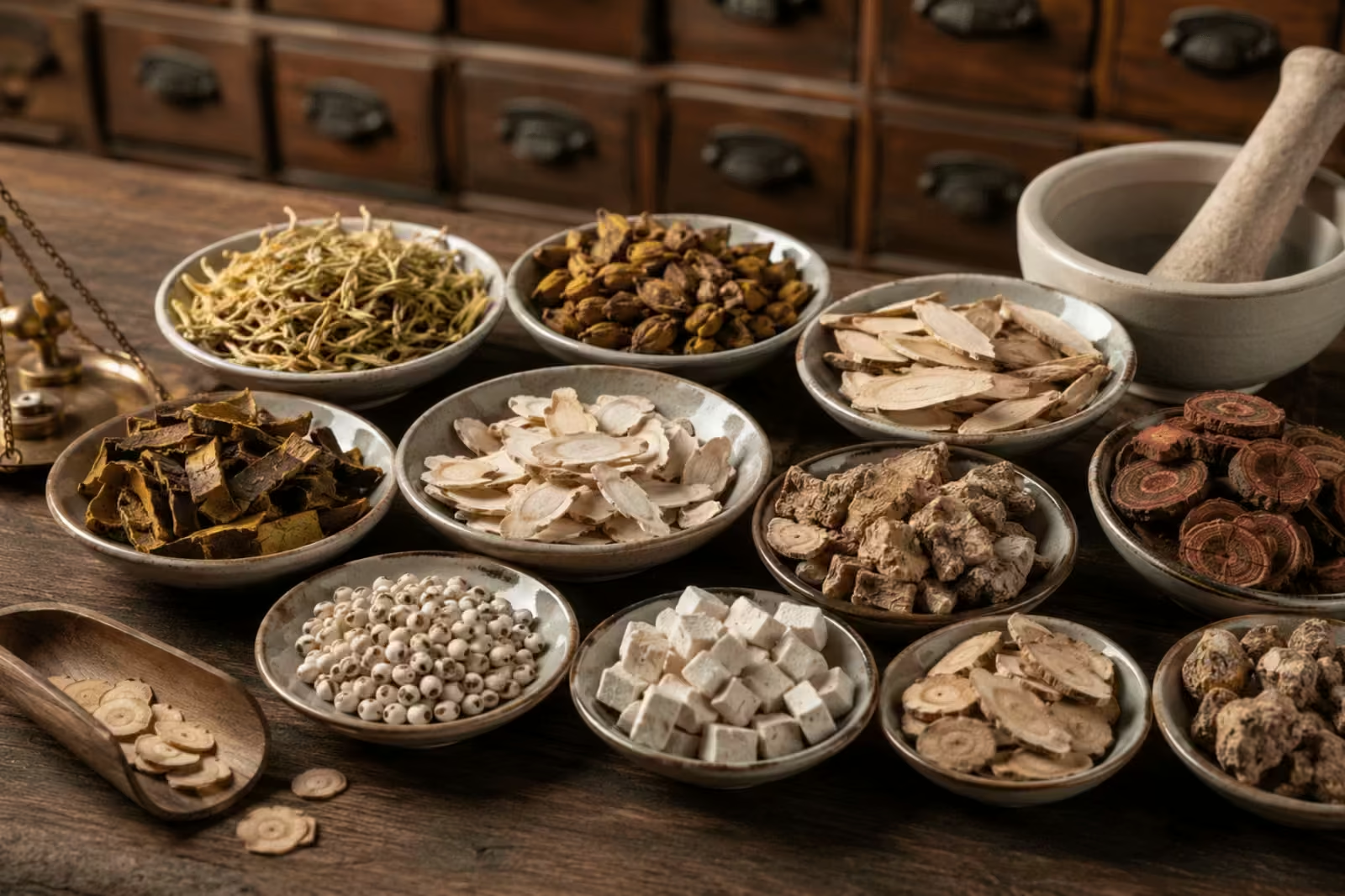
There is no single best Chinese herb for every type of inflammation. The herbs below represent different therapeutic categories and should be understood within the formulas and patterns in which they are traditionally prescribed.
Jin Yin Hua is the flower bud of Lonicera japonica. In Chinese herbal medicine, it is used to clear Heat and resolve what traditional texts call Fire toxicity.
A practitioner may consider it when redness, warmth, tenderness, sore throat, or certain skin presentations suggest a concentrated Heat pattern. Jin Yin Hua is frequently paired with Lian Qiao rather than used as a standalone treatment.
Laboratory findings involving antimicrobial or inflammatory pathways do not prove that honeysuckle treats a specific infection in humans. Suspected cellulitis, abscesses, or systemic infections require conventional medical diagnosis.
Lian Qiao refers primarily to the fruit of Forsythia suspensa. Traditionally, it clears Heat, addresses toxic swelling, and disperses palpable accumulations.
It is commonly combined with Jin Yin Hua in formulas for early Wind-Heat or localized redness and tenderness. Its traditional role is different from that of herbs used primarily for chronic fluid retention or cold joint stiffness.
Huang Qin is the root of Scutellaria baicalensis, also called Chinese skullcap. It traditionally clears Heat and dries Dampness. It may appear in formulas addressing Damp-Heat, respiratory Heat, digestive irritation, or systemic inflammatory presentations.
Chinese skullcap is not the same botanical substance as American skullcap, Scutellaria lateriflora. Common names are not reliable enough for safe purchasing or prescribing.
Reported liver injury has been associated with some skullcap-containing products, sometimes involving multi-ingredient formulations or uncertainty about botanical identity. Patients with liver disease or unexplained changes in liver enzymes need particular caution.
Huang Bai is the bark of a Phellodendron species. Within TCM, it clears Heat and dries Dampness, with a traditional emphasis on lower-body complaints.
It may be included when joints or tissues in the lower extremities feel hot, swollen, heavy, or painful. Huang Bai is an ingredient in formulas such as Er Miao San and Si Miao San.
Because concentrated extracts may behave differently from a traditional formula, a branded supplement containing phellodendron should not be assumed to have the same purpose, dose, or safety profile.
Zhi Mu, the rhizome of Anemarrhena asphodeloides, clears Heat while traditionally helping preserve or generate fluids. It may be considered when inflammatory warmth occurs with thirst, dryness, irritability, or a sense of internal Heat.
Its inclusion illustrates the balancing logic of formula design. A practitioner may need to reduce Heat without making dryness or fluid depletion worse. Zhi Mu is not an all-purpose treatment for swelling and may aggravate loose stools in some people.
Mu Dan Pi is the root bark of Paeonia suffruticosa. It is traditionally used to clear Heat from the Blood and gently address Blood stasis.
It may appear in formulas when redness or inflammatory warmth persists alongside restlessness, discoloration, menstrual changes, or fixed discomfort. Mu Dan Pi is different from Bai Shao, the white peony root used in other therapeutic categories.
Because Mu Dan Pi may affect blood movement, professional review is important for anyone using anticoagulant or antiplatelet medication.
Chi Shao generally refers to the root of Paeonia lactiflora or Paeonia veitchii. It is traditionally used to cool the Blood and disperse Blood stasis.
A practitioner may consider it when inflammation and impaired circulation appear together, especially with fixed tenderness, dark coloration, or swelling following tissue injury. It is commonly combined with other herbs rather than used by itself.
Its blood-invigorating role means that bleeding risk, menstrual history, pregnancy, surgery, and anticoagulant use must be considered.
Yi Yi Ren is the mature seed of Coix lacryma-jobi var. ma-yuen. It is both a traditional medicinal substance and a food in parts of Asia.
TCM uses Yi Yi Ren to support fluid movement, strengthen digestive function, and address Dampness. It may be included when joints feel swollen, heavy, stiff, or persistently boggy rather than acutely red and burning.
Its food-like reputation should not be mistaken for unrestricted safety. Medicinal quantities and concentrated preparations differ from ordinary culinary use. Yi Yi Ren is traditionally approached cautiously during pregnancy.
Fu Ling is the sclerotium of Wolfiporia extensa, a fungus that grows in association with pine roots. It is traditionally used to promote urination, drain Dampness, support digestive function, and calm the spirit.
It may be suitable in a formula when fluid accumulation occurs with fatigue, reduced appetite, loose stools, or a sensation of heaviness. Its action is generally considered gentler than that of aggressively draining herbs.
Fu Ling does not treat the underlying causes of heart, kidney, liver, venous, or lymphatic disease. New or generalized edema needs medical evaluation.
Ze Xie is the rhizome of Alisma orientale or a closely recognized species. It is traditionally used to promote urination and clear certain forms of Damp-Heat.
It may appear in formulas for abnormal fluid distribution, lower-body heaviness, or urinary presentations. Because increased fluid loss may affect hydration and electrolytes, combining fluid-regulating herbs with prescription diuretics should occur only under appropriate supervision.
Fang Ji is traditionally used for Wind-Damp obstruction, joint pain, and edema, particularly when swelling affects the lower body. The accepted medicinal substance commonly called Han Fang Ji comes from Stephania tetrandra.
Correct identification is crucial. Guang Fang Ji, associated with certain Aristolochia species, can contain aristolochic acid, which is linked to severe kidney injury and cancer. Products with unclear botanical identification should be avoided.
This naming problem is one of the strongest reasons to obtain Chinese herbs from qualified practitioners and suppliers that verify species and plant parts.
San Qi, also called Tian Qi, is the root of Panax notoginseng. It is traditionally valued for trauma, bruising, swelling, and bleeding associated with injury.
Its dual traditional roles of stopping bleeding and transforming Blood stasis make unsupervised use particularly inappropriate. San Qi may interact with anticoagulant and antiplatelet drugs and may not be suitable before surgery.
A painful swollen area after significant trauma still requires evaluation for fracture, ligament damage, compartment syndrome, or internal bleeding.
Lei Gong Teng has received substantial research attention because its active compounds may influence immune activity and inflammatory responses. Some clinical research suggests that carefully prepared extracts may help reduce certain rheumatoid arthritis symptoms.
However, this herb carries serious risks. Potential adverse effects may involve fertility, menstrual function, bone density, immune function, digestion, the liver, and the kidneys. Improperly prepared material can be highly poisonous.
Thunder god vine should not replace conventional rheumatoid arthritis treatment. Disease-modifying medications can help prevent permanent joint damage, while reduced pain or swelling does not necessarily mean the disease is controlled.
Lei Gong Teng should never be treated as a casual over-the-counter anti-inflammatory supplement. It requires strict professional supervision and is particularly dangerous during pregnancy or while trying to conceive.
The word “inflammation” is too broad to determine an herbal prescription. A practitioner looks at the swelling’s temperature, texture, location, onset, duration, color, triggers, and associated symptoms.
For example:
Two people with rheumatoid arthritis might therefore receive different formulas. One person may also receive different formulas at different stages as warmth, swelling, digestion, sleep, and energy change.
This principle is called pattern differentiation, or bian zheng. It is one of the most important differences between Chinese herbal prescribing and selecting a supplement solely because a product label says “joint support” or “anti-inflammatory.”
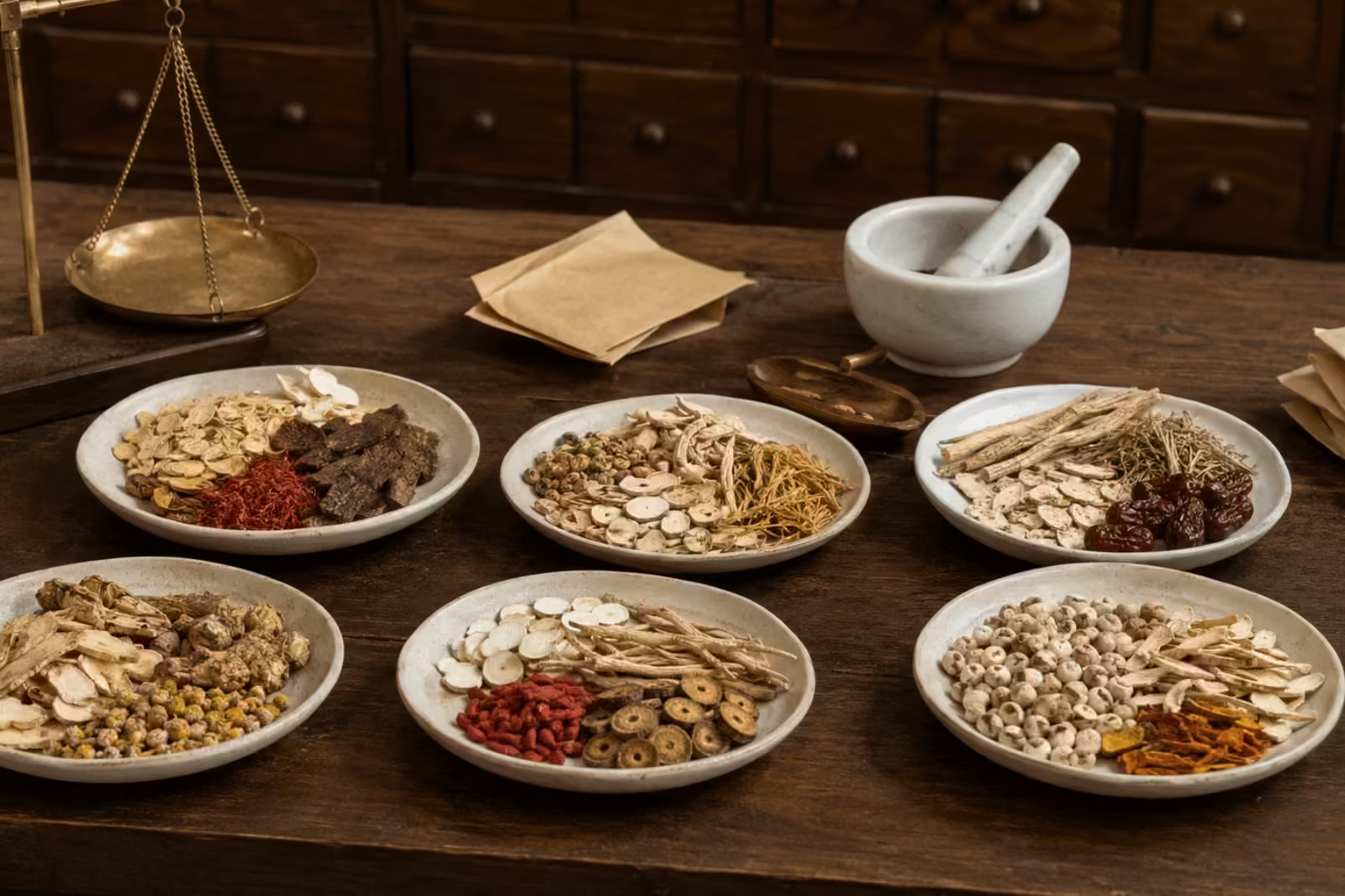
Formula names are not recommendations for self-treatment. Each formula has a defined traditional presentation, contraindications, and numerous possible modifications.
Yin Qiao San is traditionally used for the early stage of a Wind-Heat presentation. Jin Yin Hua and Lian Qiao are principal ingredients.
It is associated more closely with an acute external pattern than with chronic arthritis, generalized edema, or long-standing autoimmune inflammation. Taking it whenever any type of swelling appears would disregard its intended pattern.
Er Miao San is a compact formula based on Huang Bai and Cang Zhu. It clears Damp-Heat, especially from the lower part of the body.
Traditional presentations may include hot, heavy, swollen lower-extremity joints. Because Cang Zhu is aromatic and drying, the formula may be unsuitable when dryness or fluid depletion is prominent.
Si Miao San expands the Er Miao San strategy with additional herbs, commonly including Yi Yi Ren and Niu Xi. It is traditionally considered for Damp-Heat affecting the lower extremities.
A practitioner may evaluate it when knees, ankles, or feet are swollen, warm, heavy, or difficult to move. These symptoms can also occur in gout, infection, inflammatory arthritis, or vascular disease, so medical diagnosis remains essential.
Xuan Bi Tang is another formula associated with Damp-Heat obstructing the channels and joints. Its pattern may involve swelling, heaviness, warmth, and reduced mobility.
The formula’s purpose overlaps partially with other Damp-Heat approaches, but selection depends on the complete symptom pattern and the practitioner’s diagnostic framework.
Shen Tong Zhu Yu Tang is designed primarily around Blood stasis and painful obstruction rather than acute Heat alone. It may be considered for persistent, fixed discomfort that follows trauma or has become chronic.
Because it contains multiple blood-invigorating ingredients, medication use and bleeding risk require careful assessment.
Wu Ling San is a classic fluid-regulating formula used for particular patterns of impaired fluid transformation and distribution. It is not a universal herbal diuretic.
Unexplained edema should not be managed by increasing urination without identifying its cause. Swelling related to heart failure, kidney disease, liver disease, pregnancy complications, or a blood clot needs prompt medical treatment.
Traditional formulas are structured combinations rather than random collections of anti-inflammatory ingredients. Their roles are sometimes described as chief, deputy, assistant, and envoy.cr
This architecture allows a practitioner to clear Heat while protecting fluids, drain Dampness without excessively weakening the patient, or move Blood while controlling bleeding risk.
An ingredient list found online cannot show whether the formula’s proportions, preparation, dosage, and direction are appropriate for a particular patient.
Raw or processed ingredients are simmered in water according to specific instructions. Decoctions allow substantial customization but require accurate preparation and sourcing.
Granules are manufactured extracts dissolved in warm water. They are convenient and allow formulas to be adjusted, although extraction ratios vary among manufacturers.
These provide portability and a more consistent routine. Fixed formulas, however, offer less flexibility than a prescription modified for an individual pattern.
Tinctures and glycerin-based extracts can be convenient, but solvents, concentration, and dosing differ. Alcohol-containing products may not suit every patient.
Liniments, washes, plasters, poultices, and patches may be applied to a localized area. Topical use can still cause burns, allergic dermatitis, irritation, or systemic exposure.
Do not place an herbal patch over broken skin, an undiagnosed rash, an infected wound, or an area with reduced sensation unless a qualified clinician directs you to do so.
Inflammation is an immune and vascular response to infection, tissue damage, irritation, or another perceived threat. The process increases blood flow and directs immune cells and signaling molecules toward the affected area. This can produce redness, warmth, swelling, tenderness, and reduced function.
Acute inflammation is usually short-lived and can be a necessary part of healing after an injury or infection. Chronic inflammation persists and may be associated with rheumatoid arthritis, inflammatory bowel disease, psoriasis, asthma, or certain metabolic disorders.
Inflammation is not the same as pain. A person can experience mechanical pain without substantial inflammation, while inflammation can develop before severe pain appears. Swelling is also not always inflammatory. Fluid retention may result from venous insufficiency, lymphatic obstruction, medication, pregnancy, or heart, kidney, or liver disease.
These distinctions matter because an herb selected for hot inflammatory swelling may be unsuitable for non-inflammatory edema. Different causes of inflammation and swelling require different forms of evaluation and treatment.
Traditional Chinese Medicine does not have one historical diagnosis equivalent to the modern biomedical category of inflammation. Instead, practitioners interpret a person’s complete presentation through patterns of disharmony.
Terms such as Heat and Dampness describe traditional diagnostic relationships. They should not be treated as literal substitutes for infection, edema, cytokine activity, or another biomedical mechanism.
Heat may be considered when an area is red, warm, burning, tender, or rapidly worsening. Other signs can include thirst, agitation, a bitter taste, constipation, dark urine, or a red tongue, depending on the location and cause.
A Heat pattern does not automatically mean that an infection is present. Conversely, describing a problem as Heat must never delay testing or antibiotic treatment when a bacterial infection is possible.
Dampness is associated with heaviness, puffiness, lingering swelling, stiffness, or a sensation that the body or limbs are difficult to move. Symptoms may feel worse in humid conditions. Digestive complaints, fatigue, loose stools, or a greasy tongue coating may appear in broader Dampness patterns.
TCM practitioners may use herbs that transform Dampness or support fluid movement, but these herbs are not substitutes for medical diuretics and should not be used to self-treat unexplained edema.
Damp-Heat combines retained fluid or heaviness with inflammatory warmth. A joint, for example, may be swollen, hot, tender, and difficult to move. Depending on the body system involved, Damp-Heat may also be associated with sticky discharge, urinary burning, digestive discomfort, or skin eruptions.
The pattern illustrates why a single “cooling” herb may be incomplete. A formula may need to address both Heat and accumulated Dampness while protecting digestion and body fluids.
Blood stasis is considered when pain remains fixed in one location, feels sharp, follows trauma, or occurs with bruising and dark discoloration. Swelling that persists after an injury may contain elements of both fluid accumulation and Blood stasis.
Blood-invigorating herbs require caution when a patient uses anticoagulants, has a bleeding disorder, is pregnant, or is preparing for surgery.
Painful obstruction syndrome, commonly called Bi syndrome, is a TCM framework for pain, stiffness, heaviness, or numbness affecting muscles and joints. Symptoms may move between locations or change with cold, damp, or hot weather.
A hot, swollen joint and a cold, stiff joint therefore represent different patterns, even if both have been given the same biomedical diagnosis.
Not all swelling is treated by clearing Heat. Chronic puffiness accompanied by fatigue, cold limbs, poor appetite, loose stools, or weakness may be interpreted as impaired transformation and movement of fluids.
Strong cooling or draining treatment can be inappropriate in this presentation. It may further weaken digestion or deplete fluids without addressing the underlying problem.
Chinese herbs contain compounds that may affect inflammatory pathways in laboratory or animal studies. Researchers commonly investigate cytokines, oxidative stress, immune-cell activity, cyclooxygenase pathways, and signaling systems such as NF-κB.
These findings can guide further research, but they do not automatically establish that an herb reduces pain, prevents joint damage, or safely treats disease in people. Absorption, metabolism, dosage requirements, and adverse effects in the human body may differ substantially from laboratory models.
Clinical research on Chinese herbal medicine can be difficult to interpret because:
A 2025 systematic review examined hundreds of randomized trials involving East Asian herbal medicine combined with conventional rheumatoid arthritis treatment. The research is encouraging, but differences in formulas, study quality, and reporting mean the findings cannot be generalized to every product or patient.
Thunder god vine has received particular attention for rheumatoid arthritis. Some studies suggest that carefully prepared extracts may improve certain symptoms, but serious adverse effects sharply limit its suitability.
Chinese herbs should not be considered proven replacements for conventional anti-inflammatory treatment. Certain herbs and formulas have clinically interesting properties, but their effectiveness and safety must be evaluated according to the specific product, condition, dosage, and patient.
Integrative care should mean coordinated care. It does not mean stopping prescribed medicine when symptoms temporarily improve.
This is particularly important for rheumatoid arthritis. Disease-modifying antirheumatic drugs and biologic therapies are intended to control disease activity and prevent progressive joint damage. An herb that makes a joint feel less painful has not necessarily controlled the autoimmune process.
Potentially significant combinations include:
Patients should give both practitioners and physicians a complete list of prescriptions, over-the-counter medicines, vitamins, teas, powders, tinctures, and topical products. “Herbal supplement” is not specific enough. The exact ingredients and manufacturer should be documented whenever possible.
Natural origin does not guarantee safety. Potency, preparation, botanical identity, dosage, contamination, and individual health status can all influence risk.
Some Chinese herbal products have been found to contain heavy metals, pesticides, microorganisms, toxic substances, or incorrectly substituted herbs. Certain products have also contained undeclared pharmaceutical ingredients.
Seek professional guidance if you:
A qualified practitioner should provide the formula name, complete ingredient list, therapeutic purpose, dosage instructions, expected treatment duration, and monitoring plan.
Choose products from suppliers that verify botanical identity and test appropriate batches for contaminants. Labels should identify the botanical name, plant part, lot number, and manufacturer rather than relying only on a common English name.
Stop using the product and seek medical advice if you develop a rash, facial swelling, breathing difficulty, severe diarrhea, persistent vomiting, jaundice, dark urine, unusual bleeding, or marked fatigue.
Some causes of swelling are time-sensitive and should not be managed initially with herbal medicine.
Seek urgent medical care for:
These signs can indicate a blood clot, serious infection, allergic reaction, fracture, internal injury, or heart, kidney, or liver dysfunction. Prompt diagnosis is more important than selecting an anti-inflammatory remedy.
A Chinese medicine consultation should involve more than choosing an herb from a symptom list. The practitioner may ask about:
Traditional tongue and pulse examination may contribute to pattern differentiation. The practitioner then selects a formula, preparation, dose, and reassessment schedule.
The formula may change as the swelling improves or its presentation changes. Continuing the same strongly cooling or draining formula indefinitely can be inappropriate once the original pattern is no longer present.

The strongest herb is not necessarily the most suitable one. Effective Chinese herbal care depends on identifying whether inflammation is dominated by Heat, Dampness, Blood stasis, painful obstruction, deficiency, or a combination of patterns.
Jin Yin Hua and Lian Qiao serve a different purpose from Yi Yi Ren and Fu Ling. Chi Shao and San Qi require different precautions from fluid-regulating herbs. Lei Gong Teng has noteworthy pharmacological activity, but its serious toxicity makes unsupervised use unsafe.
At ACA Acupuncture and Wellness, we provide personalized acupuncture, Chinese herbal medicine, cupping, moxibustion, and other traditional Chinese medicine services based on each patient’s symptoms and health history. Contact us to schedule an appointment and learn whether a professionally selected treatment plan may appropriately support your care for pain, swelling, or inflammation.
Sources:
Pan, M.-H., Chiou, Y.-S., Tsai, M.-L., & Ho, C.-T. (2011). Anti-inflammatory activity of traditional Chinese medicinal herbs. Journal of Traditional and Complementary Medicine, 1(1), 8–24.
Chinese herbal formulas may be used as complementary care for gout-related pain and swelling when matched to the patient’s TCM pattern. However, they do not replace medical treatment for controlling uric acid. A hot, swollen joint should also be evaluated to exclude infection or another urgent condition.
Instructions depend on the formula, preparation, and patient. Some formulas are taken before meals, while others may be better tolerated with food. People who experience nausea, reflux, or stomach discomfort should contact their practitioner before changing the timing or dosage.
Do not combine formulas without professional guidance. Different products may contain overlapping herbs, produce opposing effects, or increase the risk of excessive dosing and medication interactions. Give your practitioner a complete list of every tea, powder, capsule, tincture, and supplement you use.
Not necessarily. Over-the-counter products usually contain fixed ingredients and doses, while practitioner-prescribed formulas may be customized according to symptoms, medical history, and changing TCM patterns. Manufacturing quality and ingredient verification can also vary between products.
A practitioner may use Chinese herbs to support recovery from exercise-related soreness, bruising, or swelling. Persistent pain, severe swelling, weakness, numbness, or an inability to use the affected area may indicate an injury that requires medical evaluation.
Worsening symptoms should not automatically be considered detoxification or a healing response. New pain, digestive problems, dizziness, rash, unusual bleeding, or increasing swelling may indicate an adverse effect, interaction, or unsuitable formula. Stop taking the product and contact a qualified healthcare professional for guidance.
LOCATIONS
MANHATTAN
QUEENS
NEW JERSEY
CALIFORNIA

The over $4 billion US acupuncture market offers a great opportunity with over 10% annual growth rates and a continuing flow of new patients interested in the benefits of acupuncture.
