

Suan Zao Ren, or sour jujube seed, is the most widely recognized Chinese herb for sleep. Traditional Chinese Medicine usually achieves better results by combining it with other herbs selected for the person’s complete pattern, such as waking at night, racing thoughts, stress, vivid dreams, night sweats, palpitations, or digestive discomfort.
Chinese herbal medicine does not use one universal remedy for insomnia. A formula intended for an exhausted person with light sleep may be very different from one prescribed for irritability, nighttime heat, or digestive congestion. Correct pattern identification is therefore more important than choosing the herb with the strongest reputation.
Suan Zao Ren, or sour jujube seed, is the most widely recognized Chinese herb for sleep. Traditional Chinese Medicine usually achieves better results by combining it with other herbs selected for the person’s complete pattern, such as waking at night, racing thoughts, stress, vivid dreams, night sweats, palpitations, or digestive discomfort.
Chinese herbal medicine does not use one universal remedy for insomnia. A formula intended for an exhausted person with light sleep may be very different from one prescribed for irritability, nighttime heat, or digestive congestion. Correct pattern identification is therefore more important than choosing the herb with the strongest reputation.
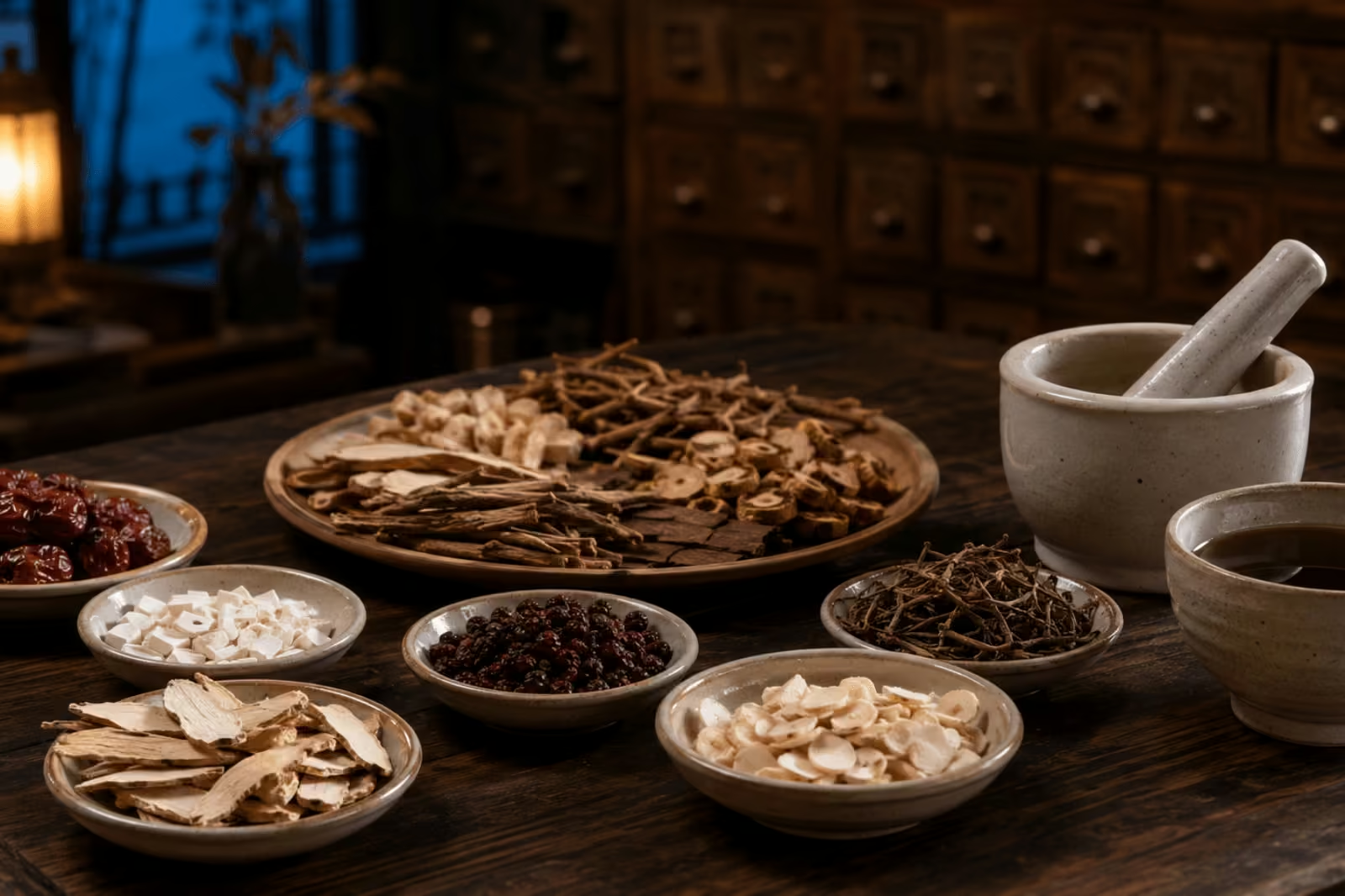
Chinese herbal medicine usually relies on formulas rather than isolated ingredients. A formula may contain a principal herb, supporting herbs that strengthen its intended action, and additional ingredients that balance digestion or reduce unwanted effects.
Suan Zao Ren is the dried mature seed of Ziziphus jujuba var. spinosa. It is commonly called sour jujube seed or ziziphus seed.
In Chinese herbal medicine, Suan Zao Ren traditionally nourishes Heart Yin and Liver Blood, calms the Shen, and helps control abnormal sweating. It is frequently considered when sleep is light, easily disturbed, or accompanied by irritability, vivid dreams, palpitations, dryness, or night sweats.
It is particularly associated with difficulty staying asleep, although it may also appear in formulas for trouble falling asleep. Suan Zao Ren should not be confused with ordinary red dates or jujube fruit. The medicinal seed has a different composition and traditional purpose.
Bai Zi Ren is the mature seed of Platycladus orientalis, commonly known as Chinese arborvitae seed.
Traditionally, it nourishes the Heart, calms the Shen, and moistens the intestines. It may be considered when insomnia occurs with emotional sensitivity, palpitations, forgetfulness, dry stool, or constipation.
Its moistening properties may make it unsuitable for people who already experience loose stools, digestive weakness, or significant abdominal fullness. Bai Zi Ren is commonly combined with other nourishing herbs rather than used alone.
Ye Jiao Teng is the vine or stem of Polygonum multiflorum, the plant also associated with He Shou Wu. These two medicinal materials are not interchangeable.
It is traditionally used to nourish Blood, calm the Shen, and support more settled sleep. It may be selected for frequent waking, physical restlessness, irritability, excessive dreaming, or sleep disturbance accompanied by dry or itchy skin.
Ye Jiao Teng has a gentler and more sleep-focused traditional role than the plant’s processed root. Product labels should clearly identify the plant part used because Polygonum multiflorum root has been associated with liver injury.
He Huan Pi is the bark of Albizia julibrissin, also called the silk tree or mimosa tree.
Rather than acting as a general sedative, He Huan Pi is traditionally used to relieve emotional constraint and calm the Shen. It may be considered when poor sleep follows prolonged frustration, grief, tension, irritability, or emotional distress.
Associated signs may include chest or rib-side tension, frequent sighing, mood changes, or feeling physically tired but mentally unable to disengage from the day.
He Huan Hua, the flower of the same tree, is a related but separate medicinal substance. Product labels should specify whether the bark or flower is included.
Fu Shen is a portion of the medicinal fungus Wolfiporia cocos that develops around a pine root. Although commonly grouped with Chinese herbs, it is technically fungal materia medica.
In TCM, Fu Shen calms the Shen while supporting fluid metabolism. It frequently appears in formulas for worry, palpitations, fatigue, dream-disturbed sleep, or a heavy and unsettled feeling.
Fu Shen and Fu Ling come from the same fungus, but Fu Shen is traditionally emphasized when calming the mind is a treatment priority. It is generally used as part of a coordinated formula rather than as a strong sleep-inducing substance.
Yuan Zhi is the root of Polygala tenuifolia, commonly called Chinese senega root or thinleaf milkwort.
Traditional Chinese medicine uses Yuan Zhi to calm the Shen, support communication between the Heart and Kidneys, and address Phlegm believed to cloud mental activity. It may appear in formulas when insomnia occurs with forgetfulness, mental fog, vivid dreams, palpitations, or an easily startled feeling.
Yuan Zhi is not ideal for casual self-treatment. It can irritate the gastrointestinal tract, particularly when used incorrectly or in a poorly tolerated preparation.
Long Yan Rou is dried longan fruit from Dimocarpus longan.
In TCM, it nourishes Heart Blood and supports Spleen qi. It may be considered when poor sleep accompanies persistent thinking, fatigue, poor concentration, palpitations, reduced appetite, or a depleted feeling.
This presentation differs from insomnia associated with intense Heat or agitation. A person may feel physically exhausted but mentally unable to settle.
Long Yan Rou is sweet and nourishing. It may not suit people with digestive congestion, abdominal bloating, or blood-sugar concerns unless professionally recommended.
Bai He is the bulb of certain Lilium species and has both culinary and medicinal uses.
Traditionally, it nourishes Yin, moistens dryness, and calms the spirit. It may be included when sleep disturbance accompanies a dry throat, nighttime warmth, night sweats, lingering emotional uneasiness, or internal restlessness.
Eating lily bulb as food is not equivalent to using it therapeutically. Clinical preparations may contain different amounts and herbal combinations.
Wu Wei Zi is the fruit of Schisandra chinensis. Its name means “five-flavor fruit.”
TCM classifies Wu Wei Zi as an astringing herb. It is traditionally used to conserve fluids, reduce abnormal sweating, support depleted states, and calm the Shen.
In sleep formulas, it is often a supporting ingredient when insomnia occurs with night sweats, palpitations, irritability, or physical exhaustion. It may affect how the body processes certain medicines, so people taking prescription medication should seek professional guidance.
Dan Shen is the root of Salvia miltiorrhiza, also known as Chinese red sage.
Its primary traditional function is to invigorate Blood rather than induce sleep. It may appear in an insomnia formula when agitation accompanies fixed discomfort, menstrual symptoms, or other signs associated with Blood stasis.
Dan Shen may increase bleeding risk and interact with anticoagulant or antiplatelet medicines. It should not be combined casually with warfarin, aspirin, clopidogrel, or similar medications.
Huang Lian is the rhizome of Coptis chinensis and related species. It contains berberine and has an intensely bitter taste.
In TCM, Huang Lian clears Heat and drains Fire. It may appear in formulas when severe restlessness accompanies irritability, a bitter taste, mouth sores, digestive upset, or agitation that becomes worse at night.
Huang Lian is not a general sleep herb. Its cold and bitter properties may be unsuitable for people with fatigue, poor appetite, loose stools, or a cold constitution.
Berberine-containing products may interact with diabetes medications, anticoagulants, immunosuppressants, and other prescriptions.
Lian Zi Xin is the green plumule found inside the lotus seed.
It is traditionally used to clear Heart Fire and calm agitation. It may be considered when insomnia is marked by intense restlessness, irritability, mouth or tongue sores, thirst, or nighttime Heat.
Lian Zi Xin is extremely bitter and is not intended as an all-purpose bedtime tea. Its traditional indications are narrow, making accurate pattern identification particularly important.
The following associations describe traditional clinical reasoning and should not be used for self-diagnosis.
| Sleep complaint | Associated signs | Chinese herbs or formulas commonly considered |
| Trouble falling asleep | Emotional tension, overthinking, agitation, or insufficient nourishment of the Shen | Suan Zao Ren, Bai Zi Ren, He Huan Pi, Yuan Zhi, or Long Yan Rou |
| Waking repeatedly at night | Light sleep, dryness, palpitations, or nighttime warmth | Suan Zao Ren, Ye Jiao Teng, Bai Zi Ren, or Bai He |
| Waking too early | Depletion, emotional constraint, Heat, mood changes, or physical symptoms | Selection depends on the complete pattern because waking time alone is insufficient |
| Racing thoughts and overthinking | Persistent mental activity, worry, forgetfulness, or emotional tension | Long Yan Rou, Fu Shen, Yuan Zhi, or Suan Zao Ren |
| Stress, irritability, or emotional upset | Emotional constraint, tension, warmth, or signs of Liver qi stagnation developing into Heat | He Huan Pi or Jia Wei Xiao Yao San |
| Vivid dreams and light sleep | Dream-disturbed sleep, restlessness, or frequent waking | Suan Zao Ren, Fu Shen, Ye Jiao Teng, or Yuan Zhi |
| Night sweats, dry mouth, or feeling hot | Yin deficiency, fluid depletion, nighttime warmth, or intense agitation | Suan Zao Ren, Bai He, Wu Wei Zi, Huang Lian, or Lian Zi Xin |
| Fatigue, palpitations, and poor appetite | Depletion, worry, weakness, or poor sleep | Long Yan Rou, Fu Shen, or Gui Pi Tang |
| Restlessness with nausea or digestive fullness | Phlegm pattern, chest discomfort, heaviness, or digestive disturbance | Wen Dan Tang |
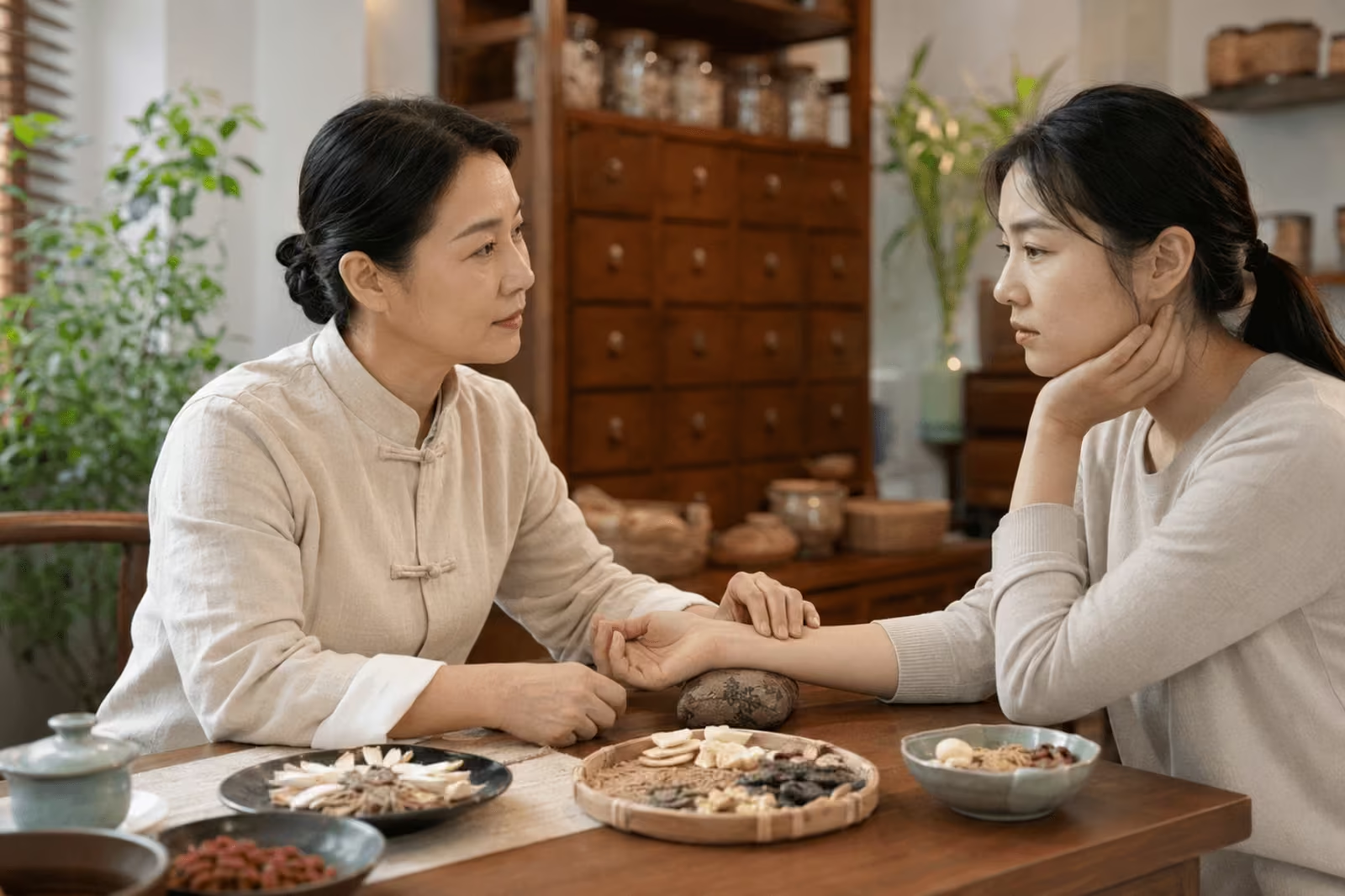
Traditional Chinese Medicine does not treat insomnia as one uniform condition. It interprets sleep difficulty through groups of signs and symptoms known as patterns.
Two people may both sleep for only five hours, yet receive different herbal formulas. One may lie awake thinking about work while feeling tired, cold, and weak. Another may feel hot, irritable, thirsty, and physically restless. Although both have insomnia, their broader presentations are not the same.
TCM commonly describes healthy sleep as depending on the Shen, often translated as the spirit or mind, settling properly at night. Terms such as Heart Blood deficiency, Heart Yin deficiency, Liver qi stagnation, Phlegm-Heat, or disharmony between the Heart and Kidneys describe traditional clinical patterns. They are not equivalent to biomedical diagnoses or literal descriptions of organ disease.
Sleep timing also matters. A practitioner may ask whether the problem involves:
These details help determine whether the herbal approach should primarily nourish, calm, regulate, cool, or settle.
Chinese herbs may support better sleep when the formula is appropriately matched to the individual’s symptoms and TCM pattern. They are traditionally used to address concerns such as difficulty falling asleep, repeated waking, vivid dreams, racing thoughts, stress, night sweats, and restlessness.
However, no single Chinese herb or formula works for every type of sleep problem. Effectiveness may depend on:
Herbal formulas bearing the same name may also differ among manufacturers and practitioners. They can contain different concentrations, substitutions, processing methods, or additional ingredients, which may affect the results.
Chinese herbs should not be viewed as a direct replacement for established insomnia care. Persistent sleep problems may be related to sleep apnea, chronic pain, anxiety, depression, medication effects, hormonal changes, or another condition that requires medical evaluation.
There is no universal timeline. Some people notice changes in sleep onset or nighttime waking within several days, while others require a few weeks of monitored treatment.
Response time may depend on:
A formula that causes new symptoms, excessive sedation, digestive distress, a rash, palpitations, or worsening sleep should be reviewed promptly. Continuing to take an ineffective formula indefinitely is not appropriate.
A decoction is prepared by simmering raw or processed medicinal ingredients in water. It provides substantial flexibility because a practitioner can adjust individual ingredients according to the person’s symptoms.
Decoctions require careful ingredient identification, preparation, and monitoring. They should not be assembled from online lists without professional guidance.
Concentrated granules are convenient and allow formulas to be adjusted. Potency varies by manufacturer and extraction ratio, so equal spoonfuls from different brands may not provide equivalent amounts.
Tablets and traditional-style pills are portable and easier to take consistently. However, fixed formulas allow less customization, and their complete ingredient lists should still be reviewed.
Liquid extracts may be easier for some people to use, but their concentration and alcohol content vary. Alcohol-based preparations may be unsuitable for certain individuals.
A mild tea made from food-grade ingredients is not equivalent to a professionally prepared herbal formula. Some Chinese medicinal substances require special processing, precise combinations, or controlled quantities.
A product described as a natural tea is not automatically gentle, safe, or suitable for nightly use.
A responsible Chinese herbal product should provide:
Avoid formulas containing unidentified proprietary mixtures or ingredients with unclear translations. Products should be screened for pesticides, microbes, heavy metals, and undeclared pharmaceutical ingredients.
Extra caution is necessary with formulas that may contain cinnabar, plants containing aristolochic acid, or incorrectly identified Polygonum multiflorum material.
Chinese herbal products may contain ingredients that differ from those listed on their labels. Herbs may also interact with medications or be unsuitable for people with certain medical conditions.
Chinese herbs can produce pharmacological effects. Combining them with sedatives or other supplements may increase drowsiness, impair coordination, or cause unpredictable reactions.
Obtain professional guidance before combining a Chinese herbal sleep formula with:
Tell every healthcare provider about the herbs and supplements you take. Information about many herb-drug interactions remains incomplete, but clinically significant interactions can occur.
Professional review is particularly important for people who are:
Stop taking the product and seek medical attention for difficulty breathing, facial swelling, fainting, a severe rash, jaundice, dark urine, unusual bleeding, persistent vomiting, marked confusion, or an irregular heartbeat.
Herbs should not delay the evaluation of an underlying sleep or medical disorder.
Speak with a healthcare professional if sleep problems persist, significantly affect daytime function, or occur with:
Chinese herbal medicine may be considered as one part of an integrative care plan. However, it should not replace evaluation for sleep apnea, mental health conditions, medication effects, endocrine disorders, chronic pain, or other causes of persistent insomnia.
A qualified Chinese medicine practitioner typically conducts a detailed assessment rather than asking only whether someone sleeps well.
The assessment may cover:
Tongue and pulse findings may also be considered within the TCM diagnostic framework. The practitioner then selects a base formula, modifies it when appropriate, and monitors sleep patterns and side effects.
The formula may need to change as the person’s symptoms change. Repeating the same product indefinitely without reassessment is inconsistent with individualized Chinese herbal practice.
Suan Zao Ren remains one of the leading Chinese herbs associated with better sleep, but it is not automatically appropriate for every form of insomnia. He Huan Pi may be considered when emotional tension dominates, while Long Yan Rou may be selected when exhaustion and overthinking occur together. Bai He may be relevant when dryness and nighttime warmth are prominent, while Fu Shen or Yuan Zhi may be considered when worry, vivid dreams, or mental cloudiness complicate rest.
The central principle of Chinese herbal medicine is matching the formula to the person’s complete pattern. A qualified practitioner can evaluate symptoms, identify potential medication interactions, recommend an appropriate preparation, and modify the formula as sleep patterns change.
At ACA Acupuncture and Wellness, we provide acupuncture, cupping, moxibustion, and other traditional Chinese medicine services tailored to each patient’s health concerns. Contact us to schedule an appointment and learn how a personalized treatment plan may support better sleep and overall well-being.
Sources:
Chen, F.-P., Jong, M.-S., Chen, Y.-C., Kung, Y.-Y., Chen, T.-J., Chen, F.-J., & Hwang, S.-J. (2011). Prescriptions of Chinese herbal medicines for insomnia in Taiwan during 2002. Evidence-Based Complementary and Alternative Medicine, 2011, Article 236341.
Yeung, W.-F., Chung, K.-F., Poon, M. M.-K., Ho, F. Y.-Y., Zhang, S.-P., Zhang, Z.-J., Ziea, E. T.-C., & Wong, V. T. (2012). Chinese herbal medicine for insomnia: A systematic review of randomized controlled trials. Sleep Medicine Reviews, 16(6), 497–507.
The appropriate time depends on the formula, preparation, and treatment goal. Some formulas are taken in divided doses during the day, while others may be scheduled closer to bedtime. Follow the instructions provided by the prescribing practitioner or product manufacturer rather than assuming every sleep formula should be taken immediately before bed.
Some people may experience morning drowsiness, mental fog, dizziness, or reduced coordination. The risk may increase when herbs are combined with alcohol, cannabis, sedatives, antihistamines, melatonin, or other sleep products. New or persistent grogginess should be discussed with the prescribing practitioner before the formula is continued.
Some formulas are prescribed nightly for a limited period, but nightly use is not appropriate for every person or product. The formula, dose, treatment duration, symptoms, medications, and response should be reviewed periodically. Long-term self-treatment without reassessment can allow side effects or an underlying sleep disorder to go unnoticed.
Chinese herbal formulas are not one uniform category, so they cannot all be described as non-habit-forming. Their ingredients and effects vary considerably. Although they do not necessarily act like prescription sleeping pills, relying on any product nightly without professional monitoring is not advisable. Changes in sleep after stopping a formula should be evaluated rather than automatically interpreted as withdrawal.
Chinese herbs and acupuncture are sometimes used together within an individualized TCM treatment plan. However, research on acupuncture for insomnia remains limited by small and inconsistent studies, so it should not be presented as a guaranteed treatment. Patients should tell every practitioner about all therapies, medications, and supplements they use.
No. Store-bought products usually contain fixed ingredients and doses, while practitioner-prescribed formulas may be adjusted according to the person’s symptoms and response. Products with the same traditional formula name can also differ in concentration, extraction method, ingredient substitutions, and quality. Chinese herbal products have occasionally been affected by contamination or ingredient-identification problems, making transparent labeling and reputable manufacturing important.
LOCATIONS
MANHATTAN
QUEENS
NEW JERSEY
CALIFORNIA

The over $4 billion US acupuncture market offers a great opportunity with over 10% annual growth rates and a continuing flow of new patients interested in the benefits of acupuncture.
