

Acupuncture may help relieve breast tenderness by supporting pain regulation, easing surrounding muscle tension, and addressing cyclic or stress-related symptoms. Breast discomfort can disrupt sleep, exercise, concentration, intimacy, and daily activities, especially when it appears suddenly or feels different from usual hormonal changes.
As a complementary therapy, acupuncture should not replace a breast examination, diagnostic imaging, infection treatment, or cancer care. New, persistent, focal, or visibly abnormal symptoms require medical evaluation before treatment begins.
Current research suggests possible benefits for cyclic and noncyclic mastalgia, although the evidence remains limited and treatment results vary.

Acupuncture may help relieve breast tenderness by supporting pain regulation, easing surrounding muscle tension, and addressing cyclic or stress-related symptoms. Breast discomfort can disrupt sleep, exercise, concentration, intimacy, and daily activities, especially when it appears suddenly or feels different from usual hormonal changes.
As a complementary therapy, acupuncture should not replace a breast examination, diagnostic imaging, infection treatment, or cancer care. New, persistent, focal, or visibly abnormal symptoms require medical evaluation before treatment begins.
Current research suggests possible benefits for cyclic and noncyclic mastalgia, although the evidence remains limited and treatment results vary.
Breast pain, also called mastalgia or mastodynia, is soreness, aching, burning, heaviness, swelling, or tenderness felt within or around the breast.
Pain may affect one breast or both breasts. It may be diffuse, limited to one precise area, triggered by pressure, or present without physical contact.
Clinicians generally classify breast pain into three categories:
| Type of breast pain | Typical pattern | Common features |
| Cyclic breast pain | Changes with the menstrual cycle | Usually affects both breasts and may involve heaviness, swelling, or generalized tenderness |
| Noncyclic breast pain | Does not follow a predictable menstrual pattern | May affect one breast or remain focused in one area |
| Extramammary pain | Originates outside breast tissue | May come from the chest wall, ribs, muscles, shoulder, neck, or nerves |
Identifying the pattern is important because cyclic hormonal tenderness, a painful cyst, chest-wall strain, and post-surgical nerve pain require different treatment approaches.
Cyclic breast pain follows a recurring pattern connected to the menstrual cycle. It often becomes more noticeable before menstruation and improves after the period begins.
The discomfort may feel like:
Cyclic symptoms frequently affect both breasts. They may occur alongside bloating, headaches, irritability, fatigue, sleep changes, or other premenstrual symptoms.
Hormonal activity influences breast tissue throughout the menstrual cycle. This does not necessarily mean that a person has an abnormal hormone level. Breast tissue can be sensitive to normal changes in estrogen, progesterone, and other signaling processes.
Cyclic tenderness may also occur during perimenopause or while using hormonal contraception, fertility medication, or menopausal hormone therapy.
Noncyclic breast pain does not consistently change with the menstrual cycle. It may be constant, intermittent, unilateral, or limited to one clearly defined location.
Possible causes include:
Persistent noncyclic pain should be evaluated before acupuncture begins, particularly when the discomfort remains in one location or is accompanied by a lump, nipple change, or skin abnormality.
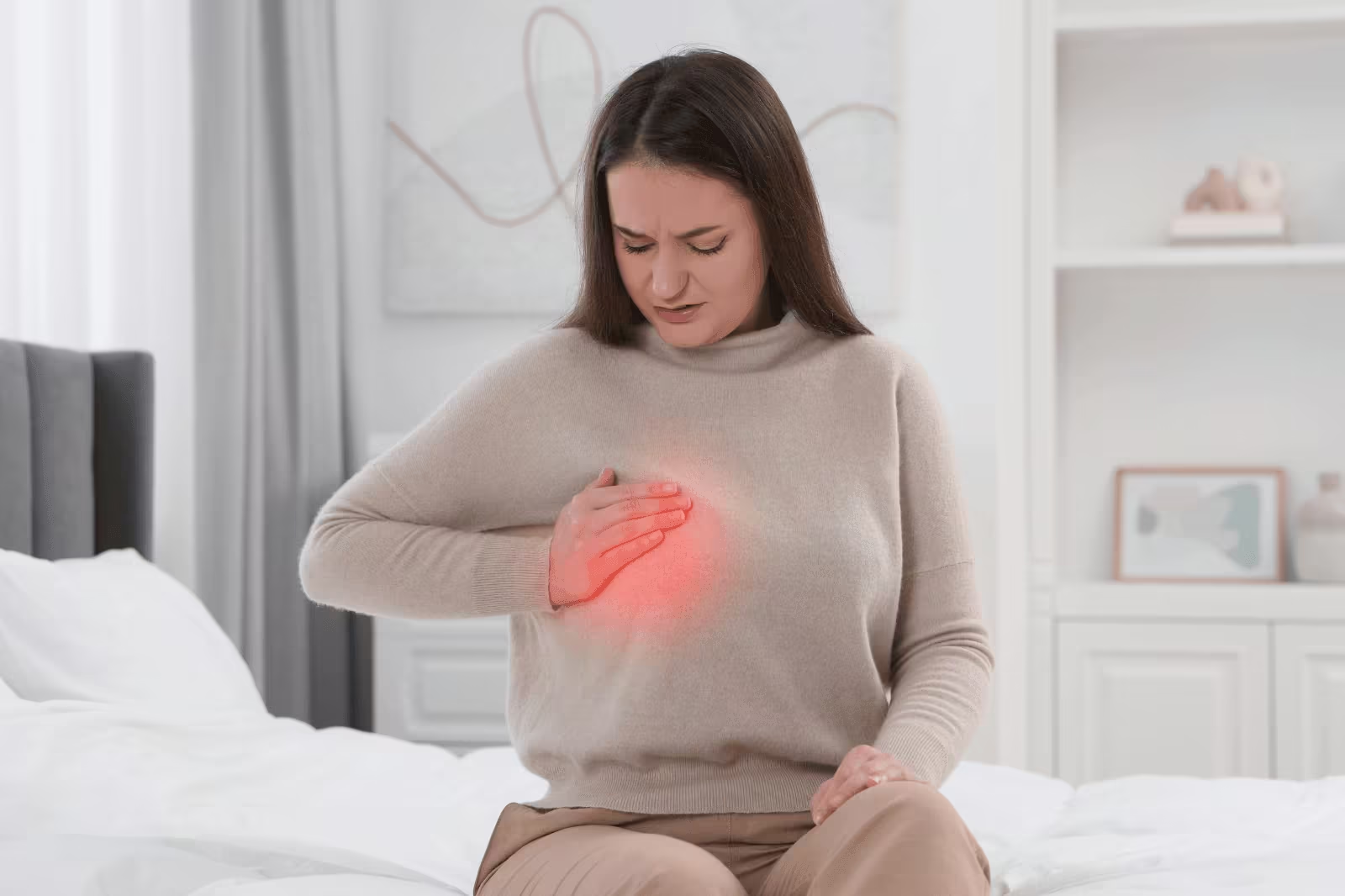
Pain felt near the breast does not always begin in breast tissue. The muscles, fascia, ribs, cartilage, joints, and nerves of the chest lie directly beneath and around the breasts.
Pain originating in these structures is called extramammary breast pain.
Common musculoskeletal causes include:
Chest-wall pain may worsen when the arm moves, the torso twists, a deep breath is taken, or pressure is applied over a rib or muscle. It may also occur with neck stiffness, shoulder restriction, or upper-back tension.
Recognizing a musculoskeletal source can change the treatment plan. Acupuncture may then address the chest wall, shoulder, upper back, and related movement patterns instead of focusing only on the area where the pain is felt.
Acupuncture may help some people experience less breast tenderness, fewer painful days, and improved physical comfort, but it is not a proven cure for every cause of breast pain.
A recent systematic review found that acupuncture showed potential for cyclic and noncyclic breast pain. However, the researchers also identified limitations in the quality of the available studies. Treatment methods, acupuncture points, comparison groups, and ways of measuring improvement differed across the research.
The current evidence supports describing acupuncture as a possible complementary treatment rather than a definitive medical solution.
Response to treatment may depend on:
Some patients may notice a decrease in tenderness or improved comfort during exercise and sleep. Others may experience little change. Progress should therefore be measured using clear symptoms and daily activities rather than vague impressions alone.
Acupuncture involves placing very fine, sterile needles at selected points on the body. The needles may be gently manipulated by hand or, in suitable cases, stimulated using a mild electrical current.
Modern research suggests that acupuncture may influence sensory nerves, connective tissues, muscles, and pain-processing pathways in the nervous system. Its effects cannot be explained by one mechanism alone.
Pain is not determined solely by what happens in breast tissue. Signals from the affected area travel through peripheral nerves and the spinal cord before being interpreted by the brain.
This process can be influenced by:
Acupuncture stimulates sensory nerves in the skin and underlying tissues. This stimulation may affect pathways involved in pain transmission, pain inhibition, pressure sensitivity, and muscle tension.
This is one reason an acupuncture treatment may use points on the hands, legs, feet, back, or ears rather than inserting needles into the painful breast.
Breast-area pain may be intensified by tight pectoral muscles, upper-back tension, restricted shoulder movement, irritated rib joints, or myofascial trigger points.
A practitioner may assess whether the pain changes with:
When a musculoskeletal pattern is present, acupuncture may target the upper back, shoulders, chest-wall muscles, arms, or related distal points.
Treatment may be combined with physical therapy, stretching, posture correction, mobility exercises, or gradual strengthening when appropriate.
Stress does not mean breast pain is imaginary. However, ongoing stress can increase muscle tension, disturb sleep, and make the nervous system more sensitive to discomfort.
Breast tenderness may feel stronger during periods of anxiety, poor sleep, emotional strain, or physical exhaustion even when there has been no major change in breast tissue.
Acupuncture may be incorporated into care when breast discomfort occurs alongside:
The purpose is not to identify stress as the sole cause. It is to address factors that may increase pain sensitivity or make symptoms harder to manage.
The phrase “balances hormones” is commonly used in discussions about acupuncture, but it is broader than current evidence supports.
Acupuncture may affect communication between the nervous system and neuroendocrine processes. However, research has not established that it reliably corrects a particular estrogen, progesterone, or prolactin abnormality responsible for breast pain.
For cyclic tenderness, it is more accurate to say that acupuncture may help the body regulate pain and related symptoms during hormonally sensitive phases of the menstrual cycle.
Acupuncture should not replace medical testing when symptoms suggest a hormonal, reproductive, thyroid, pituitary, or other endocrine condition.
Traditional Chinese Medicine evaluates breast pain as part of a broader symptom pattern rather than treating every patient with the same acupuncture points.
A practitioner may ask about:
Traditional patterns associated with breast tenderness may include Liver Qi stagnation, Qi and Blood stagnation, heat, phlegm accumulation, or deficiency patterns.
These terms belong to the diagnostic framework of Traditional Chinese Medicine. They do not mean that a person has liver disease, blocked arteries, an infection, or a hormone disorder.
Traditional pattern differentiation may guide acupuncture point selection, but it does not replace a medical breast diagnosis.

Acupuncture may be considered when breast tenderness appears predictably before menstruation and improves after the menstrual period begins.
Treatment goals may include:
Because cyclic pain naturally improves and worsens, progress should be tracked across more than one menstrual cycle. A reduction in symptoms at the beginning of menstruation may be part of the natural pattern rather than a treatment effect.
Fibrocystic breast changes can cause temporary lumpiness, fullness, cyst-related discomfort, or tenderness. Symptoms may become more noticeable before menstruation.
Acupuncture may be used to support symptom relief after the breast changes have been properly evaluated. It cannot determine whether a lump is benign or remove a breast cyst.
Acupuncture does not replace:
A new, growing, firm, or persistent lump should be medically assessed even when a person has previously been diagnosed with fibrocystic breast changes.
Acupuncture may be considered for noncyclic pain after structural, inflammatory, and other medical causes have been investigated.
It may be appropriate when:
Pain that becomes more intense, more localized, or associated with a physical breast change should be reassessed.
Acupuncture may be particularly relevant when breast-area pain originates in the chest wall.
Possible signs include:
Treatment may focus on reducing muscle guarding, improving movement, and addressing trigger points or areas of tension around the chest, shoulder, neck, and upper back.
Persistent pain can occur after lumpectomy, mastectomy, breast reconstruction, lymph node procedures, or other surgery.
Post-surgical symptoms may include:
Acupuncture may be considered as part of a coordinated post-surgical rehabilitation plan. Approval from the surgeon or oncology team may be necessary, particularly when healing is incomplete or cancer treatment is continuing.
Needles should not be inserted through:
Treatment may be combined with physical therapy, scar management, medication, and oncology rehabilitation.
Acupuncture may help manage certain symptoms associated with breast cancer treatment, but it does not treat breast cancer or replace oncology care.
Acupuncture has been studied as supportive care for:
Clinical guidance supports acupuncture as an option for joint pain associated with aromatase inhibitor therapy. This symptom affects the joints and muscles and is different from pain arising inside the breast.
The National Cancer Institute identifies acupuncture as a complementary therapy studied for managing cancer symptoms and treatment side effects. It is not a substitute for surgery, radiation therapy, chemotherapy, hormone therapy, targeted therapy, or immunotherapy.
Patients receiving cancer treatment should speak with their oncology team before scheduling acupuncture. Treatment may require modification because of:
An acupuncturist providing oncology support should understand these precautions and be willing to coordinate with the patient’s medical team.
Acupuncture should not replace medical care for suspected mastitis or a breast abscess.
Mastitis may develop suddenly and can cause breast pain together with:
These symptoms require prompt assessment. An infection may require medication, and an abscess may need drainage.
Acupuncture may only be considered as supportive care after a qualified medical professional has evaluated the breast and determined that complementary treatment is safe. It should never delay antibiotics, drainage, lactation support, or another necessary treatment.
Pregnancy and breastfeeding produce substantial changes in breast tissue. Tenderness may be related to normal development, engorgement, feeding difficulties, milk stasis, inflammation, infection, or a separate breast condition.
An acupuncturist treating a pregnant or breastfeeding patient should have relevant training and understand which points and techniques require modification.
Medical or lactation assessment is important when breast pain occurs with:
Acupuncture may support relaxation and comfort, but it should not replace evaluation of mastitis, an abscess, or feeding-related complications.

Breast pain should be medically evaluated when it is new, persistent, focal, worsening, or accompanied by changes in the breast, nipple, skin, or general health.
Contact a healthcare professional for:
Persistent pain in one area or pain that worsens over time warrants clinical assessment.
A new lump, nipple change, discharge, skin dimpling, redness, or swelling should be reported even when a recent screening mammogram was normal.
Pain near the breast can occasionally originate from the heart, lungs, or another internal organ.
Seek emergency care for pain accompanied by:
Acupuncture is not an emergency treatment and should never delay urgent medical care.
Imaging recommendations depend on the pain pattern, physical examination, age, medical history, and individual breast cancer risk.
Diffuse or cyclic pain without a lump or suspicious clinical finding may not require diagnostic imaging. Persistent focal pain is evaluated differently and may lead to ultrasound, diagnostic mammography, or another test based on the patient’s clinical situation.
A healthcare professional may recommend imaging when:
Magnetic resonance imaging is not generally used as the first test for breast pain alone.
Acupuncture should not be used to postpone imaging recommended by a physician or breast specialist.
An acupuncture appointment begins with a detailed assessment and generally uses points on the arms, hands, legs, feet, ears, back, or surrounding muscles rather than placing needles directly into breast tissue.
The acupuncturist may ask about:
The practitioner may also assess posture, shoulder movement, muscle tension, chest-wall tenderness, and other factors that could contribute to the pain.
A responsible acupuncturist should refer the patient for medical care when symptoms fall outside the practitioner’s scope.
Acupuncture needles usually do not need to be placed directly into breast tissue.
Points may be selected on the:
Local treatment near the chest may sometimes be considered for musculoskeletal pain, but it must be anatomically safe, clinically appropriate, and accepted by the patient.
Patients can request distal treatment only. They can also decline any point or ask for a needle to be removed at any time.
Point selection should be individualized rather than based on a fixed formula.
Depending on the symptom pattern, an acupuncturist may consider points such as:
| Acupuncture point or region | Why it may be considered |
| LI4 | Frequently used in broader pain-management strategies |
| LR3 | Often selected in TCM patterns involving stress or menstrual symptoms |
| SP6 | May be considered for menstrual and gynecologic symptom patterns |
| ST36 | Commonly included in treatments focused on general regulation and recovery |
| PC6 | May be selected when pain occurs with stress, nausea, or chest-area discomfort |
| LI11 | Sometimes included when heat or inflammatory features are considered |
| Ear points | May support pain regulation and relaxation |
| Upper-back and shoulder points | May address muscular tension and restricted movement |
| Chest-wall points | May be considered for confirmed musculoskeletal pain when safe |
These examples are not instructions for self-treatment. Certain acupuncture points may be unsuitable during pregnancy or in the presence of specific medical conditions.
Acupuncture needles should never be inserted at home without appropriate professional training.
Breast pain is physically and emotionally sensitive. Treatment should protect the patient’s comfort, dignity, and control throughout the appointment.
A professional practitioner should:
A patient should never feel pressured to accept needling near the breast or chest.
Acupuncture needles are thin and flexible. Insertion may produce brief pressure or a mild pinch.
Other sensations may include:
Sharp, burning, intense, or electrical pain should be reported immediately so the practitioner can adjust or remove the needle.
There is no universal number of treatments for breast pain.
The course of care depends on:
A sensible approach is to begin with a defined trial of care and then review the results.
For cyclic breast pain, improvement should be followed across multiple menstrual phases. For noncyclic or musculoskeletal pain, progress may be measured through changes in severity, frequency, movement, sleep, and daily activity.
Treatment should not continue indefinitely when symptoms remain unchanged. Lack of improvement, worsening pain, or the appearance of a new breast change should lead to reassessment.
Acupuncture may be more effective when combined with appropriate self-care and conventional treatment.
A supportive bra can reduce movement and mechanical strain, particularly during exercise. The bra should support the breasts without creating painful compression or digging into the chest wall.
An incorrect size can contribute to shoulder tension, rib pressure, and discomfort around the breast.
Warmth may feel soothing for generalized aching or tight muscles. A cool compress may be more comfortable when tenderness involves swelling.
Heat should not be applied over infected, numb, recently operated, or radiation-damaged tissue without medical guidance.
Topical or oral anti-inflammatory medication may be appropriate for some patients. Medication choice depends on individual health history, pregnancy status, kidney function, gastrointestinal risk, allergies, and current prescriptions.
Medication should be used according to professional guidance rather than assumed to be safe for every patient.
Physical therapy may be useful when breast-area pain is associated with:
Acupuncture and physical therapy may address different parts of the same pain pattern.
Hormonal contraception, fertility medication, menopausal hormone therapy, and other medicines may contribute to breast tenderness in some people.
Do not stop or change a prescribed medication without consulting the healthcare professional who prescribed it.
Evening primrose oil, vitamin E, herbal formulas, and other supplements are frequently promoted for breast tenderness. Evidence for many products remains inconsistent, and supplements can cause adverse effects or interact with medication.
Additional caution is necessary for people who:
Natural products are not automatically safe, effective, or suitable for every patient.
Acupuncture is generally considered safe when performed by a qualified practitioner using sterile, single-use needles and appropriate anatomical technique.
Temporary effects may include:
Serious complications are uncommon but may include infection or injury when acupuncture is performed improperly. Safe treatment depends on practitioner training, clean needle technique, anatomical knowledge, and proper patient screening.
Tell the practitioner about:
Choose an acupuncturist who:
Breast pain should not be treated with a generic protocol. Effective care begins by determining whether the discomfort is cyclic, structural, inflammatory, musculoskeletal, post-surgical, or related to another medical condition.
At ACA Acupuncture and Wellness, treatment is personalized according to the location, timing, severity, and overall pattern of each patient’s symptoms. Acupuncture may be incorporated into a coordinated plan designed to support pain relief, reduce surrounding tension, improve physical comfort, and complement appropriate medical care.
Schedule an appointment with us to discuss your symptoms and determine whether individualized acupuncture care is appropriate for your breast tenderness.
Sources
American College of Radiology. (2018). ACR Appropriateness Criteria®: Breast pain. https://acsearch.acr.org/docs/3091546/Narrative/
National Center for Complementary and Integrative Health. (n.d.). Acupuncture: Effectiveness and safety. U.S. Department of Health and Human Services, National Institutes of Health.
Shi, H., Chen, H., Gao, S., Fang, J., Zhu, L., & Liu, Z. (2024). Acupuncture for cyclic and noncyclic breast pain in women: A systematic review and meta-analysis of randomized controlled trials. European Journal of Integrative Medicine, 68, 102355.
Acupuncture may help some people experience less breast tenderness, fewer painful days, or improved physical comfort. Research is encouraging but not strong enough to guarantee relief for every patient. The outcome depends largely on the source and pattern of the pain.
Acupuncture may be considered for recurring premenstrual tenderness after concerning causes have been excluded. Symptoms should be tracked across several menstrual phases to determine whether improvement is consistent.
Usually not. Treatment can use points on the arms, hands, legs, feet, ears, upper back, shoulders, and surrounding muscular areas. Patients may request distal treatment and decline needling near the chest.
Acupuncture may help manage tenderness associated with fibrocystic breast changes. It cannot diagnose a lump, determine whether a change is benign, remove a cyst, or replace recommended imaging.
Response varies. Some patients notice changes during an initial course of care, while cyclic symptoms must be assessed over multiple menstrual phases. Continued care should depend on measurable improvement.
It may be appropriate after the surgeon or oncology team confirms that treatment is safe. Needles should not pass through unhealed incisions, infected tissue, open wounds, radiation-damaged skin, or areas requiring surgical protection.
Acupuncture may support the management of certain treatment-related symptoms, including aromatase inhibitor-related joint pain. It is complementary care and does not treat the cancer itself.
Acupuncture cannot replace medical treatment for mastitis or a breast abscess. Redness, warmth, swelling, fever, or flu-like symptoms require prompt medical assessment.
It may be appropriate when performed by a practitioner experienced in pregnancy and postpartum care. Breast pain accompanied by fever, redness, a persistent lump, feeding problems, or worsening symptoms should be medically assessed first.
Seek medical evaluation for a new lump, persistent focal pain, nipple discharge, nipple inversion, skin dimpling, redness, warmth, fever, enlarged lymph nodes, changes in breast shape, or symptoms that continue to worsen.
LOCATIONS
MANHATTAN
QUEENS
NEW JERSEY
CALIFORNIA

The over $4 billion US acupuncture market offers a great opportunity with over 10% annual growth rates and a continuing flow of new patients interested in the benefits of acupuncture.
