

Last Updated: February 04, 2026
Tensor fasciae latae (TFL) pain is a common but frequently misdiagnosed source of outer hip and thigh discomfort, often mistaken for IT band syndrome, hip joint pathology, or lower back issues. The TFL is a small but highly reactive muscle that plays a critical role in hip stabilization, pelvic control, and knee alignment during walking, running, and standing. Because it works in constant coordination with the gluteal muscles and fascia, even subtle dysfunction can create persistent pain patterns that are difficult to resolve with stretching alone.
TFL pain rarely exists in isolation. In many cases, it develops as part of a broader myofascial pain syndrome, where trigger points, altered nervous system signaling, and compensatory movement patterns reinforce muscle tightness and inflammation. Poor posture, prolonged sitting, overuse, or glute inhibition can overload the TFL, causing it to become hyperactive and resistant to conventional treatments. This explains why TFL pain often keeps coming back, even after rest, foam rolling, or physical therapy.
Acupuncture addresses TFL pain at its source by targeting myofascial trigger points, restoring neuromuscular balance, and improving local circulation. Rather than focusing only on the painful area, acupuncture evaluates how the hip, pelvis, and nervous system interact as a whole. This integrative approach not only relieves pain but helps prevent recurrence by correcting the underlying imbalances that drive TFL dysfunction.
Last Updated: February 04, 2026
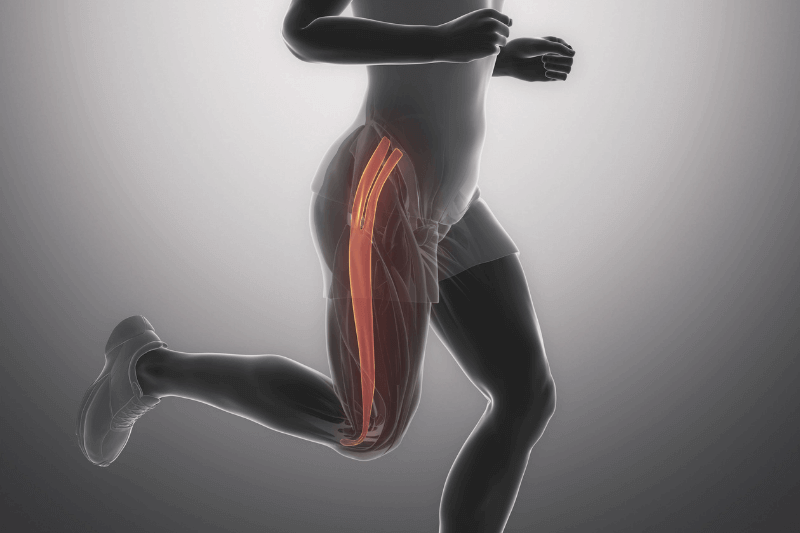
Tensor fasciae latae (TFL) pain is a common but frequently misdiagnosed source of outer hip and thigh discomfort, often mistaken for IT band syndrome, hip joint pathology, or lower back issues. The TFL is a small but highly reactive muscle that plays a critical role in hip stabilization, pelvic control, and knee alignment during walking, running, and standing. Because it works in constant coordination with the gluteal muscles and fascia, even subtle dysfunction can create persistent pain patterns that are difficult to resolve with stretching alone.
TFL pain rarely exists in isolation. In many cases, it develops as part of a broader myofascial pain syndrome, where trigger points, altered nervous system signaling, and compensatory movement patterns reinforce muscle tightness and inflammation. Poor posture, prolonged sitting, overuse, or glute inhibition can overload the TFL, causing it to become hyperactive and resistant to conventional treatments. This explains why TFL pain often keeps coming back, even after rest, foam rolling, or physical therapy.
Acupuncture addresses TFL pain at its source by targeting myofascial trigger points, restoring neuromuscular balance, and improving local circulation. Rather than focusing only on the painful area, acupuncture evaluates how the hip, pelvis, and nervous system interact as a whole. This integrative approach not only relieves pain but helps prevent recurrence by correcting the underlying imbalances that drive TFL dysfunction.
The tensor fasciae latae (TFL) is a small but highly reactive hip muscle that often becomes overactive when the gluteal muscles fail to stabilize the pelvis. Rather than being the primary cause of dysfunction, the TFL is frequently the victim of poor motor control, altered gait mechanics, and compensation elsewhere in the kinetic chain.
Clinically, the TFL acts as an emergency stabilizer. When the body senses instability at the pelvis or hip, especially during walking, running, or single-leg loading, the nervous system increases TFL activation to maintain balance. Over time, this protective response can turn into chronic tension, trigger point formation, and persistent outer hip or thigh pain.
This explains why many people stretch the TFL repeatedly with little relief. The muscle is not tight by accident. It is working overtime to compensate for inhibited gluteus medius function and poor neuromuscular coordination.
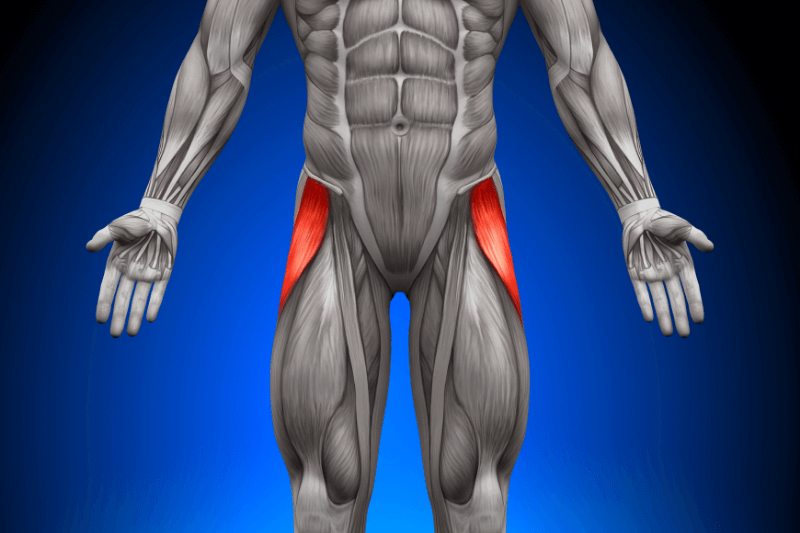
The tensor fasciae latae (TFL) originates at the anterior iliac crest and anterior superior iliac spine (ASIS) and inserts into the iliotibial (IT) band, which runs down the lateral thigh and attaches just below the knee. This anatomical placement positions the TFL as a functional link between the pelvis, hip, and knee, allowing it to influence movement and load transfer across all three regions.
From a clinical and acupuncture perspective, this anatomy is significant because the TFL contributes to hip flexion, hip abduction, and medial rotation, particularly during weight-bearing and transitional movements. Rather than acting as a prime mover, the TFL often functions as a stabilizer that becomes overactive when larger muscles fail to provide adequate control.
Specifically:
Because the TFL inserts directly into the IT band, excessive activation or tension increases IT band stiffness, even though the IT band itself cannot contract. Myofascial trigger points within the TFL frequently refer pain into the outer hip, lateral thigh, or knee, creating symptoms that are often mistaken for joint or IT band pathology.
The superficial location of the TFL makes it highly responsive to acupuncture and myofascial release. However, if excessive tone persists, force is transmitted downward through the fascial system, contributing to lateral knee pain, altered tracking, and symptoms that do not resolve with knee-focused treatment alone.
In healthy movement, the gluteus medius and gluteus maximus act as the primary stabilizers of the pelvis. When these muscles are inhibited due to prolonged sitting, poor posture, prior injury, or faulty movement patterns, the nervous system shifts stabilization demands to the TFL.
Common contributors to TFL overactivation include:
This is why TFL pain is common in runners, cyclists, and desk workers, even when flexibility and strength appear adequate.
Understanding how TFL dysfunction affects daily movement is more useful than listing isolated muscle actions.
Repeated daily compensation leads to chronic tightness, inflammation, and pain that often feels resistant to conventional care.
Because TFL dysfunction is driven by neuromuscular imbalance rather than simple muscle tightness, effective treatment must address:
Acupuncture is particularly effective in these cases because it can reduce trigger point activity, normalize muscle tone, and support improved motor control at the same time.
Understanding where the tensor fasciae latae (TFL) begins and ends explains why dysfunction in this small muscle can produce pain far beyond the hip.
Origin: The TFL originates from the anterior iliac crest near the anterior superior iliac spine (ASIS) at the front of the pelvis.
Insertion: Rather than attaching directly to bone in the thigh, the TFL inserts into the iliotibial (IT) band, a dense strip of fascia that runs along the lateral thigh and anchors at the tibia just below the knee, near the lateral femoral condyle.
This fascial attachment allows the TFL to influence both hip and knee mechanics, even though it does not cross the knee joint itself.
The TFL and IT band function as a continuous fascial system, not as separate structures. The IT band cannot contract on its own, but it transmits tension generated by the TFL and surrounding muscles.
When the TFL becomes overactive or chronically tight:
This is why many people continue to experience lateral knee pain even after aggressive foam rolling or local knee treatment. The true driver is often proximal TFL overactivation, not inflammation at the knee itself.
Myofascial trigger points within the TFL frequently refer pain downward, reinforcing the illusion that the knee or IT band is the primary problem.
A holistic approach to TFL pain does not mean vague whole-body care. Clinically, it means addressing multiple interacting systems rather than treating muscle tightness in isolation.
TFL pain persists when treatment focuses only on stretching or foam rolling because:
Foam rolling can temporarily reduce tone by stimulating sensory receptors in the fascia, which is why it often feels helpful at first. However, without correcting neuromuscular coordination and load distribution across the kinetic chain, the TFL quickly returns to a guarded state.
An effective, holistic strategy addresses:
Acupuncture is particularly effective in this context because it influences both the myofascial system and the nervous system, allowing muscle tone, pain signaling, and movement patterns to normalize together rather than temporarily.
Acupuncture is an effective treatment for TFL pain because it addresses myofascial trigger points, nervous system overactivity, and compensatory movement patterns rather than muscle tightness alone. This makes it particularly useful for pain that persists despite stretching, foam rolling, or conventional exercise programs.
Unlike passive treatments that target symptoms, acupuncture works at both the local tissue level and the central nervous system, allowing pain relief and movement restoration to occur together.
The TFL is prone to developing myofascial trigger points, which are hyperirritable areas within muscle tissue associated with altered nerve signaling and sustained contraction.
When acupuncture needles are inserted into these trigger points, several important responses occur:
A properly placed needle often produces a local twitch response, which is an involuntary contraction of the muscle fibers. This response is clinically significant because it indicates a neurological release of abnormal muscle spindle activity.
The local twitch response helps:
Stretching alone cannot consistently achieve this reset because it does not directly influence the spinal reflex loop maintaining the contraction.
Acupuncture increases localized blood flow within the TFL and surrounding fascia. This improves oxygen delivery, removes metabolic waste, and supports tissue repair. Reduced ischemia also lowers inflammatory signaling within the muscle.
TFL pain is rarely mechanical alone. It is strongly influenced by central nervous system sensitization, especially in chronic cases.
Acupuncture helps regulate this process by:
This is why acupuncture often succeeds where foam rolling or stretching provides only short-term relief.
While both techniques involve needle insertion, they are not the same.
Acupuncture considers why the TFL became overactive in the first place, such as gluteal inhibition or altered gait, rather than treating the muscle in isolation.
Electroacupuncture may be used in more resistant or chronic cases to enhance neuromuscular reeducation and reduce pain sensitivity.
Acupuncture can be used as a corrective intervention initially and later transitioned into maintenance care for individuals with recurring lateral hip or knee symptoms.
A holistic approach means addressing the full system that drives TFL overuse, not layering random therapies.
Foam rolling and self-myofascial release can be helpful, but they work best after muscle tone and pain signaling have been normalized through acupuncture.

The TFL functions within a coordinated muscle network.
Acupuncture does not only relax the TFL. It helps restore balance across this system by reducing dominance patterns and improving motor control, allowing underactive muscles to re-engage.
Red flags that suggest TFL involvement include knee pain that persists despite knee treatment and pain that worsens with prolonged sitting or running.
Trigger point referral occurs because sustained muscle contraction alters sensory input to the spinal cord. This causes the brain to misinterpret the pain source.
Common referral patterns include:
This referral pattern often overlaps with IT band syndrome or lumbar nerve irritation, which is why accurate assessment is essential.
Treatment frequency depends on symptom duration, activity level, and contributing biomechanical factors.

Tensor fasciae latae pain is rarely a simple muscle issue. It is often the result of myofascial trigger points, nervous system overactivity, and faulty movement patterns that place excessive demand on the outer hip. When these underlying factors are not addressed, symptoms tend to return, even after rest, stretching, or isolated exercise programs.
A comprehensive treatment approach focuses on correcting the root cause rather than chasing symptoms. Acupuncture plays a central role by reducing trigger point activity, calming neuromuscular tension, and restoring coordination between the TFL, gluteal muscles, and surrounding structures. When combined with targeted strengthening, movement retraining, and appropriate myofascial techniques, long-term relief becomes achievable rather than temporary.
At ACA Acupuncture and Wellness, care is designed around this integrative, systems-based approach. In addition to acupuncture, holistic services such as cupping therapy, moxibustion, and personalized treatment planning are used to support circulation, reduce chronic muscle tightness, and improve overall movement quality. Each treatment plan is tailored to address both pain relief and functional recovery.
If persistent outer hip, thigh, or lateral knee pain is limiting your movement or quality of life, professional evaluation and individualized care can make a meaningful difference. Contact ACA Acupuncture and Wellness to learn how a holistic treatment approach can help restore balance, mobility, and lasting relief.
Sources:
Park, H. S., Jeong, H. I., Sung, S. H., & Kim, K. H. (2023). Acupuncture treatment for hip pain: A systematic review and meta-analysis. Healthcare, 11(11), 1624.
TFL-driven pain is usually most tender at the front outer hip near the ASIS and often worsens with prolonged sitting, single-leg stance, running, or hill work. Hip joint pain tends to feel deeper and more “inside the joint,” commonly in the groin or front of the hip, and is often aggravated by deep hip flexion and internal rotation. Lumbar-related pain is more likely when symptoms include tingling, numbness, burning pain that travels below the knee, or pain that clearly changes with spinal movements such as bending, prolonged standing, coughing, or sneezing. If neurological symptoms, progressive weakness, or bowel or bladder changes are present, medical evaluation is important.
When performed by a licensed practitioner, acupuncture in the TFL region is generally safe. The most common, expected reactions are temporary soreness, mild bruising, or a short-lived flare in tightness for 24 to 48 hours. Less common risks include stronger bruising, lightheadedness, fatigue after treatment, or irritation of nearby tissues. People taking blood thinners, those with bleeding disorders, and pregnant patients should discuss precautions, positioning, and technique adjustments before treatment.
Many people feel meaningful improvement in pain and hip mobility within one to three sessions, especially when symptoms are primarily myofascial and activity-driven. Chronic or recurrent cases often need a short course of care before results stabilize, commonly around six to ten sessions, with a clear reassessment point after the first three to four visits. If there is no measurable change after several sessions, it usually signals that biomechanics, training load, or the primary pain driver needs to be rechecked rather than simply continuing the same approach.
For the first 24 hours, avoid aggressive stretching into pain, deep hip stretches that provoke the outer hip, high-intensity running, steep hills, heavy lower-body lifting, or long periods of sitting without breaks. Most people do best with light walking, gentle hip range-of-motion, hydration, and normal daily movement. If you return to exercise, keep intensity low and prioritize controlled technique so the glutes can engage without the TFL immediately taking over.
Yes. Persistent lateral hip or thigh pain often has a myofascial and neuromuscular component that does not show clearly on standard imaging. Even when scans are normal, trigger points, protective guarding, altered gait mechanics, and nervous system sensitivity can keep symptoms cycling. Acupuncture can reduce trigger point activity and calm neuromuscular tension, which often makes corrective strengthening and movement retraining more effective. If symptoms keep returning, reassessing gait, hip stability, and training volume is typically the missing piece.
The most effective exercise pairing is strengthening and control work that restores gluteus medius, gluteus maximus, and posterior chain contribution so the TFL does not stay in an “emergency stabilizer” role. A strong starting point is hip stability drills that train pelvic level control during single-leg loading, plus glute-focused strengthening that builds capacity without provoking the outer hip. If the TFL grabs immediately during exercise, it usually means the movement is too difficult, the range is too large, or fatigue is driving compensation, so reducing intensity and rebuilding control is the fastest route to long-term change.
LOCATIONS
MANHATTAN
QUEENS
NEW JERSEY
CALIFORNIA

The over $4 billion US acupuncture market offers a great opportunity with over 10% annual growth rates and a continuing flow of new patients interested in the benefits of acupuncture.
