
Korean, Japanese, and Chinese acupuncture share roots in East Asian medicine, but the treatment you receive can feel quite different depending on the style your acupuncturist practices.
Chinese acupuncture often uses a broad pattern-based assessment, local and distant points, and a wider range of needle stimulation. Japanese acupuncture tends to rely more on touch, fine needles, shallow insertion, and repeated checks of the body during treatment. Korean acupuncture includes several systems, including Saam acupuncture, Korean hand acupuncture, and constitution-based methods.
These descriptions are broad tendencies rather than fixed rules. Many acupuncturists train in more than one method, and a good practitioner adjusts the treatment to your symptoms, health history, sensitivity, and response.
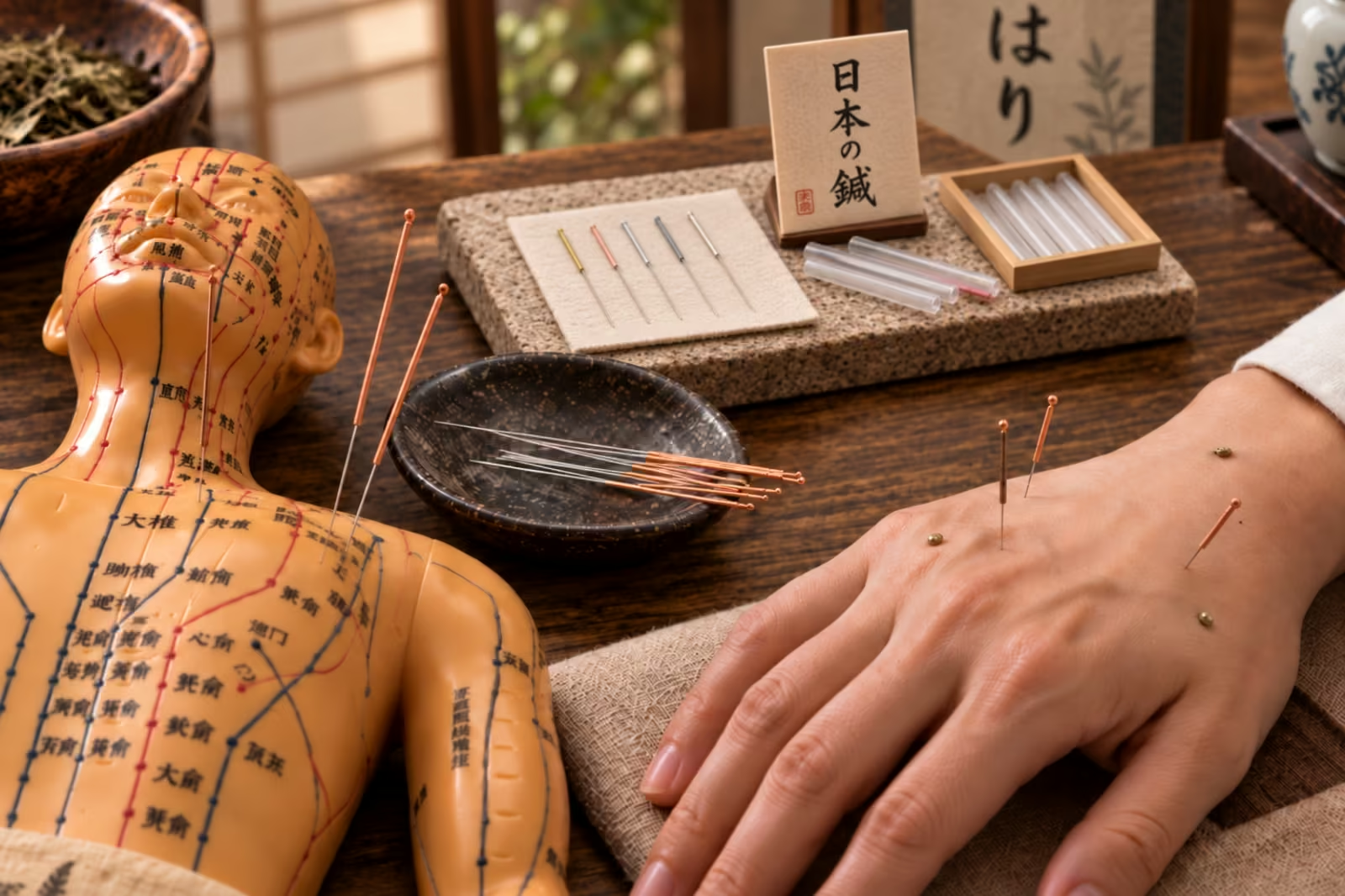
Korean, Japanese, and Chinese acupuncture share roots in East Asian medicine, but the treatment you receive can feel quite different depending on the style your acupuncturist practices.
Chinese acupuncture often uses a broad pattern-based assessment, local and distant points, and a wider range of needle stimulation. Japanese acupuncture tends to rely more on touch, fine needles, shallow insertion, and repeated checks of the body during treatment. Korean acupuncture includes several systems, including Saam acupuncture, Korean hand acupuncture, and constitution-based methods.
These descriptions are broad tendencies rather than fixed rules. Many acupuncturists train in more than one method, and a good practitioner adjusts the treatment to your symptoms, health history, sensitivity, and response.
| Feature | Chinese Acupuncture | Japanese Acupuncture | Korean Acupuncture |
| Common approach | Pattern assessment using local and distant points | Touch-led assessment with light, precise stimulation | Channel balancing, distal points, hand microsystems, or constitution-based methods |
| Needle depth | May range from shallow to deeper insertion | Often shallow | Depends on the system and point choice |
| Typical sensation | May include heaviness, warmth, pressure, tingling, or a dull ache | Often mild, with light pressure or little sensation | Can range from mild to noticeable |
| Assessment | Health history, tongue, pulse, symptom patterns | Abdomen, pulse, channels, tender areas, tissue changes | Channel pattern, pulse, constitution, symptoms, or hand maps |
| Point selection | Local and distant body points | Points often confirmed through touch | Often distal points, hand points, or system-based combinations |
| Needle movement | Rotation, lifting, gentle thrusting, or electrical stimulation may be used | Often light movement or minimal manipulation | Depends on the Korean method being used |
| Other methods you may see | Cupping, moxibustion, gua sha, or electroacupuncture | Moxibustion, acupressure, or contact tools | Hand pellets, magnets, pressure, or moxibustion |
The table gives you a quick comparison, but it cannot predict exactly how one appointment will feel. Training differs from practitioner to practitioner, even within the same tradition.
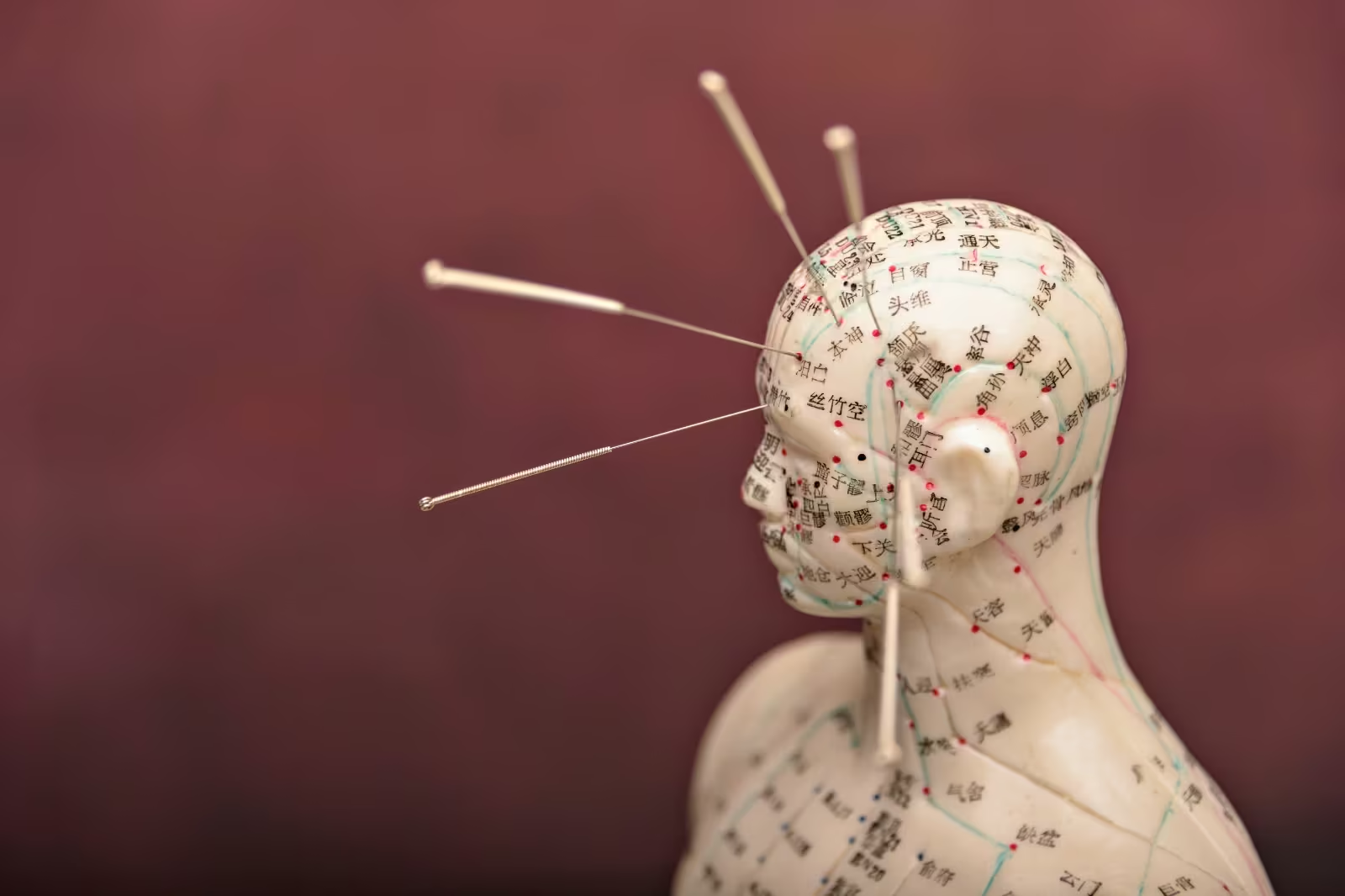
Chinese acupuncture often begins with a broad look at your symptoms and health patterns. Your acupuncturist may ask about the concern that brought you in as well as sleep, digestion, appetite, energy, stress, headaches, temperature, menstrual health, and changes that make your symptoms better or worse. The treatment may also draw on meridian pathways when selecting treatment points.
The practitioner may also look at your tongue and feel the pulse at both wrists. Within Traditional Chinese Medicine (TCM), these findings help guide point selection and the treatment plan.
Chinese-style treatments often combine points near the problem area with points farther away. A practitioner treating neck discomfort may place needles around the neck and also use points on the hands, arms, legs, or feet. Points such as the PC-6 acupuncture point show how practitioners may work with locations away from the main symptom area.
Needle depth changes with the body area, the point, your build, and the treatment goal. A practitioner may use shallow needling near the face or wrist and a different depth in a thicker muscular area.
The practitioner may rotate or gently move a needle after insertion. This can produce a response called de qi. You may notice heaviness, warmth, pressure, tingling, or a dull ache. The feeling may stay near the needle or travel a short distance.
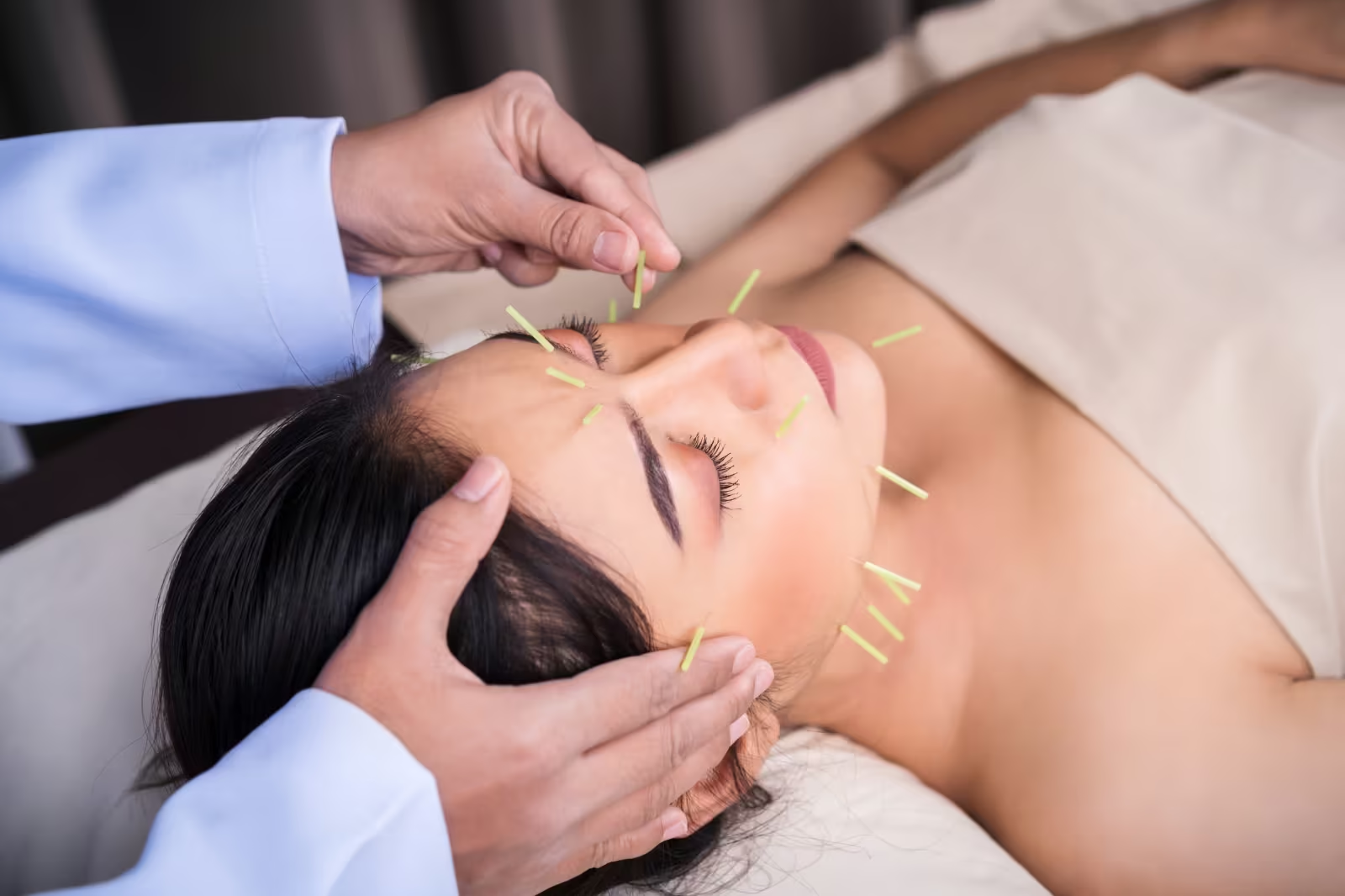
Japanese acupuncture often uses fine needles, shallow stimulation, and close examination through touch. Many Japanese systems ask the practitioner to check the body before and during treatment rather than relying only on the assessment made at the start.
The practitioner may examine your abdomen, back, pulse, channels, or tender areas. They may notice changes in tension, temperature, sensitivity, or tissue resistance. After testing a point, they may check the same area again to see whether your body has changed.
Japanese acupuncture often uses thin needles and light stimulation. A guide tube may rest against your skin while the practitioner taps the needle into place. You may feel a small tap, mild pressure, or very little.
Some Japanese methods do not pierce the skin. Contact needling uses a tool that touches, presses, taps, or strokes an acupuncture point. The practitioner still chooses the point through a structured assessment.
Research has also examined the sensations people experience during Japanese-style acupuncture, including how penetrating and nonpenetrating needles feel during treatment.
Some Japanese systems divide care into root treatment and branch treatment. Root treatment addresses the channel pattern found during the exam. Branch treatment focuses on the symptom that brought you to the clinic.
This structure lets the practitioner work with the broader pattern and the complaint you want addressed without using strong stimulation at every point.
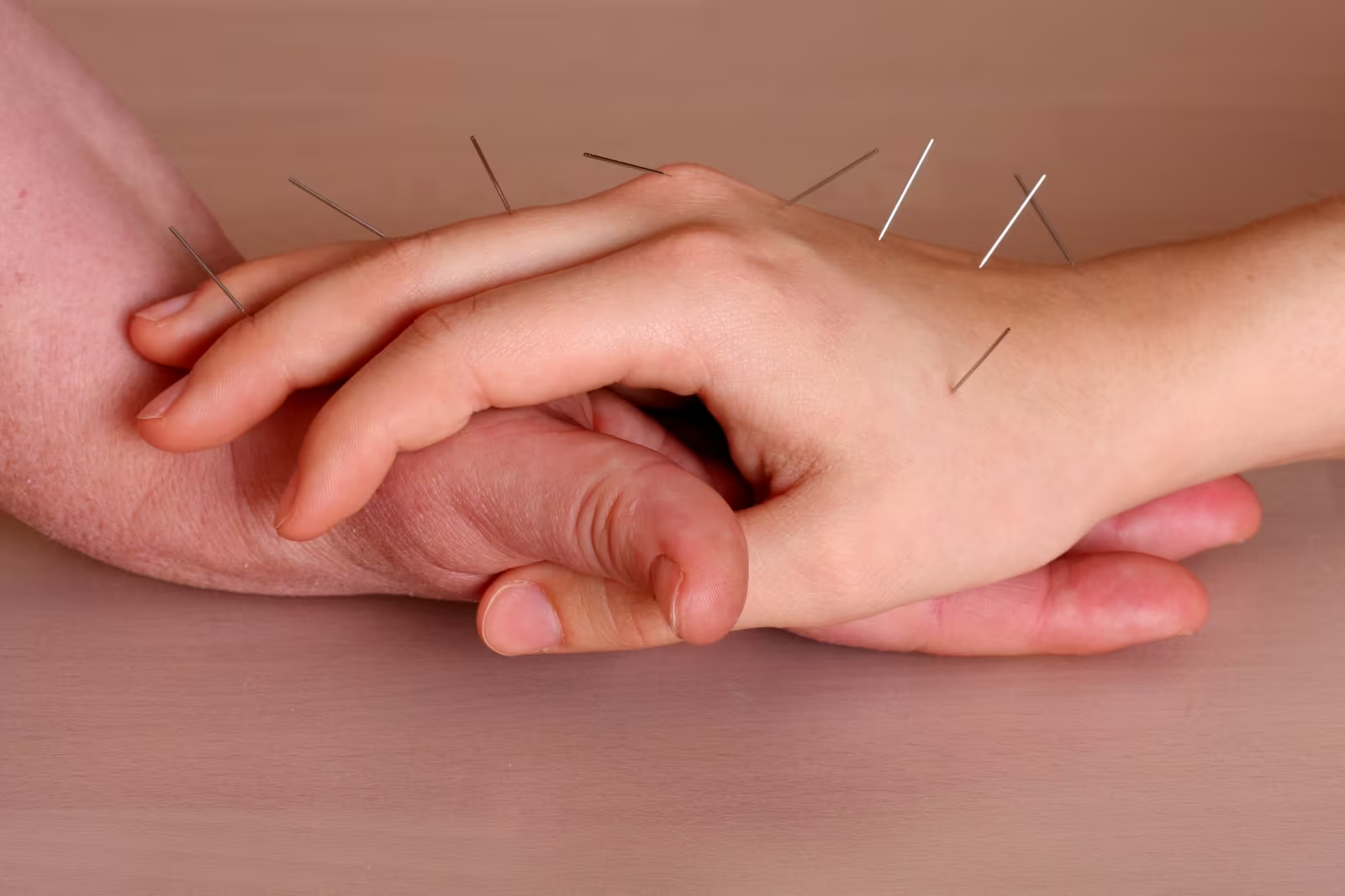
Korean acupuncture refers to several systems rather than one fixed technique. Some methods focus on channel relationships, some use the hands as a treatment map, and others group findings through a constitution-based framework.
Two of the best-known forms are Saam acupuncture and Korean hand acupuncture.
Saam acupuncture is a Korean method that selects points through channel relationships and the Five Phases: Wood, Fire, Earth, Metal, and Water.
A classic Saam prescription uses four points, often below the elbows or knees. The practitioner chooses two points to strengthen one channel relationship and two to reduce another. Because the method relies heavily on distal points, the needles may sit far from the area where you feel symptoms.
The practitioner first decides which channel pattern fits the clinical picture. They may then adjust the prescription, add another point, or combine Saam with another acupuncture method.
Saam treatment does not always stop at four needles. The number and location of points can change according to the practitioner’s assessment and the way you respond.
Korean hand acupuncture treats the hand as a microsystem. In this model, mapped areas on the palm, fingers, and back of the hand correspond to other parts of the body.
The practitioner may use tiny needles, pellets, magnets, or pressure on these hand points. This approach may appeal to someone who prefers treatment within a small area or cannot comfortably position another part of the body for needling.
Korean hand acupuncture is not the same as hand reflexology. The two methods use different maps and different rules for choosing treatment points.
Some Korean systems consider constitutional traits when choosing treatment. Taegeuk, Sasang, Eight Constitution, and other Korean methods do not use one shared set of rules.
A constitution-focused assessment may look at digestion, temperature, energy, recurring symptoms, physical traits, and pulse findings. The practitioner then applies the method in which they received training.
A constitution label should not replace an assessment of your current symptoms. Your response during and after treatment still matters.
Start with the treatment experience you want and the training of the practitioner you are considering.
You do not need to choose by country alone. Many practitioners study techniques from more than one tradition and adjust needle depth, point choice, and stimulation after seeing how you respond.
Research has not shown that one of these three traditions works best for every person or condition. Studies usually examine one acupuncture protocol for one health concern rather than comparing complete Chinese, Japanese, and Korean systems under the same conditions.

Choose a practitioner who holds the license required in your state, uses sterile single-use needles, and has formal training in the acupuncture style they provide.
Before treatment, tell your acupuncturist if you are pregnant, take blood-thinning medication, have a bleeding disorder, use an implanted electrical device, or have another health condition that could affect care.
You can also ask how often they use Chinese, Japanese, or Korean acupuncture and how they adjust needle depth and stimulation to your comfort.
Japanese, Korean, and Chinese acupuncture differ in how practitioners assess symptoms, select points, and approach treatment. Understanding those differences can help you decide which style may feel most comfortable and suitable for your needs.
If a Traditional Chinese Medicine approach feels like the right fit and you are looking for acupuncture in NYC, ACA Acupuncture & Wellness provides acupuncture care based on TCM principles. We consider your symptoms, health history, and treatment goals to provide care that reflects your individual needs.
Interested in learning whether a Traditional Chinese Medicine approach may be right for you? Contact us to schedule an appointment and speak with our team about your treatment goals.
Sources:
National Center for Complementary and Integrative Health. (2022, October). Acupuncture: Effectiveness and safety. National Institutes of Health.
Nishiwaki, M., Takayama, M., Yajima, H., Nasu, M., Park, J., Kong, J., & Takakura, N. (2018). A double-blind study on acupuncture sensations with Japanese style of acupuncture: Comparison between penetrating and placebo needles. Evidence-Based Complementary and Alternative Medicine, 2018, 8128147.
Park, J.-Y., Lee, Y.-S., Park, H.-J., Lee, S. K., Lee, J.-W., & Kim, S.-Y. (2024). A survey on the real-world clinical utilization of a traditional acupuncture in Republic of Korea: Sa-am acupuncture. Journal of Integrative Medicine, 22(5), 570–578.
Research supports acupuncture as an option for some types of back pain, but studies do not show that Chinese acupuncture is consistently better than Japanese acupuncture, or the reverse. The treatment plan, practitioner training, your diagnosis, and how you respond are more useful factors when choosing care.
Japanese acupuncture often uses fine needles, shallow insertion, guide tubes, and lighter stimulation, so many people experience less needle sensation. Chinese acupuncture can also be performed gently. Tell the practitioner if you want minimal stimulation.
Korean acupuncture is used for many of the same concerns that bring people to other acupuncture clinics. The main difference is how some Korean systems choose points. Saam acupuncture uses channel relationships and distal points, while Korean hand acupuncture uses mapped points on the hands.
No. The classic Saam pattern uses four points, but practitioners may add local points, modify the prescription, or combine Saam with another method based on your symptoms and response.
Yes. Some practitioners train in more than one tradition and combine methods within their legal scope of practice. Ask which systems they studied and why they recommend a certain technique for you.
No. Needle diameter and length vary. Japanese-style treatments often use very fine needles, while Chinese and Korean methods may use different sizes depending on the point, body area, technique, and treatment goal.
LOCATIONS
MANHATTAN
QUEENS
NEW JERSEY
CALIFORNIA

The over $4 billion US acupuncture market offers a great opportunity with over 10% annual growth rates and a continuing flow of new patients interested in the benefits of acupuncture.
