
Hand reflexology is a complementary touch practice that applies controlled pressure to mapped areas of the hands. Traditional reflexology connects these areas with different parts of the body, while current evidence supports using the practice mainly for relaxation and short-term comfort rather than diagnosing or treating disease.
Because the hands are easy to reach, hand reflexology can be used during a professional session or practiced gently at home. Understanding the hand map, the techniques, and the limits of the evidence can help you approach it with realistic expectations.
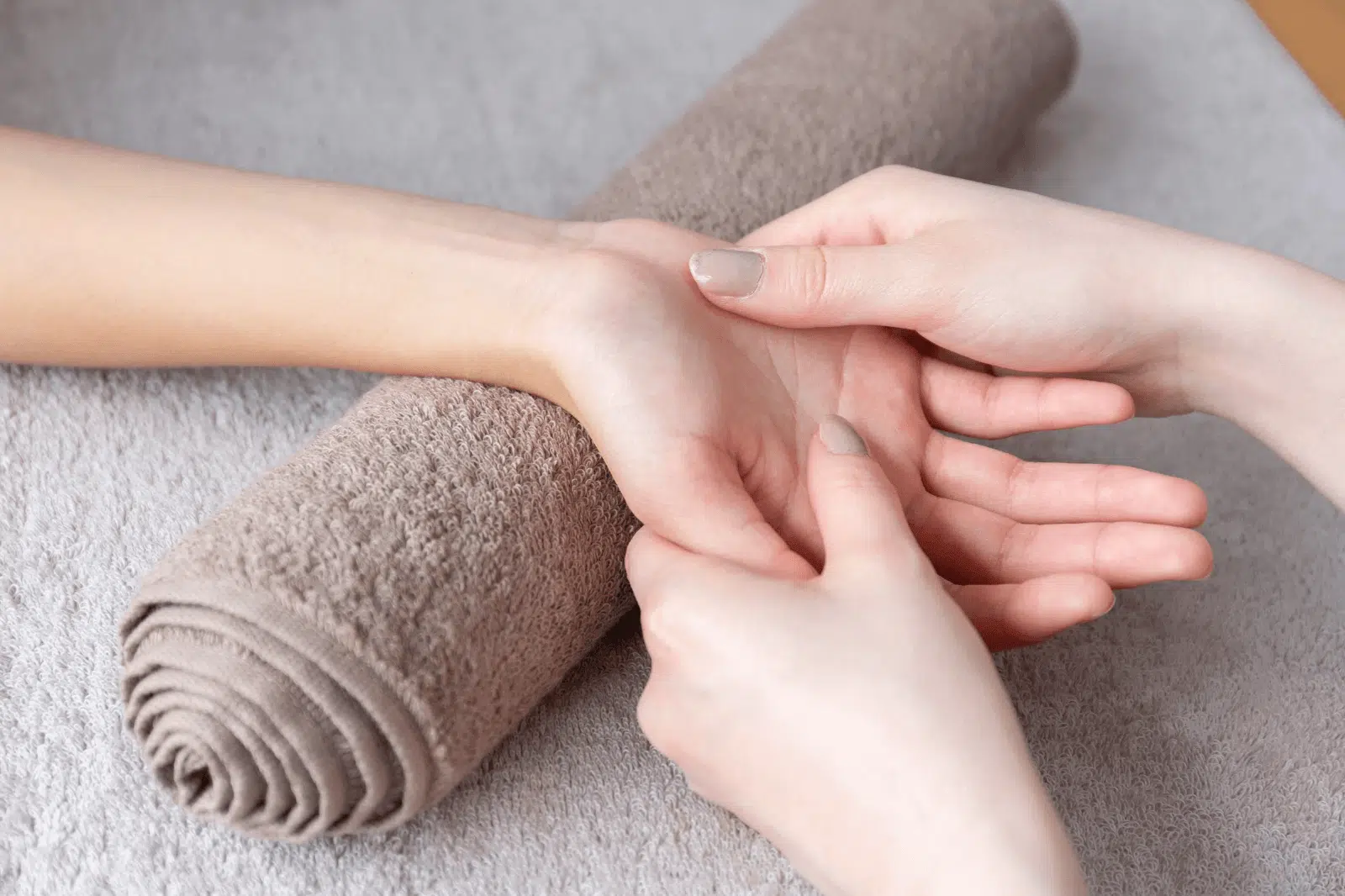
Hand reflexology is a complementary touch practice that applies controlled pressure to mapped areas of the hands. Traditional reflexology connects these areas with different parts of the body, while current evidence supports using the practice mainly for relaxation and short-term comfort rather than diagnosing or treating disease.
Because the hands are easy to reach, hand reflexology can be used during a professional session or practiced gently at home. Understanding the hand map, the techniques, and the limits of the evidence can help you approach it with realistic expectations.
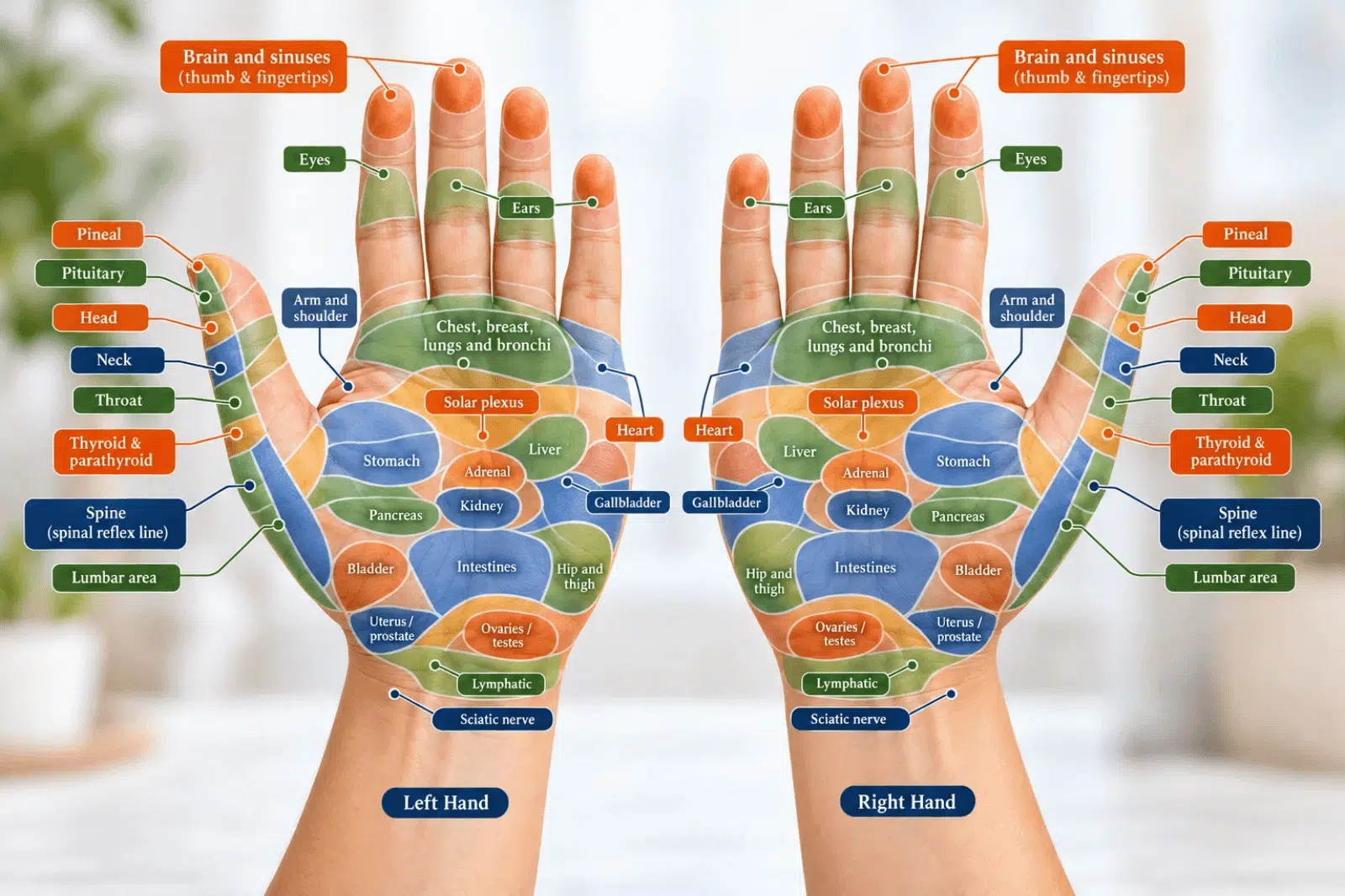
Hand reflexology uses thumb or finger pressure on areas of the hand that reflexology traditions associate with other parts of the body.
The practice treats the hand as a body map. Practitioners usually move through the hands in a set sequence rather than pressing random spots.
The map itself should not be confused with anatomy. The National Center for Complementary and Integrative Health (NCCIH) states that reflexology is based on the belief that points on the hands or feet correspond to other parts of the body, but evidence has not shown that pressing a hand area changes the function of a distant organ.
That distinction matters. Reflexology can still be used for relaxation and hands-on comfort without treating a tender spot as a diagnosis.
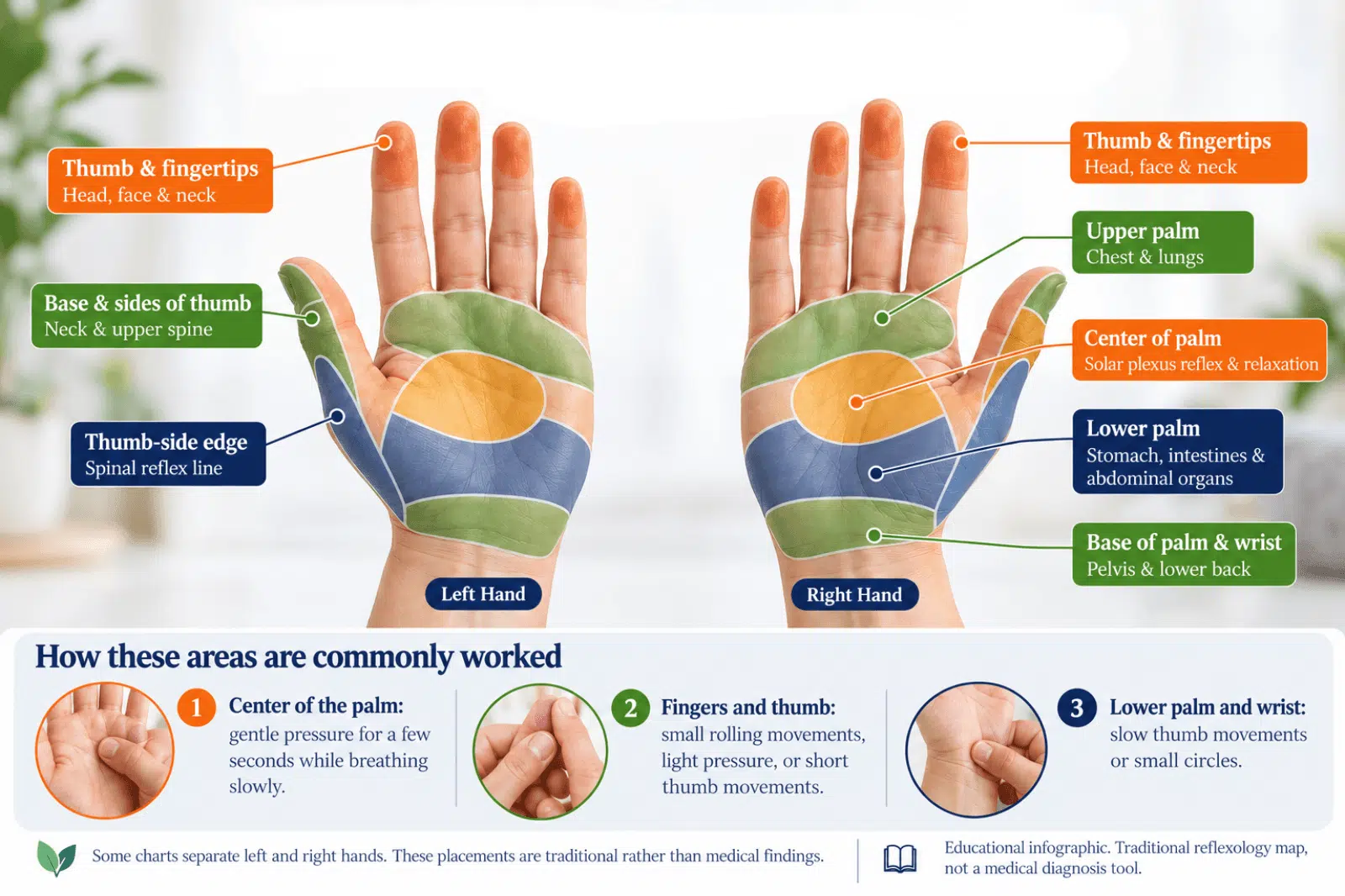
Most hand reflexology charts use broad zones rather than one exact point for every organ or body part.
The exact borders can differ between reflexology schools. Learning the larger areas is more practical than trying to locate a millimeter-perfect spot.
| Hand area | Traditional reflexology association |
| Thumb and fingertips | Head, face, and neck |
| Base and sides of the thumb | Neck and upper spine |
| Upper palm | Chest and lungs |
| Center of the palm | Solar plexus reflex and relaxation |
| Lower palm | Stomach, intestines, and abdominal organs |
| Thumb-side edge | Spinal reflex line |
| Base of the palm and wrist | Pelvis and lower back |
Some charts also separate the left and right hands. These placements are traditional rather than medical findings.
The middle of the palm is often labeled the solar plexus reflex area. A practitioner may hold gentle pressure here for a few seconds while you breathe slowly. The label refers to the reflexology map. Pressing the palm does not physically reach the anatomical solar plexus.
The fingers and thumb are commonly associated with the head, face, and neck. Since these areas are narrow, practitioners often use small rolling movements, light pressure, or short thumb movements.
The lower palm is commonly mapped to the abdomen. The base of the hand and wrist are often linked with the pelvis and lower back. These areas are usually worked with slow thumb movements or small circles.
Reflexology and acupressure both use pressure, but they follow different systems.
Reflexology maps body regions onto the hands, feet, or ears. Acupressure uses named acupuncture points from Traditional Chinese Medicine (TCM). Those points are traditionally organized along acupuncture meridian pathways.
This difference is easy to miss because many online hand-pressure charts blend the two practices.
PC-6, also called Neiguan, is a good example. The PC-6 acupuncture point sits on the inner forearm near the wrist. It belongs to acupuncture and acupressure, not to the reflexology hand map.
An acupressure mat also uses pressure across the skin, but it does not work from a hand reflexology chart.
Knowing which system you are using keeps the instructions clear.
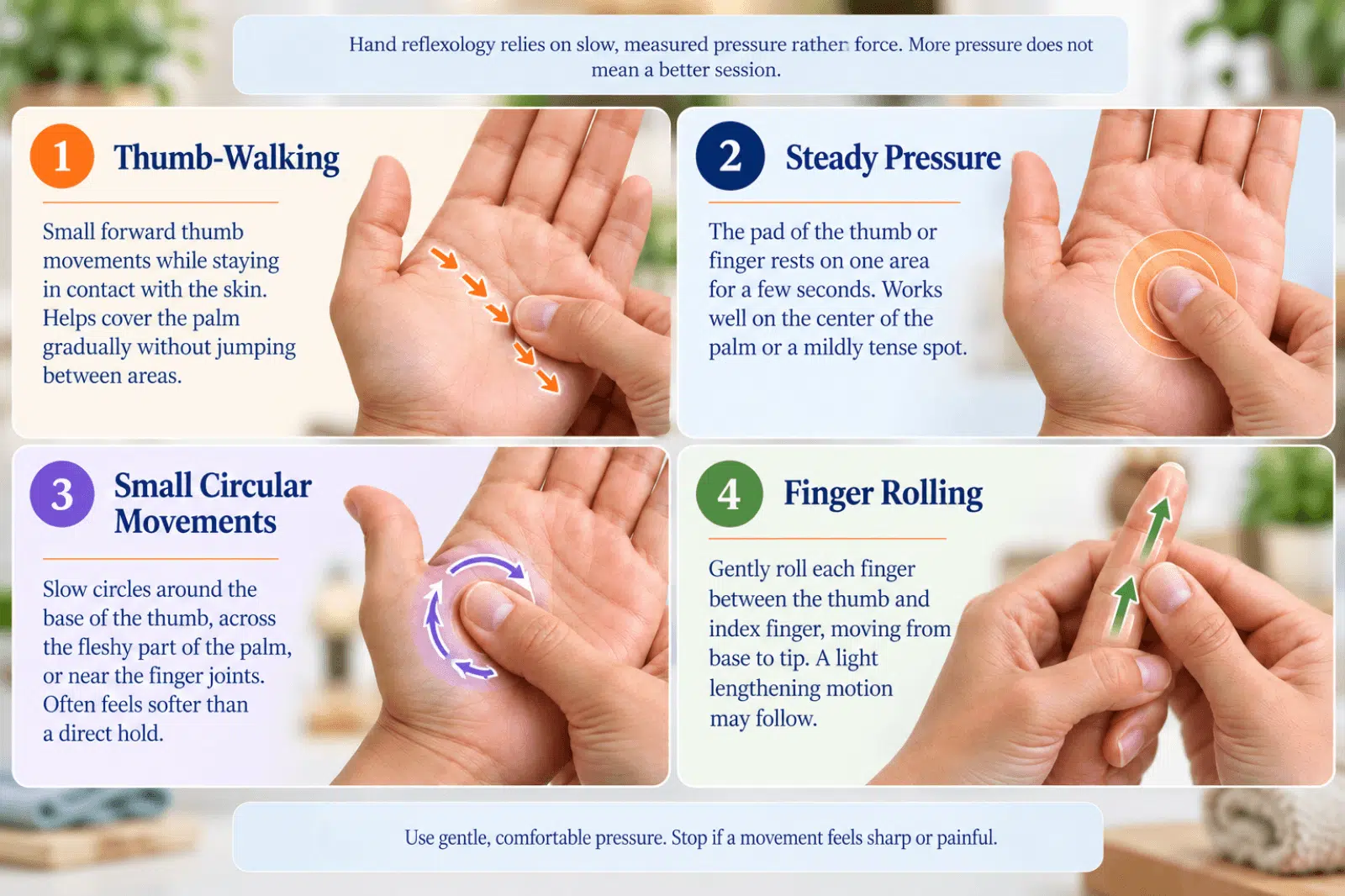
Hand reflexology relies on slow, measured pressure rather than force. More pressure does not mean a better session.
Thumb-walking uses a series of small forward movements while the thumb stays in contact with the skin. The thumb bends and straightens as it moves across the palm. This lets the practitioner cover an area gradually instead of jumping from one point to another.
For steady pressure, the pad of the thumb or finger rests on one area for a few seconds. This works well in the center of the palm or on a spot that feels mildly tense. Ease off if the sensation becomes sharp.
Slow circles can be used around the base of the thumb, across the fleshy part of the palm, or near the finger joints. Some people find this softer than a direct hold.
The practitioner gently rolls each finger between the thumb and index finger, moving from base to tip. A light lengthening motion may follow. Skip this technique on a finger that is injured, swollen, or painful.
A home routine can take only a few minutes and should leave your hands feeling comfortable.
Remove rings or tight bracelets. Rub your hands together for about 15 to 20 seconds, then support one hand with the other.
Start near the upper palm and thumb-walk toward the center. Continue across the lower palm using light, even pressure. Make a few slow circles around the base of the thumb, then roll each finger from base to tip. Finish with a gentle hold in the center of the palm while taking several slow breaths.
Repeat the same sequence on the opposite hand.
There is no need to keep working a sore spot until the tenderness disappears. Stop if you develop sharp pain, numbness, stronger tingling, or swelling. Hand pain that keeps returning deserves medical assessment rather than stronger pressure.
Most people notice pressure, warmth, movement, or mild tenderness during hand reflexology. The session should not feel sharply painful.
One area may feel more sensitive than another. A practitioner may describe it as a tender or reactive reflex, but that feeling does not prove that a body part shown on the chart has a problem.
Local factors can make a hand sensitive. Repetitive use, dry or irritated skin, arthritis, joint strain, nerve pressure, and previous injuries can all change how pressure feels.
You may also notice slower breathing, warmer hands, sleepiness, or a general sense of calm.
A professional hand reflexology session usually starts with a short health discussion and continues with pressure that can be adjusted to your comfort.
The practitioner may ask about injuries, surgery, swelling, skin problems, reduced sensation, medications, and the reason for your visit. The hands are then supported while the practitioner works through the fingers, thumb, palm, sides of the hand, and wrist.
Treatment length varies by setting. Some clinical studies have used 20-minute hand reflexology sessions, while appointments in wellness settings may be shorter or longer, especially when hand work is paired with another service.
Tell the practitioner if a movement feels too strong or causes an unusual sensation. A professional session should respond to your feedback rather than follow a fixed pressure level.
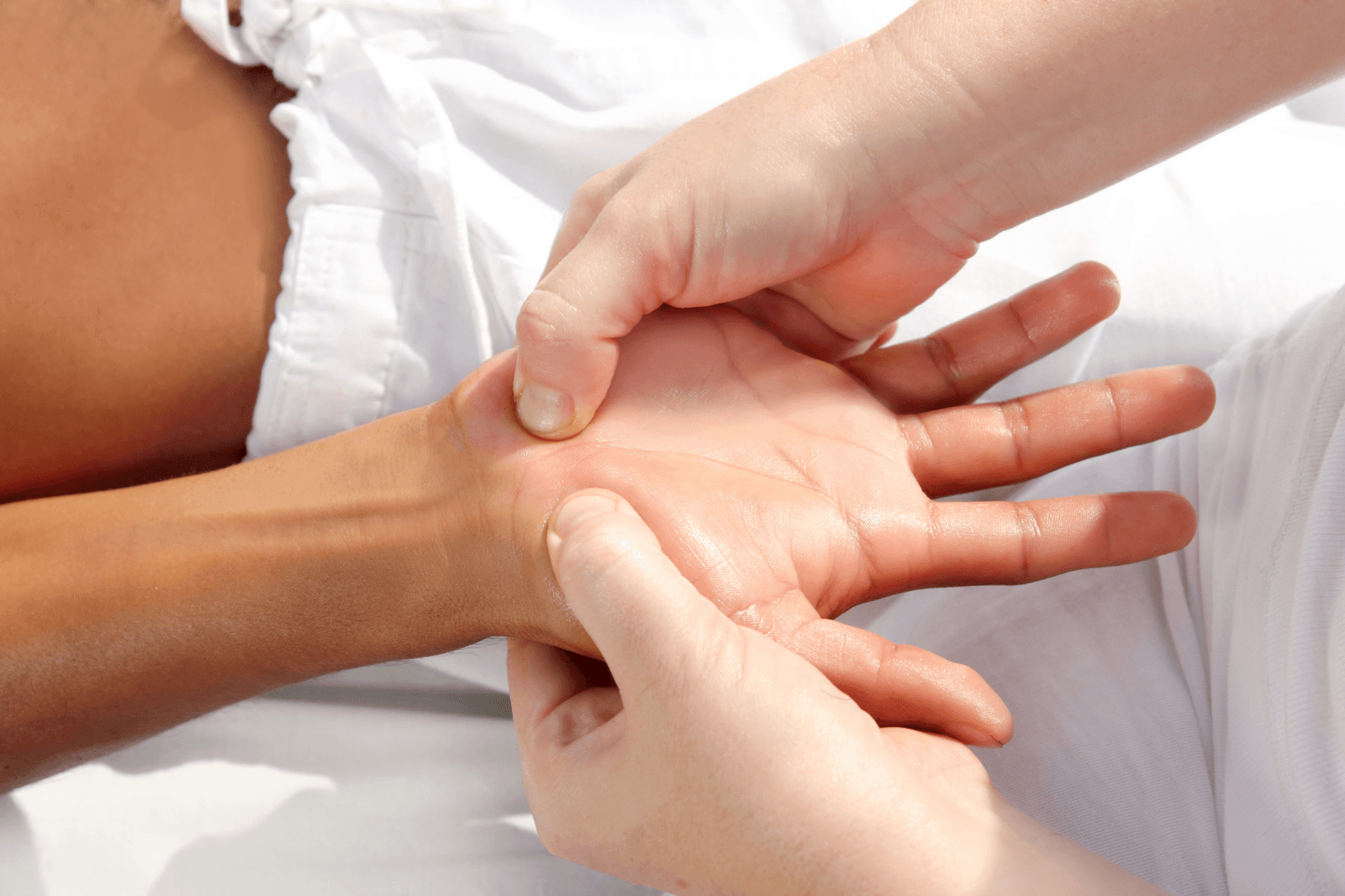
Hand reflexology is often chosen for relaxation, stress relief, and hands-on comfort rather than for treating a specific medical condition.
Because the hands are easy to access, reflexology can fit into a short self-care routine, a longer wellness appointment, or a session paired with another hands-on therapy. Some people prefer hand work when foot reflexology feels inconvenient or uncomfortable.
You may find hand reflexology appealing if you:
The goal is usually comfort and relaxation rather than creating a strong physical sensation. Hand reflexology should also be viewed as a complementary practice, not a substitute for medical evaluation when symptoms are persistent, severe, or unexplained.
Gentle hand reflexology is low risk for many people when the skin is healthy and the pressure stays comfortable.
Avoid direct pressure over open cuts, burns, infected skin, recent surgical areas, fresh injuries, or swollen joints.
Ask a healthcare professional before pressure work if you have poor sensation in your hands, unexplained swelling, a condition that affects circulation, or a bleeding or bruising problem. If you are pregnant, tell the practitioner and discuss any health concerns with your prenatal care team.
Seek medical care for symptoms that are new, severe, or getting worse. Reflexology should not delay evaluation of a medical problem.
Hand reflexology can be a simple way to add hands-on relaxation to your wellness routine. The right approach depends on what you want from the session, how your hands feel, and whether another therapy may be useful alongside it.
At ACA Acupuncture & Wellness, we take time to understand your symptoms, comfort level, and goals before recommending care. Depending on your needs, reflexology may be used on its own or alongside acupuncture, Tuina massage, cupping therapy, or moxibustion. Each method has a different role, giving your practitioner several ways to plan care around tension, discomfort, stress, and general wellness.
Ready to see whether reflexology fits your needs? Schedule an appointment with ACA Acupuncture & Wellness and talk with our team about the treatment options that make sense for you.
Gentle hand reflexology can be done regularly if your hands stay comfortable. Use light pressure when working on common pressure points, and reduce the pressure or take a break if your hands become sore or irritated.
No. Too much lotion can make thumb-walking difficult because the skin becomes slippery. A small amount can be used if your hands are dry.
No. A hand massage usually focuses on muscles, joints, and soft tissues in the hand itself. Reflexology follows a traditional map that associates hand areas with other parts of the body.
Yes. They may be used during the same course of care, but they remain separate methods. Reflexology uses mapped hand zones, while acupuncture uses defined acupuncture points selected according to an acupuncture treatment plan.
Neither is better for everyone. Hand reflexology is easy to use for self-care and can be convenient when the feet are difficult to access. Foot reflexology gives the practitioner a larger working surface and has been studied more often. Comfort and personal preference often guide the choice.
Sources:
National Center for Complementary and Integrative Health. (2020). Reflexology. U.S. Department of Health and Human Services.
Göktuna, G., Dağcan, N., & Gürol Arslan, G. (2025). The effect of hand reflexology massage on pain and anxiety after coronary artery bypass graft surgery: A double-blind, randomized, placebo-controlled trial. The Journal of Cardiovascular Nursing, 40(2), E57–E64. doi:10.1097/JCN.0000000000001033
Zeidy, P., Safdari, A., Kerami, A., & Safarabadi, M. (2025). Comparison of the effects of foot and hand reflexology on pain and anxiety in patients admitted to the cardiac intensive care unit. Advanced Biomedical Research, 14, 168. doi:10.4103/abr.abr_103_25
LOCATIONS
MANHATTAN
QUEENS
NEW JERSEY
CALIFORNIA

The over $4 billion US acupuncture market offers a great opportunity with over 10% annual growth rates and a continuing flow of new patients interested in the benefits of acupuncture.