

Cupping therapy for golfer’s elbow can help reduce inner elbow pain, forearm tightness, and movement sensitivity by using gentle suction to decompress irritated soft tissue around the wrist flexor and pronator muscles. It is best used as part of a complete recovery plan that also includes activity modification, stretching, progressive strengthening, and correction of the movements that overloaded the tendon in the first place.
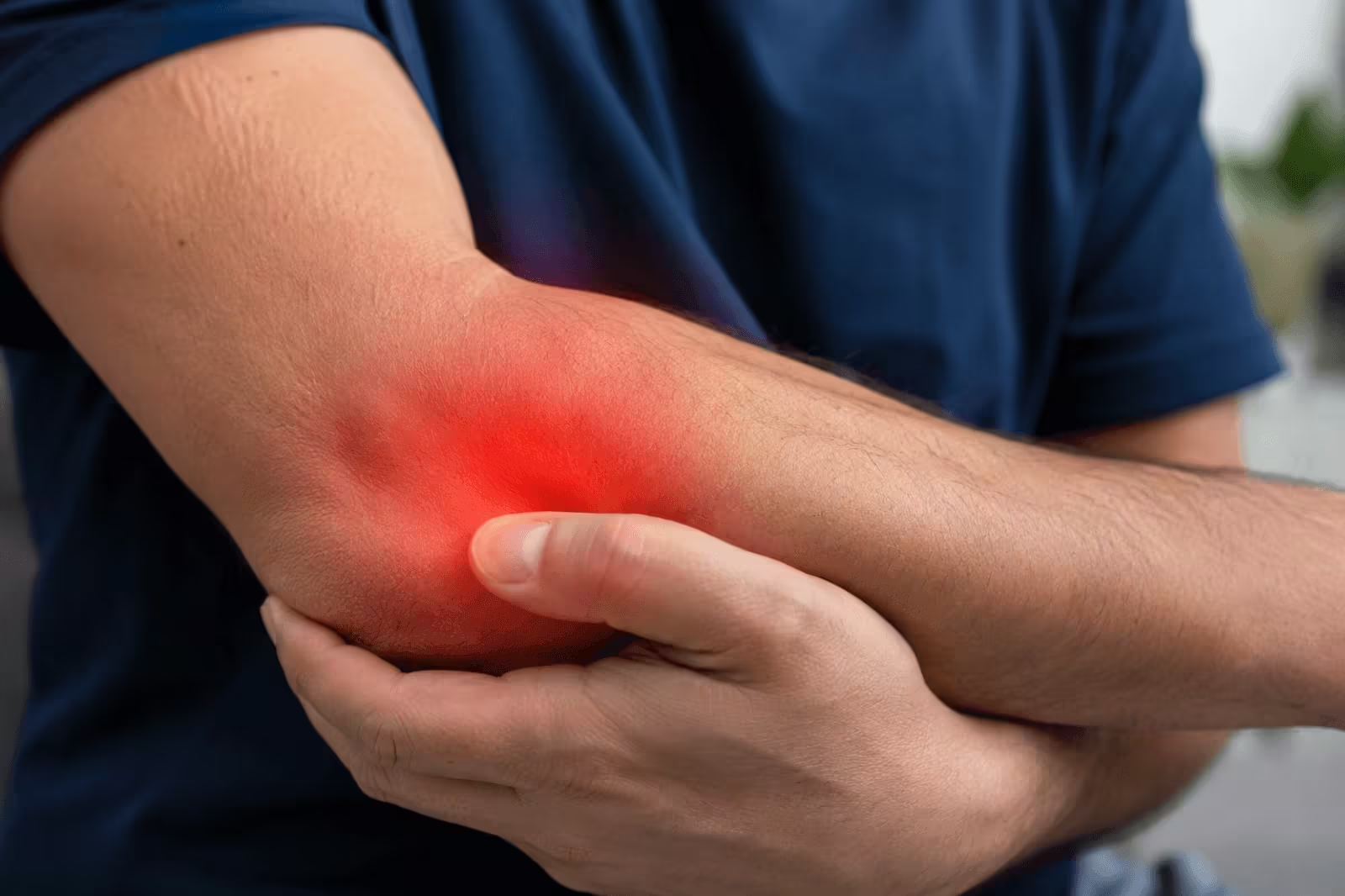
Golfer’s elbow, medically called medial epicondylitis or medial epicondyle tendinopathy, affects the tendon attachment on the inside of the elbow. The pain often appears during gripping, lifting, wrist flexion, forearm rotation, golf swings, weight training, tool use, and simple tasks such as opening jars or carrying bags. Because the wrist flexor and pronator muscles connect closely with the inner elbow, symptoms may also spread into the forearm, wrist, or hand during repeated gripping and twisting motions.
Cupping therapy for golfer’s elbow can help reduce inner elbow pain, forearm tightness, and movement sensitivity by using gentle suction to decompress irritated soft tissue around the wrist flexor and pronator muscles. It is best used as part of a complete recovery plan that also includes activity modification, stretching, progressive strengthening, and correction of the movements that overloaded the tendon in the first place.
Golfer’s elbow, medically called medial epicondylitis or medial epicondyle tendinopathy, affects the tendon attachment on the inside of the elbow. The pain often appears during gripping, lifting, wrist flexion, forearm rotation, golf swings, weight training, tool use, and simple tasks such as opening jars or carrying bags. Because the wrist flexor and pronator muscles connect closely with the inner elbow, symptoms may also spread into the forearm, wrist, or hand during repeated gripping and twisting motions.
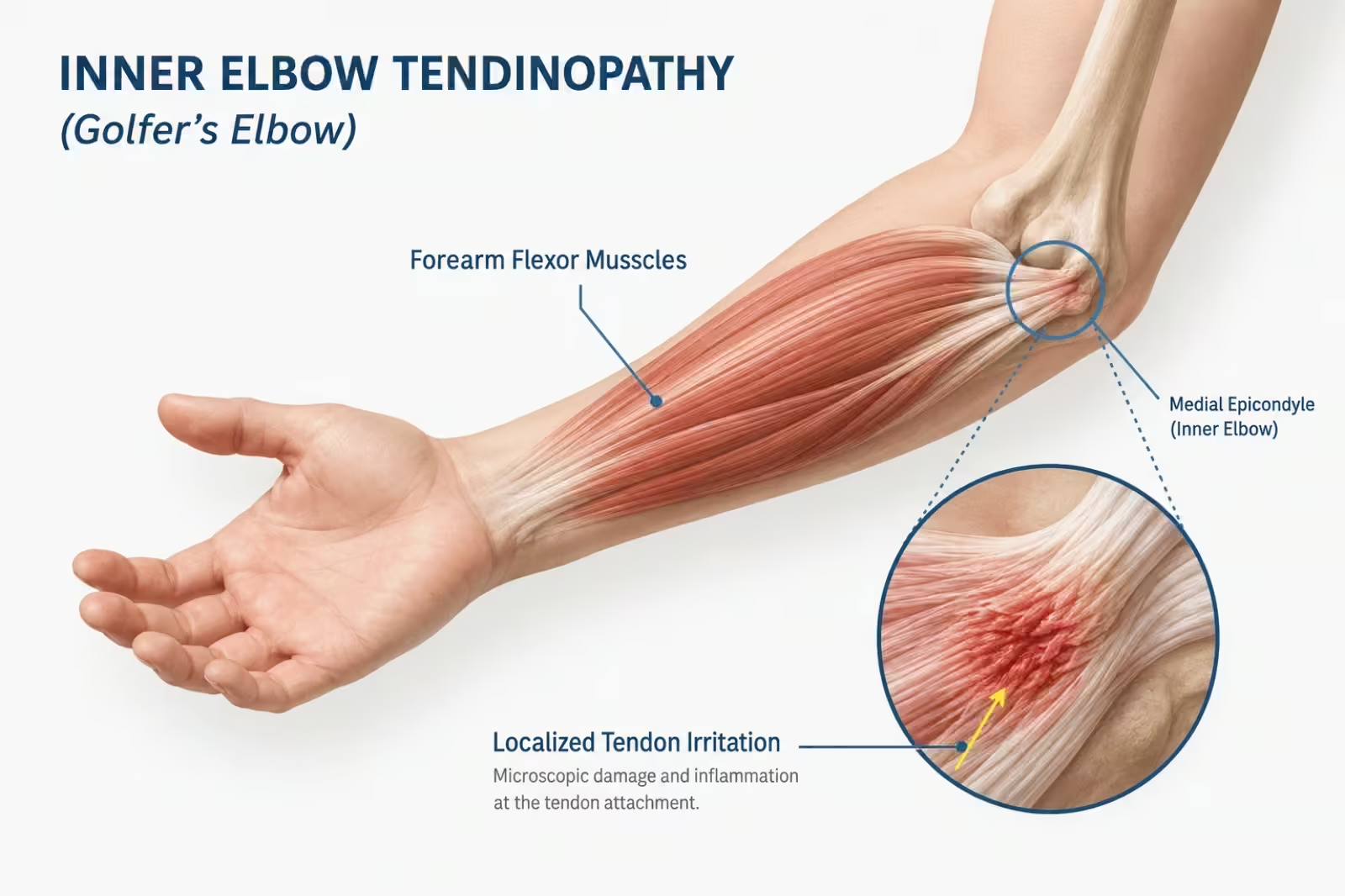
Golfer’s elbow is an overuse condition that causes pain and tenderness on the inside of the elbow where the wrist flexor and forearm pronator tendons attach to the medial epicondyle. It is commonly linked to repetitive gripping, wrist bending, forearm rotation, and high-load hand use.
Although the name points to golf, golfer’s elbow is not limited to golfers. It can affect weightlifters, tennis players, baseball players, climbers, tradespeople, gardeners, office workers, musicians, and anyone who repeatedly loads the forearm flexor muscles. Repetitive bending, grasping, and twisting can strain the tendons that connect the forearm and elbow, creating pain in the wrist, forearm, and elbow.
Medial epicondylitis is less common than tennis elbow, which affects the outside of the elbow. StatPearls notes that medial epicondylitis accounts for about 10% of epicondylitis cases, with a reported general population prevalence near 0.4%. This lower prevalence can make the condition feel overlooked, especially when many online resources focus more heavily on tennis elbow.
The key structure involved is the common flexor tendon. This tendon connects several forearm muscles to the inner elbow, including the pronator teres, flexor carpi radialis, palmaris longus, and flexor carpi ulnaris. These muscles help bend the wrist, grip objects, and rotate the forearm palm-down. When the tendon is repeatedly loaded beyond its current capacity, small areas of irritation, disorganized tendon remodeling, and pain sensitivity can develop.
Inner elbow pain can spread because the wrist flexors, forearm pronators, common flexor tendon, and nearby nerves work as one connected movement system. A problem at the medial epicondyle can create symptoms down the forearm and into the wrist during gripping, lifting, or twisting.
Many people describe golfer’s elbow as a sharp or aching pain directly on the bony point inside the elbow. Others feel a pulling sensation along the inner forearm, reduced grip strength, stiffness in the morning, or discomfort when shaking hands.
This symptom pattern makes sense anatomically. The muscles that attach near the inner elbow continue into the forearm and help control the wrist and fingers. If the tendon attachment is irritated, the body may protect the area by tightening surrounding muscles. That protective tension can make the forearm feel dense, ropey, or difficult to stretch.
The ulnar nerve also travels near the inner elbow. When symptoms include tingling, numbness, or electrical sensations into the ring and pinky fingers, the problem may involve ulnar nerve irritation rather than simple tendon pain. Cupping should not be used as a substitute for evaluation when nerve symptoms are present.
Cupping therapy can help golfer’s elbow by easing short-term pain, reducing forearm muscle tension, improving soft tissue mobility, and making rehabilitation exercises more comfortable. It does not cure tendon degeneration by itself and should be combined with progressive tendon loading.
Current evidence for cupping is strongest for short-term pain relief in broader musculoskeletal pain conditions, not specifically for golfer’s elbow alone. Research suggests that cupping may help reduce pain intensity and improve comfort in some musculoskeletal conditions, but the evidence is still limited and results can vary by condition, technique, treatment frequency, and patient response.
That distinction matters. Cupping can be useful when the main barrier is pain, stiffness, protective muscle guarding, or difficulty tolerating early rehab. It is less useful when the main problem is poor load capacity, heavy gripping habits, weak wrist flexors, poor lifting technique, or a golf swing that keeps overloading the same tendon.
The most practical view is this: cupping can help calm the system so the person can move better, but strengthening teaches the tendon to tolerate load again.
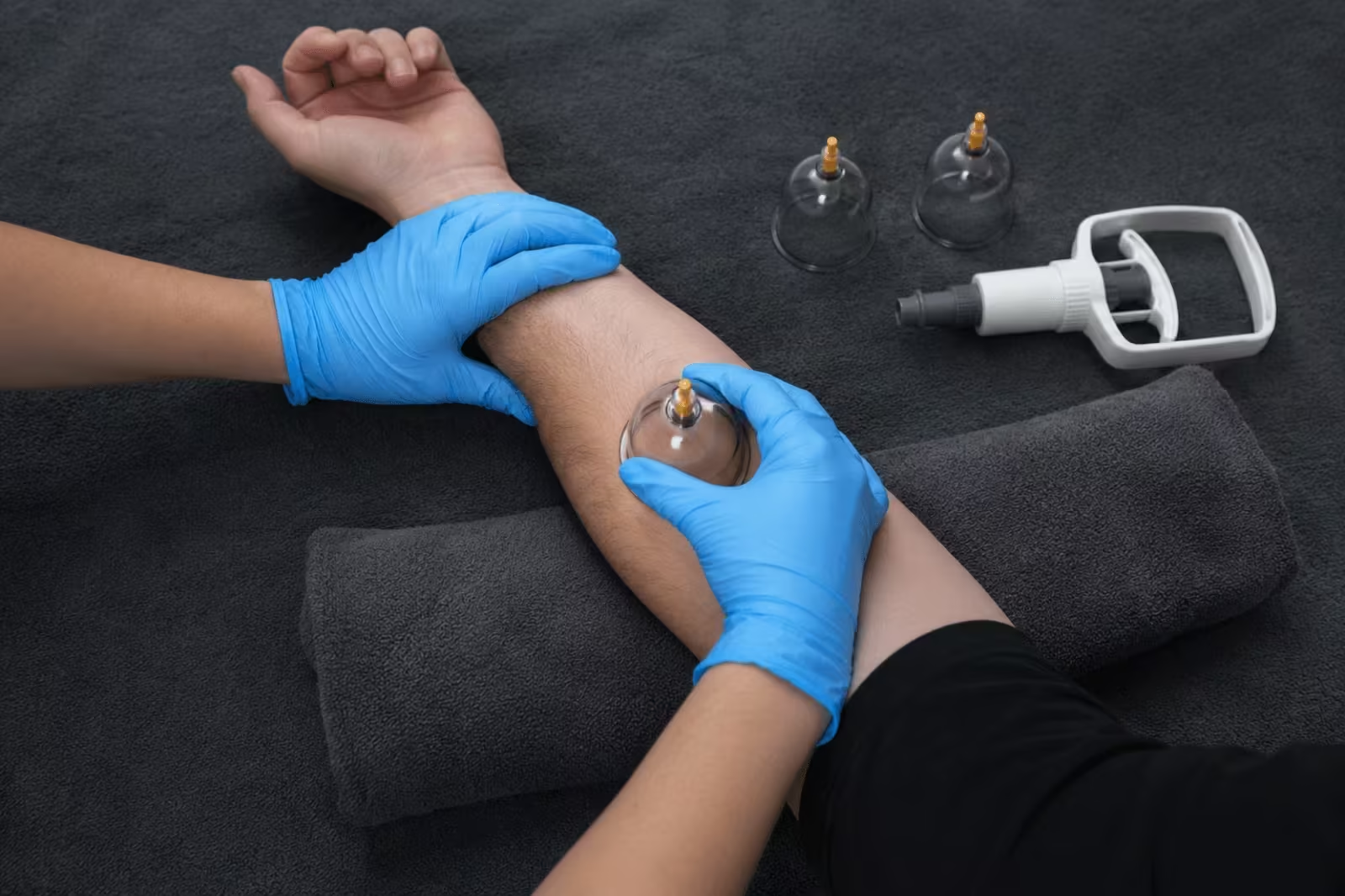
Cupping therapy uses suction to help release muscle tightness by creating negative pressure that lifts the skin and superficial soft tissue instead of pressing down into the muscle. This creates a decompressive effect that may reduce perceived tightness, improve local tissue movement, and change pain sensitivity.
Traditional massage, instrument-assisted soft tissue work, and manual release techniques usually apply compression. Cupping works differently. A cup is placed on the skin, suction is created, and the tissue is gently pulled upward. This is why cupping is often called myofascial decompression.
For golfer’s elbow, the goal is not to suction directly on the painful bone. The more useful target is usually the inner forearm muscle group that feeds tension into the common flexor tendon. Gentle suction along the flexor-pronator mass can help the forearm feel less guarded, especially when the muscles are tight from repeated gripping.
Cupping may also influence pain through the nervous system. The skin and fascia contain sensory receptors that help the brain interpret pressure, stretch, threat, and movement. By creating a novel sensory input, cupping may temporarily reduce pain sensitivity and improve comfort during movement.
This does not mean stronger suction is better. Severe bruising, intense pain, or aggressive pulling is not a sign of better treatment. Safe cupping for golfer’s elbow should feel therapeutic, not punishing, and it should be performed with proper skin care, clean equipment, and appropriate pressure levels.
Cupping therapy may benefit golfer’s elbow by reducing short-term pain, easing forearm tightness, improving wrist and elbow mobility, and helping the patient tolerate the exercises needed for longer-term recovery.
Pain relief is the most common reason people try cupping for golfer’s elbow. The suction may decrease protective muscle tension and reduce pain sensitivity in the forearm. This can make daily movements such as gripping a cup, turning a doorknob, or lifting a light object feel easier.
Pain relief should be viewed as a window of opportunity. The best use of that window is to restore motion, practice light loading, and identify the activity that triggered the pain.
Golfer’s elbow often comes with tightness in the wrist flexors and pronators. These muscles can feel overworked, especially after golf, lifting, typing, tool use, or gripping. Cupping may help the inner forearm feel less compressed and more mobile.
This is especially useful when a person feels discomfort not only at the elbow, but also through the muscular portion of the forearm.
When pain is high, people naturally avoid moving the elbow, wrist, or hand. That avoidance can increase stiffness. Gentle cupping may help the arm feel safe enough to move again, especially when followed by controlled wrist and forearm exercises.
Eccentric strengthening and progressive loading are essential for tendon recovery, but they can be difficult when the forearm is highly sensitive. Cupping may reduce symptoms enough to make early rehab more tolerable.
A recent review on eccentric exercise for medial epicondylitis concluded that eccentric exercise may reduce pain and improve function, particularly when used within multimodal conservative care, although the certainty of evidence remains low. This supports the practical approach of combining symptom-relieving therapies with structured strengthening.
Rest can help calm symptoms, but rest alone does not rebuild tendon capacity. Cupping may help people move from passive rest into active recovery when used at the right stage.
Cupping cannot repair an overloaded tendon by itself, correct poor lifting mechanics, rebuild grip strength, or remove the need for progressive rehabilitation. It is a supportive therapy, not a complete treatment plan.
This is where many people lose time. They find a therapy that reduces pain for a few days, return to heavy gripping too quickly, and then wonder why the pain keeps coming back. The issue is not that the therapy failed. The issue is that pain relief was mistaken for tissue readiness.
Golfer’s elbow improves when the tendon is exposed to the right amount of load at the right time. Too little load can leave the tendon underprepared. Too much load can flare symptoms. The recovery plan has to find the middle zone.
A good candidate for cupping therapy has inner elbow pain related to forearm tightness, repetitive gripping, wrist flexion, or mild to moderate tendon sensitivity without severe swelling, acute trauma, progressive nerve symptoms, or skin problems.
Cupping may be reasonable when symptoms include:
Cupping is not the best first step when symptoms suggest a more serious condition. Sudden pain after a pop, major swelling, bruising after trauma, inability to grip, fever, open wounds, spreading redness, or progressive numbness should be evaluated before any soft tissue therapy is used.
Inner elbow pain is not always golfer’s elbow. Similar symptoms can come from ulnar nerve irritation, ligament injury, neck-related nerve pain, arthritis, tendon tears, or other elbow conditions that require a different treatment plan.
This is one of the most important sections for both patient safety and content quality. Many articles treat all inner elbow pain as medial epicondylitis. In practice, that is too simple.
Possible lookalike conditions include:
| Condition | How It May Feel | Why It Matters |
| Cubital tunnel syndrome | Tingling, numbness, or burning into the ring and pinky fingers | The ulnar nerve may be irritated and should not be aggressively cupped |
| Ulnar collateral ligament sprain | Inner elbow pain during throwing or valgus stress | Common in throwing athletes and may require sport-specific evaluation |
| Cervical radiculopathy | Neck, shoulder, arm, or hand symptoms with nerve-like pain | The source may be the neck, not the elbow |
| Biceps or triceps tendon injury | Pain in the front or back of the elbow | Treatment targets differ from golfer’s elbow |
| Elbow arthritis | Deep joint stiffness, reduced range of motion, grinding | Soft tissue treatment alone may not address joint changes |
| Acute fracture or tendon tear | Sudden severe pain, bruising, swelling, weakness | Needs medical assessment |
Treatment for golfer’s elbow often begins with reducing or temporarily avoiding the activities that trigger inner elbow pain. Many cases improve with relative rest, symptom control, gentle mobility work, and progressive strengthening, but recovery can take months when the tendon has been irritated for a long time. Persistent, worsening, or unusual symptoms should be assessed by a qualified healthcare professional.
Cupping for golfer’s elbow is usually applied with light to moderate suction along the wrist flexor and pronator muscles of the inner forearm, while avoiding aggressive suction directly over the medial epicondyle and the ulnar nerve.
A careful session usually starts with assessment. The clinician may check pain location, grip tolerance, wrist flexion, wrist extension, forearm pronation, elbow range of motion, tenderness, and nerve symptoms. This helps determine whether cupping is appropriate and where it should be applied.
Static cupping means the cup stays in one place for a short period. For golfer’s elbow, static cups may be placed over tight forearm muscle tissue, not directly on the most irritated bony point. The goal is to reduce muscle guarding and sensitivity.
Static placement should be conservative around the inner elbow because the area is narrow and anatomically sensitive.
Dynamic cupping uses suction with slow movement of the cup along the forearm. This technique may be helpful when the forearm feels stiff or restricted. The cup is usually moved in the direction of the muscle fibers, often along the inner forearm rather than directly across the painful tendon attachment.
Gliding cupping should use enough lotion or medium to prevent skin drag. It should not create sharp pain.
Active motion cupping combines gentle suction with controlled movement. For example, a cup may be placed along the forearm flexor mass while the patient slowly bends and straightens the wrist. This can help connect tissue mobility with functional movement.
Active motion should be gentle. The purpose is to improve tolerance and control, not force through pain.
Cupping should feel like firm pulling, warmth, mild pressure, or a stretching sensation in the skin and soft tissue. It should not feel sharp, burning, electrical, or unbearable.
After treatment, the arm may feel lighter, looser, warmer, or mildly sore. Circular marks can appear and may last several days. Darker marks do not prove that the treatment worked better. They usually show local skin and capillary response to suction.
Stop or reduce suction if there is sharp pain, numbness, tingling, dizziness, skin tearing, intense burning, or symptoms traveling into the hand.
Cupping therapy is best understood as a symptom-relief and tissue-mobility tool. It may help reduce forearm tightness and make movement more comfortable, but it does not replace the treatments that rebuild tendon strength. Eccentric strengthening, activity modification, and load management are still the core parts of long-term golfer’s elbow recovery.
| Treatment | Main Role | Best Use |
| Cupping therapy | Reduces pain sensitivity and forearm tightness | Helpful before or alongside rehab exercises |
| Stretching | Maintains wrist and forearm mobility | Useful when stiffness limits movement |
| Eccentric strengthening | Builds tendon load capacity | Essential for long-term recovery |
| Isometric exercises | Calms pain and begins loading | Useful during early rehab |
| Bracing or counterforce strap | Reduces tendon strain during activity | Helpful for temporary support |
| Ice or heat | Manages pain and irritability | Useful based on symptom stage and preference |
| Massage or soft tissue therapy | Reduces muscle guarding | Helpful when compression is tolerated |
| Dry needling | Targets trigger points and neuromuscular sensitivity | Requires trained clinical application |
| Rest | Reduces acute irritation | Helpful early, but incomplete by itself |
The best results usually come from combining short-term pain relief with active rehabilitation. Cupping can help the arm feel less restricted, stretching can restore comfortable motion, and strengthening can improve the tendon’s ability to tolerate gripping, lifting, swinging, and twisting again.
The most effective golfer’s elbow recovery plan combines symptom control, tendon loading, movement correction, and recurrence prevention. Cupping can support this process, but it should not be the entire process.
The first goal is to reduce the activities that keep provoking pain. This does not always mean complete rest. It usually means relative rest.
Examples include:
Cupping may be used in this phase if the pain is not acute, severe, or linked to trauma. The goal is comfort and mobility, not deep tissue intensity.
Once pain is calmer, the next goal is to restore comfortable wrist, elbow, and forearm movement. Gentle wrist flexor stretching, elbow range of motion, and forearm rotation can help reduce stiffness.
Cupping may be used before movement work to make the forearm feel less guarded.
This is the most important phase for lasting recovery. The tendon has to learn to tolerate load again.
Useful exercises often include:
The load should be challenging but controlled. A simple pain scale can help guide exercise intensity: mild discomfort may be acceptable during tendon rehabilitation, but sharp pain, worsening symptoms, or soreness that lasts into the next day usually means the load is too high. Pain monitoring helps prevent the tendon from being overloaded too quickly while still allowing it to gradually rebuild strength.
When basic exercises become comfortable, the next step is gradual return to real-world load. This phase should match the person’s goals.
A golfer may reintroduce half swings before full swings. A lifter may return to lighter pulling movements before heavy deadlifts or chin-ups. A tradesperson may return to shorter tool-use intervals before full work intensity.
Cupping may still be useful during this stage, especially after higher-load sessions, but it should not be used to cover up poor recovery planning.
Golfer’s elbow often returns when the original overload pattern returns. Prevention requires ongoing attention to grip, technique, equipment, strength, and recovery.
Long-term prevention may include:
Exercises after cupping should be controlled, progressive, and matched to symptom tolerance. The goal is to use the temporary pain relief from cupping to build better movement and tendon capacity.
Extend the affected arm in front of the body with the elbow straight and palm facing up. Gently pull the fingers back with the other hand until a stretch is felt along the inner forearm.
Hold the stretch without forcing pain. This should feel like a mild to moderate stretch, not a sharp pull at the elbow.
Rest the forearm on a table with the palm facing up. Press the hand gently upward into the other hand without allowing movement. Hold for several seconds, then relax.
Isometrics can be useful when movement is painful but the tendon can tolerate light load.
Hold a light weight with the palm facing up. Use the other hand to help lift the wrist into flexion, then slowly lower the wrist down into extension using the affected side.
This exercise loads the wrist flexor tendon in a controlled way. It should be slow, smooth, and light at first.
Hold a light object such as a hammer or small dumbbell. Slowly rotate the forearm palm-up and palm-down while keeping the elbow supported.
This helps retrain the forearm pronators and supinators, which are often involved in gripping and twisting tasks.
Begin with gentle gripping using a soft ball or towel. Progress slowly. Heavy gripping too early can flare symptoms.
Grip work should come after pain has started to settle and wrist loading is tolerated.
The elbow often compensates when the shoulder, upper back, or trunk is not contributing well during sport or lifting. Rows, external rotation work, scapular control exercises, and trunk rotation drills may help reduce strain on the forearm.
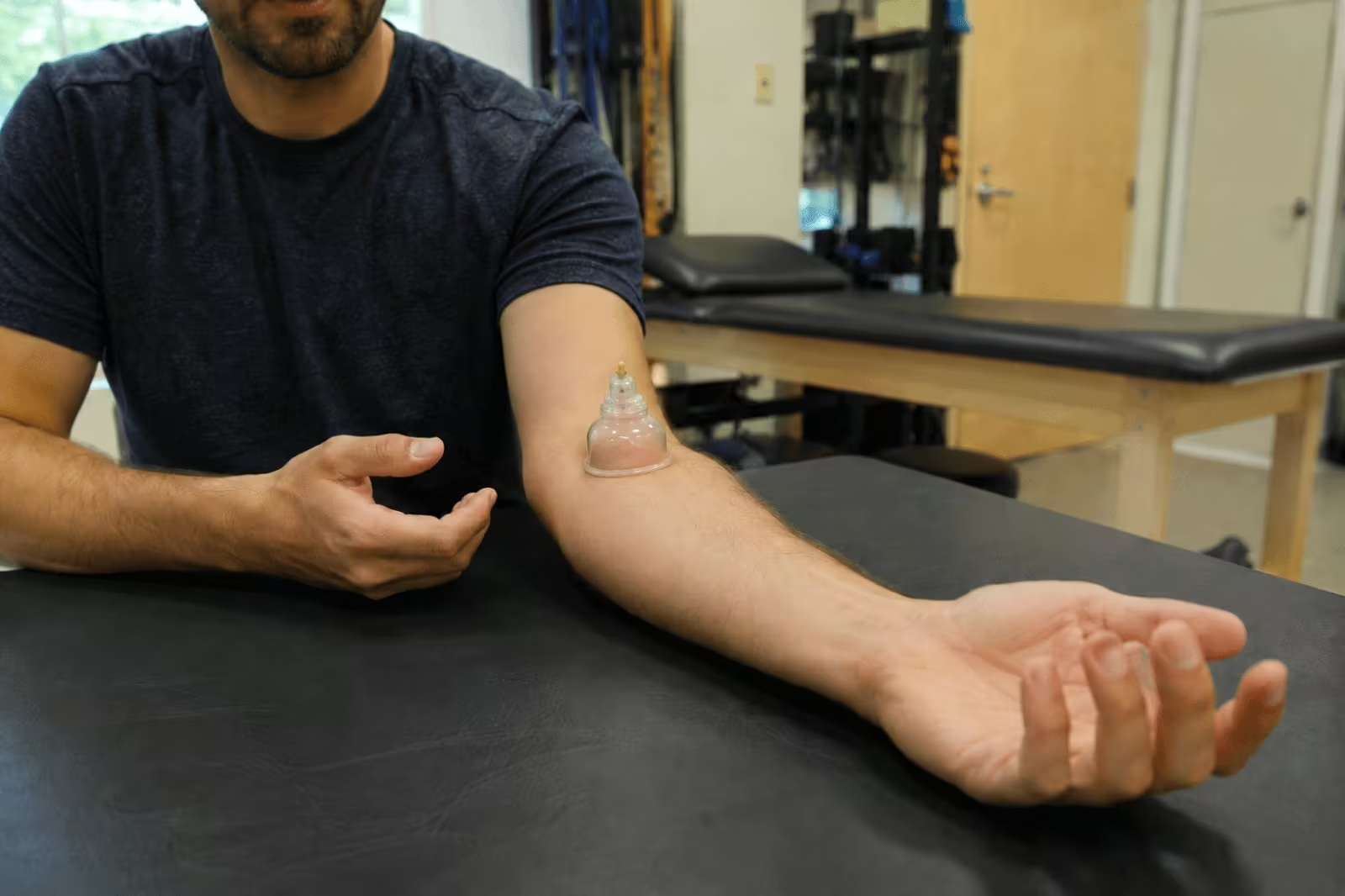
Cupping for golfer’s elbow is commonly used once weekly or every one to two weeks during the symptom-control phase, depending on irritability, skin response, and the broader rehabilitation plan. More frequent treatment is not automatically better.
A mild case may only need a few sessions alongside exercise and activity modification. A chronic case may need a longer plan that includes strengthening progressions, ergonomic changes, and sport-specific or work-specific load management.
Progress should be measured by function, not just how the elbow feels immediately after treatment. Useful progress markers include:
If cupping creates only short relief and symptoms return after every gripping task, the tendon-loading plan needs to be adjusted.
After cupping for golfer’s elbow, use gentle movement, avoid heavy gripping for the rest of the day, and monitor symptoms over the next 24 to 48 hours. The best aftercare protects the short-term benefit while keeping the tendon active enough to adapt.
Good aftercare includes:
A mild increase in soreness can happen. Strong pain, spreading redness, blistering, numbness, or tingling is not a normal recovery target.
Home cupping around the inner elbow should be approached carefully because the ulnar nerve, sensitive tendon attachments, and narrow soft tissue space make the area easier to irritate. Professional assessment is safer when pain is persistent, recurring, or associated with weakness or tingling.
Self-cupping often goes wrong for three reasons. The suction is too strong, the cup is placed directly over the painful bony point, or the person uses cupping instead of correcting the activity that caused the pain.
Safer home strategies include:
Wet cupping, bloodletting, or aggressive skin-breaking techniques should not be done at home for golfer’s elbow.
Cupping can cause temporary circular marks, mild soreness, skin tenderness, and bruising-like discoloration. It should not be used over open wounds, active skin infection, severe swelling, unexplained bruising, or areas with altered sensation.
People should get medical clearance before cupping if they have a bleeding disorder, take blood thinners, have fragile skin, have uncontrolled diabetes-related skin problems, have a history of fainting during treatment, or have unexplained neurological symptoms.
Seek evaluation before cupping if symptoms include:
Cupping should reduce irritability, not increase it. If each session causes a flare that lasts several days, the dose, placement, or diagnosis may be wrong.
Golfer’s elbow usually comes back because pain relief happens faster than tendon adaptation. The arm feels better, activity increases too quickly, and the common flexor tendon is overloaded again before it has rebuilt capacity.
Common recurrence patterns include:
The elbow may feel better after rest or cupping, but the tendon may still be underprepared for heavy gripping. Pull-ups, deadlifts, rows, golf swings, hammering, and tool use can quickly bring symptoms back.
The forearm often works harder when the shoulder, scapula, trunk, or hip does not contribute well. This is especially true in golf, throwing sports, racquet sports, and lifting.
Pain reduction is valuable, but it is not the same as strength recovery. Grip endurance, wrist flexion tolerance, and forearm rotation control matter more for long-term success.
Eccentric loading helps expose the tendon to controlled tension. Without progressive loading, the tendon may stay sensitive to the same activities that caused the injury.
Poor swing mechanics, excessive grip pressure, wrist-heavy lifting, awkward tool handles, and unsupported desk posture can all keep reloading the medial elbow.
Golfer’s elbow recovery should match the activity that caused the overload. A golfer, weightlifter, desk worker, and carpenter may share the same pain location, but they rarely need the exact same plan.
Golfers should look at grip pressure, swing volume, wrist position, warm-up quality, and club interaction with the ground. Hitting many balls off mats, gripping too tightly, or repeatedly striking the turf can increase stress on the inner elbow.
A gradual return may start with putting and chipping, then half swings, then controlled full swings. Pain during and after play should guide progression.
Lifters should temporarily reduce movements that provoke gripping and wrist flexor strain. Pull-ups, heavy rows, deadlifts, curls, and front rack positions may need modification.
Straps, neutral grips, lighter loads, and slower progressions can help maintain training while reducing tendon stress.
Tradespeople often struggle because the painful activity is part of work. Tool handle size, vibration exposure, repetitive wrist flexion, carrying loads, and sustained gripping should be reviewed.
Small changes, such as alternating hands, using padded handles, taking microbreaks, and varying tasks, can reduce cumulative strain.
Desk work can contribute when the wrist stays flexed, the mouse is gripped tightly, or the forearm rests on a hard edge. Ergonomic changes may include a relaxed mouse grip, neutral wrist position, forearm support, keyboard adjustment, and movement breaks.
Lifting children, carrying bags, gripping car seats, and repetitive household tasks can keep the tendon irritated. Using both arms, changing carrying positions, and reducing sustained one-handed gripping can help.
Bruising is not necessary for cupping to work. The goal of cupping for golfer’s elbow is symptom relief, tissue mobility, and improved movement tolerance, not severe discoloration.
Some skin marks are common after cupping. They can vary based on suction strength, treatment duration, skin sensitivity, and local circulation. However, darker marks do not prove a better therapeutic response.
For inner elbow pain, conservative dosing is especially important. The medial elbow is not an area where aggressive suction should be used casually.
Golfer’s elbow can improve within weeks when symptoms are mild and load is managed early, but chronic or recurring cases may take several months. Tendons adapt slowly, especially when the person must keep using the arm for work, sport, or daily tasks.
This is why the recovery plan should not rely only on how the elbow feels after one session. Short-term pain relief can be helpful, but lasting recovery depends on gradual loading, symptom tracking, and improving the elbow’s tolerance over time.
A realistic recovery plan tracks:
The goal is not just less pain. The goal is a stronger, more tolerant elbow that can handle the person’s actual life.
Cupping therapy can be a valuable part of golfer’s elbow care because it may reduce inner elbow pain, ease forearm tightness, and help the arm tolerate movement again. Its greatest value is not as a stand-alone cure, but as a bridge between pain relief and active rehabilitation.
The best recovery plan treats golfer’s elbow as a tendon-load problem. Cupping can calm irritated soft tissue, stretching can restore comfortable motion, strengthening can rebuild tendon capacity, and better technique can reduce repeated overload. When these pieces work together, inner elbow pain is less likely to keep returning.
At ACA Acupuncture & Wellness, care is designed to go beyond temporary relief. Our team helps patients understand the source of inner elbow pain, reduce soft tissue restriction, restore better movement, and build a stronger recovery plan for work, sport, and daily life. If golfer’s elbow is limiting your grip, swing, training, or routine, schedule an appointment with us and take the next step toward lasting relief.
Sources
American Academy of Orthopaedic Surgeons. (n.d.). Therapeutic exercise program for epicondylitis: Tennis elbow/golfer’s elbow. OrthoInfo.
Jia, Y., Dong, X., Chai, Y., Bai, Z., Sun, T., & Hou, X. (2025). Effects of cupping therapy on chronic musculoskeletal pain and collateral problems: A systematic review and meta-analysis. BMJ Open, 15(5), e087340.
Reece, C. L., Li, D., & Susmarski, A. J. (2024). Medial epicondylitis. In StatPearls. StatPearls Publishing.
The quickest reliable way to improve golfer’s elbow is to stop or reduce the activity that triggers the pain, calm the irritated tendon, and begin a structured stretching and strengthening plan once symptoms allow. Cupping may help reduce short-term pain and forearm tightness, but lasting recovery usually depends on rebuilding tendon strength and improving grip, wrist, and forearm mechanics. Golfer’s elbow can take several months to fully heal, especially when the tendon has been irritated for a long time.
Cupping is not recommended when inner elbow pain follows a sudden injury, fall, pop, or direct trauma. It should also be avoided over open wounds, skin infections, severe swelling, unexplained bruising, fragile skin, or areas with numbness or altered sensation. People with bleeding disorders, those taking blood thinners, or those with progressive tingling, weakness, or nerve symptoms should get medical clearance before cupping.
Do not keep forcing painful gripping, heavy lifting, wrist curls, pull-ups, golf swings, or tool use through sharp inner elbow pain. Do not rely on rest alone for weeks without rebuilding strength, and do not use cupping, massage, or stretching to cover up an activity that keeps irritating the tendon. Avoid aggressive suction, deep pressure directly over the painful bony point, and exercises that cause symptoms to worsen for more than 24 to 48 hours.
The root cause of golfer’s elbow is repeated overload of the wrist flexor and forearm pronator tendons where they attach to the inner elbow. This overload often comes from repetitive gripping, lifting, swinging, throwing, twisting, or wrist flexion. Over time, the common flexor tendon can become irritated, painful, and less tolerant of load.
Golfer’s elbow often does not go away because the tendon keeps being reloaded before it has recovered enough strength. Common reasons include returning to golf or lifting too soon, gripping too tightly, skipping strengthening exercises, poor wrist or shoulder mechanics, repetitive work demands, or mistaking short-term pain relief for full tendon healing. If symptoms keep returning, the recovery plan likely needs better load management and progressive strengthening.
Several conditions can be mistaken for golfer’s elbow, including cubital tunnel syndrome, ulnar nerve irritation, ulnar collateral ligament injury, cervical radiculopathy, elbow arthritis, tendon tears, and pain referred from the shoulder or neck. Tingling, numbness, burning, hand weakness, major swelling, or pain after trauma may point to something other than simple medial epicondylitis.
LOCATIONS
MANHATTAN
QUEENS
NEW JERSEY
CALIFORNIA

The over $4 billion US acupuncture market offers a great opportunity with over 10% annual growth rates and a continuing flow of new patients interested in the benefits of acupuncture.
