
Chinese herbs for high cholesterol are used in Traditional Chinese Medicine (TCM) to address patterns associated with digestion, fluid metabolism, and circulation. Certain herbal ingredients may help improve cholesterol levels, although their effectiveness depends on the preparation and available clinical evidence.
High cholesterol often develops without obvious symptoms. Many people discover elevated levels during routine blood tests and begin looking for ways to support their long-term cardiovascular health.
At ACA Acupuncture & Wellness, we offer personalized Chinese herbal consultations tailored to your health concerns, medical history, and individual needs. We help you explore traditional herbal approaches while prioritizing safety and compatibility with your existing healthcare plan.
Disclaimer: Chinese herbal medicine should complement, not replace, conventional medical care. Some herbs may cause side effects or interact with prescription medications, including statins. Consult your healthcare provider before using herbal products, and never discontinue prescribed treatments without medical guidance.
Chinese herbs for high cholesterol are used in Traditional Chinese Medicine (TCM) to address patterns associated with digestion, fluid metabolism, and circulation. Certain herbal ingredients may help improve cholesterol levels, although their effectiveness depends on the preparation and available clinical evidence.
High cholesterol often develops without obvious symptoms. Many people discover elevated levels during routine blood tests and begin looking for ways to support their long-term cardiovascular health.
At ACA Acupuncture & Wellness, we offer personalized Chinese herbal consultations tailored to your health concerns, medical history, and individual needs. We help you explore traditional herbal approaches while prioritizing safety and compatibility with your existing healthcare plan.
Disclaimer: Chinese herbal medicine should complement, not replace, conventional medical care. Some herbs may cause side effects or interact with prescription medications, including statins. Consult your healthcare provider before using herbal products, and never discontinue prescribed treatments without medical guidance.
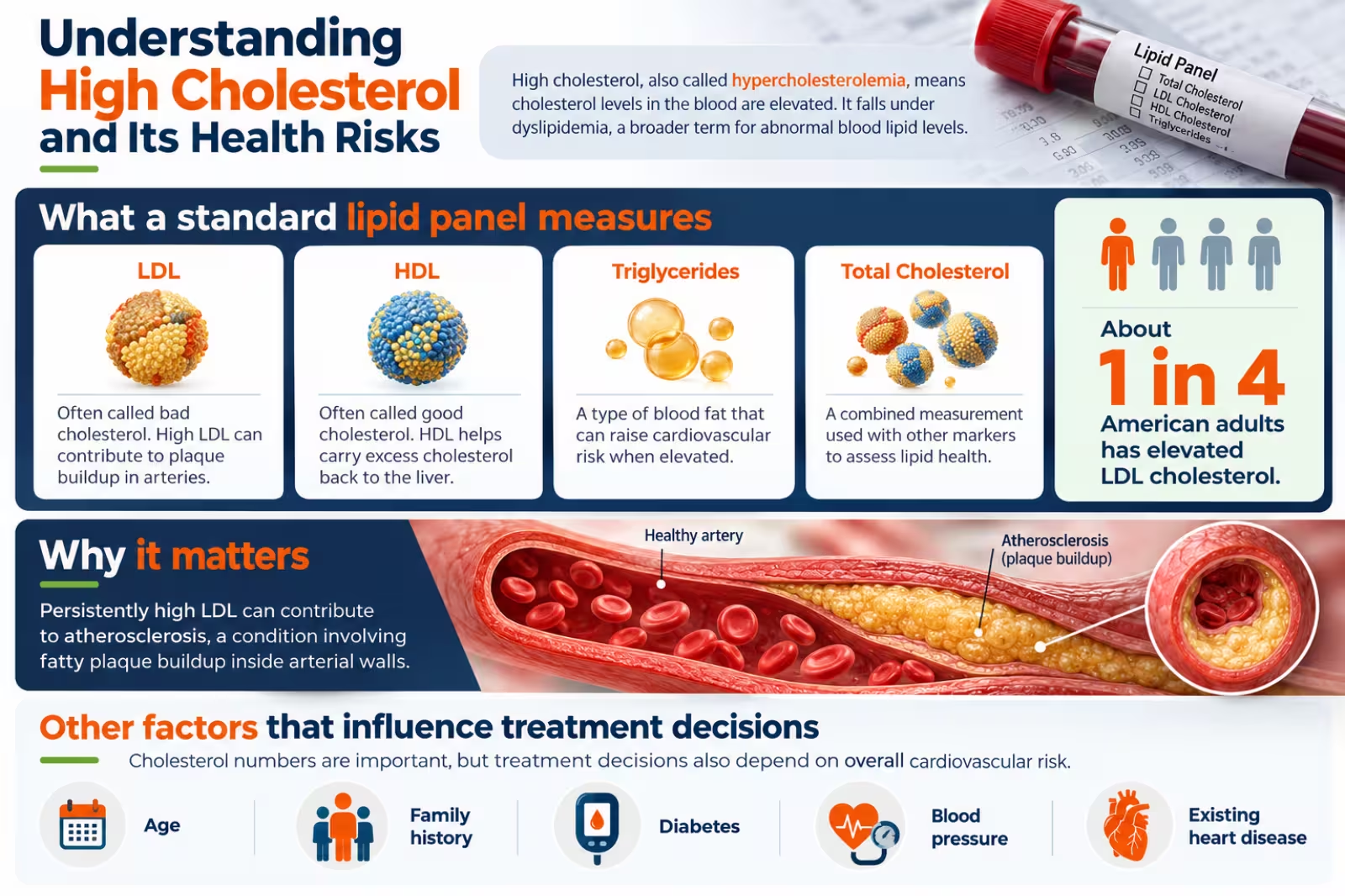
High cholesterol, also called hypercholesterolemia, occurs when cholesterol levels in the bloodstream become elevated. It falls under dyslipidemia, a broader term describing abnormal blood lipid levels.
A standard lipid panel measures several components:
Approximately one in four American adults has LDL cholesterol levels of 130 mg/dL or higher, according to national cardiovascular health statistics.
Persistently high LDL can contribute to atherosclerosis, a condition involving fatty plaque accumulation inside arterial walls.
Age, family history, diabetes, blood pressure, and existing heart disease also influence treatment decisions.
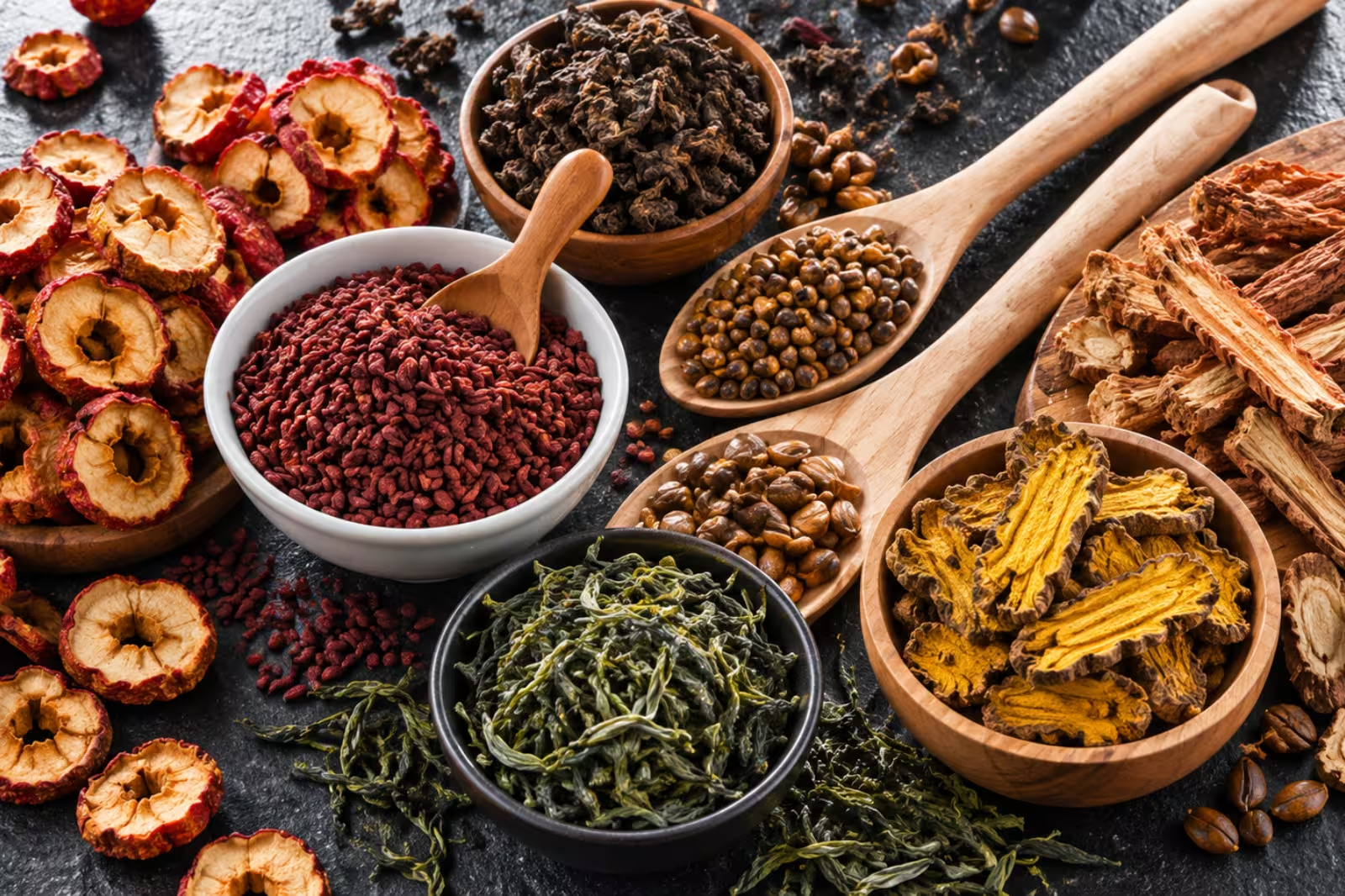
Hawthorn, red yeast rice, and berberine are among the better-studied Chinese herbal ingredients for cholesterol management. Other traditional herbs have promising laboratory findings but less convincing human evidence.
Shan Zha, or Crataegus pinnatifida, is traditionally used to address food stagnation and discomfort after heavy meals.
Its flavonoids and other plant compounds have been studied for their effects on lipid metabolism.
Clinical findings suggest that herbal preparations containing hawthorn may help improve total cholesterol and triglyceride levels. However, their effects on LDL cholesterol are less convincing compared with conventional cholesterol-lowering medications.
The available evidence has methodological limitations, and many preparations studied contained multiple herbs rather than hawthorn alone.
Further high-quality research is needed to establish its effectiveness as a cholesterol-lowering treatment.
Red yeast rice is produced by fermenting rice with certain strains of Monascus mold.
Some preparations contain monacolin K, a substance chemically identical to the prescription cholesterol medication lovastatin.
Monacolin K inhibits an enzyme involved in cholesterol production, explaining the LDL reductions observed with certain preparations.
However, the amount of this compound varies widely between products, making their effectiveness and safety difficult to predict. In the United States, red yeast rice products containing enhanced or added lovastatin cannot legally be marketed as dietary supplements.
Red yeast rice can cause side effects similar to prescription statins, including muscle injury, liver problems, and potentially serious drug interactions. Combining it with cholesterol-lowering medications, particularly statins, may increase these risks.
Some products may also contain citrinin, a contaminant associated with kidney damage.
People taking prescription cholesterol medications should consult their prescribing healthcare professional before considering red yeast rice. Its potential benefits must be weighed against these safety concerns, and it should not replace prescribed treatment without medical guidance.
Huang Lian, commonly derived from Coptis chinensis, contains the plant alkaloid berberine.
Berberine has attracted research interest because it may influence liver LDL receptor activity and cholesterol processing.
Clinical research suggests that berberine can lower LDL cholesterol by an average of approximately 18 milligrams per deciliter (mg/dL) compared with placebo. Modest reductions in triglyceride levels have also been observed.
These findings indicate potential benefits for cholesterol management, although individual responses vary. More research is needed to determine whether these improvements translate into long-term protection against heart disease.
The results primarily apply to the berberine preparations studied and should not be assumed to apply to whole Coptis root or every herbal formula containing it.
Berberine may also cause digestive side effects and interact with certain prescription medications. Professional guidance is recommended before use.
Dan Shen, also called red sage root, is traditionally used in formulas associated with blood stasis.
Its compounds, including tanshinones and salvianolic acids, have been investigated for possible effects on vascular function and inflammation.
Despite this research interest, human evidence remains insufficient to establish Dan Shen as a reliable standalone cholesterol-lowering treatment.
Dan Shen may also interact with anticoagulant medications, particularly warfarin, potentially increasing bleeding risks. Patients taking blood-thinning medications should seek medical advice before using products containing this herb.
Cassia seed is traditionally associated with bowel regulation and certain liver-related patterns.
Its polysaccharides and other plant compounds have been investigated for possible effects on bile acid handling and intestinal cholesterol absorption.
Much of this evidence comes from laboratory or animal studies.
Human research has not established a dependable cholesterol-lowering dose or long-term safety profile.
Cassia seed may also produce laxative effects and digestive discomfort.
Pu-erh is a fermented tea containing compounds such as theabrownin, which researchers have investigated for effects on gut microbes and bile acid metabolism.
Evidence that ordinary pu-erh tea consumption meaningfully lowers cholesterol in humans remains limited.
Green tea has somewhat stronger clinical evidence, with studies reporting small reductions in total and LDL cholesterol.
Tea consumption should not be treated as equivalent to concentrated extracts, which may have different safety considerations. Some concentrated green tea extracts have been associated with liver problems.
Traditional Chinese Medicine evaluates high cholesterol through pattern differentiation, a diagnostic process that examines symptoms, digestive function, and traditional concepts of circulation and energy movement.
Cholesterol has no direct historical equivalent in TCM. Practitioners instead assess several patterns that may occur alongside metabolic concerns.
Phlegm-dampness describes the accumulation of substances that the body is considered unable to process or distribute properly.
This pattern may be associated with digestive heaviness, bloating, fatigue, or a sensation of fullness.
TCM treatment traditionally focuses on improving fluid movement and digestive function.
Phlegm-dampness is a traditional diagnostic concept, not a laboratory measurement of cholesterol or arterial plaque.
Blood stasis describes impaired blood movement within the traditional Chinese medical framework.
Practitioners may identify this pattern through persistent discomfort, tongue characteristics, and other clinical observations.
Treatment may involve herbs traditionally associated with blood movement. These applications should not be confused with proven methods of clearing blocked arteries.
The TCM spleen represents functions related to digestion, nutrient processing, and fluid distribution.
People classified with spleen qi deficiency may report tiredness, reduced appetite, loose stools, or abdominal discomfort.
Dietary recommendations often include regular meals and easily digested foods. Traditional approaches to nourishing the spleen through food reflect these principles.
Liver qi stagnation is associated with disrupted energy movement and may be considered when someone experiences emotional tension, irritability, or digestive discomfort.
The TCM liver concept differs from the physical liver, which plays a direct role in cholesterol production and metabolism.
Identifying liver qi stagnation does not establish that a person has liver disease or abnormal cholesterol production.
Traditional herbal formulas combine ingredients according to a TCM pattern, while standardized extracts are prepared with more consistent ingredient specifications.
Xuezhikang is a red yeast rice-derived extract studied in clinical trials for its lipid-lowering properties. Its findings cannot automatically be applied to every commercially available red yeast rice product.
Xue Fu Zhu Yu Tang is a classical multi-herb formula associated with blood stasis patterns. Although researchers have investigated its vascular effects, evidence for cholesterol treatment remains limited.
Formulas differ in composition, preparation, and intended traditional use.
Practitioners draw from a wide range of medicinal herbs used in Chinese medicine, selecting ingredients according to established traditional classifications and the patient’s assessment.
Clinical research supports modest lipid improvements from selected herbal ingredients, but most Chinese herbal formulas lack convincing evidence that they prevent heart attacks or strokes.
An important distinction exists between lowering a laboratory value and reducing cardiovascular events.
Many herbal studies measure cholesterol changes over relatively short periods. Such trials may identify biological effects, but they cannot necessarily determine long-term protection against arterial disease.
Research quality also varies.
Some studies involve relatively small groups, inconsistent formulations, or limited adverse-event reporting. Others examine purified compounds rather than the whole herbs traditionally prescribed.
These differences matter when interpreting results.
For example, the LDL reductions observed with berberine reflect averages from controlled clinical studies, not guaranteed results for every individual. Similarly, the effectiveness of red yeast rice depends heavily on the active compounds present in a particular preparation.
Evidence should be judged according to the actual product tested, the measured outcome, and the duration of follow-up.
A Chinese herbal consultation usually begins with a review of medical history, symptoms, dietary patterns, sleep, and current medications.
Traditional tongue and pulse assessments may help practitioners identify a TCM pattern.
The next step involves deciding whether herbal treatment is appropriate and selecting a suitable preparation.
Depending on the circumstances, herbs may be prescribed as granules, teas, capsules, or prepared formulas.
Practitioners should review possible medication interactions and coordinate with the patient’s medical provider when necessary.
A lipid panel provides an objective way to track cholesterol changes. For many patients, repeat testing after treatment adjustments helps determine whether the overall management plan is working.

A heart-healthy diet, regular physical activity, and appropriate medical treatment remain the foundation of cholesterol management, with TCM dietary practices serving as an optional complementary approach.
Traditional Chinese dietary principles often emphasize cooked vegetables, regular meals, and foods selected according to digestive tolerance.
These practices can coexist with established dietary recommendations.
Oats, beans, lentils, vegetables, nuts, and other fiber-rich foods can help improve cholesterol levels.
Replacing saturated fats with unsaturated fats also supports LDL reduction.
People interested in traditional food practices may also consider Chinese medicine principles for everyday meals, including food preparation, meal timing, and digestive comfort.
Regular movement, adequate sleep, and avoiding tobacco remain important for cardiovascular health.
Chinese herbal products can cause side effects, interact with medications, and vary in quality and potency. Natural ingredients are not necessarily risk-free.
Red yeast rice requires particular caution because some preparations contain monacolin K, a compound chemically identical to the prescription statin lovastatin. Combining red yeast rice with statins or other cholesterol-lowering medications may increase the risk of muscle injury and liver damage. Some products may also contain citrinin, a contaminant associated with kidney toxicity.
Other potential concerns include:
Pregnant or breastfeeding individuals and people with liver or kidney conditions should avoid self-prescribing herbal supplements. Anyone experiencing severe muscle pain, weakness, or dark urine while taking cholesterol-related herbal products should seek prompt medical attention.
Managing high cholesterol requires a thoughtful approach that considers your medical history, lifestyle, and overall health. Chinese herbal medicine may offer complementary support when used alongside a heart-healthy diet, regular cholesterol testing, and appropriate medical treatment. Consulting a qualified practitioner can help you understand whether herbal care is suitable for your individual needs.
At ACA Acupuncture & Wellness, our practitioners provide personalized Chinese herbal consultations based on your health concerns, current medications, and wellness goals. Our team can help you explore suitable herbal options while encouraging you to stay in touch with your medical provider about your cholesterol management. Schedule a Chinese herbal consultation with ACA Acupuncture & Wellness to learn how traditional herbal care may fit into your overall wellness plan.
Sources:
Blais, J. E., Huang, X., & Zhao, J. V. (2023). Overall and sex-specific effect of berberine for the treatment of dyslipidemia in adults: A systematic review and meta-analysis of randomized placebo-controlled trials. Drugs, 83(5), 403–427.
National Center for Complementary and Integrative Health. (2024, February). High cholesterol and natural products: What the science says.
Zhou, X., Chen, C., Gao, Z., Qian, Z., & Miao, J. (2024). Efficacy of traditional Chinese medicine containing hawthorn for hyperlipidemia: A systematic review and meta-analysis. Toxicology Research, 13(2), tfae035.
No Chinese herbal treatment has been established as a reliable way to remove existing arterial plaque. Lowering LDL cholesterol can help reduce cardiovascular risk, but managing atherosclerosis may require prescription medications and other medical interventions.
Yes. Herbal ingredients can influence different lipid measurements. Research on hawthorn-containing preparations has reported favorable triglyceride findings, while berberine studies have shown modest changes in both LDL and triglycerides. Results cannot be assumed to apply to every formulation.
No. Hawthorn fruit consumed as food may contain different amounts of active compounds than concentrated extracts or multi-herb preparations. Clinical findings from prescribed formulas cannot establish an effective dietary serving of hawthorn.
Research has investigated acupuncture for lipid-related outcomes, but current evidence is insufficient to establish it as an effective cholesterol-lowering treatment. Acupuncture may be considered for other appropriate concerns, such as stress and certain pain conditions, alongside conventional care.
Yes. Very high LDL cholesterol or relatives with early heart disease may indicate familial hypercholesterolemia, an inherited condition that requires medical assessment. Dietary measures and herbal care alone may not provide adequate cardiovascular protection.
Patients should bring recent cholesterol test results, a complete medication and supplement list, and information about relevant medical conditions. Details about previous treatment reactions and family cardiovascular history can help practitioners evaluate whether herbal care is appropriate.
LOCATIONS
MANHATTAN
QUEENS
NEW JERSEY
CALIFORNIA

The over $4 billion US acupuncture market offers a great opportunity with over 10% annual growth rates and a continuing flow of new patients interested in the benefits of acupuncture.
