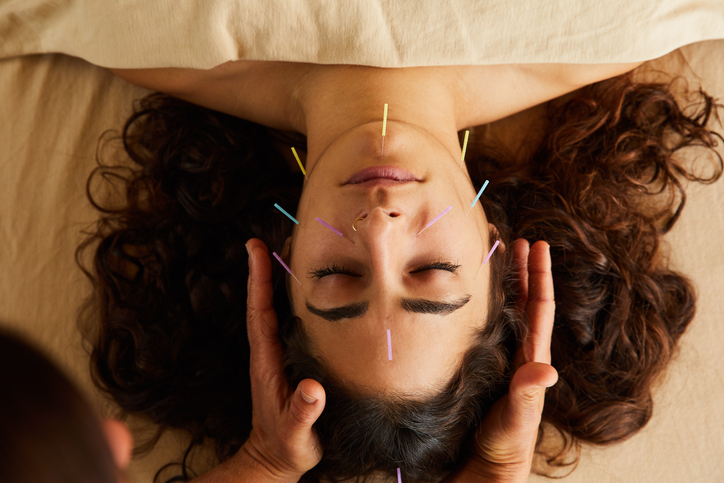

Acupuncture for semitendinosus muscle pain may reduce soreness, muscle guarding, and pain behind the thigh or knee while rehabilitation restores strength and movement. It may suit pain linked to tender muscle bands, overuse, or a recovering hamstring strain. It cannot repair a major tear or replace an accurate diagnosis.
The semitendinosus crosses both the hip and knee, so trouble in this muscle can affect running, walking, bending the knee, and rising from a chair. Treatment must account for where the pain began, whether the tendon is involved, and whether another condition is causing pain behind the knee.

Acupuncture for semitendinosus muscle pain may reduce soreness, muscle guarding, and pain behind the thigh or knee while rehabilitation restores strength and movement. It may suit pain linked to tender muscle bands, overuse, or a recovering hamstring strain. It cannot repair a major tear or replace an accurate diagnosis.
The semitendinosus crosses both the hip and knee, so trouble in this muscle can affect running, walking, bending the knee, and rising from a chair. Treatment must account for where the pain began, whether the tendon is involved, and whether another condition is causing pain behind the knee.

The semitendinosus begins at the sitting bone, runs down the inner back of the thigh, and attaches to the upper inner shin. It helps extend the hip, bend the knee, and turn the bent lower leg inward.
The muscle works hardest during sprinting, jumping, climbing, and movements that require the leg to slow down under load. Pain can develop after one forceful movement or build over time when training increases faster than the muscle can tolerate.
Because its tendon crosses the knee, semitendinosus trouble does not always feel like a typical hamstring problem. Some patients mainly feel an ache or pulling sensation behind the inner knee.
Semitendinosus pain may cause:
Symptoms closer to the sitting bone may involve the upper hamstring tendon. Pain closer to the inner knee may come from the lower tendon or nearby tissues.
A trigger point is a tender spot found within a tight band of muscle. Pressing it may reproduce the pain a patient already recognizes. The discomfort may stay in the back of the thigh or travel toward the inner knee.
Trigger-point pain usually has no sudden tearing event. The muscle may feel tight, tired, or sore after sitting, running, or repeated bending. A strain is more likely when pain starts suddenly during forceful activity and is followed by weakness, bruising, or swelling.
Trigger points are one possible source of pain, not a diagnosis for every sore hamstring. Tendon irritation, nerve symptoms, and knee problems can produce similar discomfort.

Acupuncture places fine, sterile needles into selected areas. When treatment is aimed at semitendinosus pain, the plan may include sensitive areas within the hamstring and other points chosen from the examination.
Needling may change pain signals sent through the nervous system. It can also cause a local response in the treated muscle. Some patients report less aching, easier knee movement, or reduced guarding after treatment.
A brief twitch may occur when a needle reaches a sensitive muscle band. This reaction is not needed for a good result, and it does not mean the muscle has been permanently “reset.”
Research supports acupuncture as a possible source of short-term relief for some muscle and joint conditions. Direct research on isolated semitendinosus pain remains limited. Claims that acupuncture can cure every hamstring problem go beyond the available evidence.
Acupuncture may calm pain arising from a tender semitendinosus muscle band. The area may feel less sensitive afterward, and movement may become more comfortable.
Relief does not always mean the cause has been resolved. A trigger point can return when the muscle is repeatedly overloaded, strength remains low, or training demands rise too quickly. Lasting recovery often requires both symptom care and a plan that improves what the hamstring can safely handle.
A mild or recovering strain may benefit from acupuncture when pain and guarding make comfortable movement difficult. The purpose is symptom control while the injured fibers heal and strength is rebuilt.
Acupuncture cannot join torn fibers or shorten every stage of tissue healing. A strain with marked bruising, weakness, or loss of function may need imaging and care from a sports medicine clinician.
Pain relief after needling should not be used as proof that the leg is ready for sprinting. The muscle must still tolerate walking, strengthening, faster movement, and sport-related tasks without a setback.
The lower semitendinosus tendon joins the inner upper shin as part of the pes anserinus, an area where several tendons meet. Pain here may be felt just below and inside the knee rather than in the middle of the hamstring.
Needling the muscle may help when muscle tension adds to the symptoms. Tendon pain usually needs careful load changes and progressive exercise as well. Repeatedly treating the sore area without changing the activity that irritates it may give only brief relief.
Pain directly behind the knee also needs a wider assessment. A Baker’s cyst, meniscus injury, ligament injury, arthritis, calf problem, or blood vessel condition can be mistaken for hamstring pain.
Acupuncture and dry needling both use thin, solid needles. Dry needling usually describes treatment directed at muscles, tender bands, and movement-related pain. Acupuncture may include local muscle treatment along with points chosen through a broader acupuncture assessment.
For semitendinosus pain, either approach may involve the sore hamstring. The practitioner’s training, understanding of the anatomy behind the thigh and knee, and ability to screen for other conditions matter more than the treatment name.
Acupuncture may make early movement more comfortable, but exercise prepares the semitendinosus to handle load again. A recovery plan may progress through:
The right starting point depends on the injury. Forceful stretching can aggravate a recent strain, especially when it produces sharp pain.
Progress should be judged by function, not only by soreness. Useful signs include improved strength, a normal walking pattern, greater confidence, and no marked increase in symptoms the next day.
Seek prompt assessment after a sudden injury if you felt a pop, cannot bear weight, or develop marked bruising or weakness. These signs may point to a larger hamstring tear.
A knee that locks, gives way, or becomes very swollen may have an injury inside the joint. A growing lump behind the knee may be a Baker’s cyst or another condition needing examination.
Calf warmth, redness, swelling, chest pain, or shortness of breath requires urgent medical care because these symptoms may signal a blood clot.
Numbness, tingling, burning pain, or pain running below the knee may involve a nerve rather than the semitendinosus alone.
Semitendinosus pain responds best when care matches the source of the symptoms. Acupuncture may help calm pain and guarding, while gradual exercise rebuilds the muscle’s ability to handle walking, running, and sport.
Our acupuncturists at ACA assess semitendinosus pain in the context of the full hamstring and knee. We can discuss whether acupuncture fits your recovery plan and when medical assessment or rehabilitation should be added.
Sources:
Lee, J.-W., Lee, J.-H., & Kim, S.-Y. (2020). Use of acupuncture for the treatment of sports-related injuries in athletes: A systematic review of case reports. International Journal of Environmental Research and Public Health, 17(21), 8226.
Carvalho, R. M., Machado, J., Santos, M. J., & Matos, L. C. (2023). Can acupuncture improve the flexibility of hamstring muscles? A randomized, blinded, and controlled pilot study. Healthcare, 11(4), 490.
There is no fixed course for semitendinosus pain. A recent muscle flare may respond differently from a tendon problem that has lasted for months. Treatment should be reviewed against clear changes in pain, movement, and activity.
Only stretch within a comfortable range. Stop if the stretch causes sharp pain, tingling, or greater soreness afterward. A recent strain may need gentle movement and strengthening before deeper stretching.
That depends on the injury and your current ability. Temporary pain relief does not show that the muscle has regained full strength. Return to running should begin at a level the leg can tolerate during the activity and the following day.
Not automatically. Patients may still be taking hormone therapy, targeted therapy, anticoagulants, or other medications after chemotherapy ends. Herbal products should still be reviewed for possible interactions.
Semitendinosus pain often worsens when bending the knee, running, climbing, or pressing the inner hamstring. Locking, giving way, marked swelling, or pain during twisting may point to a knee problem that needs medical assessment.
Mild muscle irritation may settle within days or a few weeks. A strain or tendon problem can take several weeks or longer. Recovery depends on the injury, activity demands, strength, and whether the leg is gradually reloaded.
LOCATIONS
MANHATTAN
QUEENS
NEW JERSEY
CALIFORNIA

The over $4 billion US acupuncture market offers a great opportunity with over 10% annual growth rates and a continuing flow of new patients interested in the benefits of acupuncture.
