


A sharp ache at the base of the thumb can make ordinary tasks, from opening a jar to lifting a baby, unexpectedly difficult. De Quervain’s tenosynovitis develops when the two tendons that move the thumb become restricted and sensitive as they pass through a narrow compartment on the thumb side of the wrist.
Acupuncture may reduce pain and improve grip, pinch strength, and hand function in people with de Quervain’s tenosynovitis. Current evidence is promising but limited, so treatment is best integrated with an accurate diagnosis, appropriate activity changes, and other conservative care when needed.
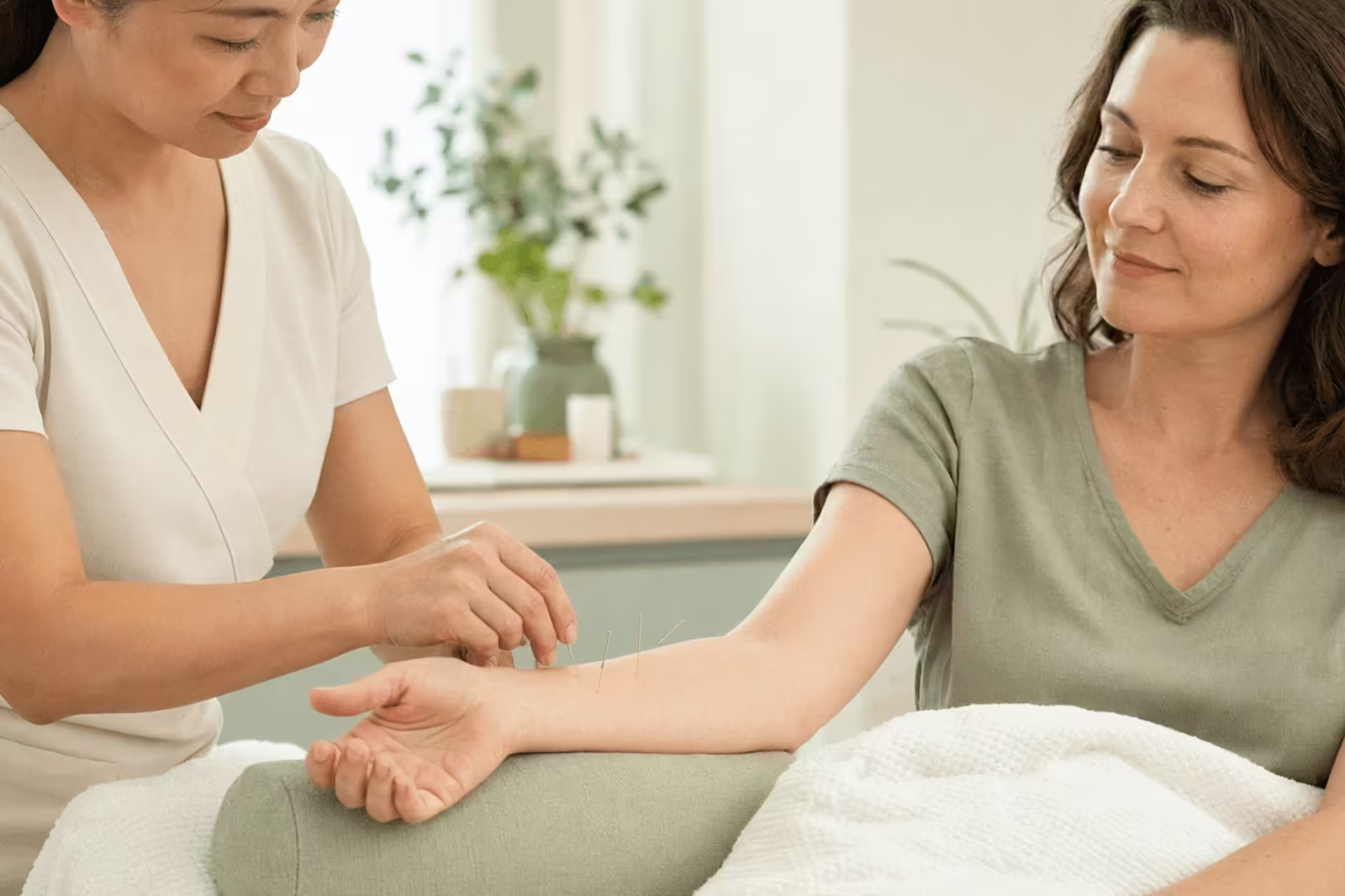
A sharp ache at the base of the thumb can make ordinary tasks, from opening a jar to lifting a baby, unexpectedly difficult. De Quervain’s tenosynovitis develops when the two tendons that move the thumb become restricted and sensitive as they pass through a narrow compartment on the thumb side of the wrist.
Acupuncture may reduce pain and improve grip, pinch strength, and hand function in people with de Quervain’s tenosynovitis. Current evidence is promising but limited, so treatment is best integrated with an accurate diagnosis, appropriate activity changes, and other conservative care when needed.
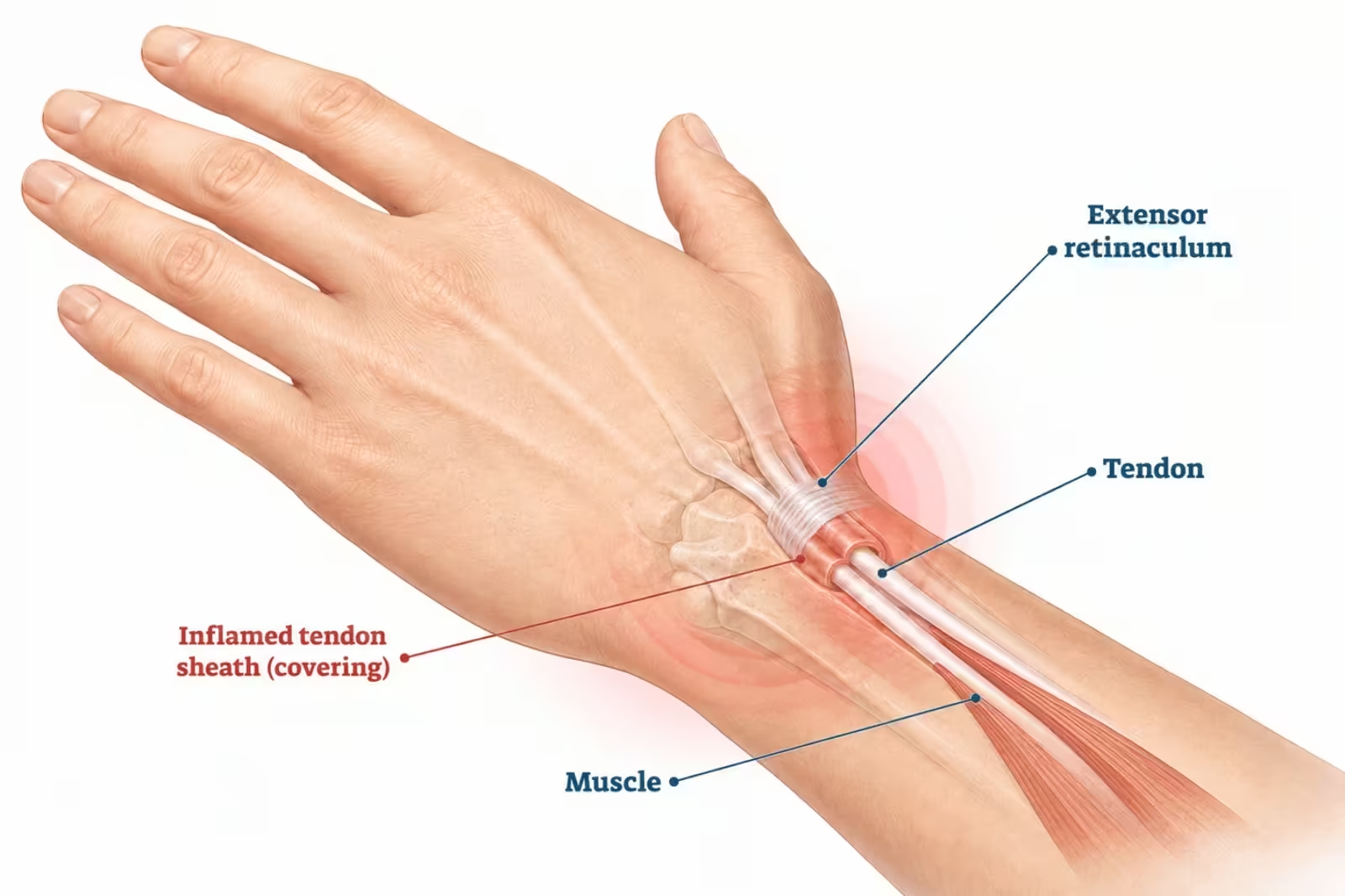
De Quervain’s tenosynovitis is a painful disorder involving the first dorsal compartment of the wrist. This narrow fibro-osseous tunnel lies beside the radial styloid, the bony prominence on the thumb side of the wrist.
Two tendons travel through the compartment:
Each tendon normally glides within a surrounding sheath as the thumb and wrist move. In de Quervain’s, thickening of the sheath and adjacent retinaculum can narrow the available space. Tendon movement then becomes painful or restricted.
Although the condition is commonly called tenosynovitis, inflammation does not fully explain every case. Tissue studies have also identified thickening and myxoid degeneration rather than a purely acute inflammatory process. For that reason, clinicians may use terms such as de Quervain tendinopathy, stenosing tenosynovitis, or radial styloid tenosynovitis.
This distinction matters because the condition is not simply a swollen tendon that needs to be “flushed out.” Treatment must consider tissue sensitivity, restricted tendon gliding, mechanical demand, hand function, and anatomical variation.
The characteristic symptom is pain on the thumb side of the wrist, usually near or just above the radial styloid. Pain may begin gradually or appear suddenly after a change in hand use.
Common symptoms include:
The discomfort is often most noticeable when the thumb is extended away from the palm while the wrist is angled or loaded. A person may feel relatively comfortable at rest but experience a sudden, sharp pain when picking up an object.
Everyday tasks can repeatedly load the APL and EPB tendons. Common triggers include:
Pain during an activity does not automatically prove that the activity caused tissue damage. It does, however, help identify movements that may need temporary modification while the wrist settles.
There is rarely one clear cause. The condition usually reflects a combination of tissue changes, mechanical demand, individual anatomy, and health-related factors.
A sudden increase in lifting, gripping, or thumb use may exceed what the wrist currently tolerates. The tendon sheath can become thickened and sensitive, making movement through the compartment less comfortable.
Possible contributing factors include:
The relationship between de Quervain’s and occupation is more complex than the label “repetitive strain injury” suggests. Repeated movement can aggravate symptoms, but research has not established one universal activity as the cause of every case. Blaming a single job, device, or movement can create unnecessary fear and may encourage excessive avoidance.
De Quervain’s is diagnosed more frequently in women and commonly develops during middle age. Pregnancy and the postpartum period also represent an important risk window.
Pregnancy-related cases may be associated with factors such as being 30 or older, carrying multiple babies, cesarean delivery, pregnancy-related high blood pressure, and rheumatoid arthritis. However, individual risk varies, and these factors do not mean someone will necessarily develop the condition.
New parents may experience a combination of hormonal or fluid changes and repeated lifting with the thumb extended. Supporting a baby’s head, lifting under the arms, pumping, feeding, and carrying can all place the wrist in uncomfortable or aggravating positions.
Diagnosis is usually clinical. A physician, hand therapist, or other qualified clinician considers the location of the pain, when it began, which movements aggravate it, and whether there was an injury.
The examination may include:
The Finkelstein test is commonly used to reproduce pain from the first dorsal compartment. During the test, the clinician positions the thumb and moves the wrist toward the little-finger side. Pain near the radial styloid may support a diagnosis of de Quervain’s.
The Eichhoff maneuver is frequently confused with the Finkelstein test. It generally involves closing the fingers over the thumb and moving the wrist toward the little finger. This position can place more force through the area and may produce pain even in people without de Quervain’s.
Another option is the wrist hyperflexion and abduction of the thumb, or WHAT, test. It assesses symptoms while the patient moves the thumb against resistance.
These maneuvers should be interpreted as part of a complete examination. Repeated, forceful self-testing may irritate an already sensitive wrist and cannot rule out another condition.
X-rays, ultrasound, and MRI are not routinely required when the history and examination are straightforward.
Imaging may be considered when:
Ultrasound can show tendon-sheath thickening, fluid, and anatomical divisions within the first dorsal compartment. MRI may help assess atypical wrist pain or identify another soft-tissue condition.
Not every pain near the thumb comes from the APL and EPB tendons. Similar symptoms can result from:
Intersection syndrome generally causes pain farther up the back of the forearm, while thumb-base arthritis is typically centered closer to the carpometacarpal joint. Numbness, tingling, electric sensations, prominent joint deformity, or pain after a fall may indicate a different problem.
Accurate diagnosis should come before a prolonged acupuncture plan. Treating the wrong structure may delay more appropriate care.
Acupuncture may help reduce pain and improve the ability to use the affected hand. Small clinical trials have reported improvements in pain scores, grip strength, pinch strength, and upper-extremity function.
The overall evidence is encouraging but not definitive. Existing studies differ in point selection, treatment frequency, comparison groups, outcome measures, and follow-up periods. Some trials are small, and a waitlist comparison cannot determine how much improvement comes from needle-specific effects versus attention, expectation, natural recovery, or temporary changes in activity.
A balanced interpretation is that acupuncture can be considered a conservative treatment option, particularly for people seeking a non-drug approach or a treatment that can be combined with splinting and rehabilitation. It should not be presented as a guaranteed cure or as a proven replacement for every conventional treatment.
Acupuncture produces sensory input through the skin, connective tissue, muscle, and peripheral nerves. This input may influence how pain signals are processed locally, within the spinal cord, and in the brain.
Several mechanisms may contribute to symptom relief.
Needle stimulation may activate endogenous pain-regulating pathways. This can alter pain sensitivity and make movement feel more tolerable, even when the underlying tendon-sheath anatomy has not immediately changed.
Reduced pain can make it easier to perform daily tasks and participate in appropriately graded rehabilitation. It should not be interpreted as permission to return immediately to maximum gripping or lifting.
Acupuncture can produce local neurological and vascular responses around the treated region. These effects are sometimes described as improved microcirculation.
It is reasonable to discuss local circulatory changes as a possible mechanism, but increased blood flow has not been proven to reverse the structural narrowing associated with de Quervain’s. The more defensible clinical goal is improved pain, movement tolerance, and function.
Pain often causes protective tension in the forearm and hand. A practitioner may treat muscular tenderness or guarding along the forearm as well as the painful wrist region.
Reducing this protective response may allow more comfortable thumb movement. However, the APL and EPB tendons still need an appropriate progression of loading to regain capacity.
Within Traditional Chinese Medicine, thumb-side wrist pain may be interpreted as an obstruction of qi and blood within channels passing through the hand, wrist, and forearm. Point selection may therefore combine local tenderness with distal points selected according to the affected channel and the individual’s broader presentation.
These traditional concepts are part of a distinct medical framework. They should not be presented as equivalent to the biomedical anatomy of the first dorsal compartment.
No single point prescription is appropriate for every patient. Selection depends on the location of pain, sensitivity, medical history, movement pattern, and the practitioner’s training.
Points reported in clinical practice or research include:
Local and distal points may be combined. In some cases, the acupuncturist may avoid inserting needles directly into the most painful area and instead treat nearby tissues or points farther along the arm.
These locations are not instructions for self-treatment. Needling around the wrist requires anatomical knowledge because superficial nerves, blood vessels, and tendons occupy a small area.

The first appointment should involve more than placing needles where the wrist hurts. A thorough practitioner will ask about:
The practitioner may examine wrist and thumb movement, palpate the forearm, and observe how the patient performs an aggravating task. If the presentation suggests fracture, arthritis, nerve involvement, infection, or another diagnosis, referral should come before treatment.
A licensed practitioner uses sterile, single-use needles. Needles may be placed around the wrist, in the forearm, or at distal points elsewhere on the body.
A patient may notice:
Treatment commonly lasts approximately 20 to 30 minutes, although protocols vary. Manual needle stimulation or electroacupuncture may be used when appropriate.
Sharp, burning, or persistent electrical pain should be reported immediately.
Temporary soreness, bruising, minor bleeding, fatigue, or light-headedness can occur. Many people return to usual low-load activities, but immediately testing the wrist with heavy gripping may aggravate it.
Progress should be measured by more than pain at rest. Useful indicators include:
There is no scientifically established number of sessions for de Quervain’s tenosynovitis.
Published protocols have included five acupuncture sessions and treatment delivered over two weeks. In practice, a clinician may initially recommend one or two sessions per week and then reassess.
A course of four to eight treatments may be used in some settings, but it is not a universal requirement or guaranteed recovery timeline. Frequency should reflect symptom severity, duration, functional limitations, response to early treatment, and the broader care plan.
Meaningful progress should be apparent in everyday function, not only in a temporary post-treatment sensation. If several appropriately delivered sessions produce no improvement, the diagnosis and strategy should be reconsidered rather than continuing indefinitely.
Some people notice reduced sensitivity after one or several appointments. Others improve gradually over several weeks, particularly when the condition has been present for months.
Recovery can be influenced by:
Pain reduction can occur before the tendons are ready for unrestricted loading. A gradual return to demanding activity helps prevent the common cycle of feeling better, doing too much, and experiencing another flare.
Acupuncture does not have to be used in isolation. Conservative management can address symptoms, tendon loading, movement habits, and functional recovery at the same time.
A thumb spica splint supports both the wrist and thumb, limiting movements that repeatedly aggravate symptoms. Proper fit is important because a poorly fitted splint can cause pressure, stiffness, discomfort, or unnecessary restriction.
Thumb spica immobilization may be combined with a corticosteroid injection to reduce pain and improve hand function. A healthcare professional can determine whether this approach is appropriate and recommend how long the splint should be worn.
The goal is to reduce repeatedly provocative loading while preserving useful movement.
Helpful changes may include:
Complete avoidance is rarely a sustainable long-term strategy. As symptoms settle, the wrist needs a gradual return to normal movement and load.
A hand therapist may provide education, splint fitting, task modification, mobility work, and progressive strengthening.
Exercise selection depends on irritability. Forceful stretching or strengthening during an acute flare may increase symptoms. Later, controlled thumb and wrist exercises can help restore motion, coordination, and load tolerance.
Acupuncture may make movement more comfortable, but it does not replace the strength and capacity developed through progressive rehabilitation.
Pain medication, including nonsteroidal anti-inflammatory drugs or acetaminophen, may be appropriate for some patients. Suitability depends on medical history, pregnancy status, other medications, and individual risk. A physician or pharmacist should provide guidance.
Corticosteroid injection places medication into the affected tendon compartment. It has stronger evidence as a first-line intervention, especially when combined with temporary thumb spica immobilization. Ultrasound guidance may be considered when anatomy is complex or symptoms persist.
Acupuncture may still be reasonable for a patient who prefers to begin with a non-drug option, cannot receive certain medications, or wants complementary symptom support. That decision should be made with a clear understanding of the comparative evidence.
Surgery releases the first dorsal compartment to create more room for the APL and EPB tendons. It is generally reserved for symptoms that remain substantially limiting after appropriate nonsurgical care.
A separate EPB subcompartment may affect injection response and surgical planning. This is one reason persistent cases deserve evaluation by a hand specialist rather than repeated treatment without reassessment.
Acupuncture may support pain management, but it should not delay a surgical consultation when weakness, disability, or persistent mechanical restriction remains significant.
Small changes can reduce repetitive strain without requiring complete rest.
Instead of lifting a baby under the arms with the thumbs spread, place the palms and forearms beneath the baby whenever possible. Use both arms, keep the wrists straighter, and bring the baby closer before lifting.
Pillows can reduce the amount of sustained wrist work required during feeding. Alternating positions also prevents the same wrist from carrying the load every time.
Use voice input for longer messages, support the phone with both hands, or type with an index finger instead of repeatedly reaching with the thumb.
Position the mouse and keyboard so the wrist remains neutral. Short, frequent breaks are usually more practical than waiting until pain becomes severe.
Larger tool handles require less forceful pinching. Use both hands for heavy cookware, avoid repeated forceful wringing, and slide objects before lifting them when possible.
Push-ups, planks, heavy dumbbell carries, and gripping exercises may need temporary modification. A neutral-grip handle, reduced load, shorter range, or forearm-supported variation may be more comfortable.
Return gradually. Waiting for absolutely no sensation before using the hand can encourage excessive avoidance, while returning immediately to full load can provoke another flare.
Postpartum de Quervain’s is sometimes called “mother’s wrist,” although any parent or caregiver can develop it. Hormonal and fluid changes may increase susceptibility, while repeated feeding, lifting, pumping, and carrying continually load the thumb-side wrist.
Telling a new parent simply to rest is often unrealistic. A more useful plan combines symptom management with changes in technique, splinting when appropriate, help with repetitive tasks, and gradual restoration of capacity.
Acupuncture is generally compatible with breastfeeding when provided by a qualified practitioner using sterile needles. The patient should still disclose:
Acupuncture does not introduce medication into breast milk, but that does not make every technique or every clinical situation automatically appropriate. Treatment should reflect the individual’s postpartum health.
Acupuncture generally has a favorable safety profile when performed correctly by a qualified practitioner using sterile, single-use needles.
Common temporary effects include:
Serious complications are uncommon but can occur because of improper technique, nonsterile needles, or inadequate training. Possible complications include infection, nerve injury, or damage to surrounding tissues.
Tell your practitioner about anticoagulant use, bleeding disorders, immune suppression, skin infections, pregnancy, implanted electrical devices, or altered sensation. Electroacupuncture may require additional precautions for people with certain implanted devices.
Seek prompt medical assessment when wrist or thumb pain follows a fall, collision, or other significant injury. A fracture or ligament injury should not be treated as routine tendon irritation.
Medical evaluation is also important for:
A clinician should also reassess the diagnosis if acupuncture briefly changes the pain but daily hand function continues to decline.
Choose a practitioner who:
Be cautious of guaranteed cure claims, rigid treatment packages offered before examination, or advice to avoid necessary medical evaluation.

Acupuncture offers a reasonable conservative option for some people with de Quervain’s tenosynovitis. Clinical research suggests potential improvements in pain and hand function, but the evidence remains less established than the evidence supporting corticosteroid injections combined with short-term thumb spica immobilization.
An effective treatment plan begins with an accurate diagnosis. From there, acupuncture may be combined with realistic activity modifications, appropriate wrist support, progressive rehabilitation, and medical treatment when necessary. Tracking what the hand can do, rather than focusing only on how it feels immediately after treatment, provides a clearer measure of meaningful recovery.
At ACA Acupuncture & Wellness, we provide individualized acupuncture treatments based on each patient’s symptoms, daily activities, and recovery goals. If thumb-side wrist pain is affecting your work or everyday tasks, contact us to discuss whether acupuncture may be a suitable addition to your treatment plan.
Sources:
Huang, S., Fan, Q., Xiong, J., Liao, K., Hua, F., Xiang, J., Li, C., & Jin, H. (2020). The effectiveness of acupuncture and moxibustion for treating tenosynovitis: A systematic review and meta-analysis protocol. Medicine, 99(49), e22372.
Yes. Although symptoms may be more noticeable in one wrist, de Quervain’s can affect both sides, particularly when daily activities repeatedly load both hands. Each wrist should be evaluated separately because symptom severity may differ.
No. De Quervain’s causes pain near the base of the thumb on the outer wrist. Carpal tunnel syndrome typically causes numbness, tingling, or weakness affecting the thumb, index, middle, and part of the ring finger.
Ice may temporarily reduce pain after an aggravating activity, while gentle warmth may ease stiffness. Neither option corrects restricted tendon movement, so temperature therapy should complement activity modification and appropriate treatment.
Yes. Symptoms may return if the wrist is exposed to demanding gripping, pinching, or lifting before it has regained sufficient strength and tolerance. Gradually increasing activity may help reduce the likelihood of another flare.
Acupuncture may sometimes be included in a broader treatment plan after a corticosteroid injection. The timing should be discussed with the treating healthcare professionals, particularly if the injection site remains sore, swollen, or irritated.
Wear loose clothing that allows comfortable access to the hand, wrist, forearm, and elbow. Avoid tight sleeves, watches, or bracelets that may interfere with examination or treatment.
LOCATIONS
MANHATTAN
QUEENS
NEW JERSEY
CALIFORNIA

The over $4 billion US acupuncture market offers a great opportunity with over 10% annual growth rates and a continuing flow of new patients interested in the benefits of acupuncture.