


Electroacupuncture uses fine acupuncture needles connected to a device that delivers controlled electrical pulses. Regular acupuncture uses needles without electrical stimulation, either left in place or gently moved by hand. The main difference is how the needles are stimulated.
If you are considering acupuncture with electricity, you may wonder whether it hurts, works faster, or offers benefits beyond traditional acupuncture. Understanding the treatment helps you make an informed choice and feel more comfortable before your appointment.
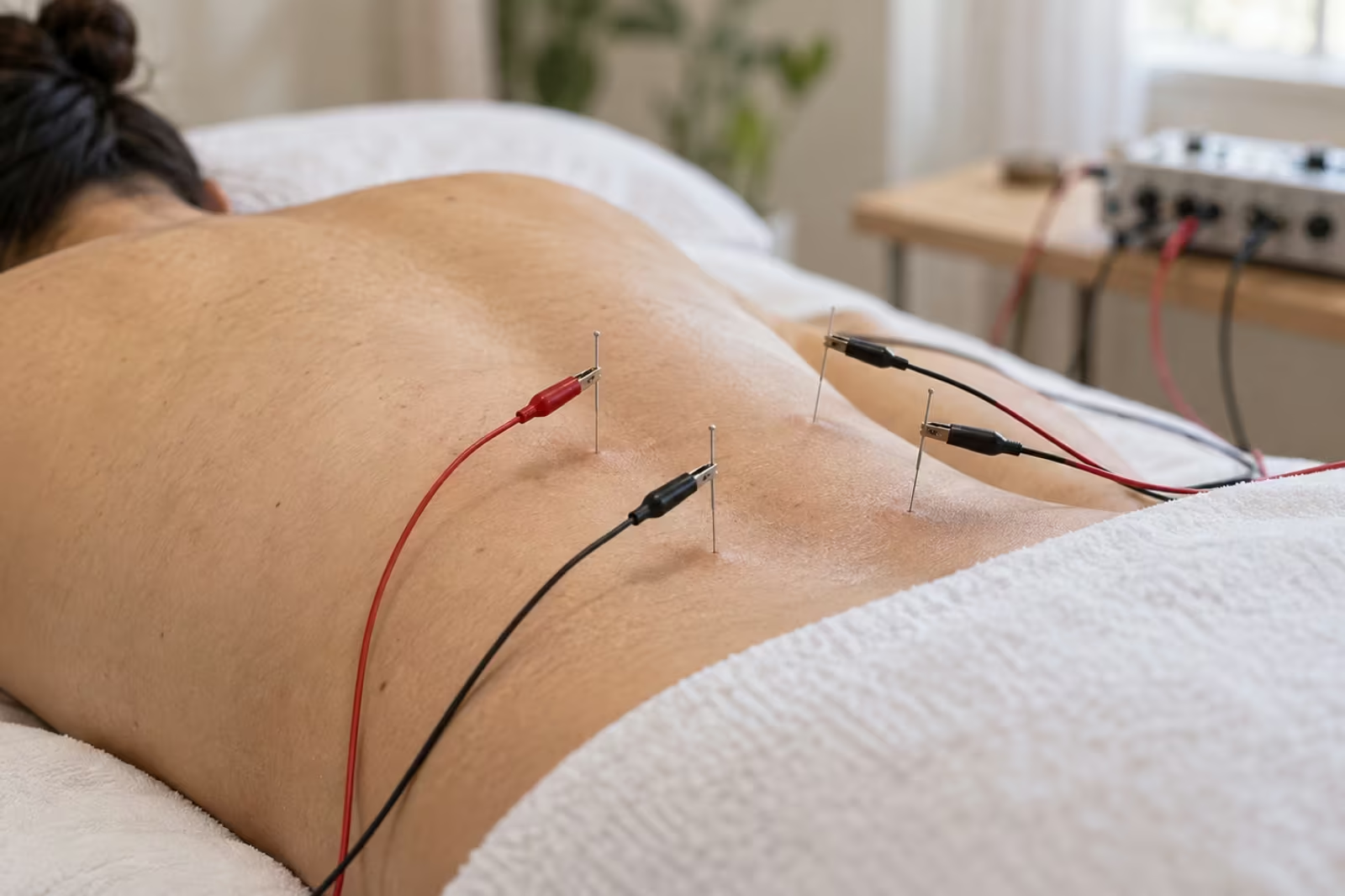
Electroacupuncture uses fine acupuncture needles connected to a device that delivers controlled electrical pulses. Regular acupuncture uses needles without electrical stimulation, either left in place or gently moved by hand. The main difference is how the needles are stimulated.
If you are considering acupuncture with electricity, you may wonder whether it hurts, works faster, or offers benefits beyond traditional acupuncture. Understanding the treatment helps you make an informed choice and feel more comfortable before your appointment.
Both methods use fine needles placed at selected acupuncture points. Regular acupuncture uses needles without electrical stimulation, while electroacupuncture connects selected needles to a device that delivers controlled electrical pulses.
| Feature | Regular Acupuncture | Electroacupuncture |
| Stimulation | Needles rest or are gently moved by hand | Selected needles receive electrical pulses |
| Sensation | Pressure, heaviness, warmth, or mild aching | Similar needle sensations with rhythmic tingling or pulsing |
| Adjustments | Needle placement, manual technique, and retention time | The same adjustments, plus pulse frequency and intensity |
| Treatment suitability | May suit people who prefer treatment without electricity, subject to appropriate screening | Requires assessment of suitability for both needling and electrical stimulation |
| Screening | Assessment of medical history and suitability for needling | Additional screening for electrical stimulation, particularly for implanted electronic devices |
Electroacupuncture does not necessarily require more needles or deeper insertion. Selected needles can receive electrical stimulation while others remain unconnected. The choice depends on your symptoms, medical history, treatment goals, and comfort with electrical stimulation.
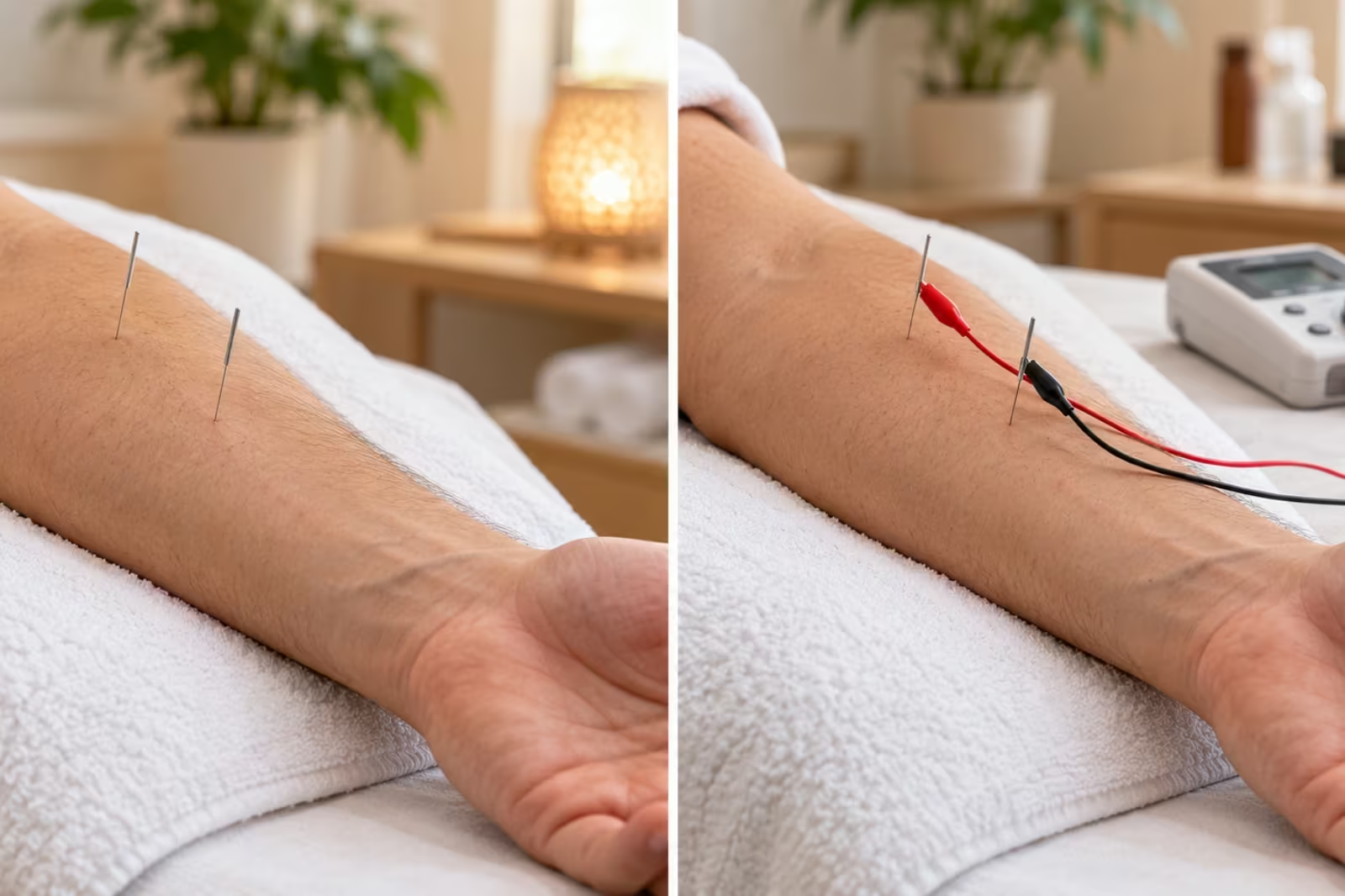
After placing the needles, the acupuncturist attaches small clips or leads to selected needles and connects them to a stimulation device. The device is started at a low setting and adjusted according to your comfort and treatment plan.
Frequency describes how often the electrical pulses occur, while intensity describes their strength. This allows repeated stimulation without the practitioner continuously moving the needles by hand.
Electrical stimulation may influence sensory nerves and the pathways involved in processing pain. Natural pain-relieving chemicals, including endorphins, may also play a role, although the full mechanism is not completely understood.
Traditional acupuncture is rooted in Chinese medicine and uses concepts such as qi and meridians to guide treatment. Manual acupuncture refers specifically to stimulating needles by hand.
Electroacupuncture can be used within a traditional acupuncture treatment plan. The distinction is how the needles are stimulated, rather than an entirely separate treatment philosophy.
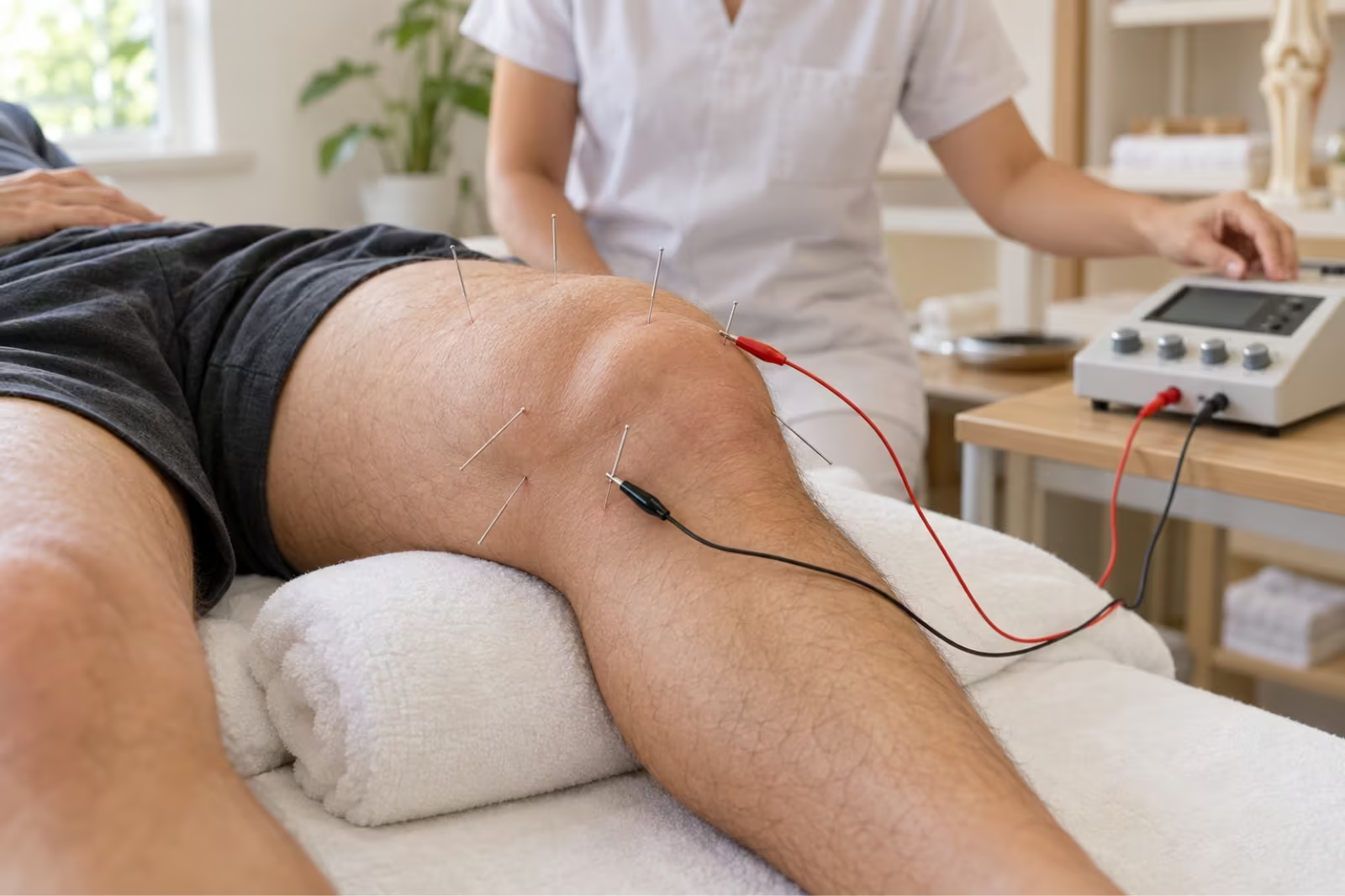
Both approaches may help manage certain pain conditions. Neither is automatically the better choice for every person or condition. The most useful comparison is whether treatment improves your symptoms and everyday function.
Regular acupuncture and electroacupuncture may be considered as part of care for some forms of musculoskeletal pain. The choice depends on the condition being treated, your medical history, and your response.
Relief does not necessarily mean the underlying cause has been corrected. For example, reduced knee pain does not mean damaged cartilage has been restored.
When treatment reduces discomfort, activities such as walking, sitting, or completing prescribed exercises may become easier.
Setting specific goals helps you assess progress. These might include walking farther, tolerating desk work longer, or experiencing fewer interruptions from pain.
Some people feel relaxed after either treatment. If discomfort interrupts sleep, symptom relief may also make resting easier.
Your preferences matter as well. Some people are comfortable with electrical pulsing, while others prefer needles without ongoing electrical stimulation.
Both treatments can produce pressure, heaviness, warmth, or mild aching around the needles. Electroacupuncture adds rhythmic tingling, tapping, buzzing, or pulsing. Small muscle twitches may also occur.
You may feel a brief prick as a needle is inserted, while some needles are barely noticeable. The initial needling process is similar for both treatments.
With regular acupuncture, needles may rest or be gently moved by hand. With electroacupuncture, the practitioner gradually adjusts the electrical stimulation using your feedback.
A stronger sensation does not mean better results. Tell your practitioner immediately if you experience:
The treatment should remain tolerable. You do not need to endure painful stimulation.
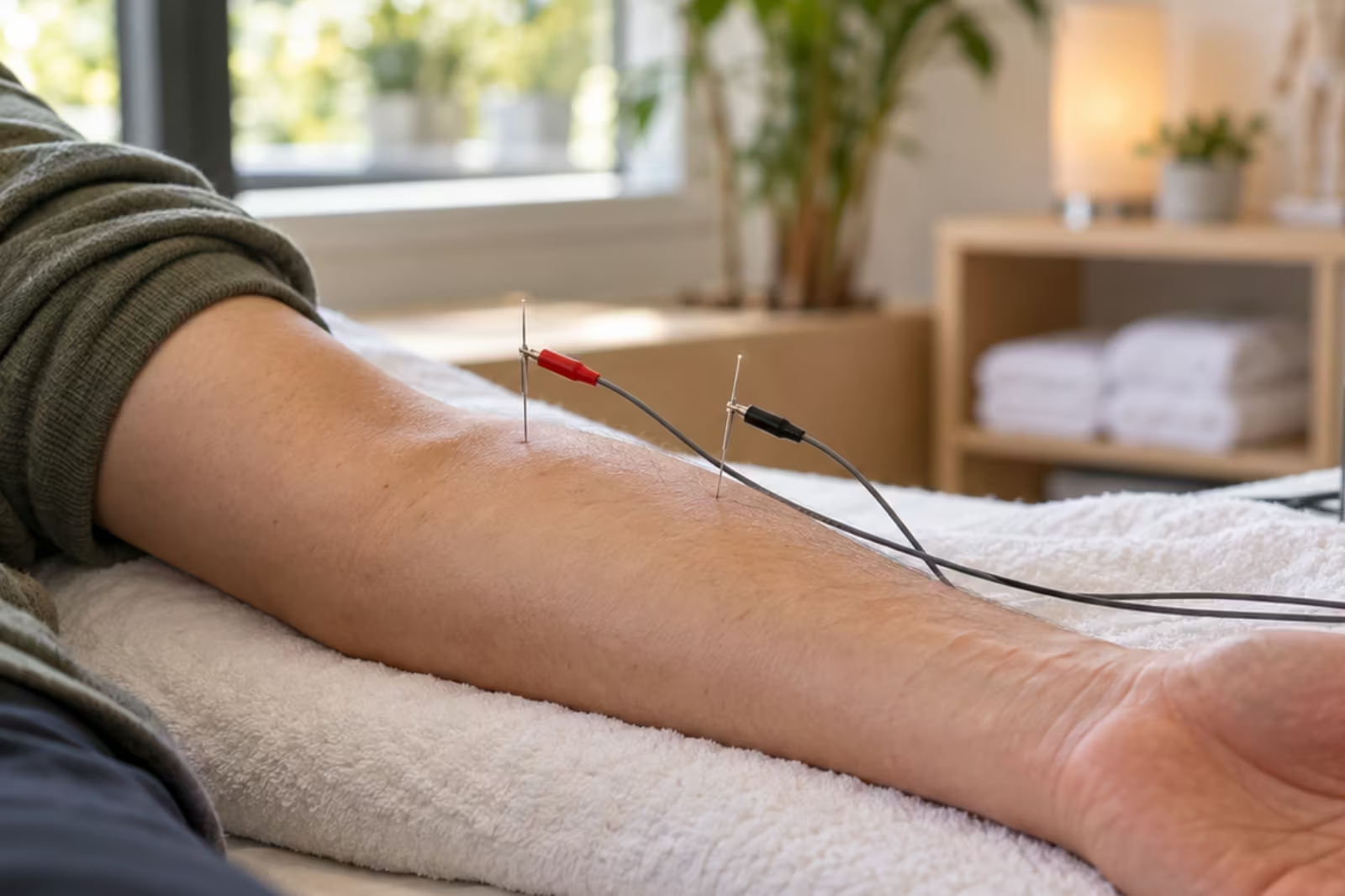
Appointments for either treatment begin with a discussion of your symptoms, medical history, medications, and goals.
Appointment length depends on your treatment plan.
Afterward, you may feel relaxed, tired, or mildly sore. Small bruises can occur. Avoid driving if you feel dizzy or unusually drowsy, and contact your practitioner if symptoms persist or worsen.
Both methods share risks associated with needling, including soreness, minor bleeding, and bruising. Rare serious complications include infection and injury to internal organs. Qualified practitioners and sterile, single-use needles help reduce these risks.
Electroacupuncture requires additional assessment because it uses electrical stimulation. Before either treatment, disclose pregnancy, blood-thinning medication, bleeding disorders, seizures, implanted electronic devices, and relevant skin or sensation problems.
A pacemaker is particularly relevant to electroacupuncture because electrical stimulation can interfere with some devices. Seek guidance from the clinician managing your device before considering it. Regular acupuncture avoids electrical stimulation, but still requires appropriate screening for needling.
Start with your treatment goal. Are you hoping to walk more comfortably, reduce pain interruptions at night, or tolerate desk work longer?
Manual acupuncture may suit you if you prefer treatment without electricity. Electroacupuncture may be appropriate when repeated electrical stimulation has a clear purpose in your care plan.
When discussing treatment with our acupuncturists at ACA, ask:
Agree on an initial treatment period and a review point. Continue based on useful improvement, tolerability, and your broader healthcare needs.

At ACA Acupuncture & Wellness, our acupuncturists can discuss the differences between regular acupuncture and electroacupuncture and help determine which approach may suit your symptoms, medical history, and preferences.
We also offer complementary services, including Tuina massage, Chinese herbal medicine, and cupping therapy, when appropriate for your care plan.
Schedule an appointment to discuss your options and set clear treatment goals with our team.
Electroacupuncture should not be painful. You may feel a brief prick when the needles are inserted, followed by rhythmic tingling, tapping, or pulsing during electrical stimulation. Tell your acupuncturist immediately if you feel sharp or burning pain or painful muscle contractions so they can adjust or stop the stimulation.
It is not consistently more effective for every condition. Electrical stimulation offers another treatment option, but the appropriate choice depends on the diagnosis, technique, and individual response.
There is no universal rule that it works faster. Some people notice changes early, while others need several appointments or experience no meaningful improvement.
The number depends on your condition, symptom duration, goals, and response. Agree on a review point rather than assuming you need an extended course.
No. Electroacupuncture delivers electrical pulses through inserted needles. TENS, short for transcutaneous electrical nerve stimulation, uses a small device to deliver mild electrical pulses through sticky electrode pads placed on the skin. Both involve electrical stimulation, but TENS does not use needles.
Standard electroacupuncture requires needles. Surface pads or handheld electrical devices use different techniques, even when marketed as “electric acupuncture.”
No. Electroacupuncture uses acupuncture needles connected to a device that delivers electrical pulses. Dry needling typically targets muscle trigger points to address pain and movement problems. Some dry needling treatments also use electrical stimulation, so the distinction involves the treatment approach, not simply whether electricity is used.
Sources:
Napadow, V., Makris, N., Liu, J., Kettner, N. W., Kwong, K. K., & Hui, K. K. S. (2005). Effects of electroacupuncture versus manual acupuncture on the human brain as measured by fMRI. Human Brain Mapping, 24(3), 193–205.
Wang, S., Xue, Y.-H., Liang, L.-B., Li, K.-P., & Wu, C.-Q. (2026). Comparative effectiveness of electroacupuncture and conventional acupuncture for rheumatoid arthritis pain: A network meta-analysis with emphasis on placebo control validity. Journal of Integrative Medicine, 24(1), 57–64.
LOCATIONS
MANHATTAN
QUEENS
NEW JERSEY
CALIFORNIA

The over $4 billion US acupuncture market offers a great opportunity with over 10% annual growth rates and a continuing flow of new patients interested in the benefits of acupuncture.