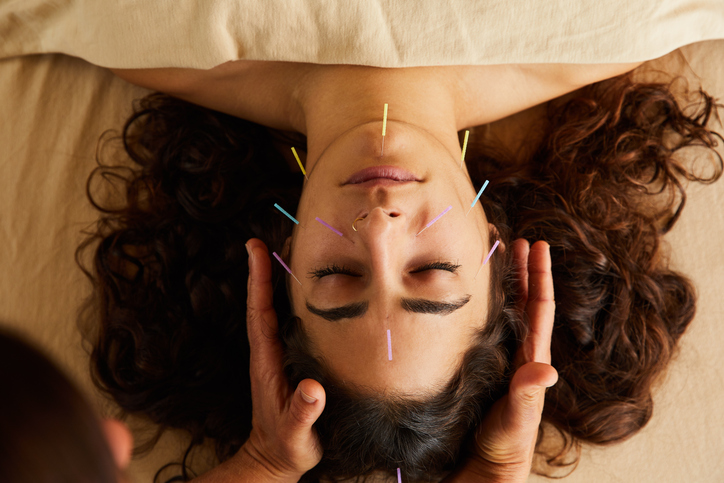
Acupuncture cannot remove varicose veins or repair faulty vein valves, but it may help ease some of the aching, heaviness, cramping, and muscle discomfort that can occur alongside them.
Varicose veins can leave your legs feeling achy, heavy, tired, or tight after a long day on your feet. Some people consider acupuncture for varicose veins when they are looking for a non-drug option for managing this type of discomfort. Learn more about our acupuncture care.
The main distinction is simple. Acupuncture may change how your legs feel, but it does not fix the vein problem that caused the varicose veins.
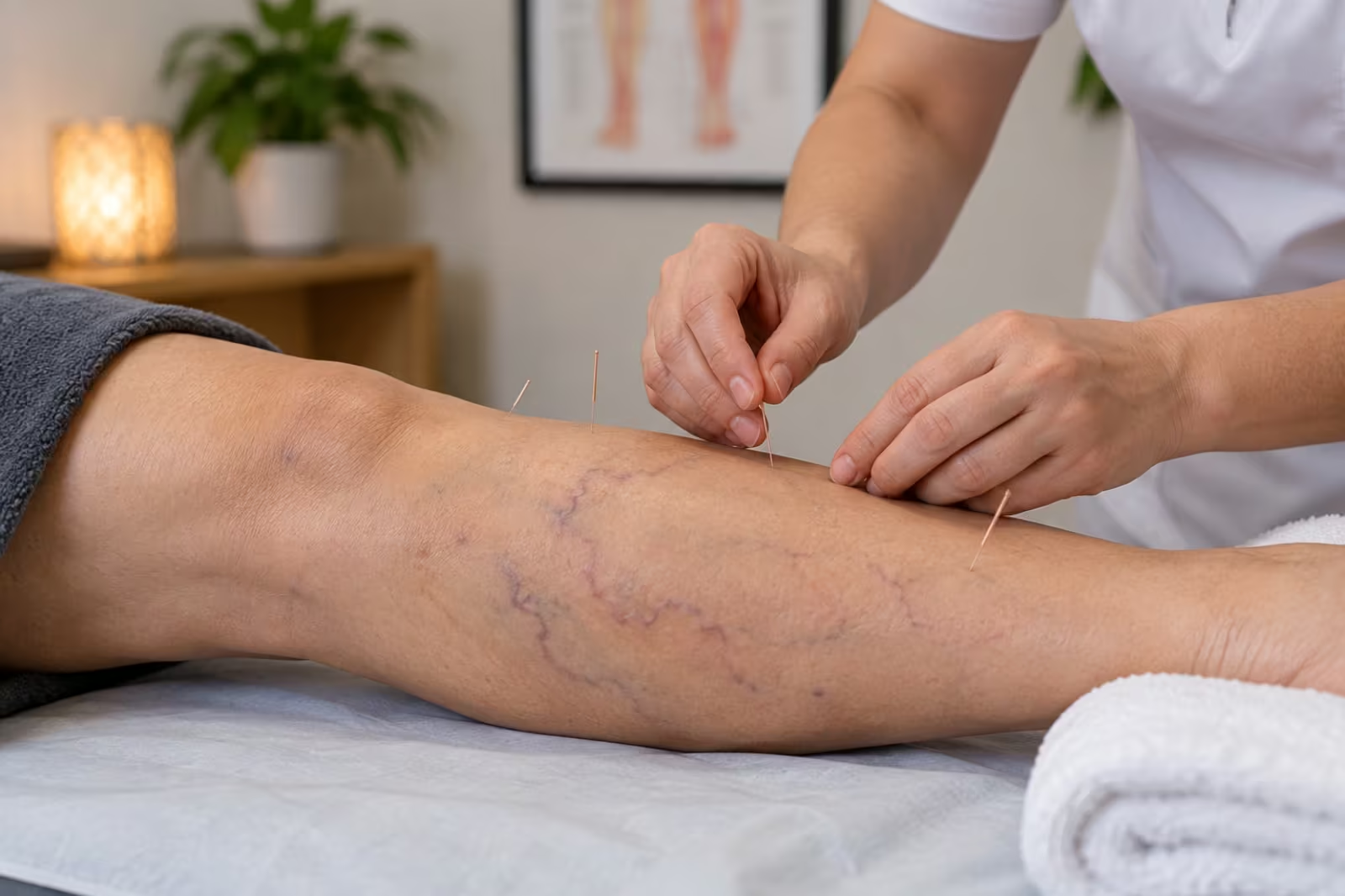
Acupuncture cannot remove varicose veins or repair faulty vein valves, but it may help ease some of the aching, heaviness, cramping, and muscle discomfort that can occur alongside them.
Varicose veins can leave your legs feeling achy, heavy, tired, or tight after a long day on your feet. Some people consider acupuncture for varicose veins when they are looking for a non-drug option for managing this type of discomfort. Learn more about our acupuncture care.
The main distinction is simple. Acupuncture may change how your legs feel, but it does not fix the vein problem that caused the varicose veins.
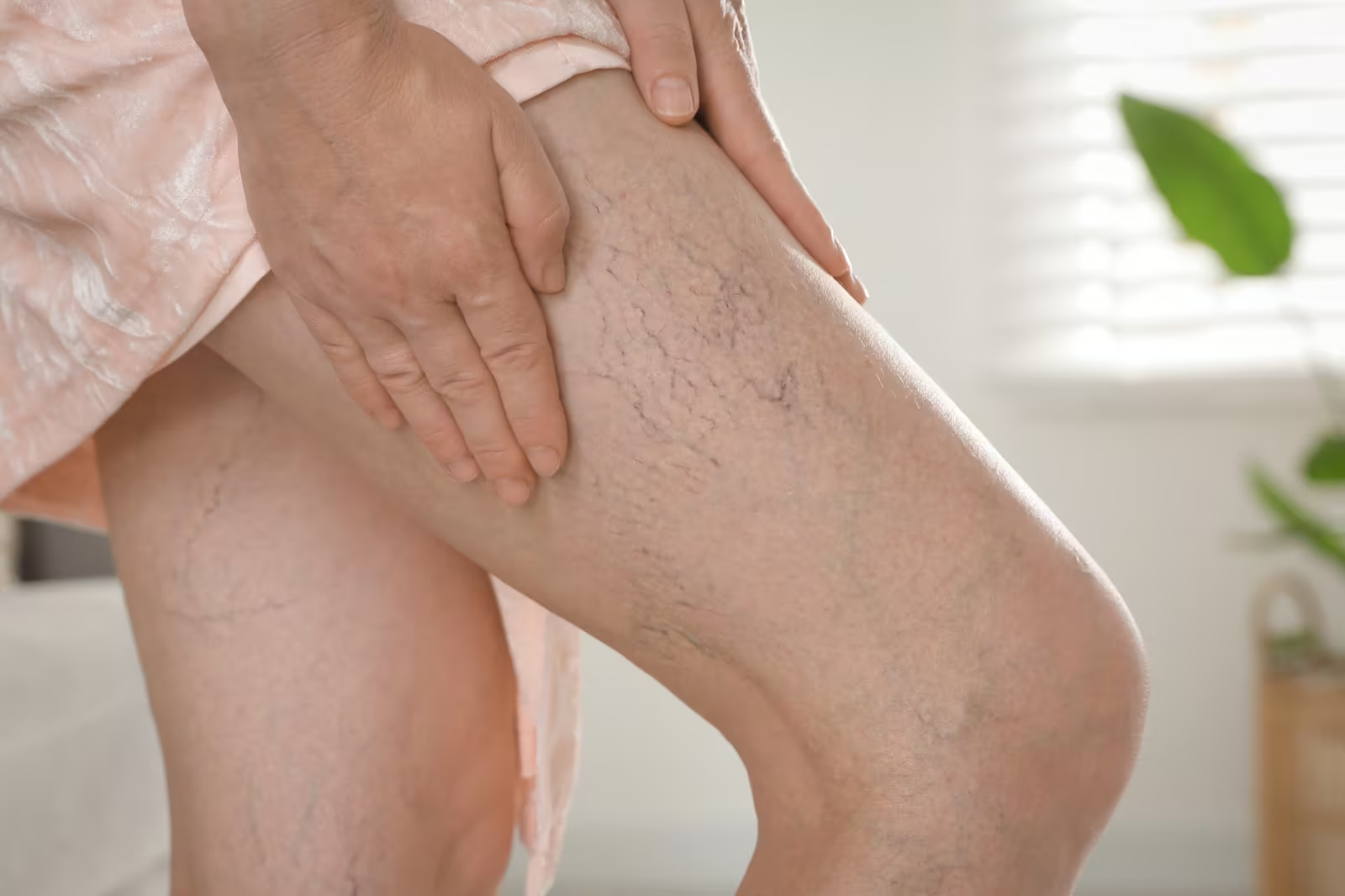
Varicose veins develop when valves inside the leg veins no longer keep blood moving upward as well as they should.
Your veins return blood to your heart. In the legs, they have to move blood upward against gravity. Small valves inside the veins help stop blood from slipping backward. Your calf muscles also squeeze the veins when you walk, helping move blood toward the heart.
When a valve becomes weak or damaged, some blood can flow backward. Doctors call this venous reflux. Blood may then collect in the affected vein, increasing pressure and causing the vein to stretch.
Over time, the vein may become enlarged, twisted, or raised above the skin.
The problem can cause more than a visible vein. You may notice aching, throbbing, heaviness, itching, ankle swelling, nighttime cramps, or legs that feel unusually tired after standing for long periods.
This is why describing varicose veins simply as “poor circulation” can be misleading.
A person with varicose veins may have normal arterial blood flow entering the legs. The problem often involves how efficiently venous blood returns toward the heart.
More advanced venous disease may lead to persistent swelling, skin discoloration, inflammation, or sores around the lower leg or ankle. Changes like these need medical assessment rather than symptom care alone.
Acupuncture may help with some of the discomfort associated with varicose veins, but research does not show that it reverses venous reflux or repairs damaged valves.
Acupuncture uses very thin needles placed at selected points on the body. Needle stimulation can affect sensory nerves, muscles, and pain signals, which may be one reason some people consider acupuncture when their legs feel sore, tight, or prone to cramping.
Traditional acupuncture also uses meridian pathways as a way of organizing points and choosing areas for treatment.
Researchers have also studied whether acupuncture changes local blood flow. A systematic review of randomized trials found that several studies reported increases in skin or muscle blood flow near treated areas.
The findings were mixed, and there were too few well-designed studies to draw firm conclusions about how often or how strongly these changes occur.
A local change in blood flow is also not the same as repairing a varicose vein.
Microcirculation describes blood moving through very small vessels in the skin and muscle. Acupuncture may cause short-lived changes in those vessels.
Venous reflux is different. It involves backward blood flow inside a vein because the valves are not closing properly.
Acupuncture does not restore those damaged valves. It also does not close an abnormal vein or permanently redirect blood away from a vein that is not working as it should.
If your legs feel warmer, looser, or more comfortable after treatment, that may reflect a local response or a change in how your nervous system processes discomfort. It should not be taken as evidence that the varicose vein itself has healed.
Acupuncture is better viewed as a possible option for managing discomfort than as a treatment for the visible vein itself.
People with varicose veins often seek care because of how their legs feel, not only because of how the veins look.
Acupuncture may be considered when you are dealing with:
Calf tightness and soreness can also have a muscular component. In some cases, calf trigger points may contribute to localized tenderness or tension in the lower leg, which can feel different from discomfort caused by the veins themselves.
These symptoms also give you a practical way to judge whether treatment is making a difference.
You might notice whether you can stand for longer without discomfort, whether your calves feel less tight in the evening, or whether nighttime cramps occur less often.
Some people interested in traditional care also look into herbal approaches for managing pain alongside acupuncture. Herbal care is a separate approach and should not be viewed as a way to repair faulty vein valves.
Swelling deserves more caution.
Varicose veins can contribute to ankle and lower-leg swelling, but swollen legs can have many causes. If swelling persists, becomes worse, or appears suddenly in one leg, a clinician should assess it.
Acupuncture should also not be presented as a way to make a large bulging vein disappear. If your goal is to close or remove an abnormal vein, a vascular clinician can discuss treatments made for that purpose.
An acupuncture session may focus on symptoms that often accompany varicose veins, such as leg aching, muscle tension, calf tightness, cramping, or a heavy feeling in the legs. The aim is to address how the legs feel rather than to treat the visible vein itself.
Prominent or raised varicose veins are avoided during needling, so needles are not placed directly into them. Instead, the practitioner may select other appropriate acupuncture points based on your symptoms, comfort level, and overall presentation.
The goal is symptom support and day-to-day comfort. Acupuncture does not repair faulty vein valves, correct venous reflux, or remove a varicose vein, but it may be considered as part of a broader approach to managing associated discomfort.
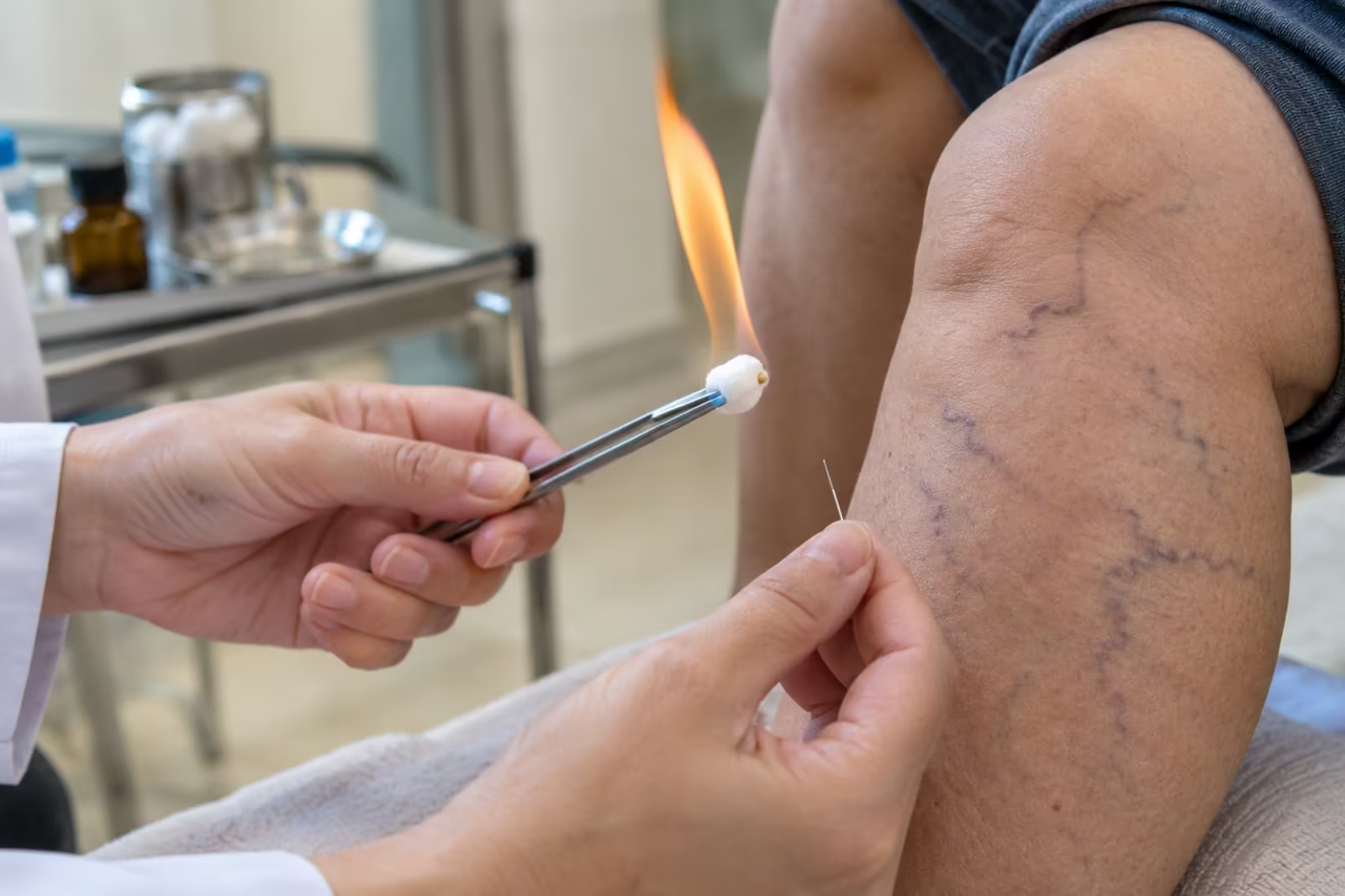
Fire acupuncture is a specialized technique that uses heated needles and is different from standard acupuncture.
Some studies have examined fire acupuncture for varicose veins, but the evidence is limited by small study sizes, different treatment methods, and incomplete safety reporting. Reported reactions have included pain, redness, bruising, itching, pigmentation changes, dizziness, and numbness.
Because fire acupuncture is a distinct technique, these findings should not be applied to standard acupuncture.
Acupuncture may be suitable for some people with varicose veins when the practitioner avoids raised veins, damaged skin, and areas that may need medical attention.
Tell your acupuncturist about your health history before treatment begins.
That includes any previous blood clot, vein procedure, bleeding disorder, open wound, or unexplained leg swelling. You should also mention medicines that affect blood clotting.
Large veins that sit close to the skin should generally be avoided during needle placement. Direct puncture may increase the chance of bleeding, bruising, or blood collecting under the skin.
Skin that is infected, badly inflamed, broken, or ulcerated should not receive routine needling through the affected area.
Your practitioner should also know if your symptoms have recently changed.
A familiar ache that has been present for months is very different from a leg that suddenly becomes hot, swollen, red, or sharply painful.
Treatment goals should stay focused on comfort and day-to-day function. Instead of judging acupuncture by whether a visible vein looks smaller, pay attention to whether cramping changes, standing feels easier, or your legs feel less tired after activity.
Acupuncture may be used alongside standard vein care when the goal is symptom management, but it should not replace assessment of ongoing venous disease.
Walking can support venous return because each step activates the calf muscles and helps move blood upward.
If your work requires long periods of sitting or standing, changing position and moving throughout the day may help reduce blood pooling in the lower legs. Leg elevation can also reduce pressure or swelling for some people.
Compression stockings may be recommended for certain patients. They apply graduated pressure to the legs and can help with swelling or discomfort in some cases. A clinician can advise whether compression is appropriate for you.
If symptoms keep returning, become more noticeable, or are accompanied by skin changes, duplex ultrasound may be used to see how blood is moving through the veins.
This scan can show whether venous reflux is present and which veins are affected.
When the vein itself needs treatment, medical options may include sclerotherapy, endovenous ablation, or removal of selected surface veins.
These procedures serve a different purpose from acupuncture because they act directly on the abnormal vein.
Acupuncture may still be considered when the concern is aching, tightness, cramping, or a heavy feeling in the legs. It should simply be viewed as symptom-focused care rather than a structural treatment for the vein.
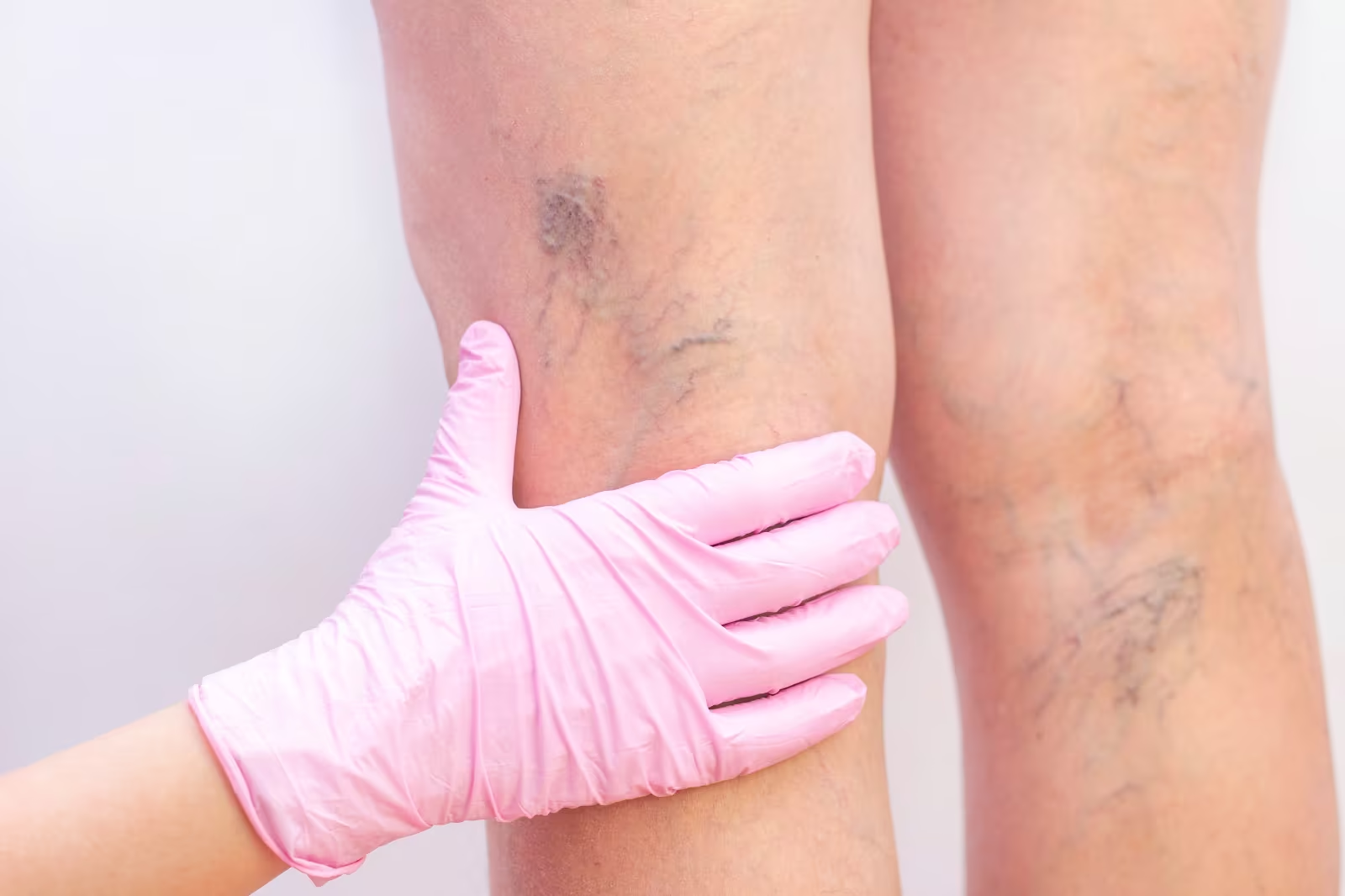
Sudden or rapidly changing leg symptoms need medical attention before acupuncture.
Seek medical care if one leg suddenly becomes swollen, warm, red, or much more painful than usual.
A hard and tender surface vein, bleeding from a varicose vein, a new sore near the ankle, or worsening skin changes also need medical assessment.
Blood clots can sometimes cause symptoms that may be mistaken for ordinary vein discomfort.
Chest pain, sudden shortness of breath, fainting, rapid breathing, or coughing up blood can occur with a pulmonary embolism and require emergency medical care.
If your symptoms change quickly or feel very different from your usual varicose-vein discomfort, get them checked before scheduling acupuncture.
Varicose veins can make everyday activities less comfortable when your legs feel sore, heavy, or tense. Acupuncture does not remove varicose veins or correct venous reflux, but some people consider it as a complementary option for managing associated discomfort.
At ACA Acupuncture & Wellness, we take time to understand your symptoms, how long they have been present, and how they affect your daily routine. If anything in your symptoms or health history suggests that medical or vascular evaluation should come first, that should be addressed before acupuncture is considered.
If leg aching, cramping, tightness, or heaviness is affecting your daily comfort, schedule a consultation with us at ACA Acupuncture & Wellness to discuss whether acupuncture may be appropriate for you.
Sources:
Gloviczki, P., Lawrence, P. F., Wasan, S. M., et al. (2024). The Society for Vascular Surgery, American Venous Forum, and American Vein and Lymphatic Society clinical practice guidelines for the management of varicose veins of the lower extremities. Part II. Journal of Vascular Surgery: Venous and Lymphatic Disorders, 12(1), 101670.
Jo, O., Lee, J., Park, S., Shin, J., Choi, S., & Choi, S. (2023). Fire acupuncture for varicose veins in the lower extremities: A review of randomized controlled trials. Journal of Acupuncture Research, 40(3), 177–187.
Kim, S. Y., Min, S., Lee, H., Cheon, S., Zhang, X., Park, J. Y., Song, T. J., & Park, H. J. (2016). Changes of local blood flow in response to acupuncture stimulation: A systematic review. Evidence-Based Complementary and Alternative Medicine, 2016, 9874207.
No. Acupuncture does not close enlarged veins or repair damaged vein valves. Some people may consider it for associated aching, heaviness, cramping, or muscle tension.
Acupuncture may cause short-term changes in blood flow in the skin or muscles. Current research does not show that these changes repair faulty vein valves or correct venous reflux.
It may be considered by people dealing with aching, muscle tension, soreness, or cramping. Its role is more closely related to symptom management than changing the vein itself.
Varicose veins can contribute to swelling, but many other conditions can also cause swollen legs. Persistent, worsening, or one-sided swelling should be assessed by a clinician before relying on acupuncture for symptom relief.
It may be suitable for some people when a trained practitioner avoids prominent veins and unhealthy skin. Tell your acupuncturist about blood-thinning medication, previous blood clots, recent vein procedures, open wounds, and unusual swelling before treatment.
The right treatment depends on your symptoms and what is happening inside the affected veins. Care may include movement, compression, sclerotherapy, endovenous ablation, or removal of selected veins. Duplex ultrasound can help a clinician determine whether venous reflux is present and guide treatment decisions.
LOCATIONS
MANHATTAN
QUEENS
NEW JERSEY
CALIFORNIA
The over $4 billion US acupuncture market offers a great opportunity with over 10% annual growth rates and a continuing flow of new patients interested in the benefits of acupuncture.
