Current medical evidence does not show that cupping removes a defined set of toxins from the body. Wet cupping removes a small amount of blood and tissue fluid.
The word “detox” can make cupping therapy sound as though suction pulls harmful substances out through the skin. Dry cupping does not work that way. Suction changes pressure in the treated area and draws blood and tissue fluid toward the skin. Wet cupping adds shallow openings in the skin, which allows a small amount of blood to leave the body. Neither method has been shown to treat poisoning or toxic exposure.
Understanding what cupping can and cannot remove starts with a look at how the body normally processes and clears waste.
Current medical evidence does not show that cupping removes a defined set of toxins from the body. Wet cupping removes a small amount of blood and tissue fluid.
The word “detox” can make cupping therapy sound as though suction pulls harmful substances out through the skin. Dry cupping does not work that way. Suction changes pressure in the treated area and draws blood and tissue fluid toward the skin. Wet cupping adds shallow openings in the skin, which allows a small amount of blood to leave the body. Neither method has been shown to treat poisoning or toxic exposure.
Understanding what cupping can and cannot remove starts with a look at how the body normally processes and clears waste.
Detoxification refers to the body’s normal process of changing, filtering, and eliminating substances rather than pulling them toward the skin.
The liver processes many chemicals that enter the bloodstream. The kidneys filter blood, remove wastes and extra water, and produce urine. Healthy kidneys filter about half a cup of blood every minute. The lungs remove carbon dioxide, while the digestive tract and bile help carry other substances out of the body.
The lymphatic system does a different job. It collects excess fluid from tissues, carries immune cells, and returns that fluid to the bloodstream. It does not hold a hidden supply of toxins that a cup can draw out.
The word “toxin” can also create confusion because it gets used for very different substances. Heavy metals, pesticides, alcohol byproducts, urea, uric acid, and carbon dioxide do not behave the same way inside the body. Each follows its own path of absorption, processing, storage, or removal.
That is why a detox claim needs more than a visible skin reaction. Research would need to name the substance, measure how much leaves the body, and show that the change matters to health.
Cupping changes pressure and fluid movement in a small treatment area. What happens next depends on whether the practitioner uses dry or wet cupping.
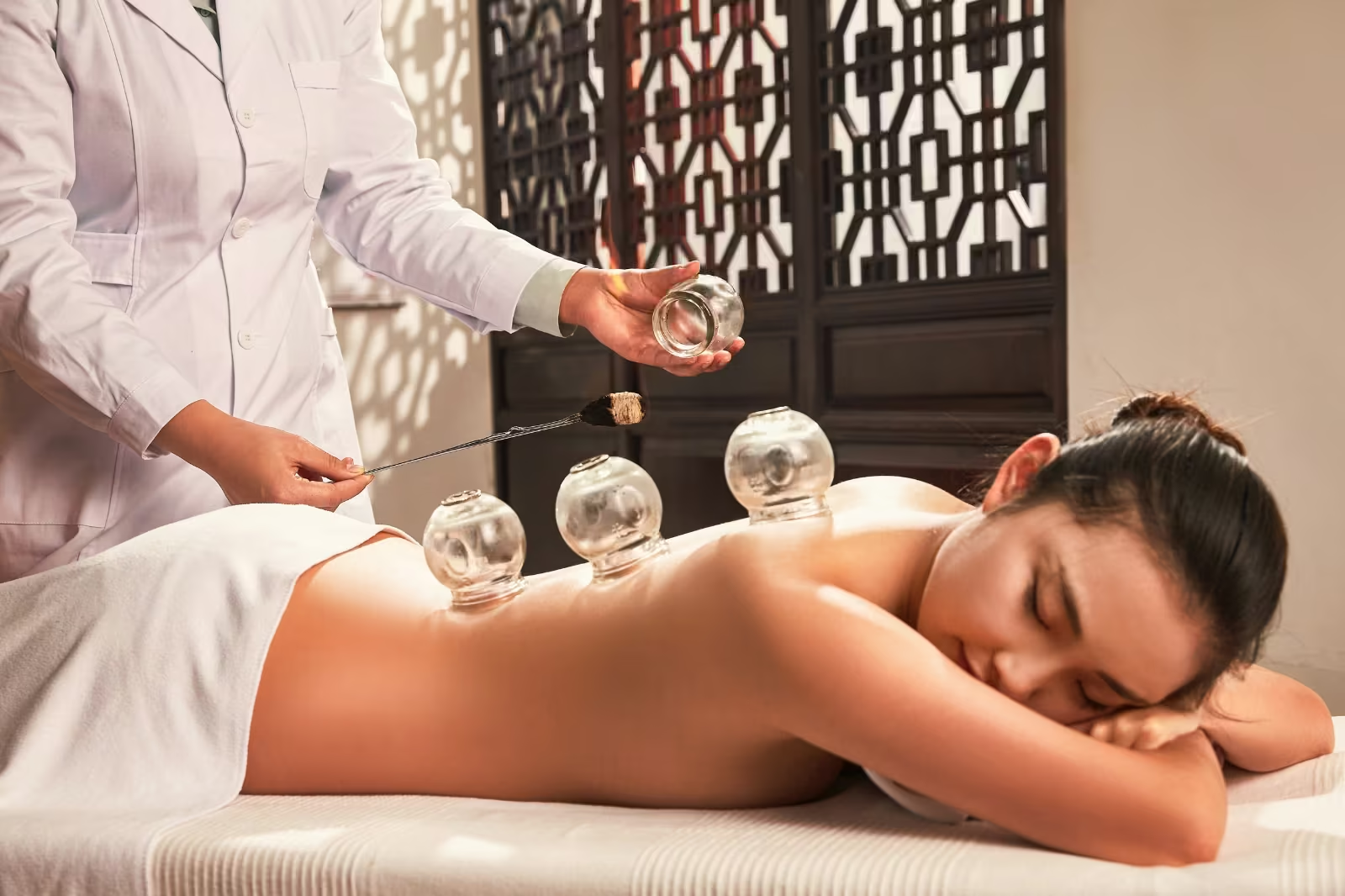
During dry cupping, a practitioner places cups on intact skin and creates suction. The negative pressure lifts the skin and superficial tissue into the cup. Blood moves toward the area, and tissue fluid can shift as pressure changes.
You may feel pulling, warmth, mild soreness, or a sense that a tight area has loosened. The skin may also turn red or purple. These effects come from a local response to suction.
Nothing physically exits the body during dry cupping because the skin stays closed. Blood and fluid may move within the treated tissue, but moving a substance from one spot to another does not mean the body has excreted it.
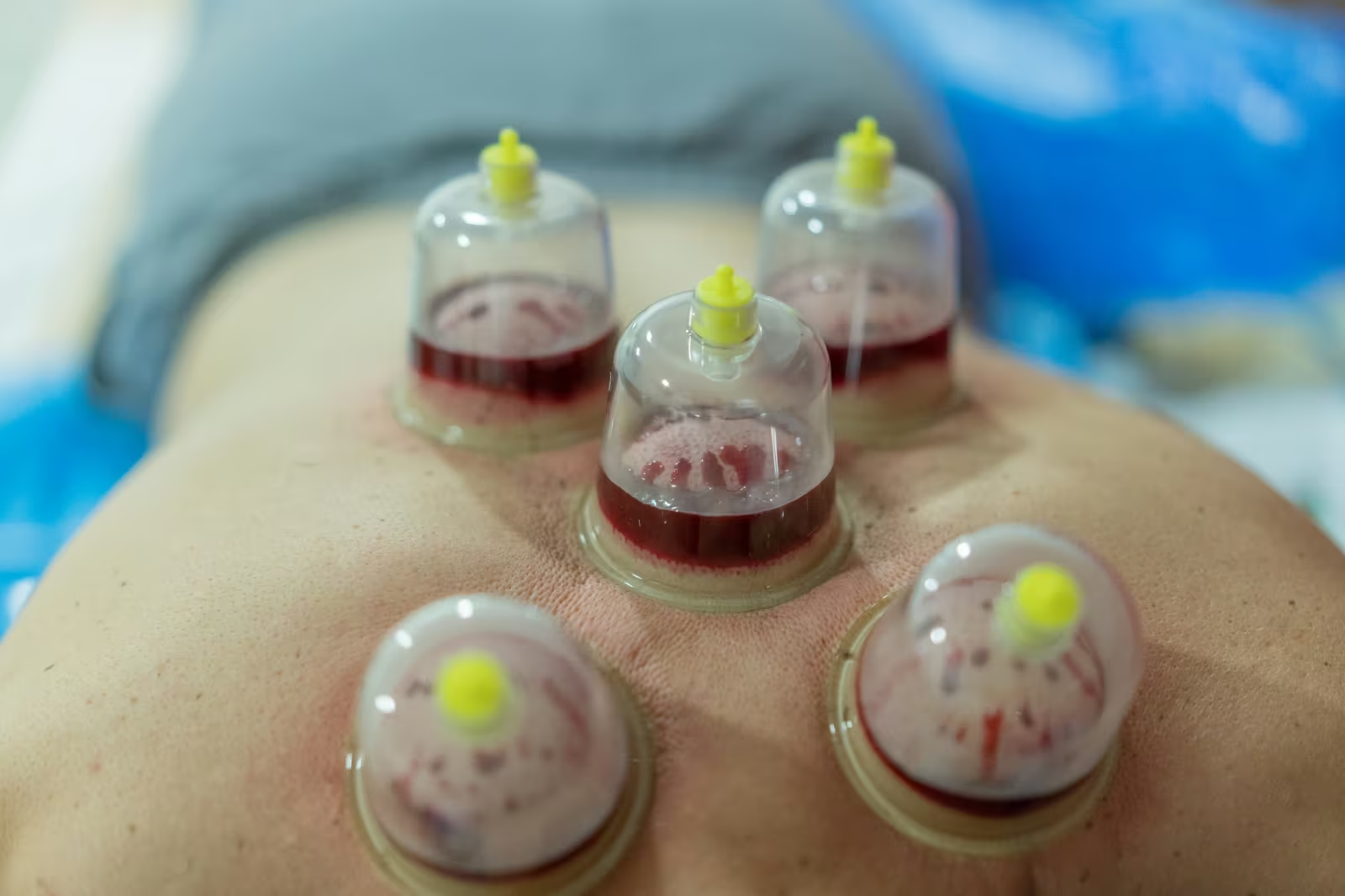
Wet cupping, also called hijama in some traditions, adds a bloodletting step. The practitioner makes shallow openings in the skin and reapplies suction, allowing a small amount of blood and tissue fluid to collect in the cup.
Although material visibly leaves the body during wet cupping, this should not be interpreted as proof that heavy metals or other toxins are being removed. Wet cupping is not a treatment for heavy-metal exposure or poisoning.
Anyone concerned about exposure to lead, mercury, cadmium, or another harmful substance should seek appropriate medical testing and treatment.
Cupping marks and fluid shifts show that suction affected the treated tissue.
The round marks appear when suction draws blood toward the skin and stresses tiny blood vessels called capillaries. Some capillaries can leak into the surrounding tissue, producing colors that range from pink and red to dark purple.
Mark color can change with suction strength, treatment time, body area, skin characteristics, medication use, and how easily you bruise. A darker mark does not mean that an area held more toxins, nor does a pale mark mean the body was “clean.”
Most marks fade as the body reabsorbs the blood under the skin. Some disappear quickly, while darker marks can remain visible longer. Following sensible post-cupping aftercare can also help you know what to expect while the skin recovers.
Cupping can also shift superficial tissue fluid. This is one reason people connect the therapy with lymphatic drainage. Local fluid movement is plausible because suction changes pressure around the tissue.
The larger detox claim goes beyond what research has shown. The lymphatic system returns fluid to the bloodstream, where the body continues to process its contents. A temporary fluid shift under a cup does not show that a named toxin left the body.
For someone seeking cupping because an area feels tight, sore, or puffy, it makes more sense to judge the session by changes in comfort and movement than by the darkness of a mark.
Cupping has more research behind pain-related and musculoskeletal uses than detoxification, though the evidence remains mixed.
Studies have looked at cupping for low back pain, neck discomfort, muscle soreness, and other musculoskeletal complaints. Some trials report short-term improvement, but differences in technique and study quality make broad claims difficult.
Cupping is often considered for goals such as easing muscle tightness, reducing soreness, improving physical comfort, and making movement feel easier. It may be especially relevant when muscles feel tense, stiff, or overworked after exercise, repetitive activity, prolonged sitting, or other physical strain.
These are practical changes that can be noticed from one session to the next, such as whether an area feels less guarded, movement feels more comfortable, or soreness and tension become easier to manage.
Relaxation can also be a reasonable goal. Some people include cupping as part of a broader recovery or wellness routine, especially when they want to address tight or uncomfortable areas while taking time to rest.
These symptom-based goals can be discussed before treatment and reassessed afterward. How often cupping makes sense will depend on your response, symptoms, and health history, so understanding appropriate cupping frequency can help set realistic expectations.
For the right person, cupping may be considered as a complementary therapy for muscle tightness, soreness, physical discomfort, movement, recovery, or relaxation.
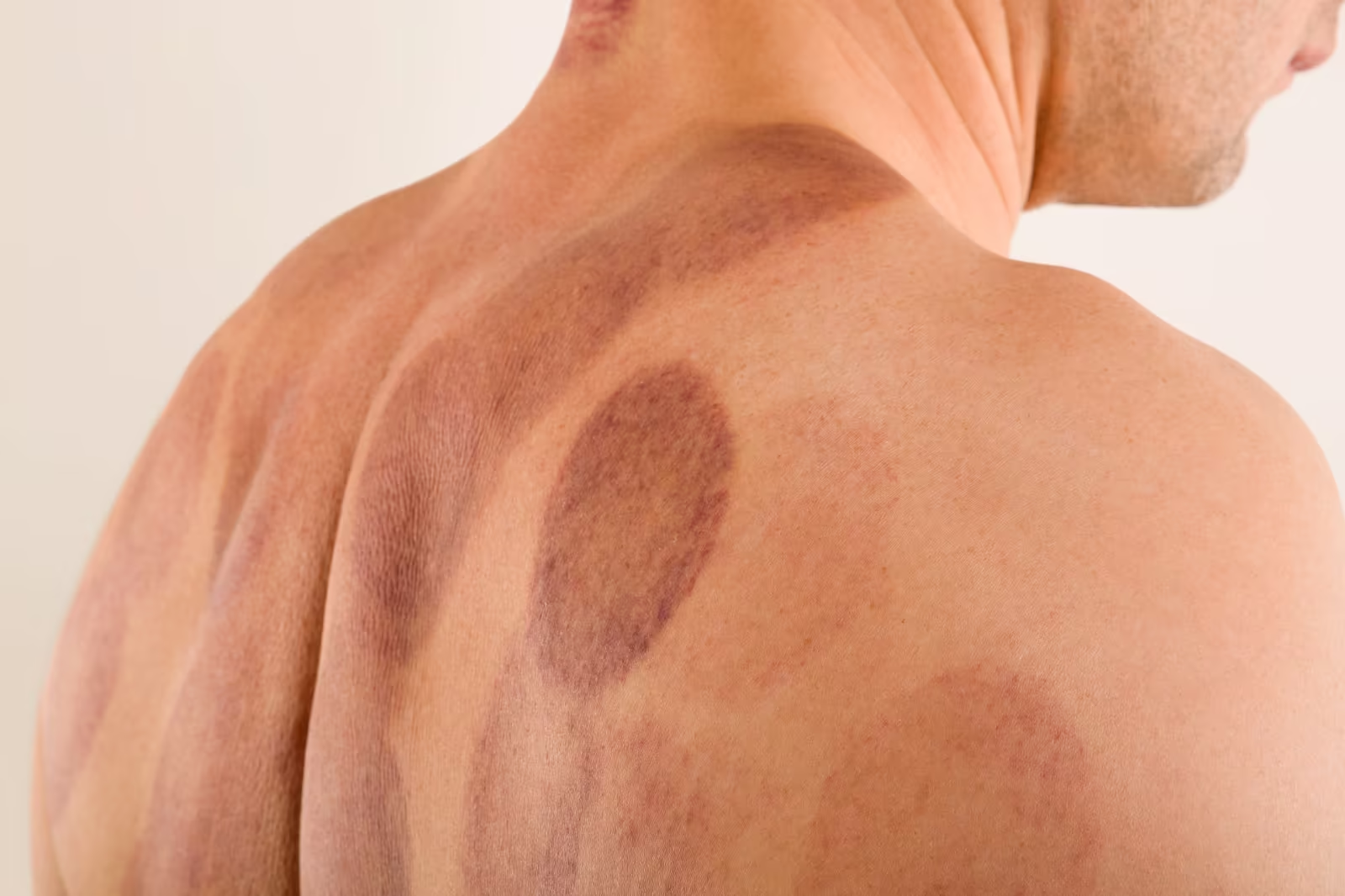
Cupping can cause temporary skin marks and soreness, while wet cupping adds bleeding and infection concerns because it opens the skin.
Possible side effects include persistent discoloration, burns, scars, infection, dizziness, and fainting. Repeated wet cupping can also contribute to blood loss. Equipment that comes into contact with blood needs proper infection-control procedures because contaminated equipment can spread bloodborne disease.
Talk with a qualified health professional before cupping if you take blood-thinning medicine, have a bleeding or clotting disorder, have anemia, or have an active skin condition. Cups should not go over infected, broken, badly irritated, or recently injured skin.
Severe pain, spreading redness, pus, fever, or worsening swelling after a session calls for medical care. These symptoms should not be considered a normal response to cupping.
A more useful way to approach cupping is to focus on what you want to feel or do differently after treatment. If the goal involves muscle tightness, soreness, movement, or comfort, those changes can be discussed and followed from one session to the next.
At ACA Acupuncture & Wellness, we use cupping with clear treatment goals and an approach that respects both traditional practice and current evidence. Cupping may be considered as part of a broader treatment plan for muscle tightness, soreness, restricted movement, or general physical discomfort.
If you are considering treatment, you can also review typical cupping costs before scheduling. If cupping therapy sounds relevant to your symptoms or treatment goals, we can help you determine whether it may be a suitable option for your needs.
Sources:
National Center for Complementary and Integrative Health. (n.d.). Cupping. U.S. Department of Health and Human Services.
National Institute of Diabetes and Digestive and Kidney Diseases. (n.d.). Your kidneys & how they work. National Institutes of Health.
Cupping is often considered for muscle tightness, soreness, stiffness, and physical discomfort. Some people notice that tight areas feel less guarded or that movement feels more comfortable after treatment, although individual responses vary.
Cupping causes local changes in pressure, blood flow, and tissue fluid, but these effects should not be interpreted as evidence that a measurable load of toxins has been released from the body.
Dry cupping keeps the skin intact, while wet cupping allows a small amount of blood and tissue fluid to leave through shallow openings in the skin.
No. Cupping does not physically remove lactic acid from muscles. The body produces lactate as part of normal energy metabolism, and it is naturally transported, used, and processed rather than remaining trapped in muscles as a toxin.
The red, purple, or darker circular marks result from the effect of negative pressure on the skin, superficial tissues, and small blood vessels. Their color and intensity can vary depending on the pressure, application time, treatment area, and individual tissue response.
Water can help you stay normally hydrated after a session, especially if you feel warm or lightheaded. Your kidneys regulate fluid balance as part of their normal work.
After cupping, the treated area may feel warm, relaxed, mildly sore, or tender for a short time, and circular marks may appear where the cups were placed. These effects can vary depending on the treatment area, suction strength, and your individual response, and the marks usually fade gradually as the skin recovers.
LOCATIONS
MANHATTAN
QUEENS
NEW JERSEY
CALIFORNIA

The over $4 billion US acupuncture market offers a great opportunity with over 10% annual growth rates and a continuing flow of new patients interested in the benefits of acupuncture.
