
Hot stone therapy combines massage with steady warmth. Cupping uses suction to lift the skin and nearby soft tissue. The main difference is how each treatment applies force and what the experience feels like.
If your shoulders stay tight after a long workday or one stubborn spot in your back never seems to loosen, you may start looking beyond a standard massage.
Two options you may come across are hot stone therapy and cupping therapy. Both may help tense areas feel more comfortable, but the experience is very different.
Does that mean one reaches deeper into your muscles? Not necessarily. Research has not shown that either technique physically reaches a set “deep” layer of muscle. What matters more is where you feel tension, how you respond to heat or suction, and which sensation you prefer.
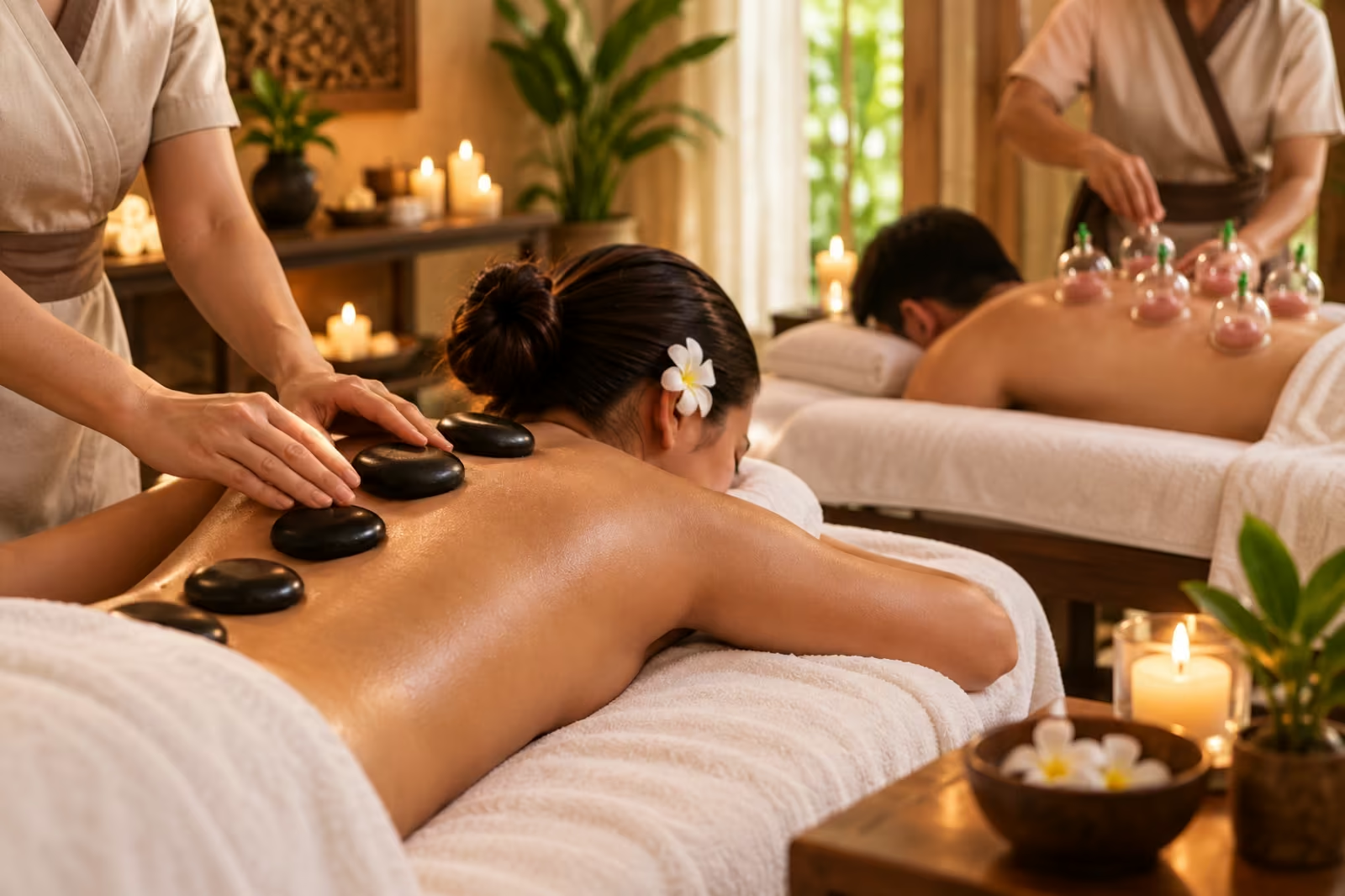
Hot stone therapy combines massage with steady warmth. Cupping uses suction to lift the skin and nearby soft tissue. The main difference is how each treatment applies force and what the experience feels like.
If your shoulders stay tight after a long workday or one stubborn spot in your back never seems to loosen, you may start looking beyond a standard massage.
Two options you may come across are hot stone therapy and cupping therapy. Both may help tense areas feel more comfortable, but the experience is very different.
Does that mean one reaches deeper into your muscles? Not necessarily. Research has not shown that either technique physically reaches a set “deep” layer of muscle. What matters more is where you feel tension, how you respond to heat or suction, and which sensation you prefer.
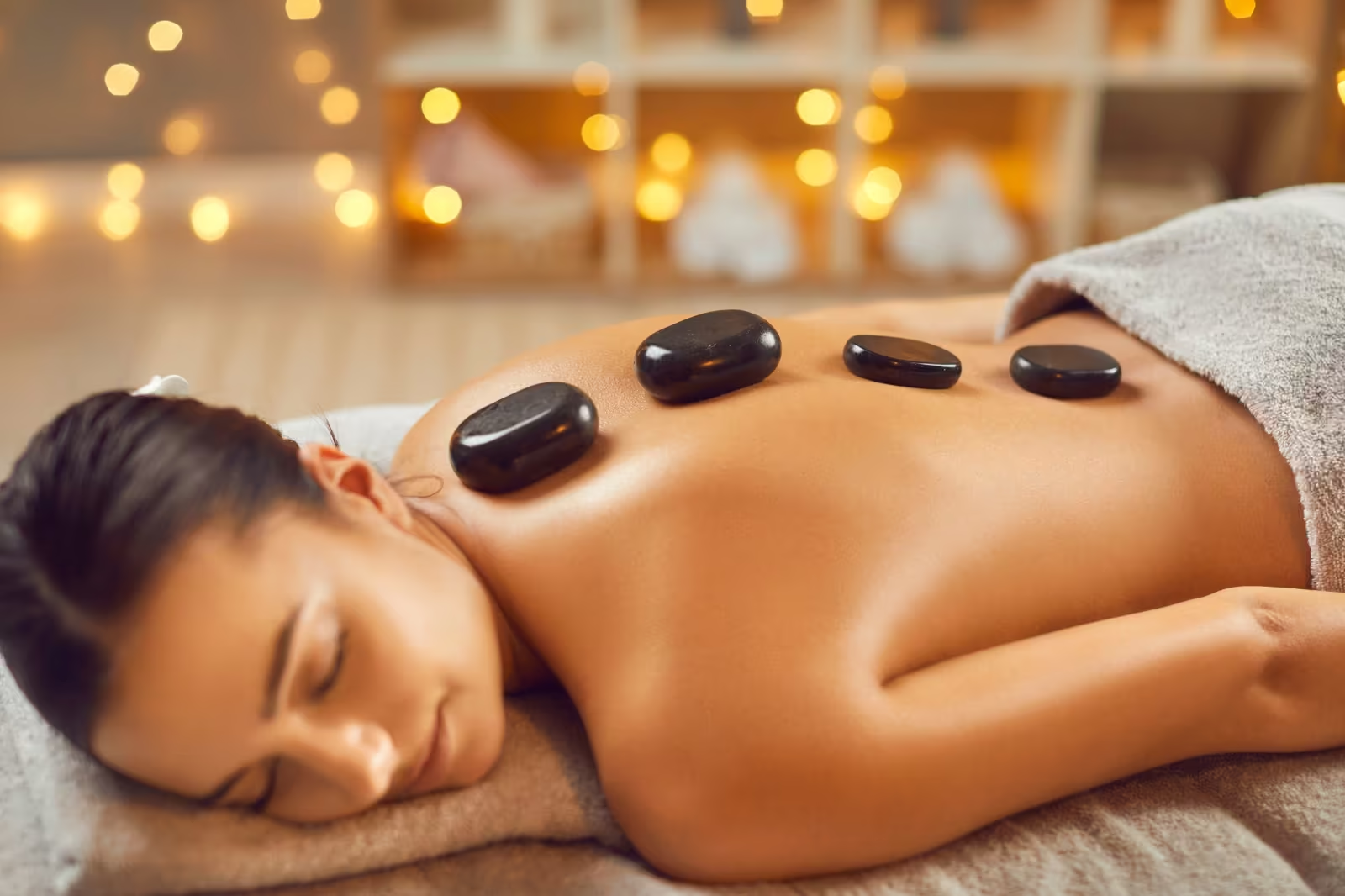
Hot stone therapy is a form of massage that combines hands-on techniques with smooth, heated stones. Basalt stones are often used because they retain heat well. A practitioner may place the stones on selected areas of your body or hold them while using massage strokes.
The stones should feel comfortably warm, not painfully hot.
What separates hot stone therapy from a standard massage is the controlled use of heat. Instead of depending only on massage pressure, the practitioner can use warmth while working across tense or stiff areas.
Evidence on superficial heat therapy suggests that warmth may help ease short-term musculoskeletal pain, muscle spasms, and stiffness while supporting flexibility. Studies focused specifically on hot stone massage are more limited, so these findings should not be taken as proof that heated stones produce the same effects.
You may prefer hot stone therapy when you enjoy warmth combined with hands-on massage.
People often choose it for:
The cause of your discomfort still matters. Ongoing or unexplained pain may need medical assessment rather than massage alone.
Many of the possible hot stone therapy benefits come from pairing massage with heat rather than from the stones by themselves.
The treatment may:
One distinction matters here. Feeling looser after a session does not mean the stones physically penetrated deep muscle tissue or permanently “released” a muscle.
Hot stone therapy works better as a description of the treatment experience: warmth plus massage aimed at comfort, relaxation, and short-term relief.
Your practitioner will usually start by asking where you feel tension, whether you have painful or sensitive areas, and how comfortable you are with heat.
The session may then include:
Hot stone therapy should feel warm and comfortable. Burning or sharp pain is not something you need to tolerate.
Cupping works very differently.
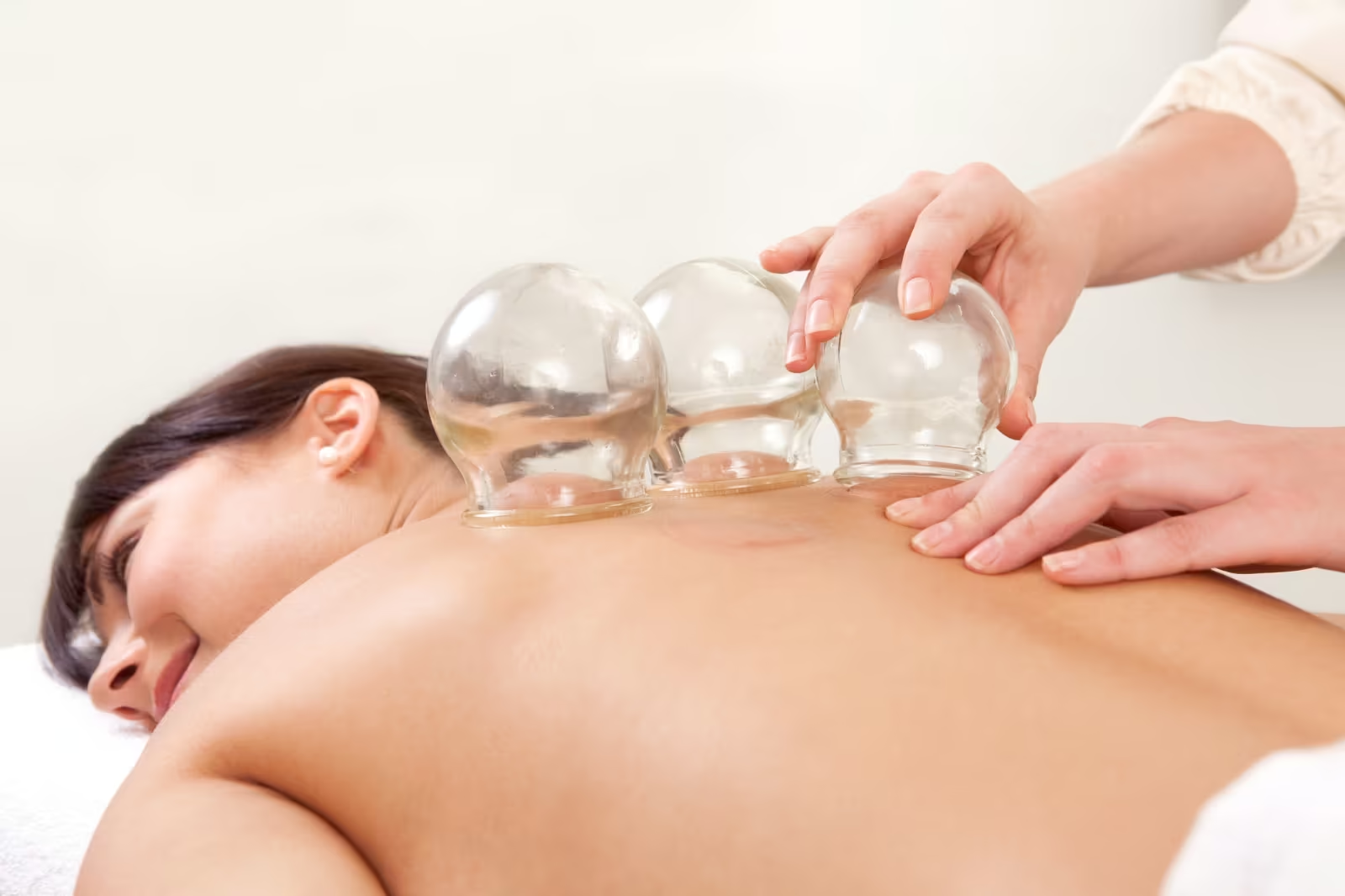
During dry cupping, a practitioner places cups on intact skin and creates negative pressure inside them. This suction pulls the skin and nearby soft tissue upward rather than pressing down on them.
The cups may stay in one place for several minutes. In some treatments, the practitioner moves them across lubricated skin. Session length and treatment format can vary, and the cost of cupping therapy may also differ depending on the clinic and whether cupping is provided on its own or alongside another treatment.
You will usually feel tightness or pulling beneath each cup. The sensation can range from mild to strong depending on the amount of suction.
Cupping has been studied for musculoskeletal pain. A systematic review and meta-analysis found that cupping was associated with lower pain intensity in people with chronic musculoskeletal pain, although improvements in physical function were not seen. The National Center for Complementary and Integrative Health (NCCIH) also cautions that much of the broader evidence on cupping remains low quality.
For that reason, it makes more sense to view cupping as an option for short-term symptom relief rather than a treatment proven to permanently change muscles or fascia.
The clearest difference is how each technique applies force to your body.
Hot stone therapy adds heat to massage and presses downward across the muscles. Cupping uses negative pressure to lift the skin and nearby tissue upward.
| Factor | Hot Stone Therapy | Cupping Therapy |
| Approach | Heated stones with massage | Cups with suction |
| Force | Downward massage pressure | Upward pulling force |
| Treatment area | Can be adapted to different areas | Can be adapted to different areas |
| Sensation | Warm, smooth, soothing | Tight, pulling, sometimes strong |
| Visible marks | Usually none | Circular marks are common |
| Often chosen for | Warmth and massage | Suction-based treatment |
| Afterward | May feel warm or mildly sore | May feel looser or mildly tender |
Neither approach needs to feel intense to be useful.
The sensation tells you more about the type of force being used than how well the treatment is working.
Both treatments may appeal to you when your muscles feel tight, but your comfort and treatment preference can help you choose between them.
Hot stone therapy may make more sense when warmth and massage feel good on tense or stiff muscles.
You might lean toward hot stone therapy if you:
Cupping creates a different treatment experience.
It may appeal to you when an area repeatedly feels tight or restricted and you prefer suction rather than the same downward pressure you would feel during massage.
You might lean toward cupping if you:
Neither treatment automatically works better for muscle tension. Your response may depend more on your symptoms and treatment preference than on how strong the session feels.
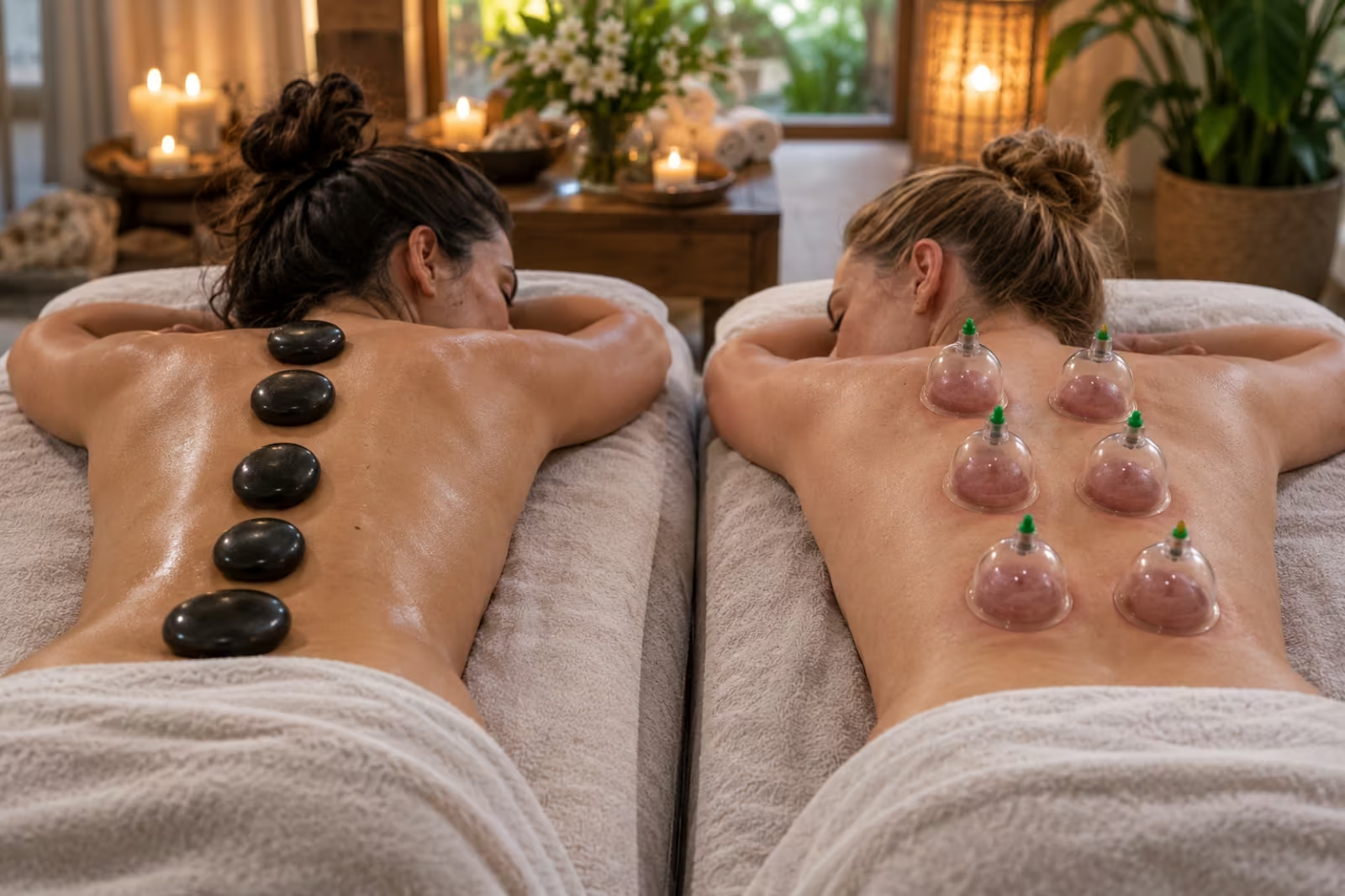
Back and shoulder tension can feel very different from one person to another.
Hot stone therapy may appeal to you when warmth and massage feel comfortable on a stiff neck, tight shoulders, or achy upper back.
Cupping may make sense if you prefer suction rather than repeated downward pressure.
Cups can be placed over selected areas of the back or shoulders based on the treatment plan and your comfort.
Massage research suggests that massage therapy may offer short-term relief for some types of neck and shoulder pain, though the evidence varies by condition and treatment. Cupping research also points toward possible short-term pain relief, but it does not show that suction corrects an underlying cause of back or shoulder pain.
If pain keeps returning, gets worse, or comes with numbness, weakness, swelling, or an injury, bodywork should not replace a medical assessment.
Cupping can feel intense because suction creates a firm tugging or pulling sensation. Stronger suction can make that feeling more noticeable.
Hot stone therapy creates a different sensation, combining warmth with massage strokes and pressure from the practitioner’s hands or stones.
Still, intensity is not a measure of how well a treatment is working.
A very strong cupping session does not necessarily provide better muscle relaxation. The same applies to massage. Harder pressure does not automatically mean better results.
Your session should stay within a level you can tolerate comfortably.
Yes. A practitioner may include both techniques in the same treatment plan.
One approach is to use hot stone massage first, then add cupping where appropriate. That allows both warmth and massage to be combined with suction during the treatment plan.
More treatment does not always mean more relief, though.
Strong massage followed by heavy suction may leave some people sore. If you bruise easily or your skin reacts strongly to cupping, your practitioner may use lighter suction, fewer cups, or separate the treatments.
Heat, massage pressure, suction strength, and treatment frequency should match your comfort and response.
Both treatments affect your skin and soft tissues, but they come with different concerns.
Cupping commonly leaves temporary red or purple circles. NCCIH notes that cupping can also cause persistent skin discoloration, scars, burns, or infections in some cases. Cupping should not be placed over broken or infected skin.
Tell your practitioner if you bruise easily, take blood-thinning medication, have a bleeding disorder, or recently had surgery.
Hot stone therapy brings heat-related concerns.
If you have reduced skin sensation, you may not notice quickly enough when a stone becomes too hot. Open wounds, active skin irritation, and some circulation or nerve problems may also affect whether a heat-based treatment suits you.
Massage therapy has a low reported rate of harmful effects overall, but rare serious events have occurred, especially with vigorous massage or in people at higher risk of injury.
Your practitioner should ask about your health history before beginning either treatment.
Start with how your tension actually feels and which treatment experience you prefer.
If warmth helps you relax, hot stone therapy may be the more comfortable choice.
If you prefer suction rather than sustained downward massage pressure, cupping may be worth considering.
You also do not need to pick the option that sounds stronger. Comfort, symptom pattern, skin response, and your health history matter more than intensity.
At ACA Acupuncture & Wellness, we look at where you feel tension, how long it has been bothering you, and what type of treatment your body tolerates well.
If recurring neck, shoulder, back, or muscle tension is affecting your comfort or movement, schedule an appointment with us. Depending on your symptoms and goals, your treatment plan may include cupping, acupuncture, Chinese massage (Tui Na), or time in our Thermal Therapy Room. Our team can help determine which of these services, or which combination, best fits your needs and treatment goals.
Sources:
Nossa, F., Franco, M., Magni, A., Raimondo, E., Ventriglia, G., & Gervasoni, F. Heat Therapy for Musculoskeletal Pain Conditions: Actionable Suggestions for Pharmacists from a Panel of Experts. Pharmacy. April 29, 2025.
Jia, Y., Dong, X., Chai, Y., Bai, Z., Sun, T., & Hou, X. Effects of Cupping Therapy on Chronic Musculoskeletal Pain and Collateral Problems: A Systematic Review and Meta-Analysis. BMJ Open. May 28, 2025.
National Center for Complementary and Integrative Health. Cupping. National Institutes of Health. Last updated November 2018.
National Center for Complementary and Integrative Health. Massage Therapy: What You Need To Know. National Institutes of Health.
National University of Health Sciences. Hot Stone Massage.
A useful measure is whether the treated area feels less tense and movement feels more comfortable afterward. A stronger sensation does not necessarily mean a treatment is working better.
Research has not shown that either technique works better for muscle relaxation. Hot stone therapy combines warmth with massage, while cupping uses suction, so the two treatments create different sensations.
Cupping may offer short-term pain relief for some people with musculoskeletal back pain. Research has found reductions in pain intensity, while improvements in physical function have been less consistent.
The terms are often used interchangeably. Hot stone massage combines heated stones with massage techniques, while cupping uses suction rather than heat and downward massage pressure.
Hot stone therapy is often incorporated into a massage session, while cups may stay on selected areas for several minutes during cupping. Total session length depends on the areas being treated and whether other techniques are included.
Cupping may leave temporary red or purple marks, along with mild tenderness or skin irritation. Post-cupping aftercare may help ease discomfort and support the skin as it recovers. Less common risks include burns, infection, scarring, or lasting discoloration. Hot stone therapy usually does not leave marks, but stones that are too hot can irritate or burn the skin.
LOCATIONS
MANHATTAN
QUEENS
NEW JERSEY
CALIFORNIA

The over $4 billion US acupuncture market offers a great opportunity with over 10% annual growth rates and a continuing flow of new patients interested in the benefits of acupuncture.
