


Essential tremor is a neurologic movement disorder that causes rhythmic shaking, most often in the hands, head, or voice during voluntary movement. Acupuncture may help essential tremor by calming nervous system overactivity, supporting motor coordination, reducing stress-related flare-ups, and improving the body’s ability to regulate movement.
For many people, essential tremor is more than a visible shake. It can affect handwriting, drinking from a cup, using utensils, buttoning clothing, applying makeup, shaving, typing, and feeling confident in social settings. The tremor often becomes more noticeable during action, pressure, fatigue, caffeine use, or emotional stress.
Acupuncture offers a natural, non-drug approach that may be used alongside medical care to help reduce symptom burden and improve day-to-day stability. It does not claim to cure essential tremor, but it can be part of a thoughtful management plan focused on steadier movement, calmer nervous system function, and better quality of life.
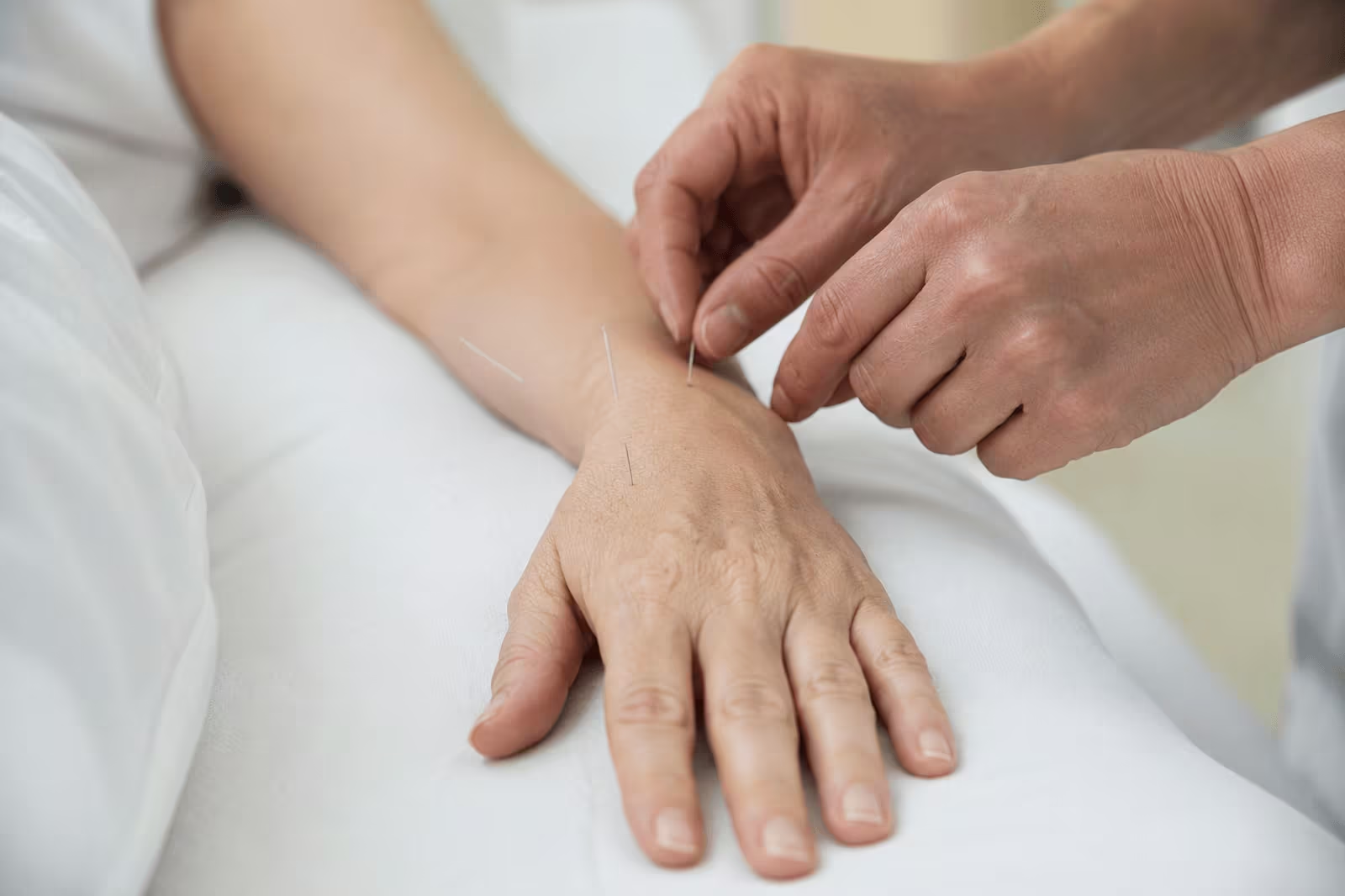
Essential tremor is a neurologic movement disorder that causes rhythmic shaking, most often in the hands, head, or voice during voluntary movement. Acupuncture may help essential tremor by calming nervous system overactivity, supporting motor coordination, reducing stress-related flare-ups, and improving the body’s ability to regulate movement.
For many people, essential tremor is more than a visible shake. It can affect handwriting, drinking from a cup, using utensils, buttoning clothing, applying makeup, shaving, typing, and feeling confident in social settings. The tremor often becomes more noticeable during action, pressure, fatigue, caffeine use, or emotional stress.
Acupuncture offers a natural, non-drug approach that may be used alongside medical care to help reduce symptom burden and improve day-to-day stability. It does not claim to cure essential tremor, but it can be part of a thoughtful management plan focused on steadier movement, calmer nervous system function, and better quality of life.

Essential tremor is a neurologic condition that causes involuntary, rhythmic shaking during movement or when holding a posture. It most commonly affects the hands, but it can also involve the head, voice, arms, legs, face, or trunk.
Essential tremor is considered one of the most common movement disorders. Unlike a resting tremor, which is often more visible when the body is relaxed, essential tremor usually becomes more noticeable when a person tries to do something precise. This may include writing, lifting a cup, eating with a fork, brushing teeth, using a phone, or holding an object still.
Essential tremor is not simply “nerves” or normal aging. It is a real neurologic disorder involving movement regulation, coordination, and nervous system signaling. The exact cause is not fully understood, but research commonly points to the cerebellum and related motor circuits that help coordinate smooth, controlled motion.
Essential tremor often develops gradually and may be mild at first. Many people notice it when a hand shakes during writing, holding utensils, drinking coffee, or reaching for an object.
Common symptoms include:
The tremor can fluctuate. A person may feel steadier in the morning and shakier after a stressful meeting, poor sleep, too much caffeine, or a physically demanding day.
Essential tremor and Parkinson’s disease can both cause shaking, but they are not the same condition. Essential tremor usually appears during action, while Parkinsonian tremor often appears at rest.
This distinction matters because the treatment approach is different. Essential tremor is commonly noticed when the hands are active, such as writing or drinking. Parkinson’s tremor is often more visible when the hands are resting in the lap or at the side of the body. Parkinson’s disease may also include stiffness, slowness of movement, balance changes, smaller handwriting, reduced arm swing, facial masking, or changes in walking.
A person with new tremor should not self-diagnose. A neurologist or qualified medical provider can help determine whether the tremor is essential tremor, Parkinsonian tremor, medication-related tremor, thyroid-related tremor, anxiety-related shaking, dystonic tremor, enhanced physiologic tremor, or another neurologic condition.
Acupuncture may help essential tremors by regulating nervous system activity, reducing stress-related tremor triggers, improving circulation, relaxing muscle tension, and supporting smoother motor control. It is best used as complementary care, not as a replacement for neurologic diagnosis or prescribed treatment.
In clinical practice, people often seek acupuncture for essential tremor because they want a natural option that does not add medication side effects. Others come because medication helps only partially, causes fatigue or dizziness, or does not fully address stress-sensitive tremor patterns.
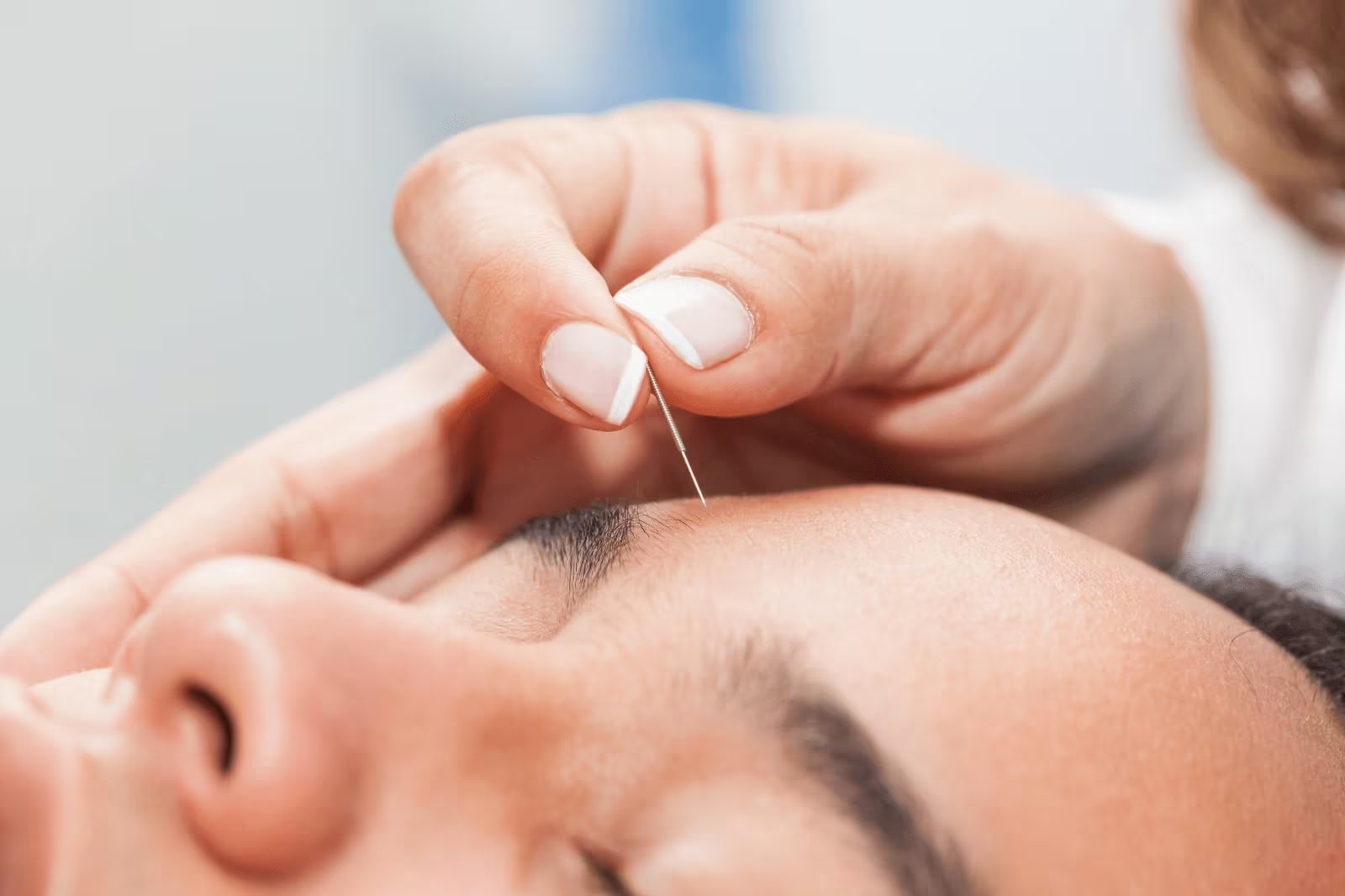
Acupuncture stimulates specific points on the body to influence nerve signaling, circulation, muscle tone, pain modulation, and autonomic nervous system balance. For essential tremor, the most relevant effects involve nervous system regulation and motor control.
Essential tremor is often understood through the relationship between the cerebellum, thalamus, motor cortex, and other movement-related pathways. These networks help the body time movement, adjust force, correct errors, and coordinate fine motor control. When these circuits become dysregulated, movement can become rhythmic, shaky, or difficult to steady.
Acupuncture may support tremor management through several overlapping mechanisms.
Essential tremor often worsens when the body is under stress. The sympathetic nervous system, commonly associated with the fight-or-flight response, can amplify shaking by increasing arousal, muscle tension, heart rate, and adrenaline-like signaling.
Acupuncture may help shift the body toward parasympathetic activity, which is associated with rest, repair, digestion, and calmer physiologic regulation. For a person with stress-sensitive tremor, this calming effect can be clinically meaningful. The tremor may not disappear, but it may become less reactive, less intense, or easier to manage during daily activities.
Movement depends on chemical messengers that help nerves communicate. GABA, dopamine, serotonin, acetylcholine, and other neurotransmitters all play roles in motor control, mood, sleep, and nervous system regulation.
Essential tremor research often discusses GABAergic pathways because GABA is an inhibitory neurotransmitter that helps quiet excessive neural firing. Acupuncture research suggests that acupuncture can influence neurotransmitter activity and central nervous system processing. For essential tremor, this may help explain why some people experience improved steadiness, reduced tension, or fewer stress-related flare-ups after a course of care.
The cerebellar-thalamic-cortical circuit is a key movement pathway involved in coordination, timing, and motor correction. Essential tremor is frequently associated with abnormal oscillation or dysregulation within this circuit.
Acupuncture is not a surgical or device-based intervention, but it may influence the way the nervous system processes sensory and motor input. This is one reason scalp acupuncture has become a topic of interest for tremor-related care. Scalp acupuncture focuses on areas traditionally associated with motor function and involuntary movement patterns.
People with tremor often tense their shoulders, forearms, jaw, neck, or hands in an attempt to control shaking. This effort can make movement more rigid and exhausting. Over time, compensatory tension may worsen fatigue and reduce fine motor ease.
Acupuncture can help reduce muscle guarding and improve the body’s ability to relax without collapsing into weakness. This matters because steadiness is not created by stiffness. Steadier movement often comes from better coordination between activation and relaxation.
Healthy circulation supports muscles, nerves, connective tissue, and recovery. Acupuncture may increase local blood flow and reduce areas of restriction or discomfort that contribute to poor movement quality.
For essential tremor, circulation alone is not the main issue. However, improved blood flow may support comfort, reduce secondary tension, and help the hands, arms, neck, and shoulders feel less strained.
Poor sleep can make tremors worse. Stress, worry, and fatigue can also increase tremor visibility, especially during tasks that require precision or social confidence.
Acupuncture is often used to support sleep quality and relaxation. When sleep improves, the nervous system may become less reactive. This can make tremor episodes feel less intense and less disruptive.
Essential tremor often becomes worse when the nervous system is stimulated. Stress, fatigue, caffeine, hunger, strong emotions, and performance pressure can all increase shaking.
This is one of the most important practical points for patients to understand. Tremor severity is not fixed from hour to hour. It can change based on nervous system load.
Common triggers include:
A person may notice more shaking when signing a form in front of someone, eating in public, presenting at work, or holding a cup while being watched. This does not mean the tremor is imaginary. It means the nervous system is responsive to context.
Acupuncture can be helpful because it addresses both the tremor pattern and the reactivity that often amplifies it.
Acupuncture for essential tremor may include body acupuncture, scalp acupuncture, electroacupuncture, auricular acupuncture, or a combined approach. The best method depends on the person’s tremor pattern, medical history, age, stress level, sleep quality, and treatment goals.
Body acupuncture uses points on the arms, legs, hands, feet, neck, back, abdomen, or head. For essential tremor, treatment may focus on nervous system regulation, muscle relaxation, circulation, and constitutional balance.
Common treatment goals include:
Scalp acupuncture is a specialized method that places needles in specific zones of the scalp associated with neurologic function. In tremor care, scalp acupuncture may be used to support motor regulation and involuntary movement control.
Scalp acupuncture is especially relevant because essential tremor involves central motor networks rather than only local hand muscles. The hands may be where the tremor is seen, but the tremor pattern is generated through nervous system circuits.
A treatment plan may include scalp zones associated with motor control, tremor regulation, or sensory-motor integration. The practitioner may also combine scalp points with body points that address stress, sleep, and muscle tension.
Electroacupuncture uses a mild electrical current between acupuncture needles. It may be considered when the goal is stronger neuromodulatory input. For some movement-related conditions, electroacupuncture is used to provide rhythmic stimulation to specific points.
Electroacupuncture is not appropriate for everyone. It may be avoided or modified for people with pacemakers, seizure disorders, certain implanted devices, pregnancy-related precautions, or specific medical concerns. A licensed acupuncturist should review medical history before using it.
Auricular acupuncture uses points on the ear. It may be used to support relaxation, stress regulation, sleep, and autonomic balance. For essential tremor, auricular points are often supportive rather than primary.
An integrative approach combines traditional acupuncture theory with modern knowledge of neuroanatomy, movement science, stress physiology, and patient function. This is often the most practical approach for essential tremor because the condition affects both movement and daily confidence.

An acupuncture visit for essential tremor begins with a detailed assessment of the tremor pattern, triggers, medical history, medications, sleep, stress, and daily function. The treatment itself usually involves thin, sterile needles placed in selected points while the patient rests comfortably.
A strong first visit should include questions such as:
The acupuncturist may observe a simple task such as holding the arms out, touching finger to nose, writing a sentence, drawing a spiral, or holding a cup. These observations help create a baseline.
Most acupuncture sessions are calm and low-stimulation. The needles are very thin, and many people feel only a light pinch, pressure, warmth, heaviness, tingling, or dull ache.
A session may include points on the scalp, arms, legs, hands, feet, neck, or back. The needles may remain in place for a period of rest. Some patients feel deeply relaxed during the session. Others notice warmth, muscle release, slower breathing, or a quieter internal state.
After acupuncture, some people feel relaxed, sleepy, lighter, or more grounded. Others notice subtle changes over several sessions rather than immediate change after one visit.
Possible short-term responses include:
Any unusual or concerning symptoms should be discussed with the practitioner and medical provider.
A typical acupuncture plan for essential tremor begins with an initial series of weekly sessions, followed by reassessment. Many people need several treatments before changes become consistent. A practical starting plan may look like this:
| Treatment Phase | Frequency | Typical Length | Main Goal |
| Phase 1: Baseline and Regulation | 1 to 2 sessions per week | 3 to 4 weeks | Calm nervous system reactivity, identify triggers, improve sleep, and establish measurable baselines. |
| Phase 2: Tremor-Focused Support | Weekly sessions | 4 to 8 weeks | Support motor control, reduce tremor intensity, improve fine motor function, and refine the point prescription. |
| Phase 3: Reassessment | After 6 to 10 sessions | One reassessment point | Compare handwriting, daily function, trigger response, sleep, and patient-reported steadiness. |
| Phase 4: Maintenance | Every 2 to 6 weeks when helpful | Ongoing as needed | Maintain gains, manage flare-ups, and support ongoing nervous system balance. |
The right timeline depends on severity, age, duration of tremor, stress load, medication use, neurologic status, and overall health.
Essential tremor should be tracked through real-life function, not only through how shaky the hands look on a given day. A good tracking system makes progress easier to see.
Useful home tracking methods include:
Write the same sentence once or twice per week. Use the same pen, paper, time of day, and seated position. Compare legibility, spacing, pressure, and fatigue.
Draw a spiral once per week. Spirals can reveal changes in rhythm, amplitude, and control.
Hold a half-full cup for 10 to 15 seconds in a safe setting. Notice spilling, confidence, and effort.
Track how easy it feels to use a fork, spoon, or chopsticks. Daily eating function matters more than a perfect clinical score.
Record sleep, caffeine, stress, meals, alcohol, medication timing, and tremor severity. Patterns often become visible within two weeks.
Rate confidence in public tasks from 1 to 10. Essential tremor affects emotional confidence as well as movement.
Acupuncture may help reduce tremor severity, improve steadiness, lower stress reactivity, support sleep, and make daily tasks feel easier. It should not be presented as a guaranteed cure for essential tremor.
Realistic improvements may include:
Some people respond quickly. Others need a longer course. Some experience partial improvement, while others mainly benefit from reduced stress, better sleep, and improved coping. A smaller group may not notice meaningful tremor change.
The most credible goal is better management, not a promised cure.
Acupuncture does not replace a neurologic diagnosis, does not cure essential tremor, and does not reverse every cause of shaking. It is a supportive therapy that may help reduce symptom burden and improve nervous system regulation.
Acupuncture should not be used as the only response when tremor is new, rapidly worsening, one-sided, associated with weakness, linked to medication changes, or accompanied by other neurologic symptoms.
It also should not replace prescribed medication without guidance from the prescribing clinician. If a person takes propranolol, primidone, anti-seizure medication, thyroid medication, antidepressants, stimulants, or blood thinners, that information should be shared before treatment.
A neurologist should evaluate tremor when symptoms are new, worsening, unclear, or affecting daily function. Medical evaluation is especially important when tremor appears with weakness, numbness, balance problems, speech changes, stiffness, memory changes, severe headache, or sudden onset.
Seek medical care promptly if tremor:
Acupuncture can be part of care after appropriate evaluation, but a clear diagnosis matters.
Conventional essential tremor treatment may include medication, botulinum toxin injections, deep brain stimulation, focused ultrasound, adaptive tools, physical therapy, or occupational therapy. Acupuncture can complement these options but should not be framed as a replacement for all medical care.
Propranolol and primidone are commonly used first-line medications for essential tremor. Propranolol is a beta blocker, while primidone is an anti-seizure medication often used for tremor control.
These medications may help many patients, but they are not ideal for everyone. Some people have contraindications, incomplete response, fatigue, dizziness, sedation, low blood pressure, breathing concerns, mood effects, or other side effects.
Botulinum toxin injections may be used for certain tremors, especially head or voice tremor, or hand tremor in selected cases. The goal is to reduce unwanted muscle activity, although weakness can occur if dosing is not carefully managed.
Deep brain stimulation is a surgical option for severe medication-resistant essential tremor. It uses implanted electrodes to modulate movement circuits. It can be effective, but it involves surgery and requires careful medical selection.
Focused ultrasound is a non-incision procedure that targets specific brain tissue involved in tremor. It may be considered for selected patients with significant tremor that has not responded well to medication.
Physical and occupational therapy can help with adaptive strategies, coordination, strengthening, posture, weighted utensils, writing tools, and daily task modification.
Acupuncture fits into this landscape as a low-risk, non-drug therapy that may support nervous system regulation, stress resilience, sleep, muscle relaxation, and functional steadiness.

Acupuncture can often be used alongside essential tremor medication when the prescribing clinician and acupuncturist are aware of the full treatment plan. It should not be used as a reason to stop medication without medical guidance.
A combined approach may be especially useful when medication reduces tremor but does not fully address stress sensitivity, sleep problems, muscle tension, or daily confidence. Acupuncture may also appeal to people who want additional support without increasing medication dose.
Patients should tell the acupuncturist if they take:
This helps the practitioner choose safe techniques and avoid assumptions about symptom changes.
Lifestyle changes can make acupuncture more effective because essential tremor often responds to nervous system load. Small daily adjustments can reduce flare-ups and improve steadiness.
Caffeine can worsen tremor in some people. Coffee, energy drinks, strong tea, pre-workout supplements, and certain medications may increase shaking.
A practical approach is to track tremor intensity with different caffeine amounts rather than assuming every person must eliminate caffeine completely.
Sleep deprivation can make tremor more reactive. A consistent sleep schedule, reduced evening screen exposure, calming nighttime routine, and treatment for insomnia can support better tremor control.
Low blood sugar can make shaking worse. Balanced meals with protein, fiber, and healthy fats may help stabilize energy and reduce tremor amplification.
Dehydration can increase fatigue, tension, and physiologic stress. Hydration is not a cure for essential tremor, but it supports overall nervous system function.
Tremor often becomes worse when a person feels watched. Breathing techniques, task pacing, and environmental adjustments can reduce the pressure loop.
Adaptive tools are not a sign of failure. They are practical ways to protect independence.
Useful tools may include:
Gentle strengthening and coordination work can support function, but excessive gripping can increase tension. The goal is controlled strength, not rigid force.
Stress can worsen tremor, and tremor can create more stress. This creates a feedback loop that makes shaking feel harder to control.
The loop often looks like this:
Acupuncture may help interrupt this loop by calming nervous system arousal, relaxing muscle tension, and improving the body’s ability to shift out of fight-or-flight mode. This is why emotional regulation is not separate from tremor care. It is part of tremor care.
Hand tremor is the most common reason people seek acupuncture for essential tremor. The hands are central to independence, communication, eating, writing, work, and self-care.
A hand tremor may affect:
Acupuncture treatment for hand tremor may include scalp points, points along the arms and hands, points that reduce neck and shoulder tension, and points that calm the overall nervous system.
A useful clinical goal is not simply “no shaking.” A better goal is “more control with less effort.”
Head tremor may appear as a yes-yes or no-no movement. It can be socially distressing because it is difficult to hide.
Acupuncture for head tremor may focus on scalp points, neck tension, upper back tension, jaw relaxation, stress regulation, and postural support. The neck and upper back often become tense when a person tries to suppress head movement. Releasing that tension may improve comfort and reduce secondary strain.
Head tremor should be properly evaluated, especially if it is new, painful, associated with abnormal posture, or suspected to involve dystonia.
Voice tremor can make speech sound shaky, strained, or uneven. It may affect public speaking, phone calls, singing, teaching, meetings, or social confidence.
Acupuncture may support stress regulation, breath control, neck and jaw relaxation, and overall nervous system balance. However, voice tremor often benefits from evaluation by a neurologist and speech-language pathologist. Some patients may also be candidates for targeted medical interventions.
Essential tremor does not look the same in every person. A person with mild hand tremor worsened by caffeine needs a different plan than a person with long-standing head tremor, poor sleep, neck tension, and medication intolerance.
A personalized acupuncture plan may consider:
The most effective care plan connects the treatment to the patient’s real daily goals. For one person, that goal may be signing a name more clearly. For another, it may be drinking from a cup with less fear. For another, it may be feeling calmer before meetings.
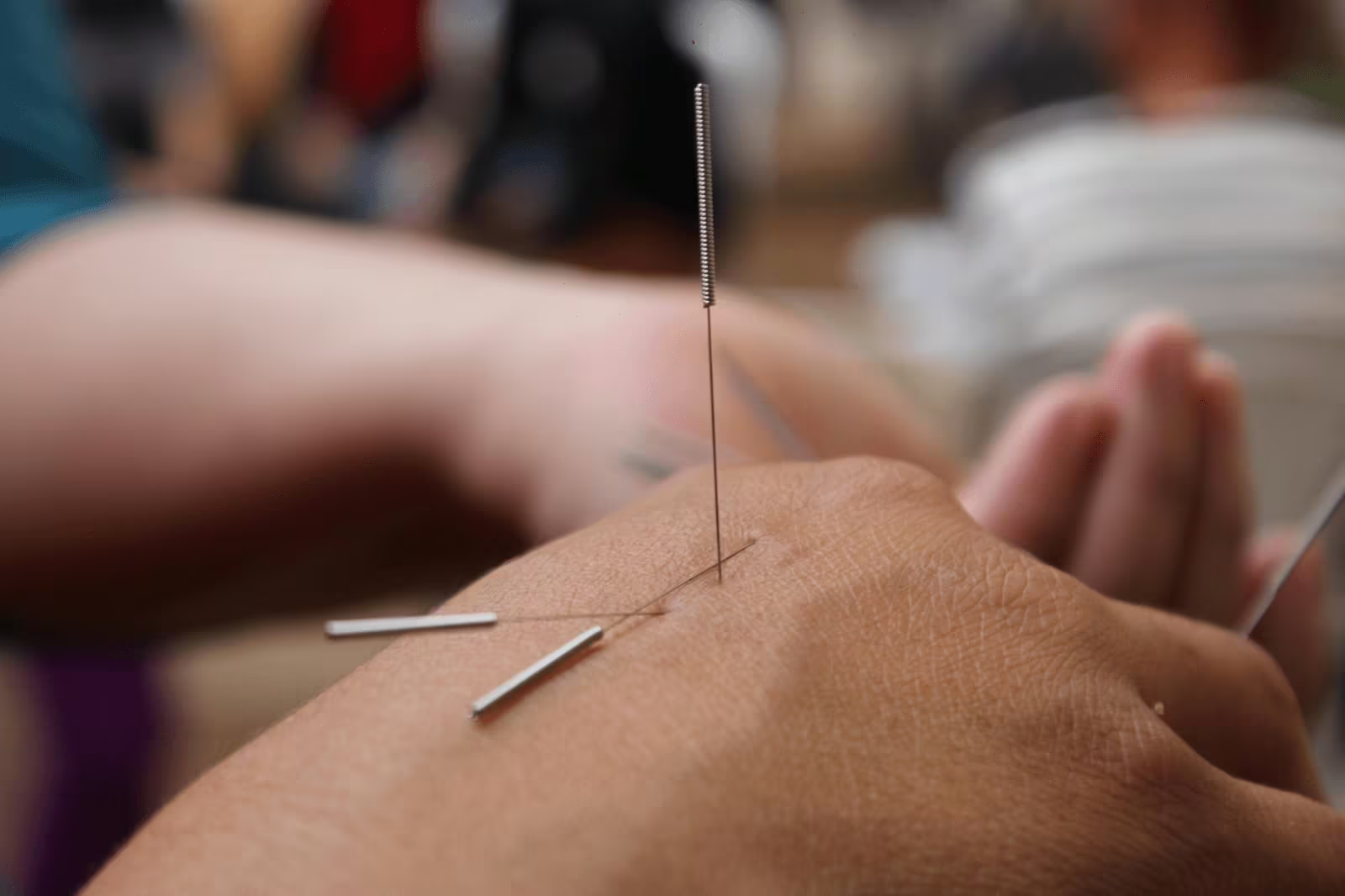
Acupuncture is generally considered low risk when performed by a licensed, trained practitioner using sterile needles. The most common side effects are mild soreness, small bruises, temporary fatigue, or lightheadedness.
Safety depends on proper screening. Patients should share medical history, medications, bleeding disorders, pregnancy status, implanted devices, seizure history, fainting history, and any neurologic diagnosis.
Extra caution may be needed for:
Electroacupuncture requires additional screening because it uses mild electrical stimulation.
A person may be a good candidate for acupuncture for essential tremor if the tremor is stable, medically evaluated, stress-sensitive, affecting daily function, or only partially managed with conventional care.
Acupuncture may be especially appropriate for people who:
Acupuncture may not be enough as a stand-alone approach for severe tremor that prevents eating, drinking, working, or self-care. In those cases, a neurologist should guide advanced treatment options.
Before beginning care, patients can ask:
Clear answers build trust and help patients make informed decisions.
Daily strategies can reduce frustration while acupuncture supports longer-term regulation.
Use a thicker pen, write slowly, rest the forearm on the table, and avoid writing while rushed. Practice signing your name at the same time each day to track changes.
Use a cup with a lid, hold the cup with both hands, fill cups halfway, or use a straw. Avoid very full hot drinks when tremor is active.
Use heavier utensils, bowls instead of plates when helpful, and elbows supported on the table. Choose foods that are easier to manage during flare-ups.
Use voice-to-text, keyboard shortcuts, larger phone grips, and scheduled breaks. Reduce caffeine before high-pressure tasks if caffeine worsens tremor.
Arrive early, choose stable seating, use cups with lids, and practice slow exhalation before fine motor tasks. Confidence often improves when the person has a plan.
Breathing does not cure essential tremor, but slow breathing can reduce the stress response that amplifies shaking. Long exhalations are especially useful because they help signal safety to the nervous system.
A simple practice:
This can be done before signing a document, eating in public, joining a meeting, or lifting a cup.
Posture affects tremor expression because the head, neck, shoulders, arms, and hands work as one movement chain. When the shoulders are elevated and the neck is tense, the hands often work harder.
Acupuncture may help reduce neck and shoulder tension, but posture habits also matter. Support the forearms during fine motor tasks, avoid gripping too tightly, and keep the shoulders relaxed rather than braced.
Some patients with earlier or milder tremor may respond more noticeably because the nervous system and muscles may be less entrenched in compensatory patterns. However, people with long-standing tremor may still benefit from better sleep, reduced stress reactivity, less muscle tension, and improved daily coping.
The best way to know is to complete a defined treatment trial and measure real-life function.
Essential tremor often requires long-term management. A strong plan may include neurologic care, medication when appropriate, acupuncture, physical or occupational therapy, trigger management, adaptive tools, sleep support, and stress reduction.
Acupuncture fits best when it is treated as one part of a broader stability strategy. The goal is to help the nervous system become less reactive and the body feel more coordinated.
A long-term plan may include:
Acupuncture for essential tremors is a natural, complementary approach that may help reduce shaking, calm nervous system reactivity, support sleep, improve muscle relaxation, and make daily tasks feel more manageable. It is not a cure and should not replace neurologic care, but it can be a valuable part of an integrative tremor management plan.
The most effective approach is personalized, measurable, and realistic. Essential tremor affects more than movement. It affects confidence, independence, and the small daily actions people often take for granted. By addressing nervous system regulation, stress triggers, muscle tension, and functional goals, acupuncture may help patients feel steadier in both body and daily life.
At ACA Acupuncture & Wellness, our acupuncturists create individualized treatment plans to support tremor management, nervous system balance, and steadier daily movement. If essential tremor is affecting your confidence, coordination, or daily routine, contact us or find the nearest clinic location to schedule a consultation and learn whether acupuncture may be a helpful part of your care plan.
Sources
National Institute of Neurological Disorders and Stroke. (2026). Tremor. National Institutes of Health.
Shi, Q., Han, J., Chen, B., Gao, S., & Shen, M. (2026). Comparative efficacy of acupuncture therapy in primary essential tremor: A network meta-analysis and systematic review. Healthcare, 14(6), 803.
Zhang, J., Yan, R., Cui, Y., Su, D., & Feng, T. (2024). Treatment for essential tremor: A systematic review and Bayesian model-based network meta-analysis of randomized controlled trials. EClinicalMedicine, 77, 102889.
The best natural treatment for essential tremor is a combined plan that reduces nervous system triggers and supports steadier movement. Acupuncture, stress regulation, better sleep, caffeine reduction, balanced meals, hydration, occupational therapy tools, and gentle coordination exercises may all help reduce tremor flare-ups and improve daily function. No natural treatment is proven to cure essential tremor, so the strongest approach is integrative care that combines natural support with proper medical diagnosis.
The newer procedure often discussed for essential tremor is MRI-guided focused ultrasound thalamotomy. This noninvasive treatment uses focused sound waves to target a small area of the thalamus, a brain region involved in tremor signaling. Deep brain stimulation is another established procedure for severe essential tremor, but it requires implanted electrodes. Focused ultrasound is less invasive than DBS, while DBS remains adjustable and commonly used for advanced tremor care.
The exact root cause of essential tremor is not fully known. Current evidence suggests essential tremor involves abnormal signaling in movement-control circuits, especially pathways connected to the cerebellum, thalamus, and motor system. Genetics may also play a role because essential tremor often runs in families. It is not caused simply by anxiety, although stress can make the shaking worse.
No vitamin is proven to stop essential tremor. However, vitamin deficiencies, especially vitamin B12 deficiency, can contribute to nerve symptoms or shakiness in some people, so testing may be appropriate if tremor is new, unexplained, or paired with numbness, weakness, fatigue, or balance changes. Supplements should be used only when there is a confirmed deficiency or medical reason, because essential tremor usually comes from neurologic movement-circuit dysfunction rather than a simple vitamin shortage.
Acupuncture may help reduce essential tremor symptoms by calming nervous system overactivity, improving stress resilience, relaxing muscle tension, supporting sleep, and helping the body regulate movement more smoothly. It works best as a complementary therapy rather than a stand-alone cure. A measurable treatment plan should track handwriting, cup-holding ability, daily function, sleep, caffeine use, and stress-related tremor changes.
People with essential tremor may benefit from limiting caffeine, energy drinks, highly stimulating pre-workout supplements, and alcohol overuse, because these can worsen shaking or nervous system reactivity. Skipping meals may also make tremor worse by lowering blood sugar. A steady diet with protein, fiber, hydration, and regular meals can help reduce tremor-triggering stress on the body, although diet alone does not cure essential tremor.
LOCATIONS
MANHATTAN
QUEENS
NEW JERSEY
CALIFORNIA

The over $4 billion US acupuncture market offers a great opportunity with over 10% annual growth rates and a continuing flow of new patients interested in the benefits of acupuncture.