

Acupuncture may help relieve orbicularis oculi trigger points by reducing muscle tension, improving circulation around the eyes, calming nerve irritation, and helping relax overactive facial muscles that contribute to pain, twitching, and eye strain.
Pain around the eyes is not always caused by an eye condition. In many cases, discomfort above, below, or around the eye originates from tight muscles surrounding the orbit, particularly the orbicularis oculi. Trigger points in this delicate facial muscle can contribute to aching, twitching, heaviness, headaches, and symptoms that closely resemble sinus pressure or eye fatigue.
Acupuncture is increasingly used as a conservative treatment option for periocular muscle tension because it targets muscular dysfunction while also addressing contributing factors such as stress, screen fatigue, poor sleep, and nervous system overstimulation.

Acupuncture may help relieve orbicularis oculi trigger points by reducing muscle tension, improving circulation around the eyes, calming nerve irritation, and helping relax overactive facial muscles that contribute to pain, twitching, and eye strain.
Pain around the eyes is not always caused by an eye condition. In many cases, discomfort above, below, or around the eye originates from tight muscles surrounding the orbit, particularly the orbicularis oculi. Trigger points in this delicate facial muscle can contribute to aching, twitching, heaviness, headaches, and symptoms that closely resemble sinus pressure or eye fatigue.
Acupuncture is increasingly used as a conservative treatment option for periocular muscle tension because it targets muscular dysfunction while also addressing contributing factors such as stress, screen fatigue, poor sleep, and nervous system overstimulation.
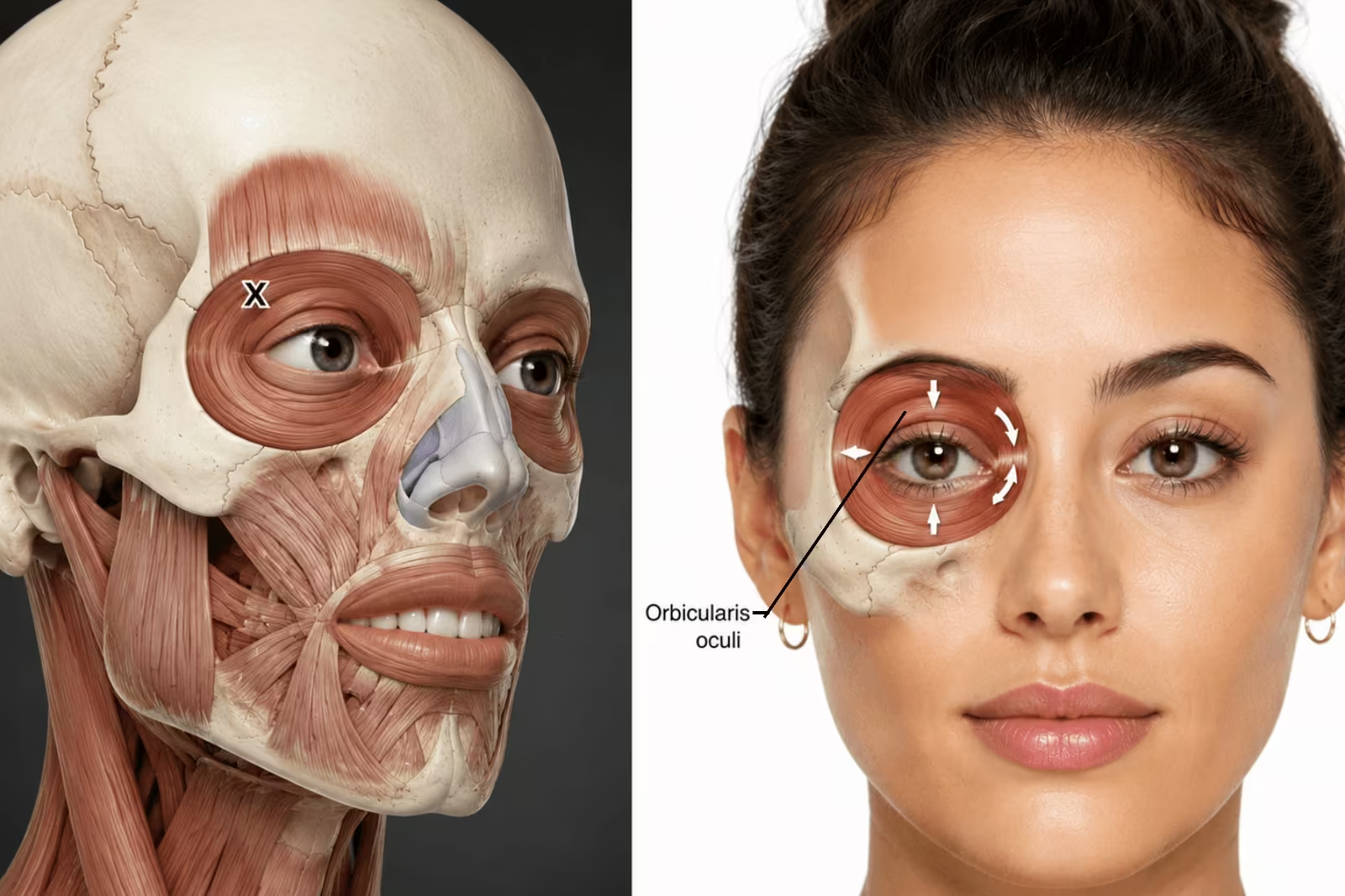
The orbicularis oculi is the circular muscle that surrounds the eyes and controls blinking, squinting, and eyelid closure. Trigger points develop when muscle fibers become tight, irritated, or overworked, creating tender bands that may radiate discomfort to nearby areas.
Unlike internal eye pain, orbicularis oculi trigger points typically create discomfort around the orbit rather than inside the eyeball itself.
The orbicularis oculi is a broad, flat sphincter muscle that wraps around the eye socket. Every blink, squint, wink, or forceful eye closure activates this muscle.
It consists of three functional portions:
This outer portion controls forceful eye closure, such as tightly squeezing the eyes shut in bright sunlight or during irritation.
This section helps with gentle blinking, which is essential for spreading tears evenly across the eye surface.
Located deeper near the tear drainage system, this portion supports tear movement and eye moisture regulation.
Because this muscle works continuously throughout the day, repetitive strain can lead to localized trigger points and muscle dysfunction.
Orbicularis oculi trigger points commonly produce symptoms that feel surprisingly widespread despite originating in a small muscle.
Common symptoms include:
Some people describe the discomfort as feeling like tired eyes that never fully relax.
A tight orbicularis oculi muscle may contribute to involuntary twitching, known as myokymia, or repetitive blinking.
Eye twitching is often linked to:
Although occasional twitching is common, persistent symptoms deserve professional evaluation.
Orbicularis oculi trigger points frequently mimic other problems, including:
This overlap is one reason many people spend months treating the wrong issue before identifying muscular involvement.
Modern lifestyle habits are making periocular muscle tension increasingly common.
Screen exposure remains one of the leading contributors to facial muscle overuse.
During prolonged computer or phone use, people blink less frequently and unconsciously squint at screens. Reduced blinking places more strain on the orbicularis oculi muscle and may increase eye fatigue.
The combination of poor posture, prolonged focus, and visual overload can gradually create trigger points around the orbit.
People who constantly squint due to outdated prescriptions or undiagnosed vision issues often overwork the muscles around the eyes.
Even mild astigmatism or subtle focusing problems may contribute to chronic muscle tension.
Stress commonly manifests physically in the face.
Many people unconsciously tense their brows, squint, or tighten facial muscles during periods of anxiety or emotional overload. Over time, this protective muscular pattern can contribute to trigger point formation.
Poor sleep reduces muscle recovery and increases nervous system sensitivity. Fatigued facial muscles are more prone to twitching, tightness, and discomfort.
Allergies, dryness, or irritation often lead to frequent eye rubbing, which may aggravate surrounding muscle tissue and perpetuate inflammation.
The orbicularis oculi does not work in isolation.
It connects functionally with several nearby muscles involved in facial expression and head tension, including:
This interconnected system explains why trigger points near the eye may also contribute to forehead discomfort, temple pressure, jaw tension, or headaches.
The muscle is primarily controlled by the facial nerve (cranial nerve VII), which coordinates blinking and facial movement. Irritation in overactive muscle fibers may influence nerve sensitivity and contribute to twitching or abnormal muscle activation.
Acupuncture may help orbicularis oculi trigger points by relaxing overactive muscles, improving local circulation, and reducing nerve sensitivity around the eyes.
Rather than simply masking symptoms, treatment aims to improve the function of the surrounding tissues.
When acupuncture needles are inserted into tense tissue, they may stimulate a localized muscle response sometimes referred to as a local twitch response.
This reaction may help:
The result is often less tension and greater comfort around the eyes.
Restricted muscle tissue may reduce blood flow and oxygen delivery.
Acupuncture may increase microcirculation around tight areas, supporting tissue recovery and helping relieve soreness or heaviness.
Many people with facial tension also have heightened nervous system stress.
Acupuncture may help regulate the autonomic nervous system by encouraging a parasympathetic, or relaxation, response. This may reduce involuntary muscle guarding and stress-related eye tension.
For individuals whose twitching is related to stress, fatigue, or muscular overactivity, acupuncture may help calm hyperactive facial muscles and reduce symptom frequency.

Although acupuncture and dry needling both involve thin needles, their approaches differ.
Acupuncture uses a broader medical framework that considers muscular symptoms alongside circulation, stress, sleep, posture, and nervous system balance.
Treatment often includes both local points around the eyes and distal points elsewhere on the body.
Dry needling focuses more directly on trigger point release inside muscular tissue.
Because the area around the eyes contains delicate anatomy, periocular needling requires specialized training and caution regardless of the treatment style used.
For many people with chronic facial tension, a whole-body approach may be beneficial because symptoms are often influenced by stress, posture, neck tightness, and sleep quality.
Licensed acupuncturists may use a combination of local and distal points depending on symptoms.
Commonly used points may include:
Located below the pupil, this point is traditionally used for eye discomfort, twitching, and swelling.
Often used for eyebrow tension, headaches, and frontal pressure.
Located near the center of the eyebrow, this point may help relieve tension around the brow and upper orbit.
Commonly used for temple headaches and eye strain.
Located near the base of the skull, this point is frequently used to address neck tension and headaches that contribute to eye discomfort.
Often used to support pain relief and reduce facial tension.
Acupuncturists rarely treat only the painful spot. Since trigger points are often influenced by whole-body tension patterns, practitioners commonly combine local and distant points.
A treatment session typically begins with a detailed assessment.
Your acupuncturist may evaluate:
Needles used around the eyes are extremely fine and inserted carefully with shallow techniques designed for sensitive facial tissues.
Many patients describe treatment as minimally uncomfortable.
Common sensations include:
Sessions commonly last between 30 and 60 minutes.
The number of treatments varies depending on symptom severity and contributing lifestyle factors.

Eye twitching, or myokymia, often improves once stress, fatigue, caffeine intake, and muscular overactivity are addressed.
Acupuncture may support relief by calming facial muscles and reducing nervous system activation.
In more complex cases, such as blepharospasm, symptoms involve involuntary eyelid spasms that may require collaboration with neurologists or ophthalmologists.
Acupuncture may sometimes be used as complementary care but should not replace medical evaluation for persistent or severe symptoms.
Professional treatment often works best alongside self-care strategies.
Helpful approaches may include:
Every 20 minutes, look at something 20 feet away for 20 seconds to reduce eye strain.
Gentle warmth may relax tight periocular muscles.
Fatigue is strongly linked to eye twitching and facial tension.
An updated prescription may significantly reduce muscle overuse.
Breathing exercises, meditation, or movement-based therapies may decrease facial guarding patterns.
The tissues around the eyes are delicate. Deep pressure or DIY trigger point release around the orbit can irritate sensitive structures.
Acupuncture near the eyes is generally considered safe when performed by a properly trained, licensed practitioner experienced in facial acupuncture.
Practitioners use careful angles, shallow insertion techniques, and detailed anatomical knowledge to avoid sensitive structures.
Potential side effects are usually mild and temporary and may include:
However, people experiencing sudden vision loss, severe redness, sharp internal eye pain, or neurological symptoms should seek immediate medical evaluation before pursuing acupuncture.
You may benefit from evaluation if you experience:
Persistent symptoms deserve proper assessment because eye discomfort may have muscular, neurological, or ocular causes.
Pain around the eyes is not always an eye problem. In some cases, persistent discomfort may originate from tight muscles surrounding the orbit, particularly the orbicularis oculi.
When trigger points develop, symptoms can mimic headaches, sinus pressure, or eye strain, making proper evaluation important. Acupuncture may help by relaxing tight muscles, improving circulation, and reducing nervous system tension that contributes to pain, twitching, and facial muscle tightness.
Because symptoms around the eyes can occasionally signal more serious medical conditions, persistent or worsening discomfort should always be properly evaluated, especially if accompanied by vision changes, severe pain, or redness.
At ACA Acupuncture and Wellness, we take a holistic approach to care by looking beyond the symptom itself and considering the underlying factors that may contribute to recurring facial tension, eye strain, stress, and muscle discomfort.
Sources:
Chi, Y., Barth, J., Wang, M., Robinson, N., Li, Z.-H., & Liu, J.-P. (2021). Eye acupuncture for pain conditions: A scoping review of clinical studies. BMC Complementary Medicine and Therapies, 23(1), 101.
Orbicularis oculi trigger points do not directly cause true blurred vision, but they may contribute to eye fatigue, squinting, heaviness, or tension that temporarily affects visual comfort. Persistent blurred vision should always be evaluated by an eye doctor.
Prolonged screen use may worsen orbicularis oculi trigger points because people tend to blink less, squint more, and strain the muscles surrounding the eyes during extended computer or phone use. This can increase muscle fatigue and tension around the orbit.
Acupuncture may help headaches associated with orbicularis oculi trigger points by relaxing tight facial muscles, reducing forehead and temple tension, and addressing contributing factors such as stress, neck tightness, and prolonged screen exposure.
Stress and anxiety may increase facial muscle guarding, unconscious squinting, and tension around the brows and eyes. Over time, these repetitive tension patterns may contribute to orbicularis oculi trigger point development.
Dehydration may contribute to muscle irritability and fatigue, which can sometimes worsen eye twitching. Poor sleep, stress, excess caffeine, and prolonged screen exposure are also common contributors.
Preventing recurring trigger points often involves reducing screen strain, improving sleep quality, correcting vision issues, managing stress, taking frequent visual breaks, and addressing posture or neck tension that may contribute to facial muscle overload.
LOCATIONS
MANHATTAN
QUEENS
NEW JERSEY
CALIFORNIA

The over $4 billion US acupuncture market offers a great opportunity with over 10% annual growth rates and a continuing flow of new patients interested in the benefits of acupuncture.
