


Acupressure can temporarily reduce tooth pain by stimulating specific pressure points that regulate facial nerves, decrease inflammation, and trigger the body’s natural endorphin response, but it does not treat the underlying dental condition. In some clinical settings, acupuncture may also be used to support short-term pain relief through similar mechanisms.
Tooth pain is one of the most neurologically intense forms of discomfort in the human body. The teeth are innervated by branches of the trigeminal nerve, one of the largest sensory nerves in the head, which explains why even minor inflammation can feel overwhelming. While dental treatment is essential for infections, cavities, or structural damage, acupressure provides a non-invasive method to calm pain signals while you wait for professional care.
In Traditional Chinese Medicine, tooth pain is often linked to imbalance in the Large Intestine and Stomach meridians, both of which traverse the face and jaw. Modern research aligns with this view in part, showing that targeted pressure can influence neural pathways, circulation, and inflammatory signaling.

Acupressure can temporarily reduce tooth pain by stimulating specific pressure points that regulate facial nerves, decrease inflammation, and trigger the body’s natural endorphin response, but it does not treat the underlying dental condition. In some clinical settings, acupuncture may also be used to support short-term pain relief through similar mechanisms.
Tooth pain is one of the most neurologically intense forms of discomfort in the human body. The teeth are innervated by branches of the trigeminal nerve, one of the largest sensory nerves in the head, which explains why even minor inflammation can feel overwhelming. While dental treatment is essential for infections, cavities, or structural damage, acupressure provides a non-invasive method to calm pain signals while you wait for professional care.
In Traditional Chinese Medicine, tooth pain is often linked to imbalance in the Large Intestine and Stomach meridians, both of which traverse the face and jaw. Modern research aligns with this view in part, showing that targeted pressure can influence neural pathways, circulation, and inflammatory signaling.

Tooth pain is amplified by the trigeminal nerve, which transmits sensation from the face, jaw, and oral cavity directly to the brainstem. When dental pulp becomes inflamed, pressure builds within a confined space, increasing neural firing. This produces sharp, throbbing pain that can radiate to the ear, temple, or neck.
Common causes include:
Inflammation increases prostaglandins and cytokines, sensitizing nerve endings. Acupressure works by interrupting this signal cascade.
Acupressure stimulates mechanoreceptors in the skin and muscle. This activates descending inhibitory pain pathways in the central nervous system.
Modern biomedical mechanisms include:
In TCM, tooth pain often corresponds to Heat rising in the Stomach channel or stagnation in the Large Intestine channel. Applying pressure clears stagnation and disperses excess Heat.
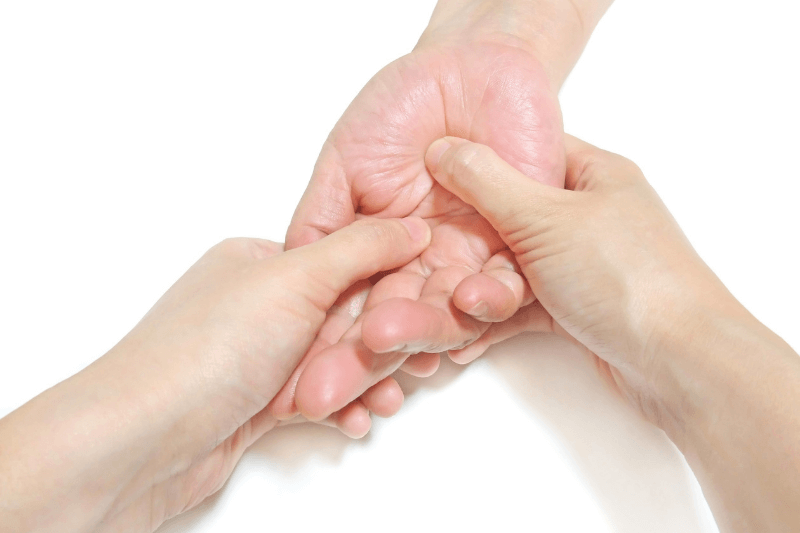
Several meridian and extra points are traditionally used to relieve toothache, facial tension, and referred jaw pain. These points influence trigeminal nerve signaling, reduce inflammation, and calm muscular tension in the head and neck.
Location: The webbing between the thumb and index finger.
This point regulates facial pain and reduces inflammation along the Large Intestine meridian. Apply firm circular pressure for 2 to 3 minutes. Avoid during pregnancy.
Location: On the masseter muscle when teeth are gently clenched.
This point directly relaxes jaw tension and improves circulation to the molars. Massage deeply for 1 to 2 minutes.
Location: Below the pupil at the lower border of the cheekbone.
This point is used for facial swelling, toothache, and sinus-related dental pressure.
Location: Just in front of the upper ear opening.
Helpful when tooth pain radiates toward the ear or temple.
Location: Between the second and third toes.
This distal point clears Stomach Heat, a common TCM pattern behind acute inflammatory tooth pain.
Additional Pressure Points for Toothache Relief

Location: In the triangular fossa of the ear.
This ear acupuncture point calms the nervous system and reduces pain perception. It is commonly used in auricular therapy for acute discomfort and stress-related jaw tension.
Location: Midway between the base of the neck and the shoulder tip.
Although primarily used for neck tension, this point can relieve referred facial pain caused by muscular tightness. Avoid during pregnancy.
Location: Below the knee, about four finger-widths beneath the kneecap.
This systemic point supports immune function and reduces stress-related inflammation that may worsen tooth pain.
Location: Four points surrounding the crown of the head.
Used to calm central nervous system overactivity and reduce pain intensity.
Location: Between the eyebrows.
Often used for relaxation and stress-related facial tension that can aggravate jaw clenching.
These additional points expand the therapeutic range beyond local facial areas, addressing both systemic inflammation and stress-related triggers. Combining local points such as ST6 and SI18 with distal regulatory points like ST36 or TF4 can create a more comprehensive pain relief response.

Toothache occurs when inflammation, infection, or structural damage irritates the dental pulp and surrounding tissues. The pulp contains blood vessels and branches of the trigeminal nerve, making it highly sensitive to pressure changes and inflammatory chemicals. Identifying the cause of tooth pain is essential because acupressure can reduce discomfort but cannot correct the underlying condition.
Tooth decay is one of the most common causes of toothache. Bacteria break down enamel, allowing infection to penetrate deeper layers of the tooth. As decay reaches the dentin or pulp, pain becomes more intense and persistent.
Pulpitis occurs when the inner pulp becomes inflamed due to untreated decay or trauma. Reversible pulpitis may cause temporary sensitivity, while irreversible pulpitis produces severe, throbbing pain that often worsens at night.
A periapical abscess forms when infection spreads to the root tip or surrounding bone. Symptoms may include swelling, pus discharge, fever, and facial tenderness. This condition requires urgent dental treatment.
Small fractures may not be visible but can expose sensitive inner layers. Pain often occurs when biting or chewing and may feel sharp or intermittent.
Wisdom teeth that cannot fully erupt may trap bacteria and inflame surrounding gum tissue. This can cause jaw stiffness, swelling, and radiating pain.
Advanced gum infection can cause aching pain, bleeding gums, and tooth mobility. Chronic inflammation may also heighten nerve sensitivity.
Maxillary sinus inflammation can create pressure on upper molars. The pain often feels like a toothache but is triggered by sinus congestion.
Jaw joint dysfunction can mimic tooth pain due to muscular tension and nerve referral patterns. Pain may worsen with clenching or chewing.
Mild tenderness is normal. Sharp pain indicates excessive force.
For enhanced effect, apply an ice cube to LI4 for short intervals.
In Traditional Chinese Medicine, tooth pain reflects an underlying energetic imbalance rather than a single uniform condition. Proper pattern differentiation allows treatment to address the root mechanism driving the pain instead of only suppressing the symptom.
This is the most common acute presentation. It produces sharp, throbbing tooth pain with red, swollen gums and bad breath. Because the Stomach meridian travels through the gums, accumulated internal Heat rises upward and inflames the dental region. Pain often improves with cold and worsens with warmth.
This pattern causes a dull, lingering ache that tends to worsen at night. In TCM, the Kidneys govern the bones and teeth, so long-term depletion leads to insufficient nourishment of the dental structures. It is more frequently seen in aging individuals or those under prolonged physical or emotional strain.
Wind Heat presents as sudden-onset tooth pain accompanied by facial swelling or sinus pressure. It reflects an acute inflammatory process affecting the facial channels and may resemble infection or seasonal flare-ups. The discomfort is often sharp and sensitive to touch.
Liver Fire is commonly associated with stress, irritability, and jaw tension. Tooth pain may fluctuate with emotional intensity, teeth grinding, or clenching. Excess internal Heat ascends toward the head, aggravating facial nerves and amplifying discomfort.
Recognizing these patterns ensures that acupressure and supportive therapies align with the true energetic imbalance, improving both immediate relief and long-term outcomes.
Acupuncture and acupressure stimulate the same meridian points, but acupuncture produces a deeper and more sustained effect. By inserting fine needles into points such as LI4 or ST6, acupuncture directly influences muscle tissue, circulation, and trigeminal nerve activity. Clinical research in dental settings shows it can significantly reduce acute tooth pain and postoperative discomfort.
Acupressure uses manual pressure instead of needles. It offers immediate, accessible relief and can reduce pain intensity within minutes, but the effect is typically milder and shorter lasting. For severe or persistent dental pain, acupuncture provides stronger analgesia, while acupressure serves as a practical temporary measure.
Seek urgent care if you experience:
Untreated dental infection can progress to cellulitis or systemic infection.

Acupressure serves as a reliable short-term strategy when tooth pain appears suddenly. It engages both modern neurophysiology and Traditional Chinese Medicine meridian theory to calm one of the body’s most sensitive nerve pathways. By reducing trigeminal nerve activation and improving local circulation, it can meaningfully decrease discomfort within minutes. When combined with timely dental care, it supports immediate relief while safeguarding long-term oral health.
For those seeking a deeper, long-term solution, a comprehensive TCM approach may provide more sustained results. At ACA Acupuncture and Wellness, care is tailored to your specific pattern and symptoms, integrating acupuncture, Tui Na massage, Chinese herbal medicine, and other supportive therapies when appropriate. Each treatment plan is personalized to address both the root imbalance and the presenting pain. If you are experiencing persistent or recurring tooth discomfort, contact us to schedule a consultation and explore a holistic path to relief.
Sources:
University of Baghdad. (2025, February 10). A randomized clinical trial of the effectiveness of acupressure in relieving orthodontic pain (ClinicalTrials.gov Identifier: NCT06812936). U.S. National Library of Medicine.
Müller, M., Schmucker, C., Naumann, J., Schlueter, N., Huber, R., & Lederer, A.-K. (2023). Acupuncture in management of acute dental pain: A systematic review and meta-analysis. Japanese Dental Science Review, 59, 114–128.
Acupressure can begin reducing tooth pain within 1 to 5 minutes when applied correctly. The response time varies depending on the cause of the pain. Mild inflammatory discomfort often improves faster than deep pulp-related pain. The relief is temporary and does not treat infection or decay.
No single pressure point permanently stops tooth pain. Points such as LI4, ST6, and SI18 can significantly reduce discomfort. These points help regulate facial nerve signaling and reduce tension. Dental treatment is still necessary to address the underlying cause.
Use your thumb to apply pressure to the LI4 point between the thumb and index finger of the opposite hand. Either hand can be used effectively. The quality and steadiness of pressure matter more than the specific finger chosen. Apply firm circular pressure for 1 to 3 minutes.
Press LI4 firmly and massage ST6 on the affected side. Apply a cold compress to the cheek to reduce inflammation. Avoid heat because it may intensify throbbing pain. Seek urgent dental care if the pain is severe or persistent.
Acupressure can ease jaw tension linked to erupting or impacted wisdom teeth. Points like ST6 and LI4 may reduce radiating discomfort. It does not correct impaction or treat infection. Persistent wisdom tooth pain requires professional evaluation.
Acupressure can be performed two to three times per day. Each session should last 1 to 3 minutes per point. Excessive pressure may cause mild soreness. Consult a dentist if pain lasts longer than 48 hours.
LOCATIONS
MANHATTAN
QUEENS
NEW JERSEY
CALIFORNIA

The over $4 billion US acupuncture market offers a great opportunity with over 10% annual growth rates and a continuing flow of new patients interested in the benefits of acupuncture.