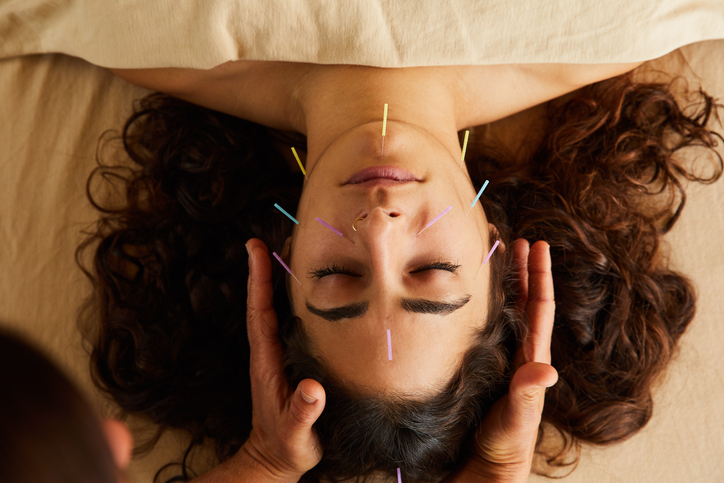

Skin conditions like psoriasis, acne, and rosacea affect appearance, confidence, comfort, and emotional well-being. They often trigger cycles of stress and inflammation that make symptoms harder to manage. Modern dermatology offers important treatments, yet flare-ups can return when deeper imbalances such as hormonal shifts, digestive issues, or immune irregularities remain unresolved.
Traditional Chinese Medicine (TCM) takes a different approach. Instead of treating skin concerns as isolated problems, it views them as reflections of internal disharmony. Through acupuncture, herbal medicine, dietary therapy, and lifestyle support, TCM works to calm inflammation, regulate the body’s systems, and strengthen long-term skin resilience. This holistic method helps reduce flare-ups and supports clearer, calmer, and healthier skin from the inside out.
Skin conditions like psoriasis, acne, and rosacea affect appearance, confidence, comfort, and emotional well-being. They often trigger cycles of stress and inflammation that make symptoms harder to manage. Modern dermatology offers important treatments, yet flare-ups can return when deeper imbalances such as hormonal shifts, digestive issues, or immune irregularities remain unresolved.
Traditional Chinese Medicine (TCM) takes a different approach. Instead of treating skin concerns as isolated problems, it views them as reflections of internal disharmony. Through acupuncture, herbal medicine, dietary therapy, and lifestyle support, TCM works to calm inflammation, regulate the body’s systems, and strengthen long-term skin resilience. This holistic method helps reduce flare-ups and supports clearer, calmer, and healthier skin from the inside out.
In Chinese Medicine, the skin reflects the health of several internal systems.
When these organ systems become imbalanced, the skin often becomes dry, inflamed, reactive, or prone to breakouts.
Chinese Medicine identifies specific patterns that explain why the skin reacts the way it does. Each pattern links to internal functions that influence inflammation, moisture levels, circulation, and sensitivity.
TCM teaches that the skin mirrors the state of internal systems. When digestion becomes sluggish, heat rises, or stress remains unregulated, the body sends signals through the skin. Issues like poor sleep, emotional tension, and irregular eating patterns also influence inflammation and overall skin clarity.
Instead of managing symptoms alone, treatment focuses on restoring balance so the skin can strengthen and heal naturally.
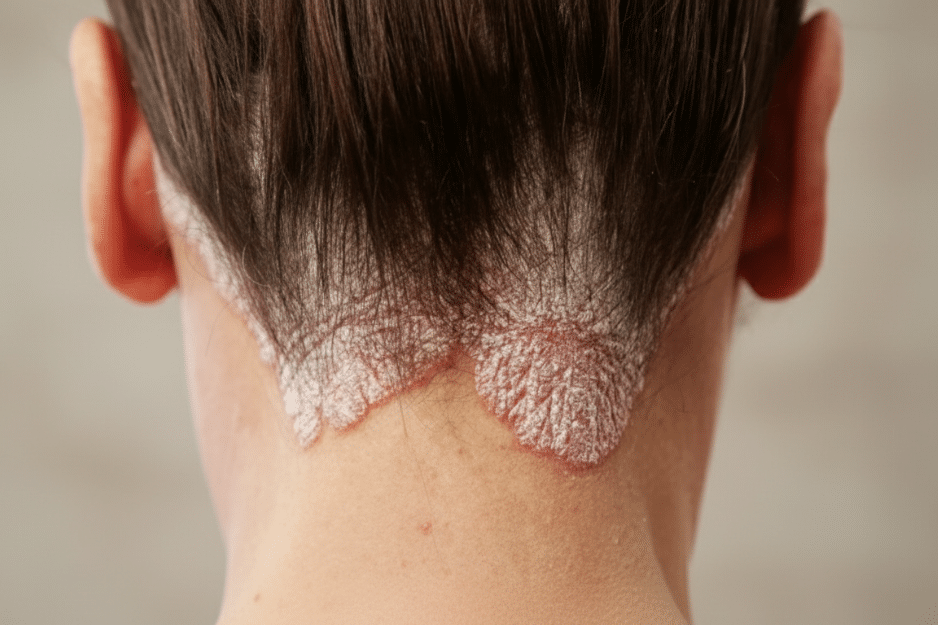
In Chinese Medicine, psoriasis is viewed as a reflection of internal imbalances that affect the blood, immune system and circulation. Several patterns commonly appear:
Emotional stress, irregular digestion and an overactive immune response frequently influence how these patterns develop and how severe the condition becomes.
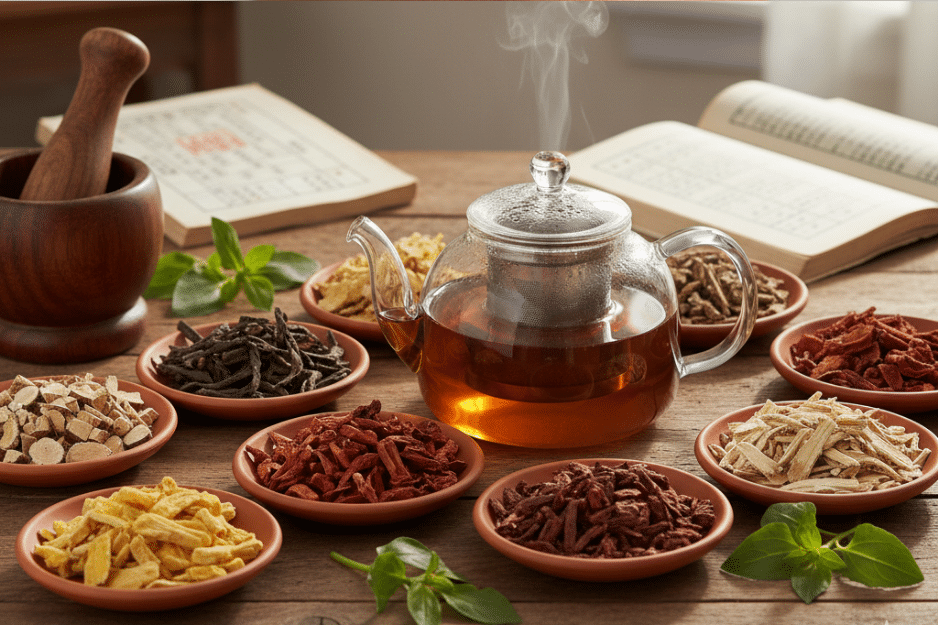
For people living with psoriasis, Chinese herbal medicine offers support by calming inflammation and restoring balance beneath the surface. Herbal formulas are crafted to cool the blood, hydrate dryness, settle heat and strengthen the body’s natural repair processes. Below are key herbs frequently included in psoriasis treatment.
These herbs help reduce redness, warmth, and rapidly changing plaques.
Psoriasis often involves blood heat or blood toxicity. These herbs cool and purify the blood:
When plaques are thick, fixed or slow to heal, herbs that move blood and break stagnation are added:
Many psoriasis patients develop dryness or yin deficiency. These herbs restore moisture, elasticity and barrier strength:
Some herbs are now used in concentrated extract form for stronger therapeutic effects:
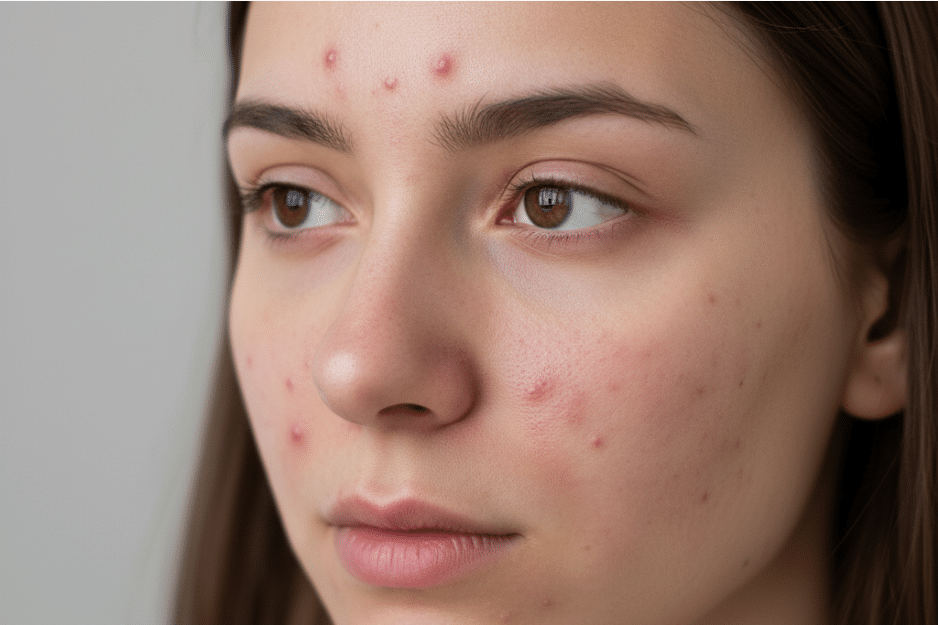
In Chinese Medicine, acne is understood as the result of internal heat, stagnation and imbalances that influence digestion, hormones and stress. Each pattern produces a different type of breakout:
Understanding these patterns allows treatment to match the exact cause behind the breakouts.
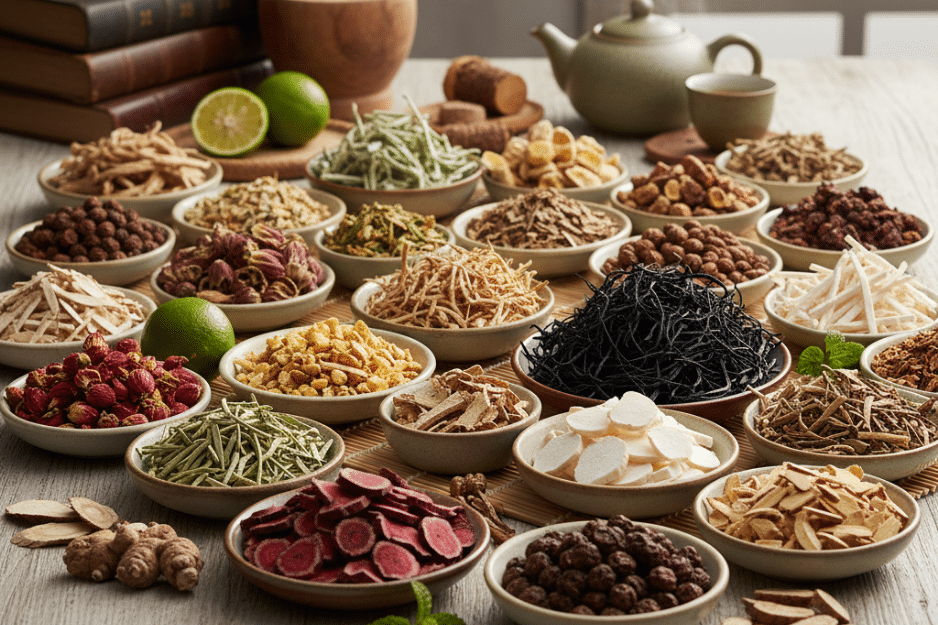
Many types of acne come from deeper imbalances such as excess heat, oily dampness or hormonal shifts. Chinese herbal medicine helps correct these patterns so the skin can clear and heal more easily. The herbs listed below are commonly used to support clearer and calmer skin.
Used for red, inflamed, hot-type pimples caused by excess stomach or lung heat.
Ideal for cystic acne, oily skin, congestion and digestive-related breakouts.
Best for nodules, cysts, acne scarring, and slow-healing lesions.
Helpful for PMS acne, cyclical flare-ups, and stress-triggered breakouts.
Used for acne with pus, swelling, or significant redness.
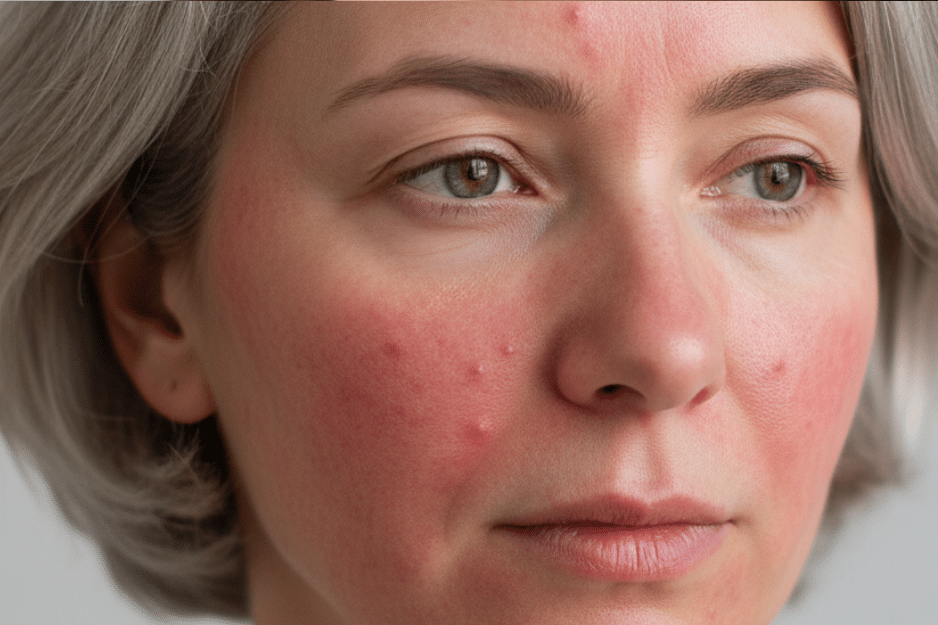
Rosacea is viewed in Chinese Medicine as a heat-dominant condition that rises to the face and disrupts the skin’s natural balance. Several internal patterns commonly contribute to flare-ups:
Environmental influences such as weather changes, spicy foods and alcohol can amplify these patterns by adding more internal heat.
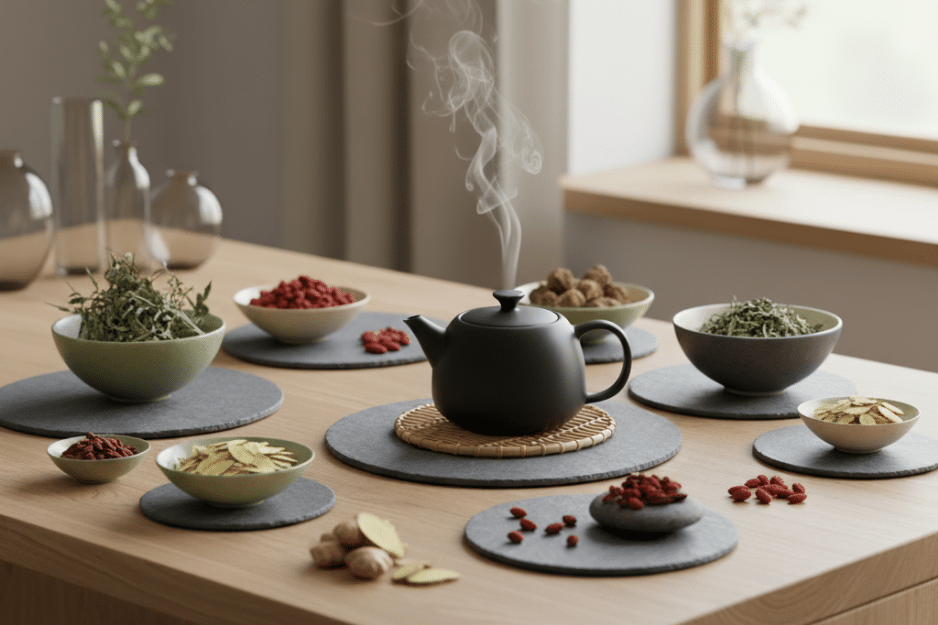
For individuals with rosacea, Chinese herbal medicine provides a gentle yet effective way to calm redness and sensitivity by addressing the internal patterns behind flare-ups. By cooling heat, nourishing the blood, settling inflammation and improving digestive harmony, herbal formulas help the skin become less reactive and more resilient over time.
These herbs target facial heat, flushing, and inflammation commonly seen in rosacea.
Used for persistent redness, visible blood vessels, and heat trapped in the blood layer.
Ideal for rosacea with breakouts, pustules, or oily areas.
Used when rosacea involves dryness, tightness, heat-sensitivity, or flushing from yin deficiency.
Helpful when rosacea flares are triggered by stress, anger, or emotional overheating.
Two patients with the same diagnosis can have different root causes. Personalized treatment ensures better results and prevents recurrent flare-ups.
Western dermatology excels at providing fast, targeted relief for visible symptoms through medications, topical treatments and clinical procedures.
Chinese Medicine focuses on long-term internal balance, addressing the root imbalances in heat, dampness, circulation, immunity and stress that drive recurring flare-ups.
An integrative approach often produces the most stable, long-lasting improvement. Combining both systems can be especially effective for:
Using Western treatments for immediate control and TCM for deeper regulation creates a more complete and sustainable path to skin healing.
Chinese Medicine offers a holistic and deeply personalized way to understand and manage chronic skin conditions. By addressing the internal patterns behind inflammation, heat, circulation, digestion and stress, TCM helps the skin heal from the inside out. Paired with supportive nutrition, stress regulation and consistent daily habits, this approach encourages clearer, calmer and more stable skin over time.
If you want a more holistic and long-term approach to your skin health, contact us at ACA Acupuncture and Wellness. We provide acupuncture, customized herbal care and personalized lifestyle guidance to help your skin heal naturally and reduce flare-ups. Our goal is to support lasting clarity, comfort and confidence in your skin.
Sources:
Li, L., Zhang, L., Li, Y., Cai, Y., Wen, X., Zheng, C., Wu, C., Bao, Y., Jiang, F., Sun, N., & Zeng, N. (2025). Overview of current research on traditional Chinese medicine in skin disease treatment: A bibliometric analysis from 2014 to 2024. Pharmaceutical Biology, 63(1), 27-41.
Cao, X., He, R., Xu, D., & Zhao, Y. (2026). Interdisciplinarity traditional Chinese medicine microneedles in skin disease treatment: Recent advances and challenges. Bioactive Materials, 55, 568–601.
Shahrajabian, M. H., & Sun, W. (2025). Study of traditional Chinese medicine to treat skin diseases and improve skin health. The Open Dermatology Journal, 21(8), 864–882.
Yang, J., Guo, J., Tang, P., Yan, S., Wang, X., Li, H., Xie, J., Deng, J., Hou, X., Du, Z., & Hao, E. (2024). Insights from Traditional Chinese Medicine for restoring skin barrier functions. Pharmaceuticals, 17(9), Article 1176.
Zhang, L., Lin, H., Chen, N., Zhu, S., & Hu, Y. (2025). Selected traditional Chinese herbal medicines for the treatment of atopic dermatitis – research progress on the effect and mechanism of actions. Frontiers in Pharmacology, 16, Article 1553251.
Su, Y., Qin, W., Wu, L., Yang, B., Wang, Q., Kuang, H., & Cheng, G. (2021). A review of Chinese medicine for the treatment of psoriasis: Principles, methods and analysis. Chinese Medicine, 16, Article 138.
Yes. Many people experience overlapping skin issues, such as acne with sensitivity or psoriasis with rosacea-like flushing. TCM does not treat each condition separately but instead identifies shared root patterns, such as heat, dampness, or stress-related stagnation, and treats them together through one cohesive plan.
Most individuals begin noticing changes within two to four weeks as inflammation, oil production, or sensitivity starts to shift. Deeper improvements, such as reduced flare frequency and more stable skin tone, often occur over eight to twelve weeks as internal systems rebalance.
In many cases, yes, but interactions must be checked. Some herbs may enhance or reduce the effects of medications such as corticosteroids, antibiotics, or acne prescriptions. Proper assessment ensures herbs complement, rather than conflict with, your current treatment plan.
Yes. Acupuncture needles are placed on body points rather than directly into inflamed lesions. This allows treatment of internal imbalances without irritating active breakouts or sensitive skin. Facial acupuncture may be added once inflammation has calmed.
They can. Herbal formulas that move blood, such as Dan Shen-based formulas, combined with facial acupuncture can help reduce pigmentation, soften scars, and support tissue repair over time.
Yes. TCM is gentle and adaptable for all ages. Acne in younger patients often involves stomach heat, hormonal changes, or stress, all of which respond well to herbal formulas and acupuncture.
LOCATIONS
MANHATTAN
QUEENS
NEW JERSEY
CALIFORNIA

The over $4 billion US acupuncture market offers a great opportunity with over 10% annual growth rates and a continuing flow of new patients interested in the benefits of acupuncture.
